
First published December 2025 | Words and photos by Luke Digweed | Read time 15 minutes | 4 comments

Luke Digweed is a staff writer for Vietnam Coracle and has lived in Vietnam since 2011. He holds an MSc in Social Anthropology from the London School of Economics where he wrote his dissertation on Vietnamese male migrants working in UK nail salons. He has worked on the production of several podcasts, including LSE’s Phelan US Centre show ‘The Ballpark’. While living in Huế, he ran the Huế Grit Tour from 2017–2020. His current Vietnam-centric interests include ceremonies and festivals, food, motion and mobility….read more about Luke
‘Alley Diving’ in the Cooler Climes of the Central Highlands
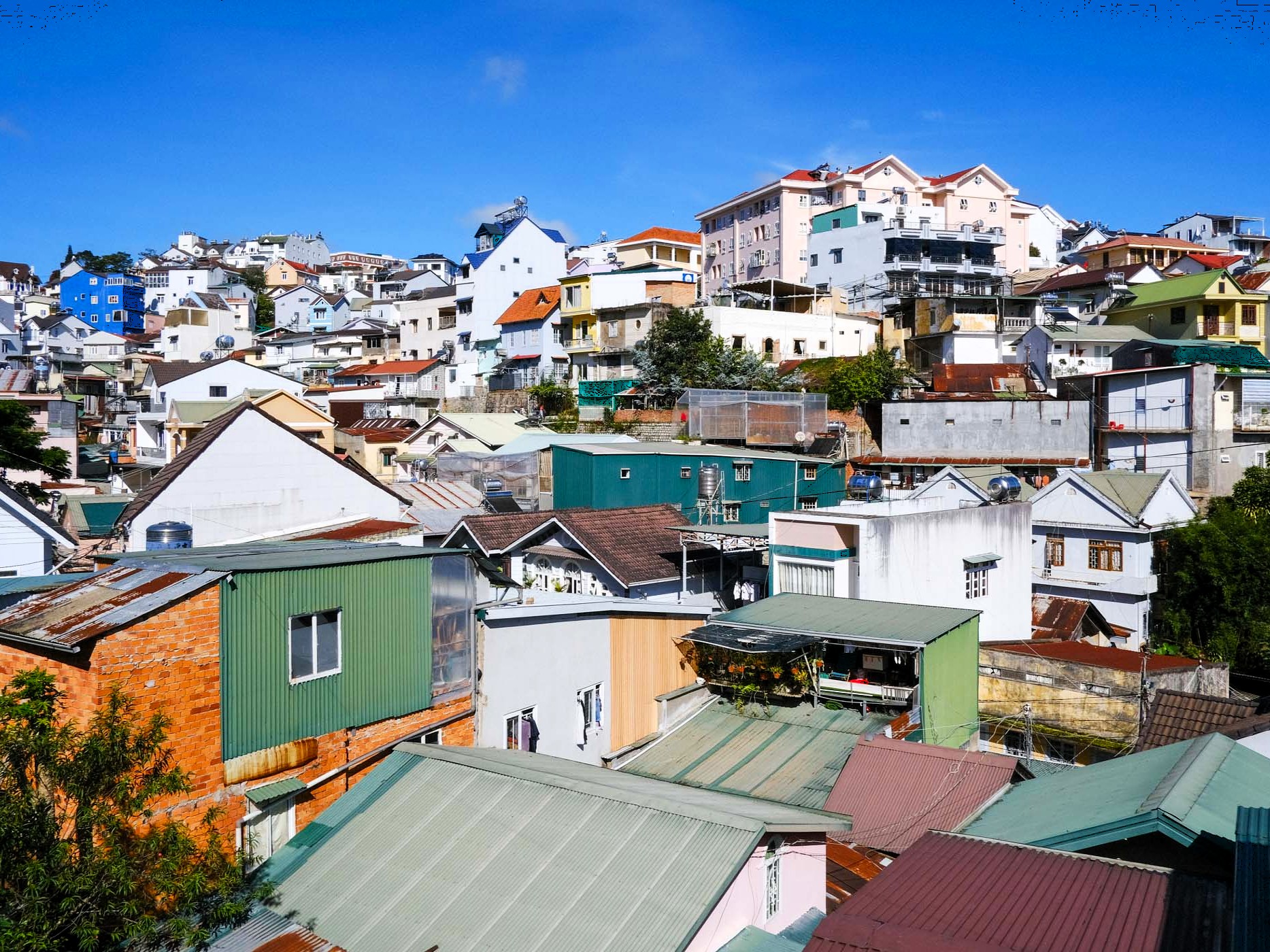
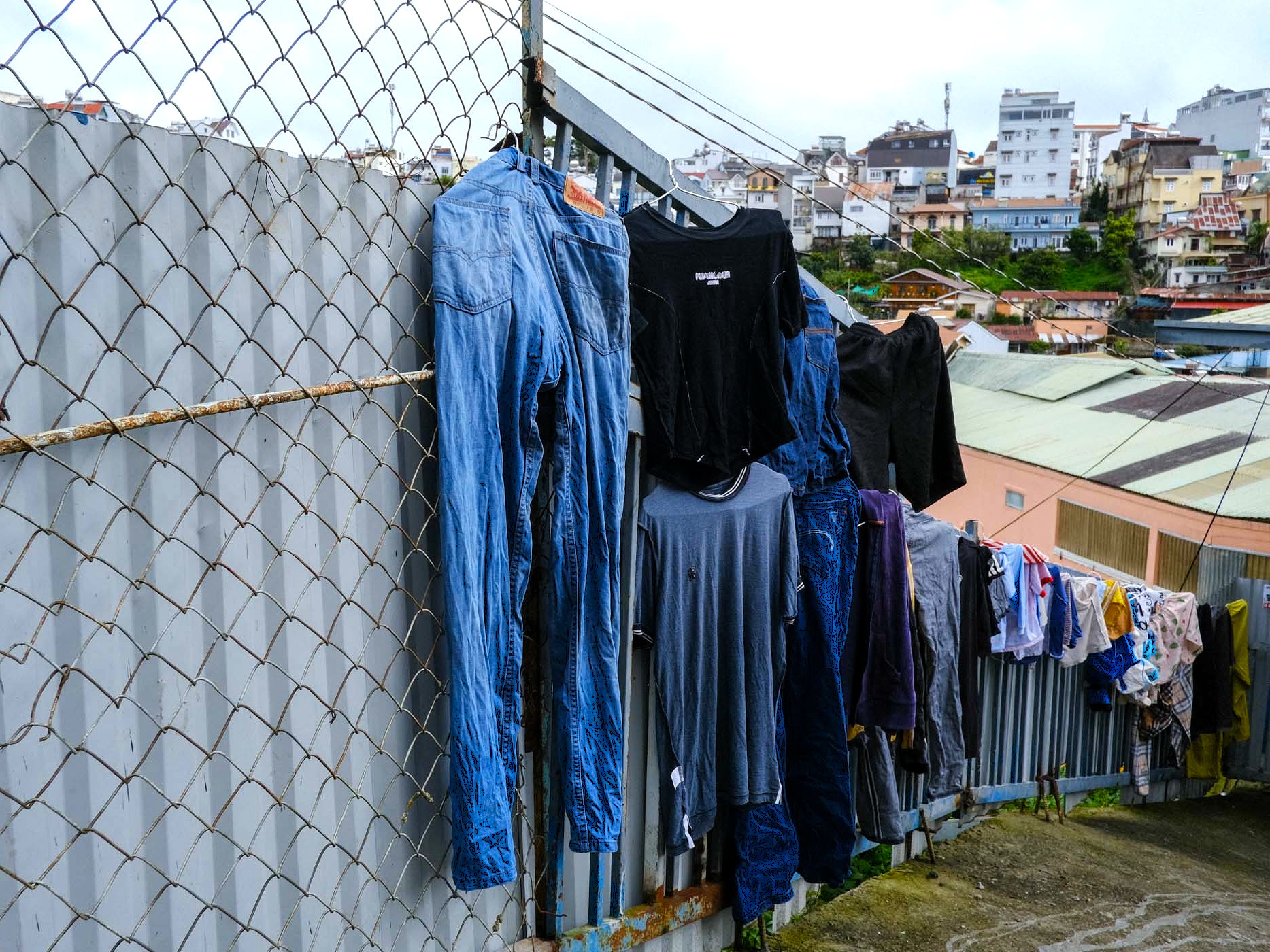
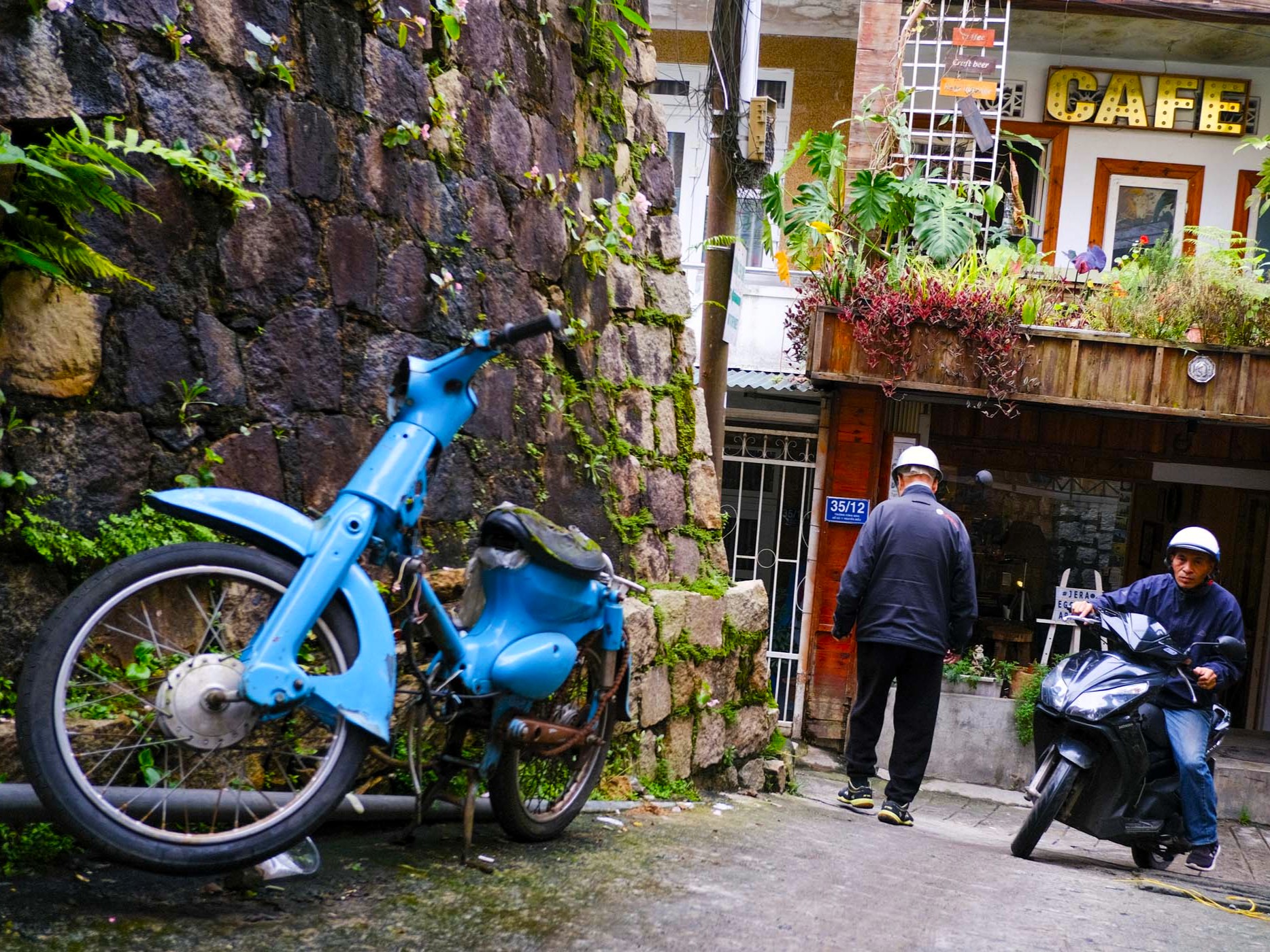
For travellers who enjoy exploring cities on foot, Vietnam can pose a few challenges: pathways obstructed by vehicles and objects, sidewalks indistinguishable from the road and a climate that can leave you sweat-drenched shortly after setting off. Đà Lạt, however, offers some relief from those challenges. The city’s pavements and roads are often wide enough to accommodate both traffic and pedestrians, meaning they rarely encroach on each other, and Đà Lạt’s cooler (albeit more temperamental) climate means walking around doesn’t immediately turn you into a perspiring blob. Urban walking, therefore, is easier and more enjoyable in Đà Lạt than elsewhere in Vietnam. As a city over a century old, Đà Lạt’s urban environment provides an architectural time-lapse of Vietnam’s modern history: from the French colonial period to the present day. The city’s roads do not follow a gridiron plan, which is more common in Vietnam’s newer cities. Instead, roads and alleyways bend, wind, rise and fall between the city’s topography and its larger buildings. This urban terrain creates an adventure of twists and turns that goes beyond straight roads and right-hand turns.

Support My Site
Free | Independent | No Sponsored Content
“Hello, if you enjoy my website, please support it.
Thank you.” Tom
[Back Top]
URBAN WALKING IN DALAT:
Exploring 3 Areas of the City on Foot
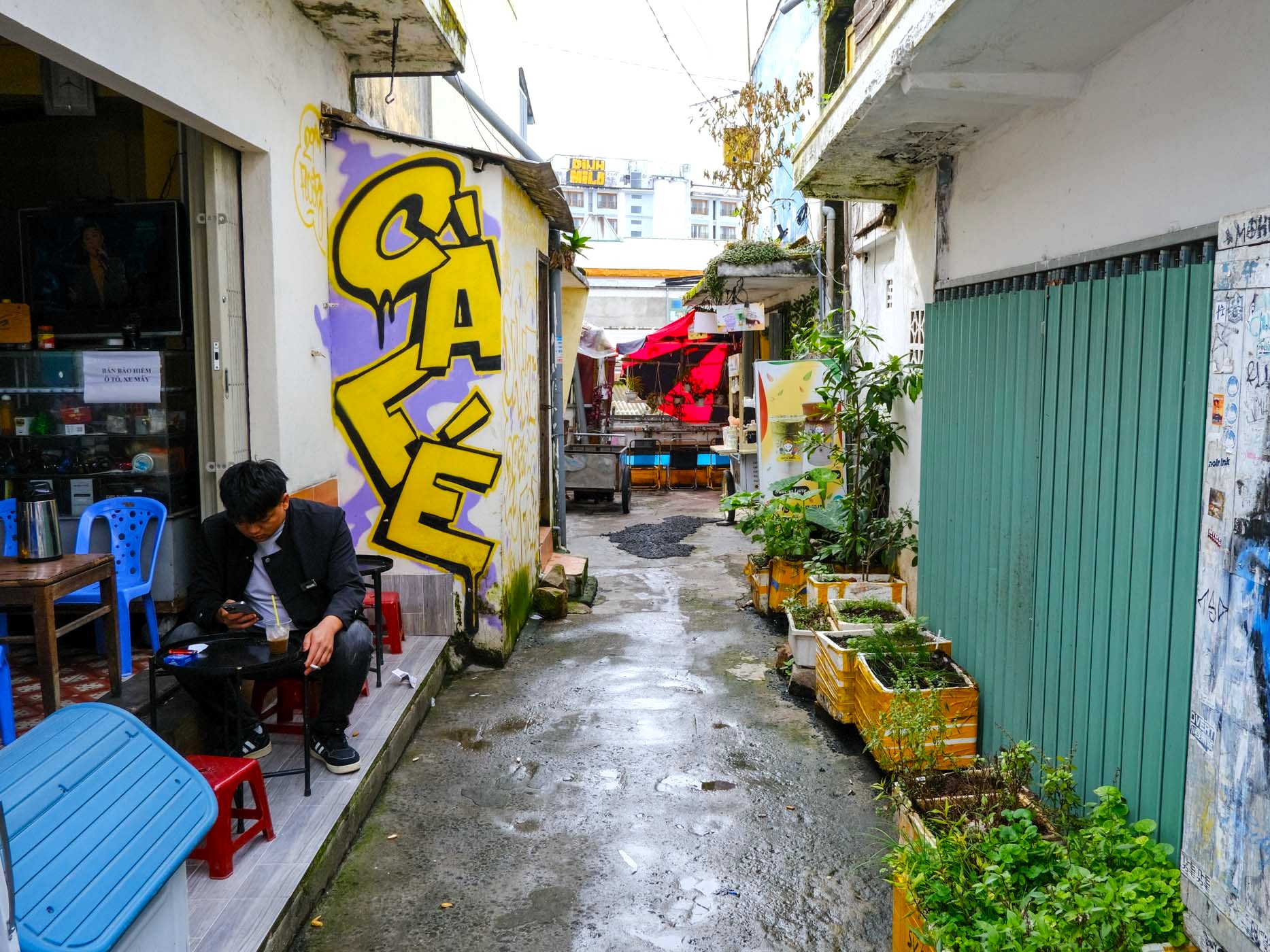
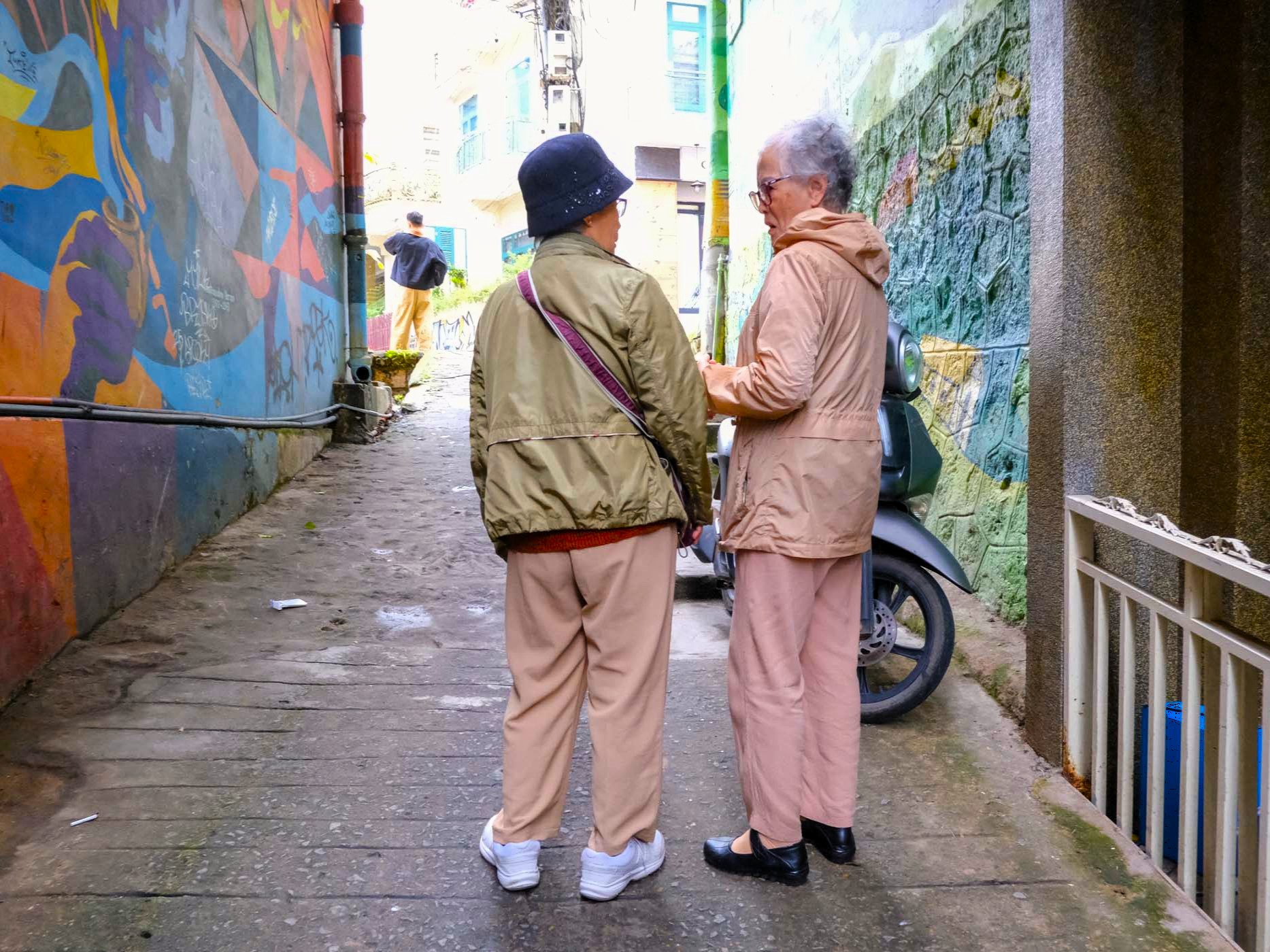
In this guide, I present three general areas of Đà Lạt that are suitable for urban walking, including places to stop, see, eat and drink along the way. Despite Đà Lạt boasting several wide boulevards, it is the dense neighbourhoods between these thoroughfares – connected by a labyrinth of smaller roads and lanes – that are most rewarding to explore for the urban walker. I think of this as ‘alley diving’ because it has something in common with the serendipity of underwater exploration: you’re never entirely sure what you’ll find and whatever you do encounter is often fleeting. Paths and alleys creep between houses, blurring the distinction between public and private spaces, exposing the walker to scenes of everyday life that are not necessarily meant to be seen and heard. Neighbours chat from their front doors, dogs bark to defend their owner’s property, windswept laundry flutters from balconies and domestic quarrels escape through kitchen windows. Click from the contents below for details:
Contents:
➤ Map
➤ Walk 3: West of Đà Lạt Market
❤️If you like this guide, please support Vietnam Coracle with a donation or become a member of my Patreon community or purchase an Offline Guide & Map. This website relies on reader support to maintain its independence & quality. Thank you, Tom
MAP:
Urban Walking in Đà Lạt
Tips & Guidance:
❤️Like this guide? Support Vietnam Coracle with a donation or join my Patreon to help keep this website free & 100% independent. Thank you, Tom
Prepare for sudden weather changes: Đà Lạt’s climate is famously temperate, but it’s also highly changeable. This means you should expect temperature fluctuations and sudden changes in weather conditions during your walk. Be prepared for both the rain and the heat. Dress suitably, because otherwise you might get caught out by a shift in the weather midway through a walk. A coat for the cooler mountain air, a rain poncho and/or umbrella for the highland showers, shorts and T-shirt for the heat and, if walking in the evenings, even a scarf and gloves. However, if you do get caught by the rain, you’re never too far from a coffee shop to seek refuge and light refreshment.
Wear suitable walking shoes: Ideally, wear shoes that are breathable, protect your feet and have excellent grip. Surfaces in Đà Lạt are inconsistent, often steep and sometimes slippery. It’s best to have footwear that lets you enjoy the walk rather than worry about falling over. In other words, avoid wearing flip-flops.
Wander, but be systematic: Use main roads only as jumping-off points for deeper exploration. Narrower roads – signposted as hẻm (‘alley’) – are usually the most rewarding to explore. Don’t allow dead ends to deter you from wandering down other small lanes: one alley may bear no fruit but another can be a window into another world. The three urban walks below are designed for wandering without a defined route or path. Finally, respect private property that is fenced, gated or prohibits public access.
Walk 1: Đào Duy Từ Street
[View Map]
❤️Like this guide? Support Vietnam Coracle with a donation or join my Patreon to help keep this website free & 100% independent. Thank you, Tom
The neighbourhood surrounding Đào Duy Từ Street is a tangle of pathways and lanes leading walkers through the everyday occurrences and intimacies of this densely populated valley. Due southwest of Hồ Xuân Hương Lake, Đào Duy Từ Street serves as the main artery connecting this area to the broader city via two of Đà Lạt’s primary roads, Trần Phú Street and Triệu Việt Vương Steet. Each alleyway and narrow road acts as a capillary, branching into different neighbourhoods and communities. Most people you see have a personal connection to the area, whether they work or live here.
Đào Duy Từ Street acts as a jumping-off point for your walk. It is also the most commercially populated part of the neighbourhood, hosting various coffee shops, eateries and other businesses. Most alleyways feature a myriad of houses with different architectural features, contributing to the area’s broader hodge-podge aesthetic. Below are some of my highlights from walking in this neighbourhood, but there is plenty more to discover as you wander around.
Bánh Căn Cô Dưỡng: 42 Đào Duy Từ Street [MAP]
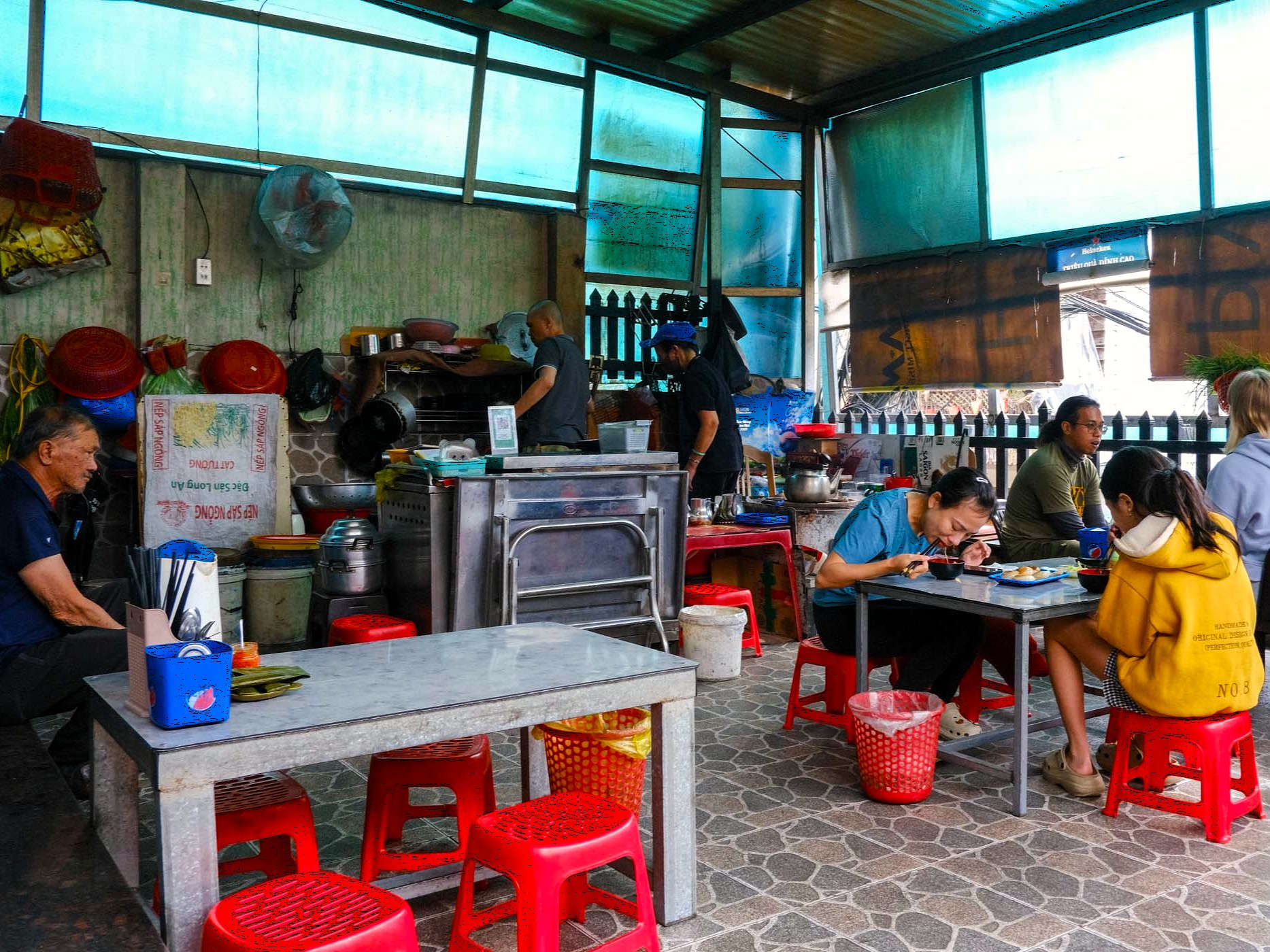
There are several eateries in the area where you can try bánh căn, one of Đà Lạt’s best-loved dishes, but Bánh Căn Cô Dưỡng’s location – sitting atop a staggered wall – makes it a particularly appealing choice. Take the stairs that lead between the two houses and you will find Bánh Căn Cô Dưỡng operating on the front porch of a modest townhouse. The makeshift canopy, made of metal sheets and various plants, protects vendors and guests from the elements while allowing sunlight to streak across the porch. Serving breakfast, Bánh Căn Cô Dưỡng makes for a great stopping point on your walk around the area. If you’re looking for something to eat on Đào Duy Từ Street but arrive later in the day, Thảo Mộc serves mì vịt tiềm (aromatic duck noodle soup) from midday until 8pm at 26 Đào Duy Từ Street [MAP].

D’Lart Garden Drinking & Dining: 41 Đào Duy Từ Street [MAP]
D’Lart is a fancy coffee shop that’s hard to ignore, situated on the first big bend in the road of Đào Duy Từ Street. Sit on the coffee shop’s porch and overlook the passing traffic, or head out the back for a full panoramic view of the neighbourhood. D’Lart is three storeys deep and descends along with the terrain beside the road. Food is also served here and various workshops are frequently held. An alternative to D’Lart is Oday Bar & Working Café [MAP]. Nestled down an alleyway, it’s open both day and night.
The Cow’s Tongue (Lưỡi Bò): also known as Dốc Nhà Bò [MAP]
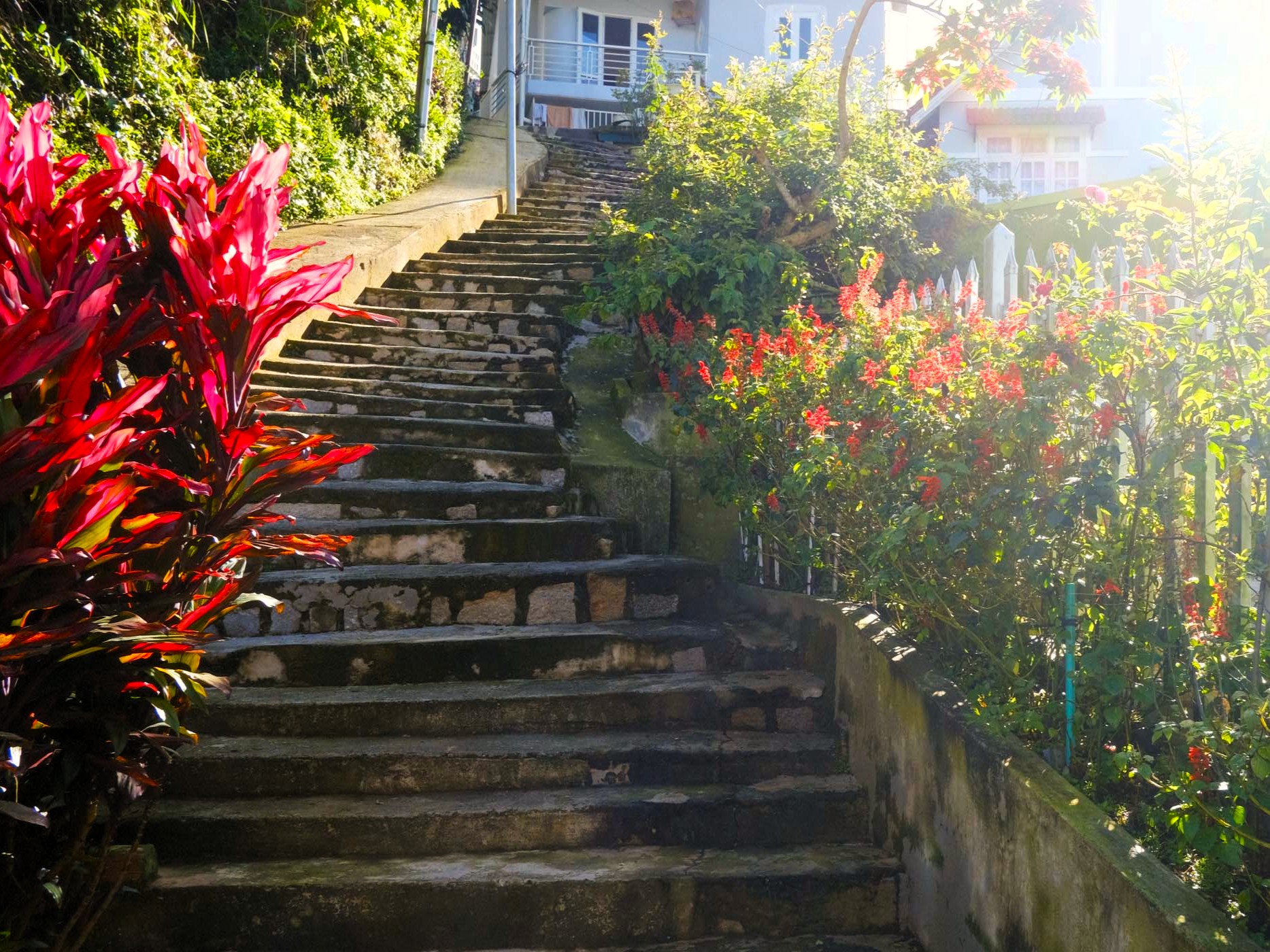
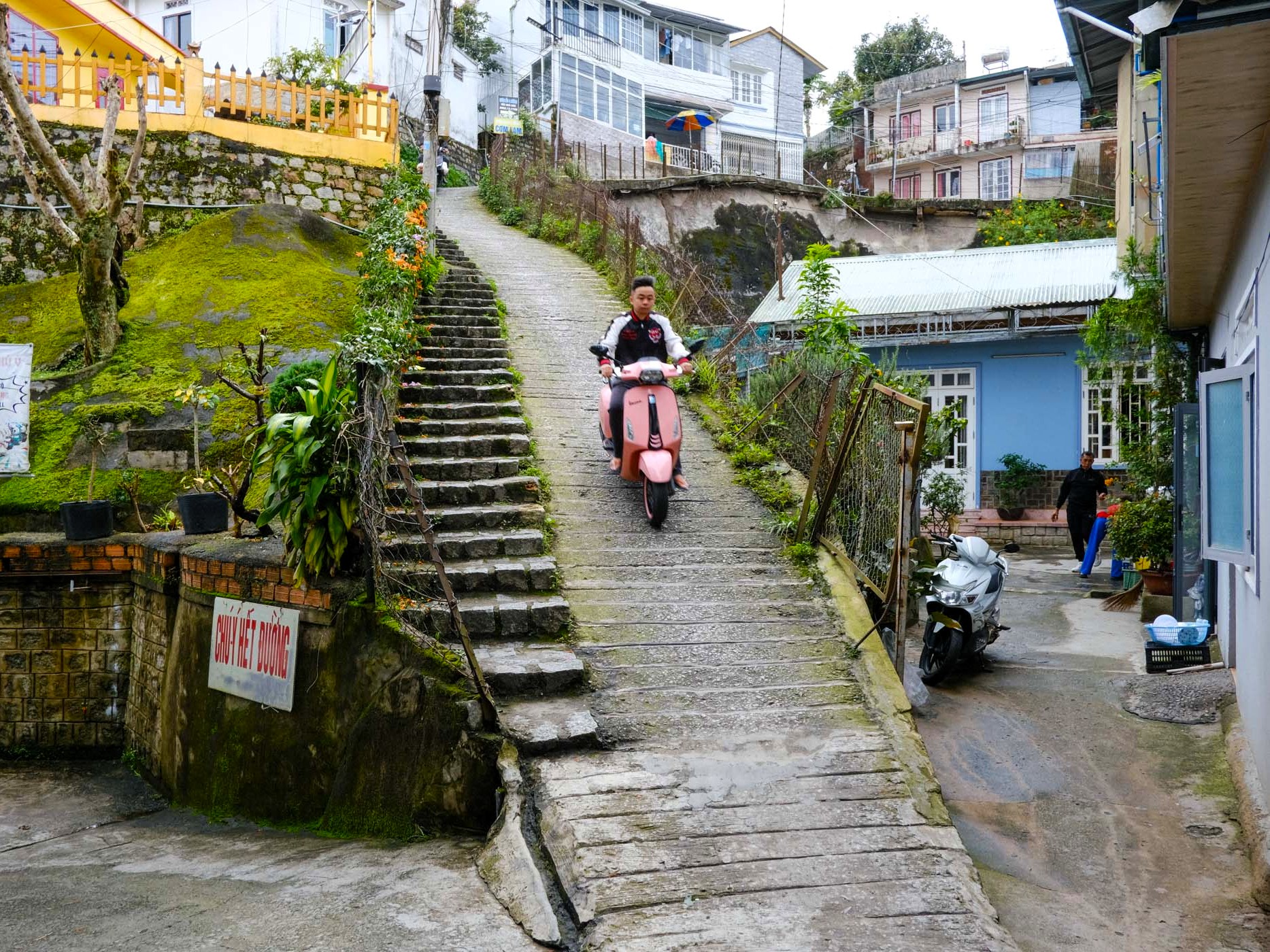
This narrow, steep and twisting lane has become a Đà Lạt check-in for domestic travellers. Montages of motorbike accidents, caused by the steep slope, frequently appear on social media. Stand at the foot of the climb and watch as various tourists anticipate, and sometimes refuse, to drive the steep path. It’s also interesting to watch how people navigate the road’s narrowness, with drivers having to stop in the road’s crevices to let oncoming traffic pass. Use the steps beside the road to climb up and continue your walk.
Trần Hưng Đạo Temple: Đền Thờ Trần Hưng Đạo [MAP]
Approximately halfway up the cow’s tongue slope is a temple dedicated to the Vietnamese historical figure Trần Hưng Đạo who fought and defeated the Mongol invasion in the 13th century. The premises include shrines and living quarters inhabited by the descendants of the temple’s founders. Note the various relics and different musical instruments used for festivals and ceremonies throughout the year. Access depends on whether the gates are open and if people are inside. Beware of the dogs! If Trần Hưng Đạo Temple is inaccessible during your visit, another place to explore in the neighbourhood is the Buddhist monastery for women, Chùa Lộc Uyển [MAP]. Access the pagoda’s premises from the side of the building rather than the front gates, which are usually locked.
Walk 2: Đồng Tâm Street
[View Map]
❤️Like this guide? Support Vietnam Coracle with a donation or join my Patreon to help keep this website free & 100% independent. Thank you, Tom
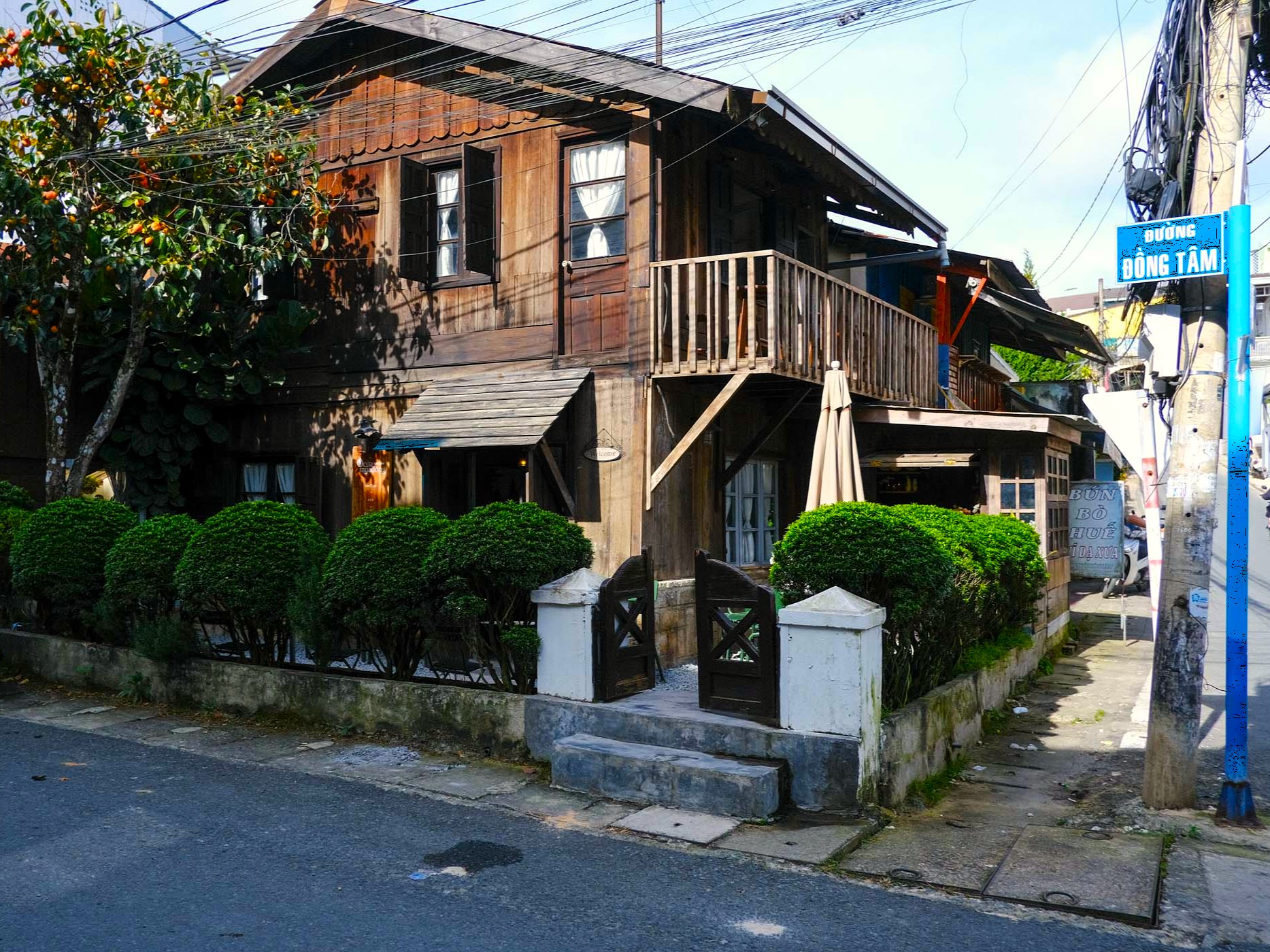
Đồng Tâm Street runs through a dense residential area and serves as the primary route in and out of the neighbourhood. The street is flanked by a series of shophouses before splitting into smaller alleys that lead up the two hills on either side. This walking location is small, compact and more suitable for people looking for a shorter walk.
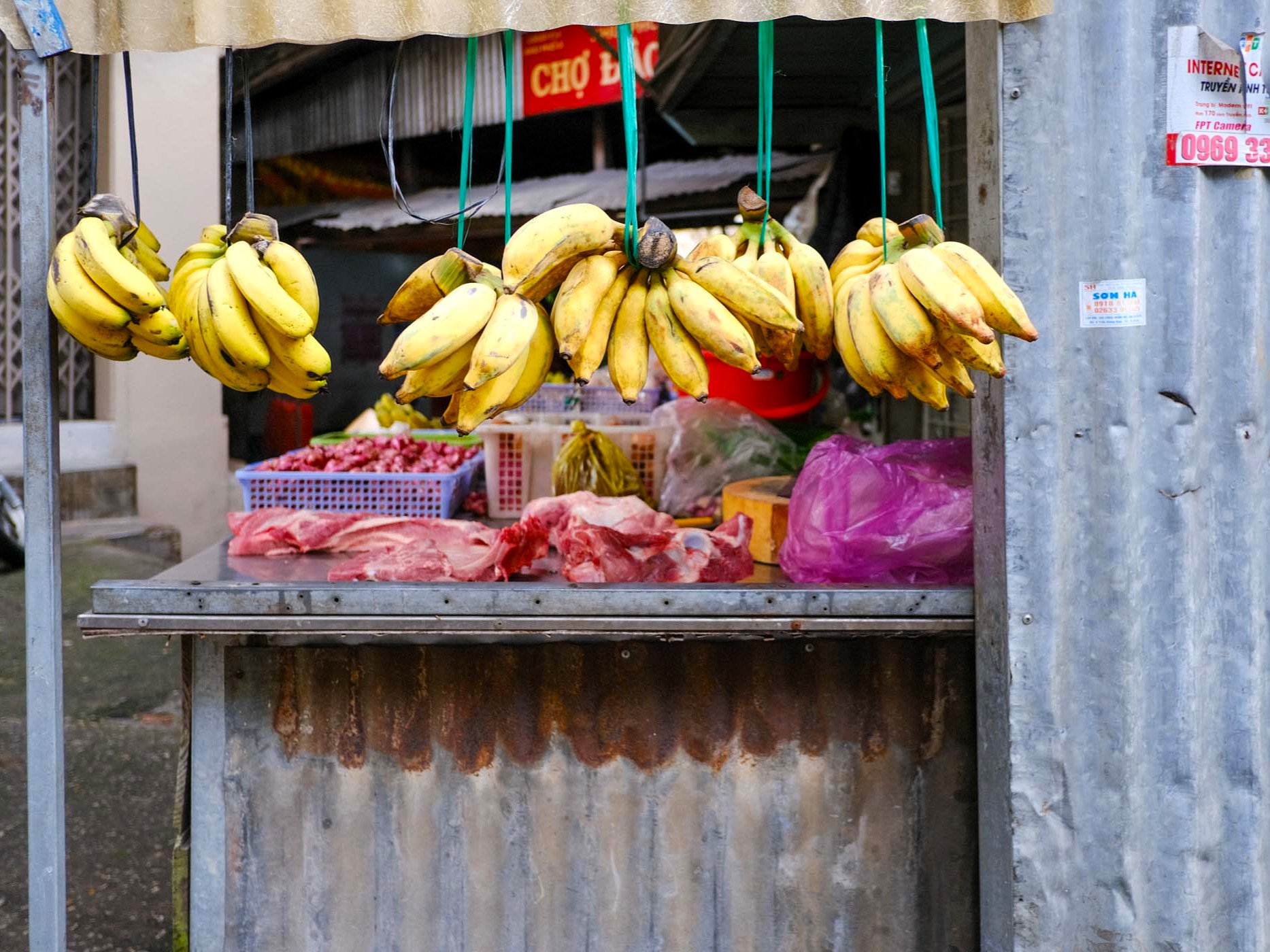
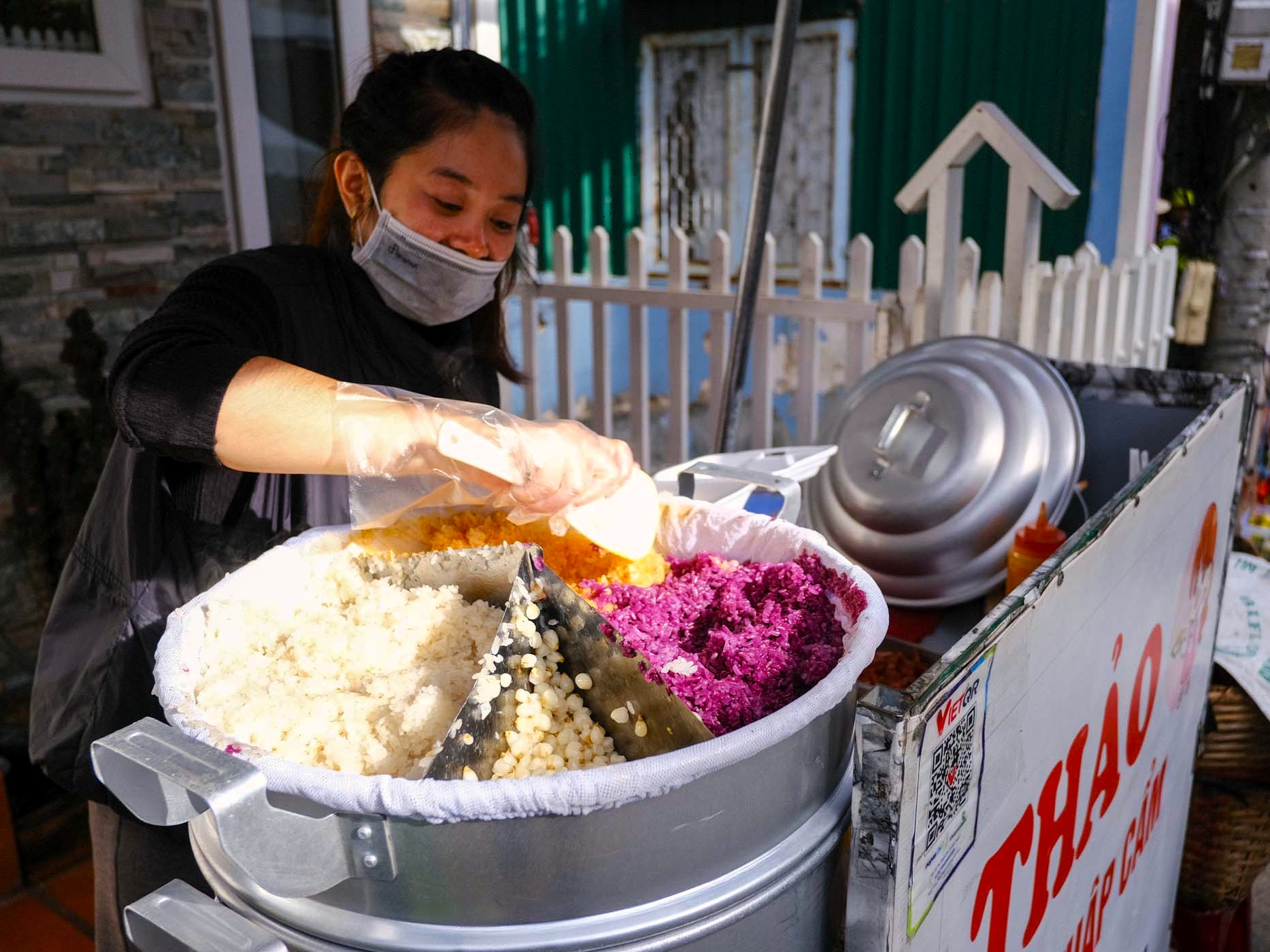
If you want to start your morning with frenetic scenes, begin this walk at Nam Thiên Market [MAP] at the northern end of Đồng Tâm Street. Vehicles stopping to buy morning groceries cause congestion and a flurry of activity on this narrow road. Local residents do their shopping while greeting and conversing with each other in the cool morning air. Several shophouses sell food along this street. Special mention goes to Bánh Ướt Lòng Gà Hằng [MAP] and Quán Ngọc [MAP] for excellent breakfasts and lunches. Besides the local market, there are a few second-hand clothing stores and boutiques worth browsing.
Minh Giáo Church: Nhà Thờ Minh Giáo [MAP]
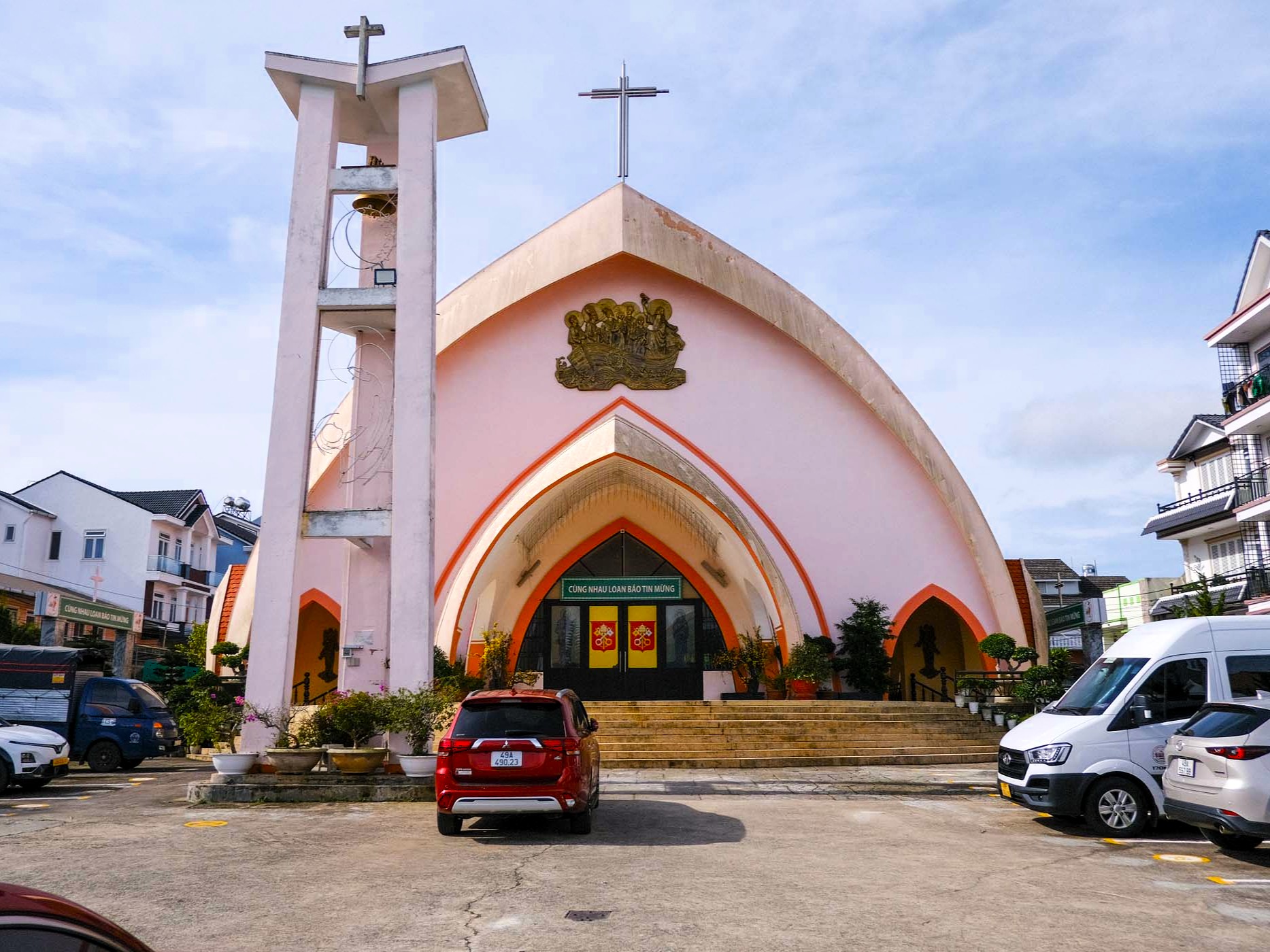
Towards the southern end of Đồng Tâm Street is Ngô Thì Nhậm Street. This road runs up a hill, past a school, then continues to Minh Giáo Church. Although the current structure is relatively new (completed in 2006), various incarnations of this church have preceded it, dating back to the 1960s. The church serves as a good example of the city’s unorthodox architectural styles. Note the roof structure and the bare-bones bell tower that sits in front of it. The road past the church and the alleyways surrounding it provide additional opportunities for exploration.
Lâm Tỳ Ni Pagoda: Chùa Lâm Tỳ Ni [MAP]
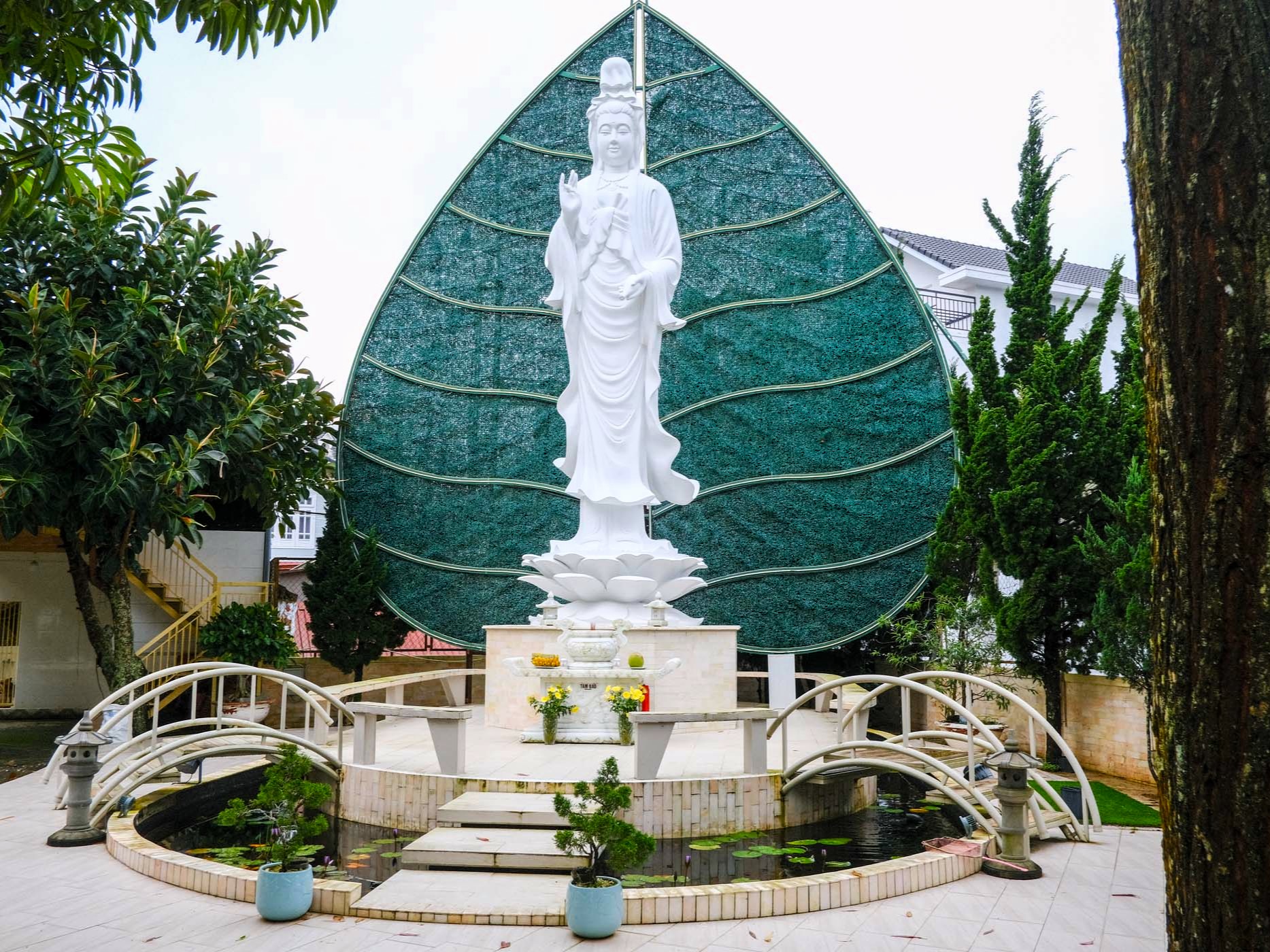
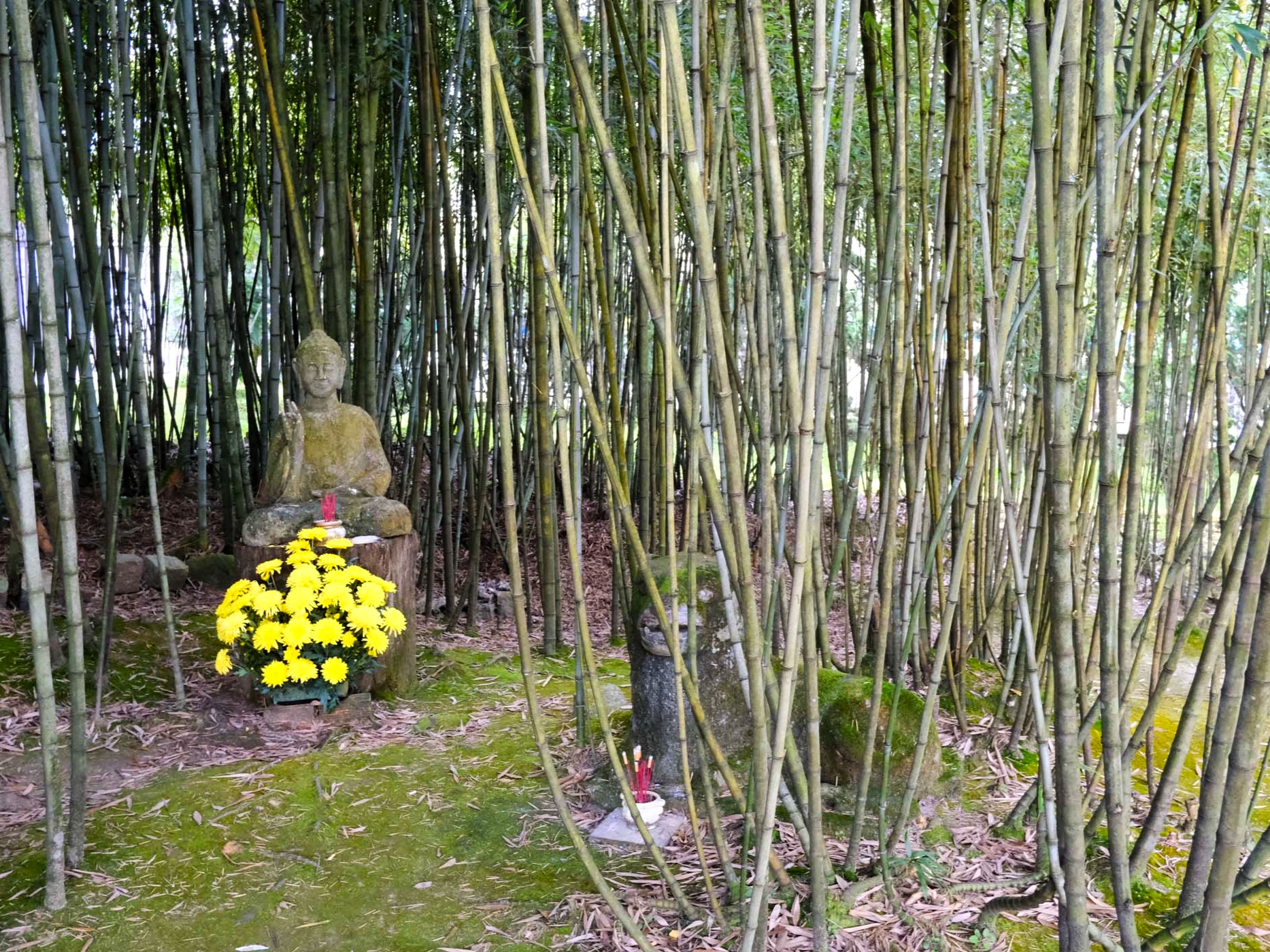
To the east of Đồng Tâm Street are several short, steep lanes. There are a few remaining traditional wooden houses here and various cafés and eateries. Eventually, you reach the trisection of Thiện Mỹ Street and the spacious premises of Lâm Tỳ Ni Pagoda. First built in the 1960s, it has retained most of its original features while avoiding sweeping expansion projects. Through the gated entrance of the pagoda is a crescent-shaped pond followed by the primary temple. What’s enjoyable about this modest pagoda is that its concrete formalities and the pagoda itself are not overbearing. On the pagoda’s south-facing side is a vast green space with a sitting area beside a shrubbery of bamboo. Walk to the back of the pagoda to find the living quarters of the residing monks and the ancestral house.
Walk 3: West of Đà Lạt Market
[View Map]
❤️Like this guide? Support Vietnam Coracle with a donation or join my Patreon to help keep this website free & 100% independent. Thank you, Tom
Deep-rooted neighbourhoods often accompany long-established markets. The area surrounding Đà Lạt Central Market [MAP] is no exception. Several roads branch off in a westward direction from the plaza near Khu Hòa Bình [MAP], flanked by buildings of various aesthetics. In particular, Tô Ngọc Vân Street, Ba Tháng Hai Street (also written 3/2 Street) and Nam Kỳ Khởi Nghĩa Street are all worth exploring. Pathways and alleys connect all three streets and are riddled with staircases and slopes, which not only offer challenging walks but also great views of the city. This may be one of the Đà Lạt’s most touristy areas, but don’t allow that to deter you from enjoying the exciting urban walking opportunities around here. While city traffic passes along these roads, it’s the street-side vendors, residents and shophouse businesses that give this area its vitality.
Dốc Nhà Làng: [MAP]
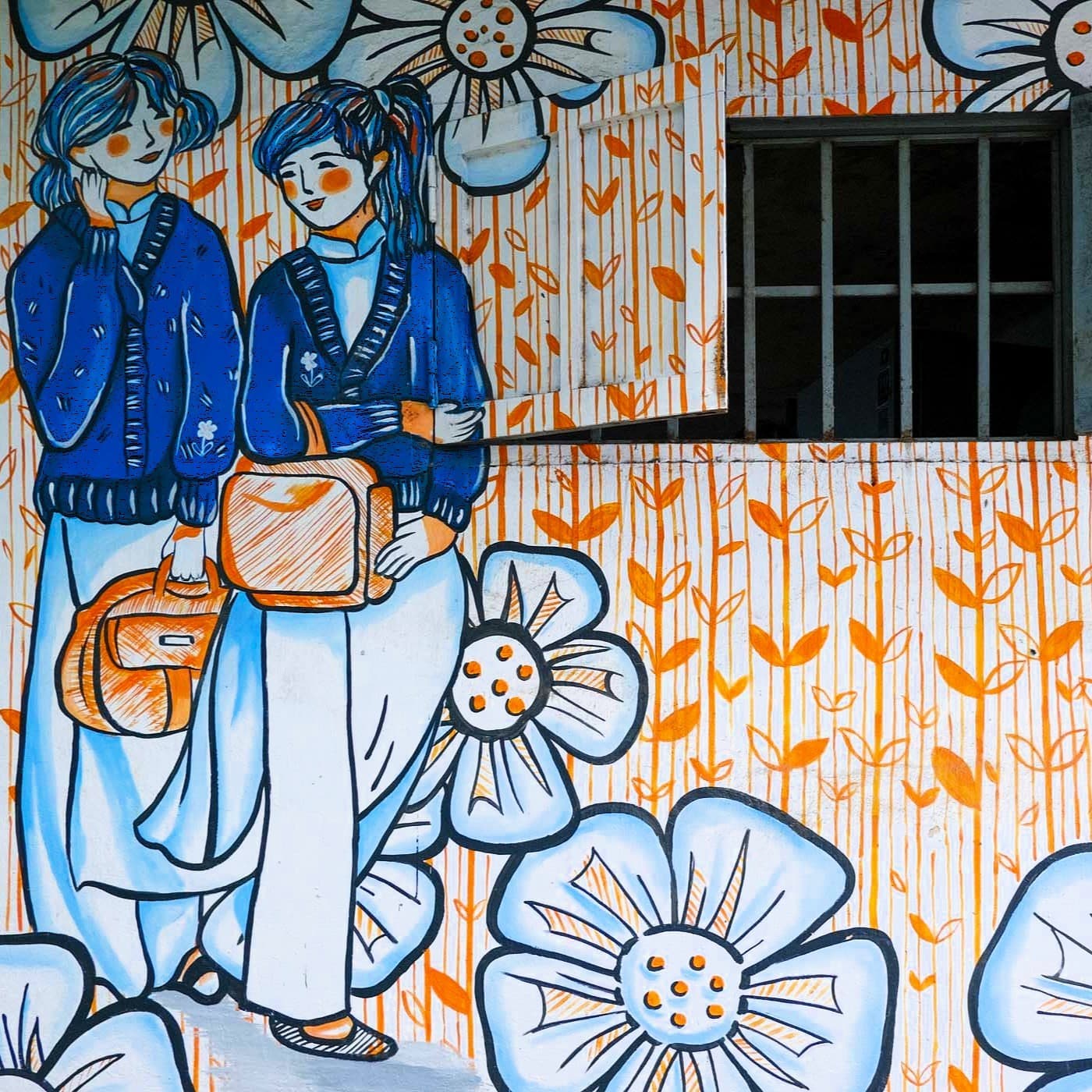
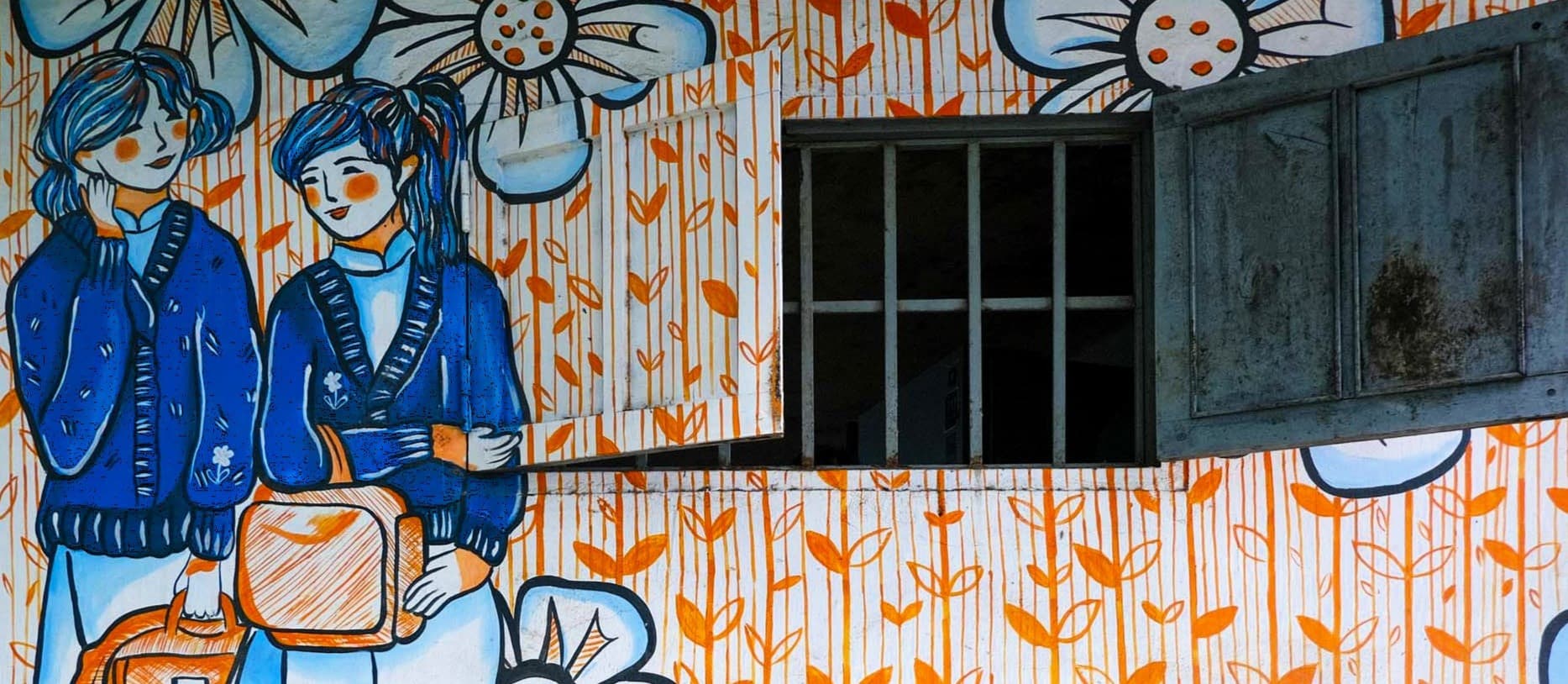
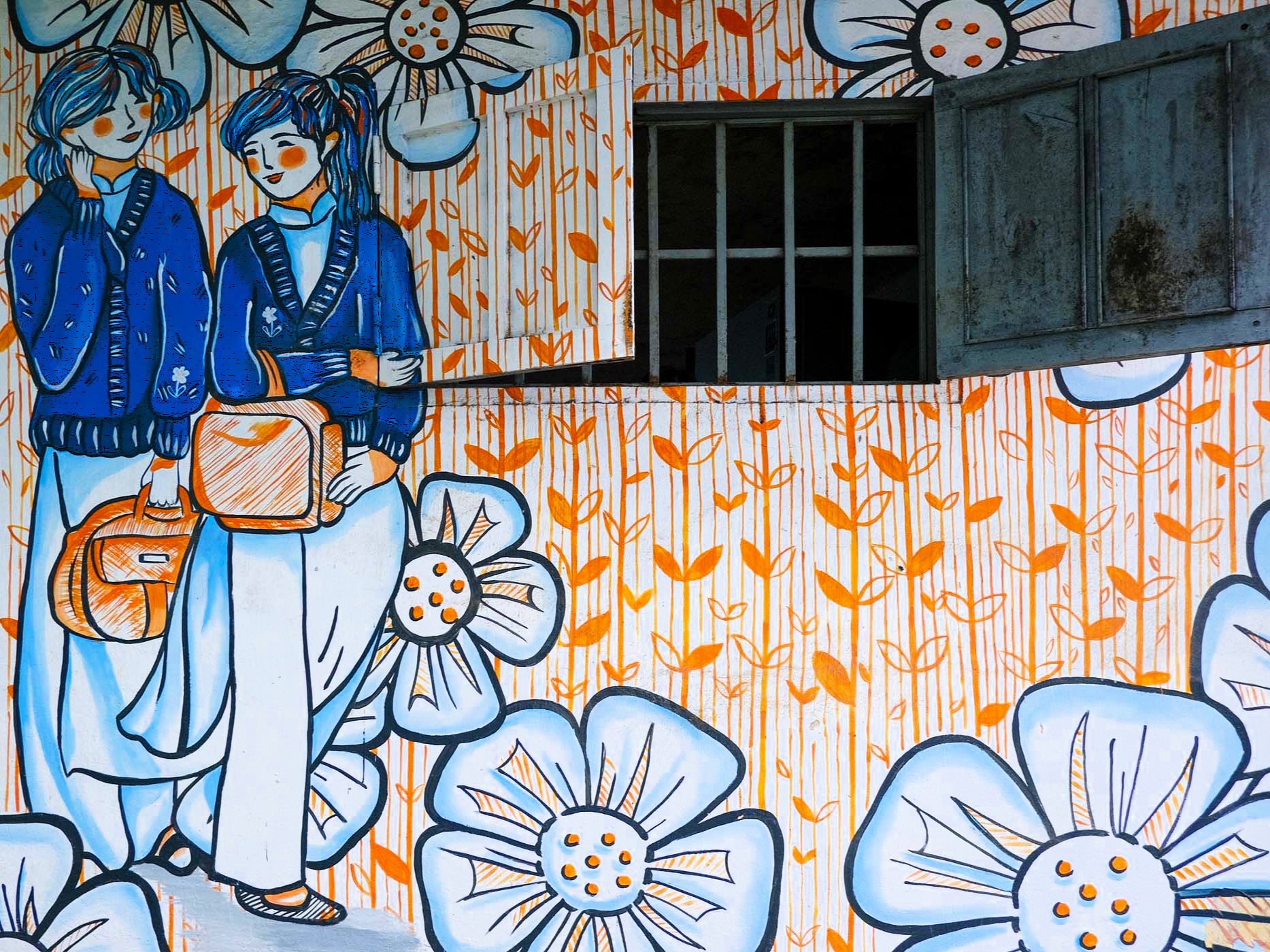
Dốc Nhà Làng is a project co-organised with the city council to provide 28 different murals in the surrounding alleyways of this area. The concept is to capture the spirit of Đà Lạt through the work of various graffiti artists. The murals depict historical and contemporary Vietnamese figures, local Đà Lạt fauna and agricultural produce, as well as personal nostalgia and coming-of-age in the city.
There are a few places to eat and drink in this area, including the new all-day café and cocktail bar Sartorista Bar & Café [MAP], as well as an alleyway noodle breakfast at Hủ Tiếu Chị Ngọc [MAP]. Follow the alleyway round to Hẻm 58 Đ. 3/2 [MAP] for some attention-grabbing residential architecture and a couple of spaces of urban decay.
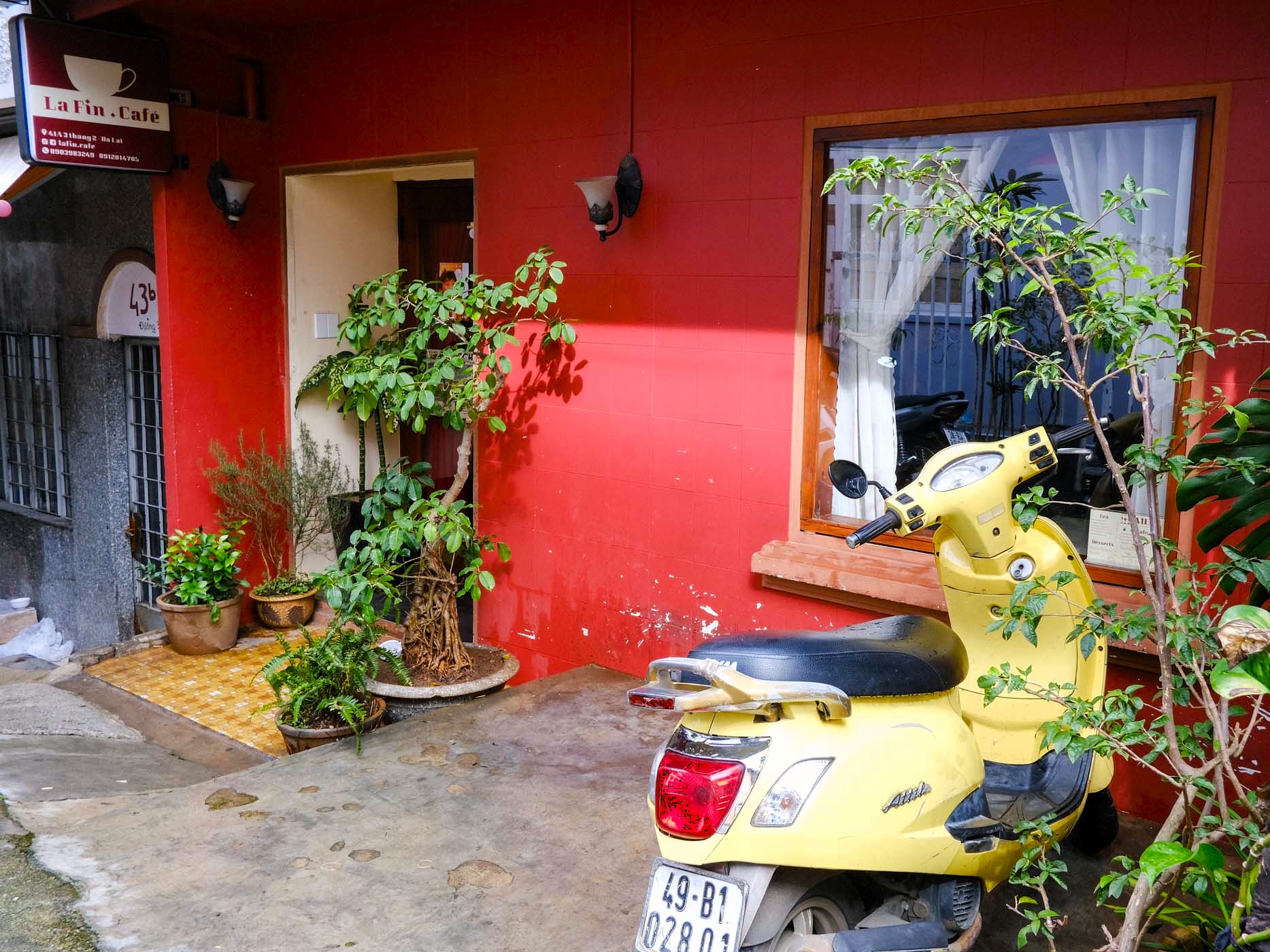
La Fin Café: [MAP]
La Fin is the perfect café escape for a rainy day in Đà Lạt. Its decor is gracefully tacky yet melancholic: the velvet red seating, the narrow balcony overlooking passing traffic on Hai Bà Trưng Street, the nuanced choice of music (Latin jazz, when I visited) that gently plays through the oversized sound system – there’s even a disco ball. All these features lend themselves to articulating an ego-induced Đà Lạt retrospective. La Fin is deja vu in Đà Lạt: a familiar feeling in a place you have never been, but once imagined. If only they served more than just soft drinks, this café would make a great spirits bar.
While La Fin offers a more secluded impression of Đà Lạt, Café Nga [MAP] is more in sync with the city’s rhythm. Just one short alleyway from the market, Café Nga’s intimate space and its furniture arrangement encourage engagement among guests, creating a lively atmosphere with the hum of conversation.

Support My Work
Free | Independent | No Sponsored Content
“Hello, if you enjoy my website, please support it.
Thank you.” Tom
*Disclosure: Vietnam Coracle content is always free and independent. Luke has written this guide because he wants to: he likes these walks and he wants readers to know about them. For more details, see the Disclosure & Disclaimer statements and my About Page


Thanks for the great article, as someone who doesn’t ride a motorbike, it’s fantastic to get some options that can be done self guided on foot.
I’ll definitely be going to Da Lat on my next trip.
Regards Jason
Hi Jason,
Great to hear that. I hope you enjoy your trip to Đà Lạt!
Best,
Tom
What a great article! I’ve lived in Dalat for a long time and am embarrassed to say that I haven’t explored most of these. Once I get my new leg, I’m off to explore each one. Thanks AGAIN, Tom!
Hi John,
I’m glad you enjoyed the guide and I hope you get a chance to walk some of the areas with your new leg soon!
Best,
Tom