
First published January 2026 | Words and photos by Luke Digweed | Read time 25 minutes | 2 comments

Luke Digweed is a staff writer for Vietnam Coracle and has lived in Vietnam since 2011. He holds an MSc in Social Anthropology from the London School of Economics where he wrote his dissertation on Vietnamese male migrants working in UK nail salons. He has worked on the production of several podcasts, including LSE’s Phelan US Centre show ‘The Ballpark’. While living in Huế, he ran the Huế Grit Tour from 2017–2020. His current Vietnam-centric interests include ceremonies and festivals, food, motion and mobility….read more about Luke
Explore a Cuisine Shaped by a Highland Climate, Domestic Migration & Colonialism
Thanks to its cool climate and unique agricultural produce, Đà Lạt occupies a distinctive position on Vietnam’s culinary map. The high altitude and temperate conditions set Đà Lạt’s cuisine apart from the country’s coastal and lowland cities, where the majority of the population resides. These differences are evident in the food available in this mountain city: hotpots, grilled meats, berries, root vegetables and forest greens dominate many of the dishes associated with Đà Lạt. But the city’s cuisine is shaped as much by history and migration as by climate and topography. Foods have been brought to Đà Lạt from different regions of Vietnam via state expansion, and from abroad through the country’s encounters with colonialism. Đà Lạt’s modern-day reputation as a romantic getaway and a magnet for mass domestic tourism has encouraged a food economy built on nostalgia, foreignness and flirtations with the highland topography. This food guide attempts to navigate these gastronomic nuances by acknowledging the inherent blurriness of any concept of “authentic” Đà Lạt food, choosing instead to focus on dishes loosely affiliated with Đà Lạt today, whether or not they have their origins in the city. Some are adaptations and adoptions of various regional dishes, others are products of local agriculture.❤️Please support this website with a donation or join my Patreon community. Thank you, Tom

Support My Site
Free | Independent | No Sponsored Content
“Hello, if you enjoy my website, please support it.
Thank you.” Tom
[Back Top]
DA LAT FOOD GUIDE:
Where & What to Eat in this Temperate Highland City
This guide focuses on more than 10 individual dishes that Đà Lạt is generally known for. I have included specific recommendations of places to try each dish. These range from modest, local streetside stalls to full-scale restaurants born from the wealth generated by Đà Lạt’s tourism boom. All dishes listed in this guide are widely available throughout the city. There are, of course, other Đà Lạt specialities to try that I haven’t included here, such as bánh tráng nướng (grilled rice paper with toppings, sometimes referred to as “Đà Lạt pizza”), mứt (dried candied fruit) and Đà Lạt wine. This guide is merely intended as a point of entry for curious diners looking to familiarize themselves with the cuisine found in and around Đà Lạt. Click a dish from the contents below for details. (For similar guides, see Related Posts. And if you enjoy this website, please support it with a donation or become a member of my Patreon community.)
Contents:
🗺️ Map
🍳 Bánh Căn
🥗 Xắp Xắp
❤️If you like this guide, please support Vietnam Coracle with a donation or become a member of my Patreon community or purchase an Offline Guide & Map. This website relies on reader support to maintain its independence & quality. Thank you, Tom
MAP:
Where to Eat in Đà Lạt
Bánh Căn:
❤️Like this guide? Support Vietnam Coracle with a donation or join my Patreon to help keep this website free & 100% independent. Thank you, Tom
WHERE TO EAT IT?
- Bánh Căn Cô Gái: 66 Nguyễn Trung Trực | 6:30-10:00 [MAP]
- Bánh Căn Nhà Chung: 1 Nhà Chung | 07:00-21:30 [MAP]
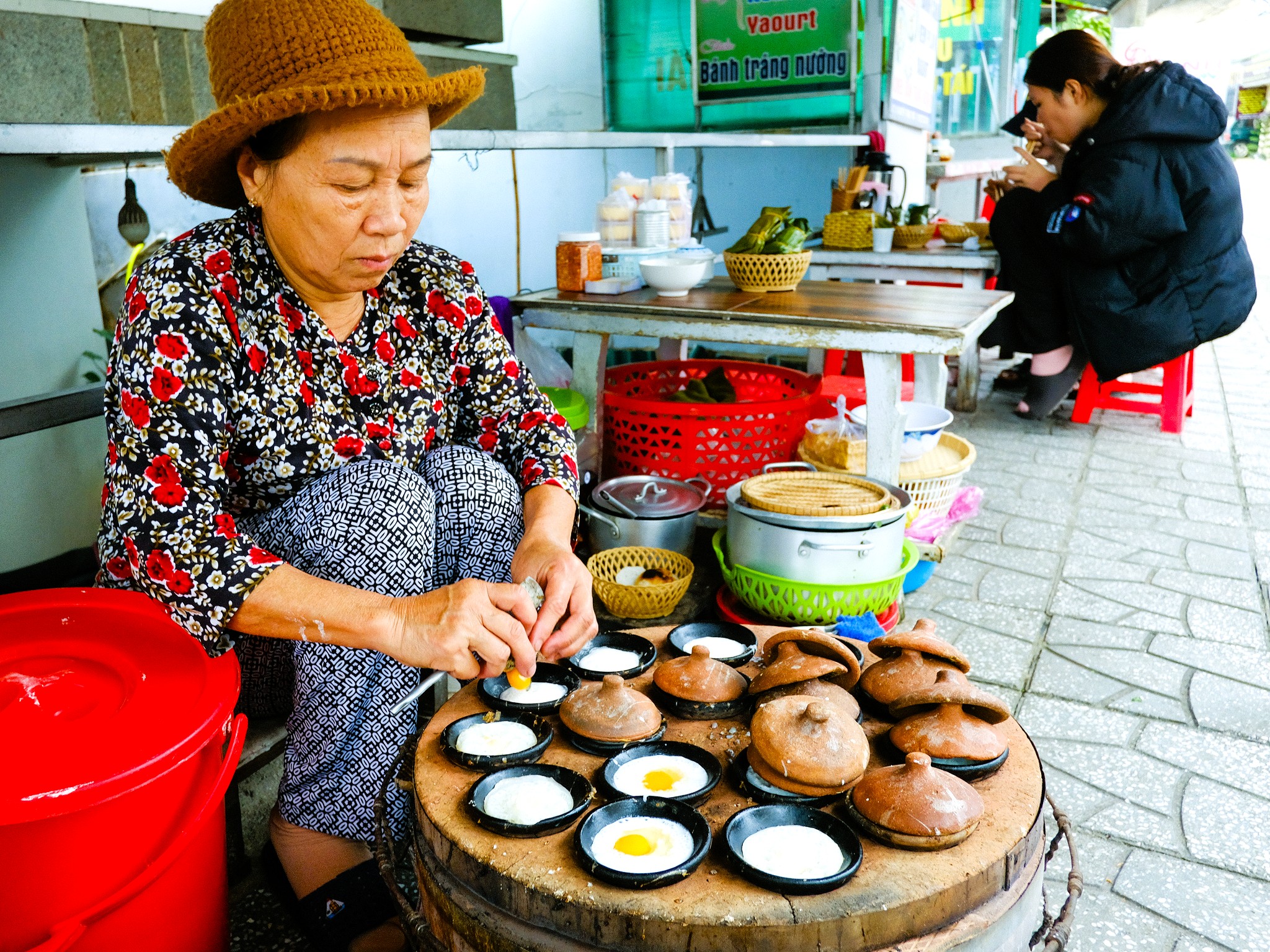
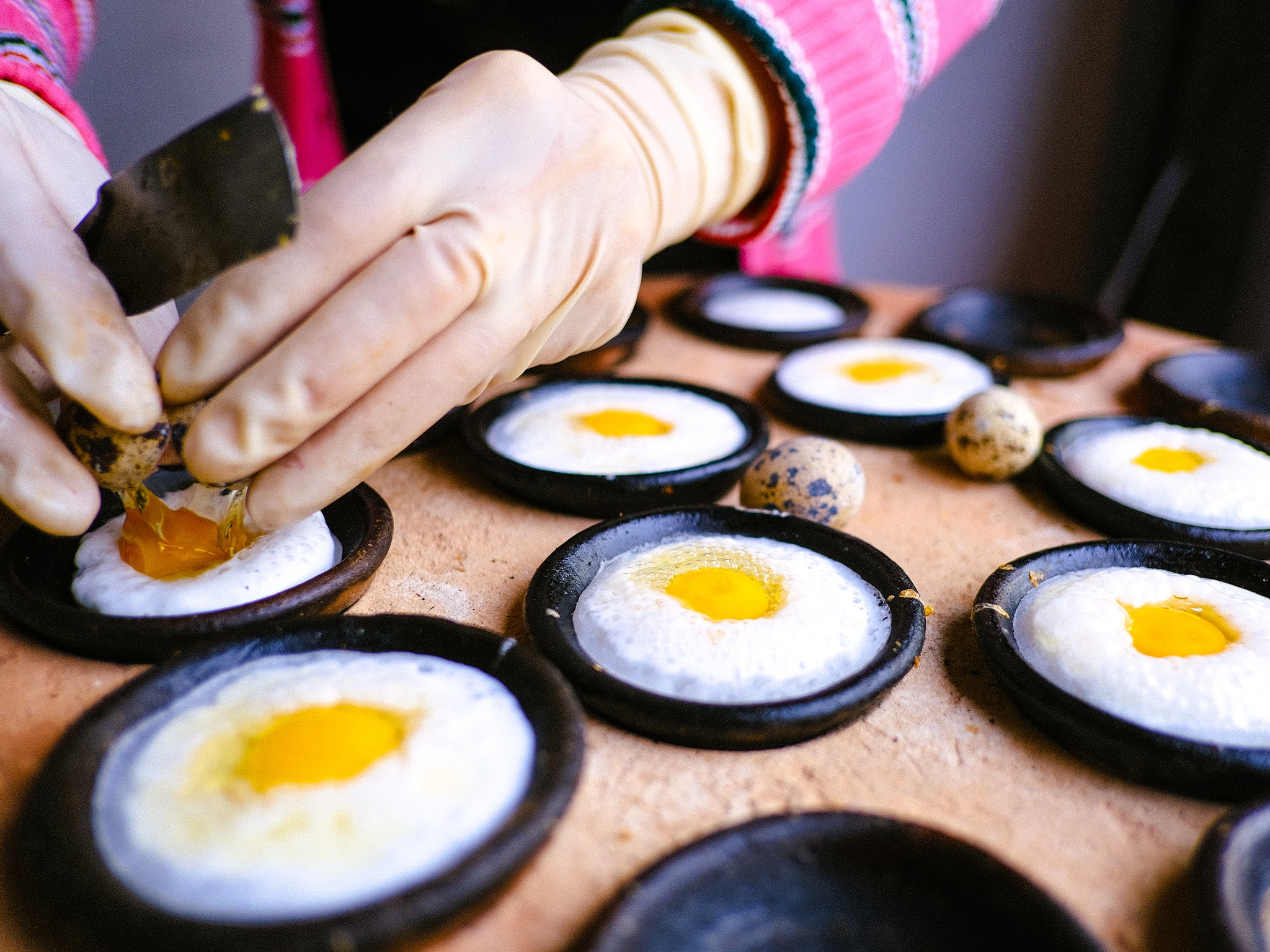
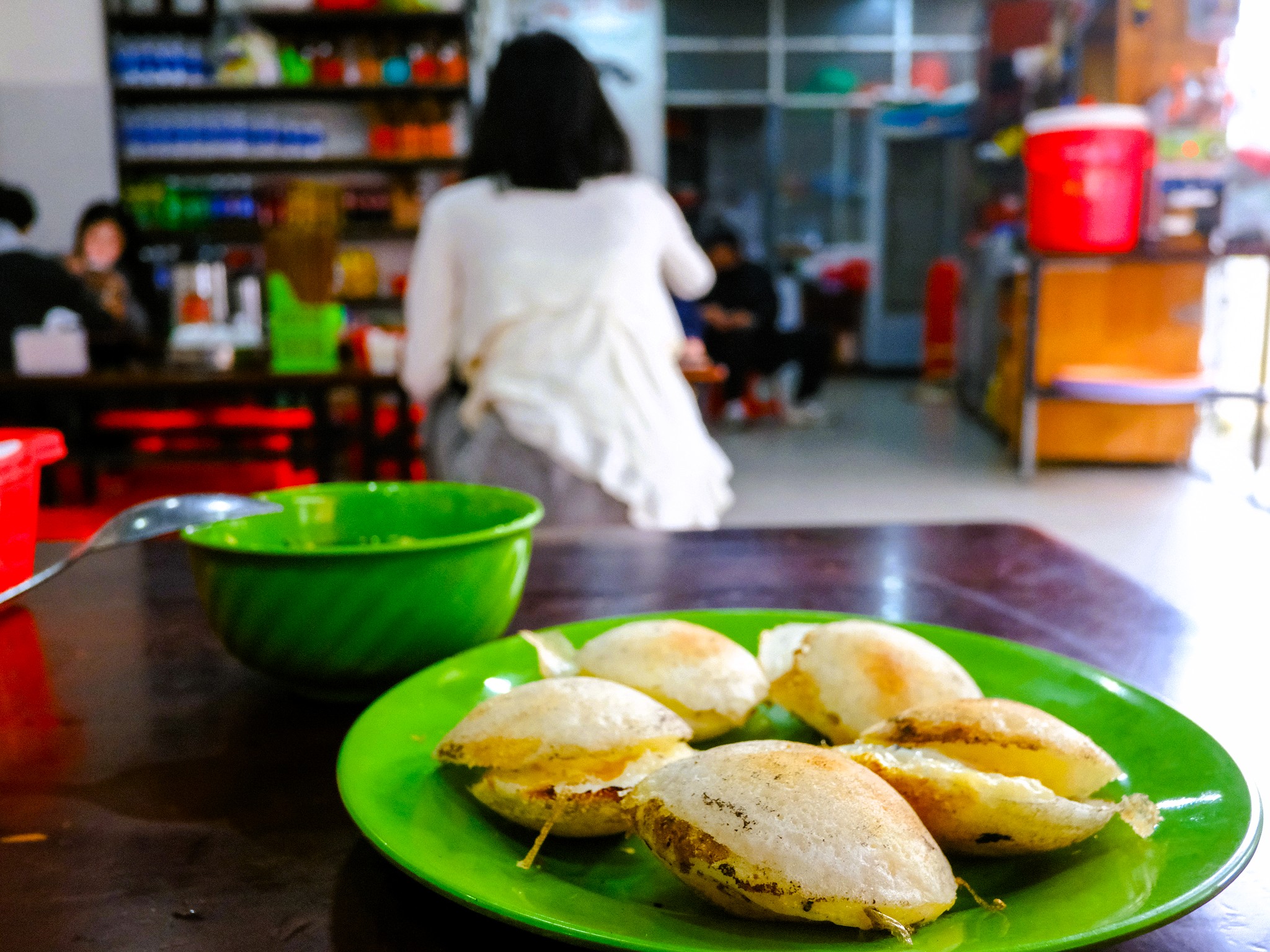
Bánh căn is Đà Lạt’s signature breakfast dish: rice flour batter fried in shallow circular cups with quail eggs on top. A similar flavour combination is also found in Vietnam’s other rice batter specialities, such as bánh xèo, bánh khoại and bánh khọt. However, bánh căn is served without leafy garnishes and is made with little to no cooking oil, resulting in near grease-free batter medallions that are crispy on the outside and fluffy inside. Bánh căn is often cooked on a unique-looking claypot stove (khuôn bánh căn) designed specifically for this dish. Shaped like a handpan, the claypot stove is heated by charcoal bricks beneath, while batter sits in shallow moulds on top. Vendors place lids over each mould, allowing the batter to cook quickly and evenly.
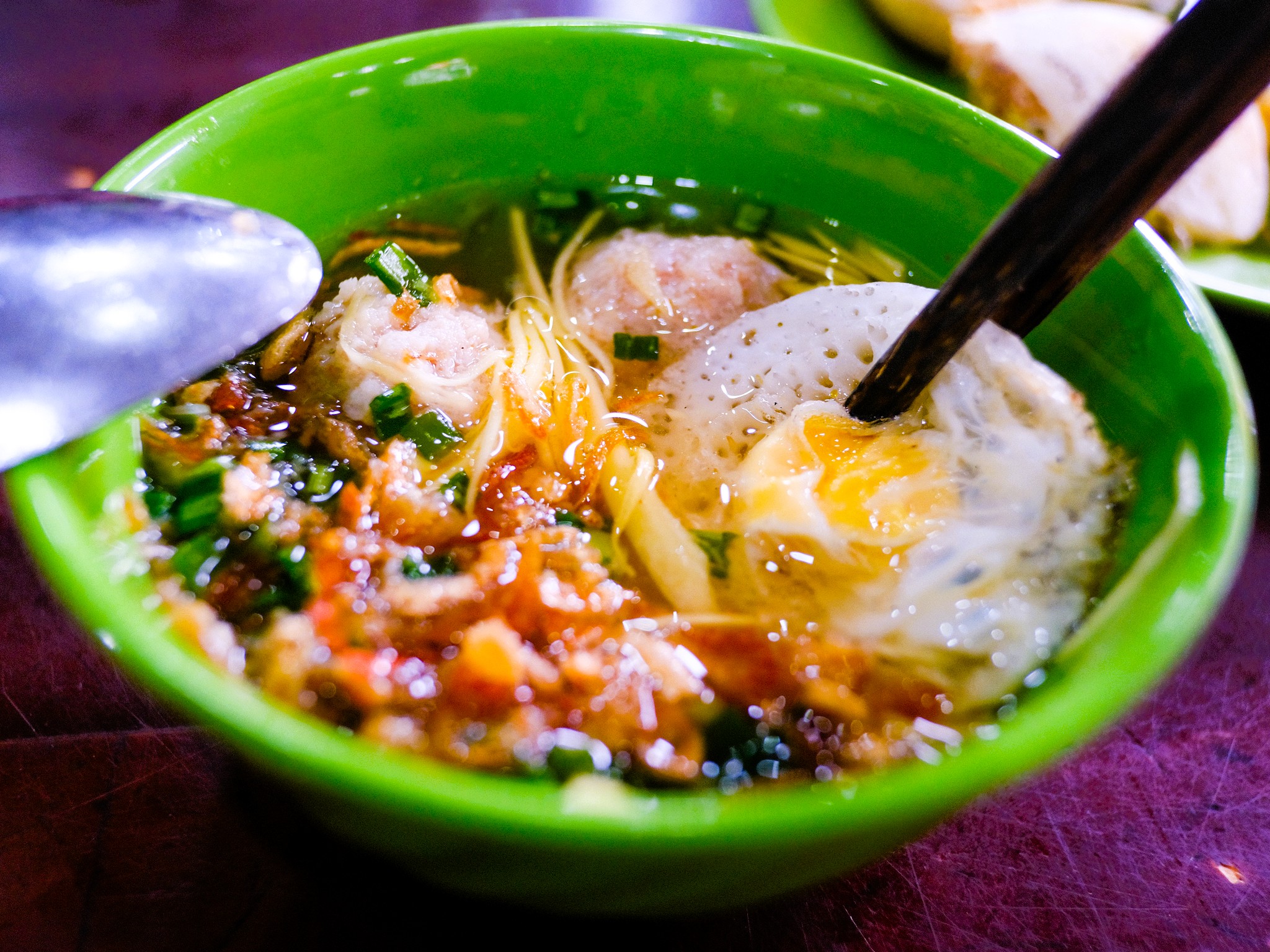
Bánh căn are dunked in an accompanying fish sauce before eating. Some patrons argue that the quality of the fish sauce is the most important part of the dish. How the fish sauce is prepared varies between vendors. Most vendors serve it with fresh shallots and the option of chả (Vietnamese sausage). Others may include fried shallots, shredded green mango and meatballs.
I came across Bánh Căn Cô Gái by chance while walking through a nearby neighbourhood. Cô Gái’s set-up awkwardly runs along a narrow pavement beside the road. Its nonchalant presence drew me in. The clientele is a ragtag collection of neighbours. I asked one patron, returning to Đà Lạt to visit family, what draws her to Cô Gái’s: “I’ve always eaten here since I was a child. Whenever I come home, I stop at Cô Gái’s.’ Bánh căn is not the only thing Cô Gái sells. Encouraging the very self-indulgence that underpins domestic tourism in Đà Lạt, Cô Gái also offers yoghurt and flan for a post-breakfast treat, which most patrons could not resist during my visit. Cô Gái is open between 6am-10am every day, though both times I visited she closed at 9:30am.

Bánh Căn Nhà Chung is one of the most popular places for tourists to eat bánh căn in Đà Lạt and offers a stark contrast to eateries serving their local communities. Bánh Căn Nhà Chung has operated for several years and encompasses two separate buildings. The kitchen sits on the main street while the dining area is located down an adjacent alley. Food takes some time to arrive, suggesting the bánh căn is made fresh and delivered straight from the kitchen (via the public alleyway). The fish sauce is stacked with multiple toppings (mango, chives, fried shallots and two meatballs). However, the separation of the kitchen from the dining area numbs the atmosphere, draining it of the energy that can make streetside dining experiences so exciting. Despite the higher price, Bánh Căn Nhà Chung serves a more filling portion with a variety of flavours and is open throughout the day.
Bánh Ướt Lòng Gà:
❤️Like this guide? Support Vietnam Coracle with a donation or join my Patreon to help keep this website free & 100% independent. Thank you, Tom
WHERE TO EAT IT?
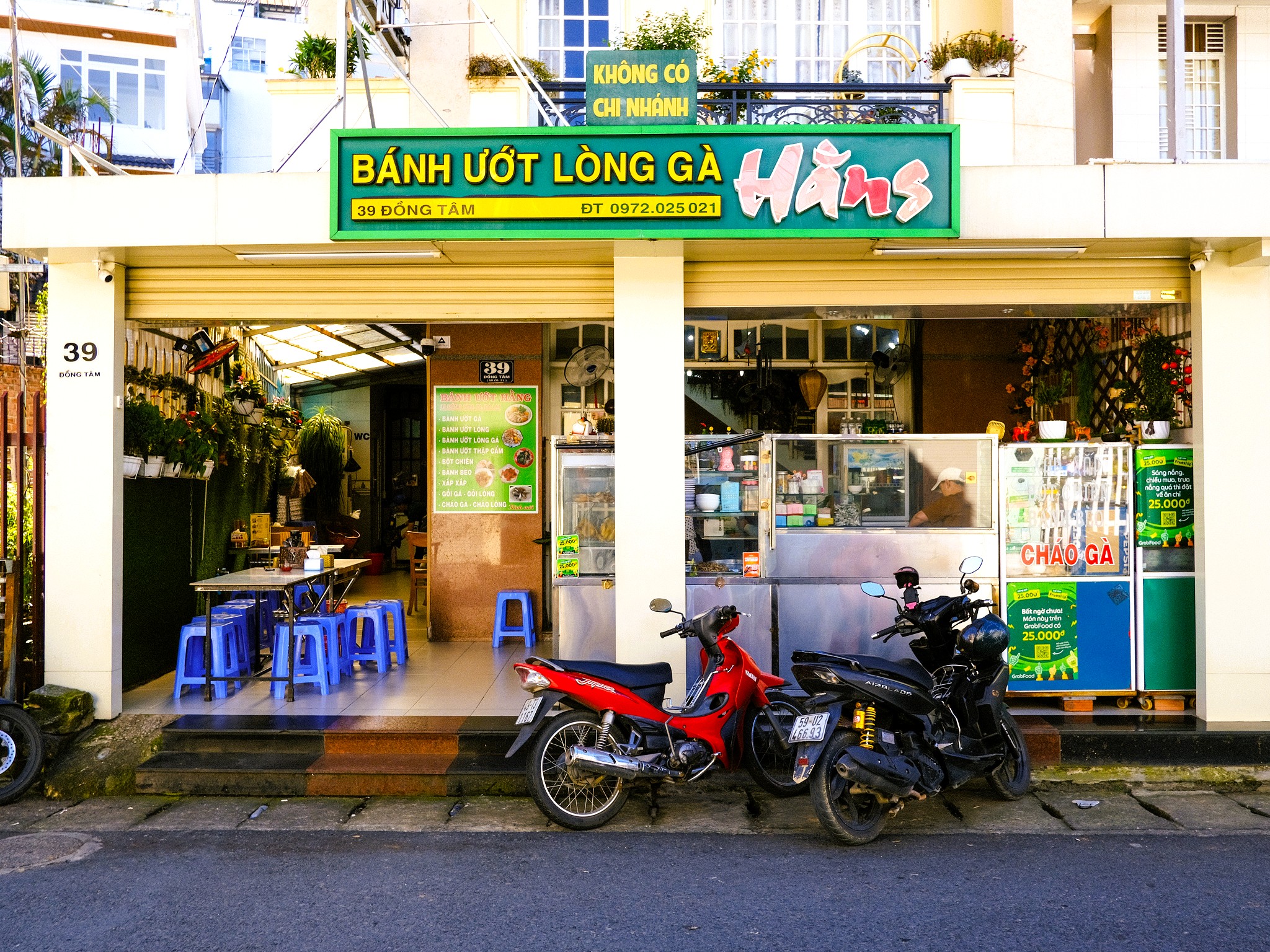
- Bánh Ướt Lòng Gà Hằng: 39 Đồng Tâm | 7:00-14:00 [MAP]
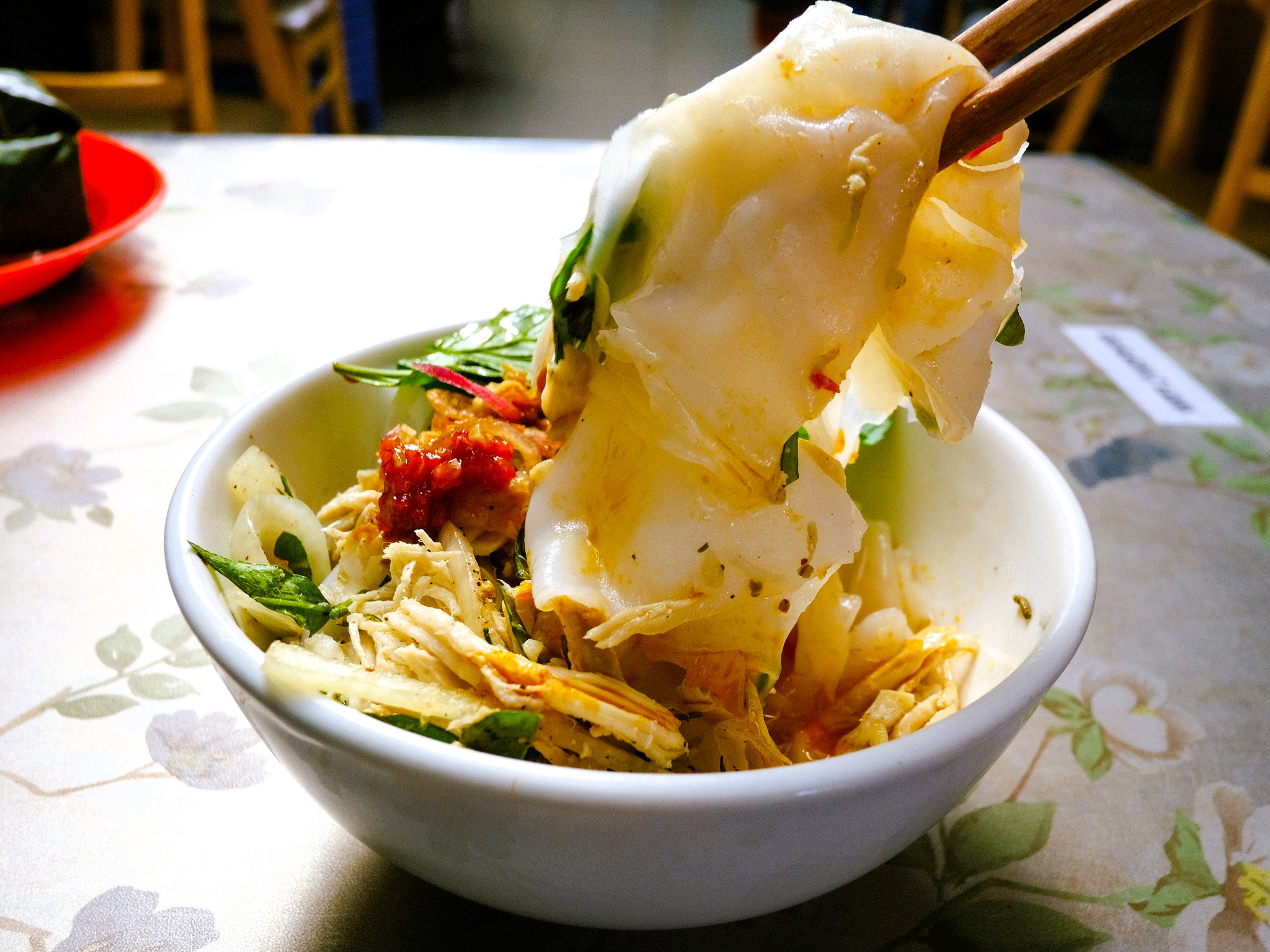
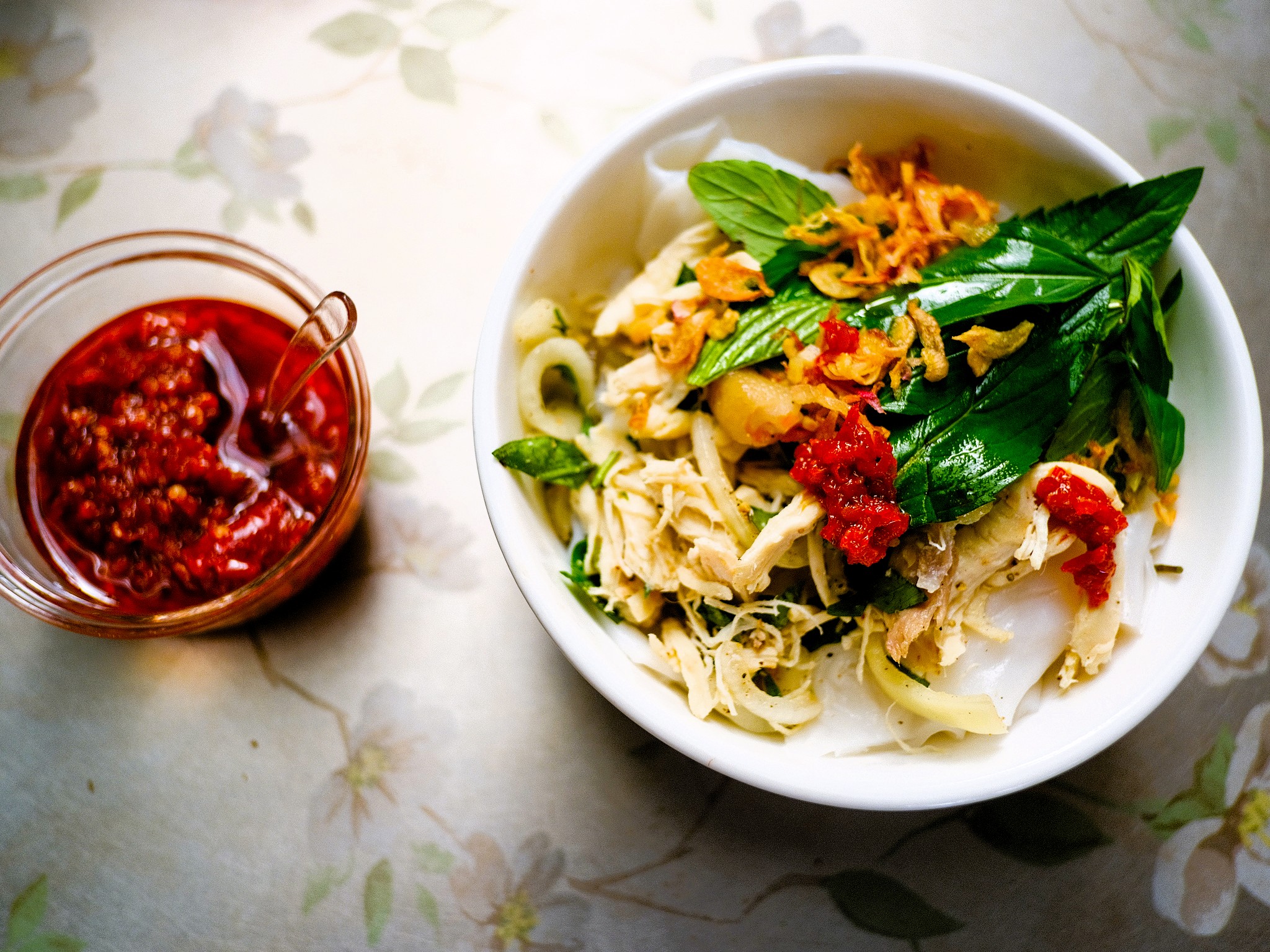
Another distinctive breakfast famed in Đà Lạt is bánh ướt lòng gà. The dish is made of several simple components: bánh ướt (thin, wide sheets of steamed rice noodles), lòng gà (chicken offal), coriander, crispy shallots and a stock made with sweet fish sauce. Optional table condiments include chilli sauce and/or lime. Quail eggs sometimes make an appearance too.
I came across Bánh Ướt Lòng Gà Hằng while researching my Đà Lạt walking guide. The patio kitchen and the side annex of tables and chairs caught my attention as the morning light struck the transparent roofing. Although the restaurant was not busy on either day I visited, I later learned that Bánh Ướt Lòng Gà Hằng is a popular place with both domestic and international visitors. The building’s living room functions as the primary dining area. Here, the elderly owners keep one eye on the three staff members who run the restaurant, while keeping the other eye on the television.
There are several ways to have your dish: thập cẩm (a mixture of chicken intestines and organs), gà xé (shredded chicken without the offal), lòng hèo (pork offal) and chả lụa (Vietnamese pork sausage). You can also choose between the bánh ướt (noodles), gỏi (salad) and cháo (rice porridge.
Bún Cá Tầm & Lẩu Cá Tầm:
❤️Like this guide? Support Vietnam Coracle with a donation or join my Patreon to help keep this website free & 100% independent. Thank you, Tom
WHERE TO EAT IT?
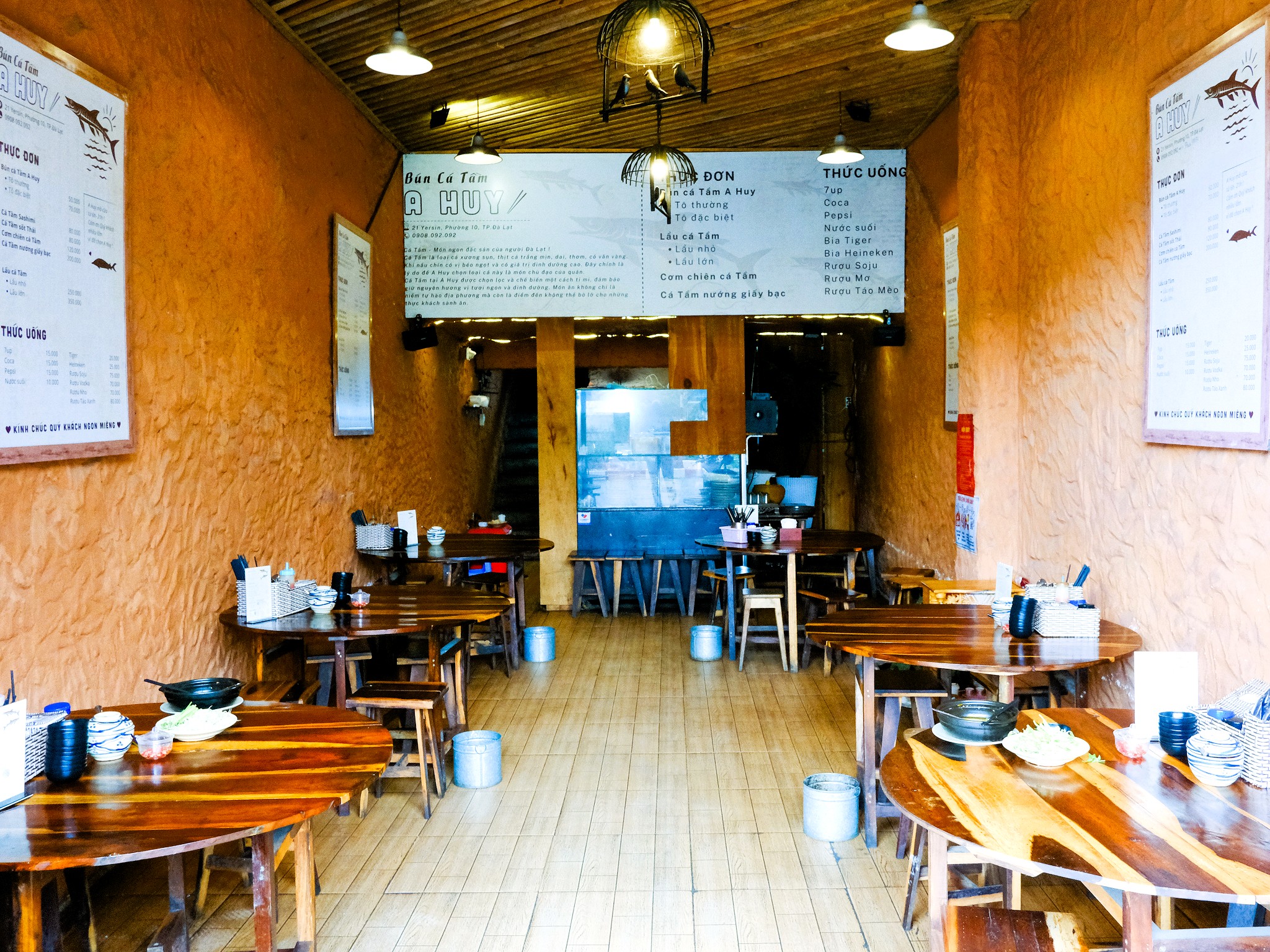
- Bún Cá Tầm A Huy: 21 Yersin | 7:00-21:00 [MAP]
There are plenty of fish noodle options from other regions of Vietnam in Đà Lạt – bún đa cá rô and bánh canh cá lóc are two personal favourites that are widely available – but bún cá tầm is rarely seen on menus outside the city. While not native to Vietnam, cá tầm (sturgeon) is farmed in and around Đà Lạt by both domestic and multinational companies, taking advantage of the region’s high altitude and cooler climate. Cá tầm are farmed not only for their flesh, but also their caviar, which is exported globally.
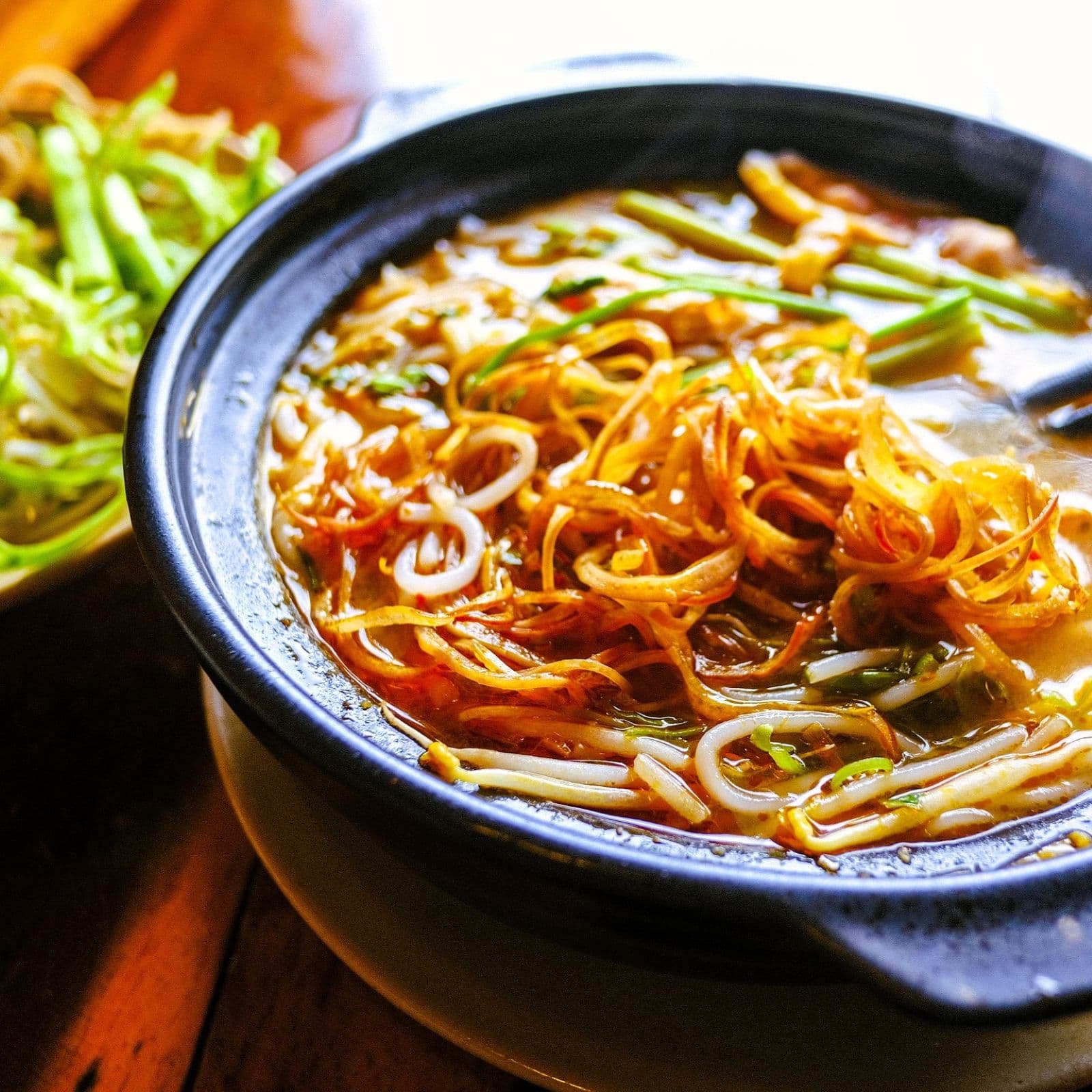
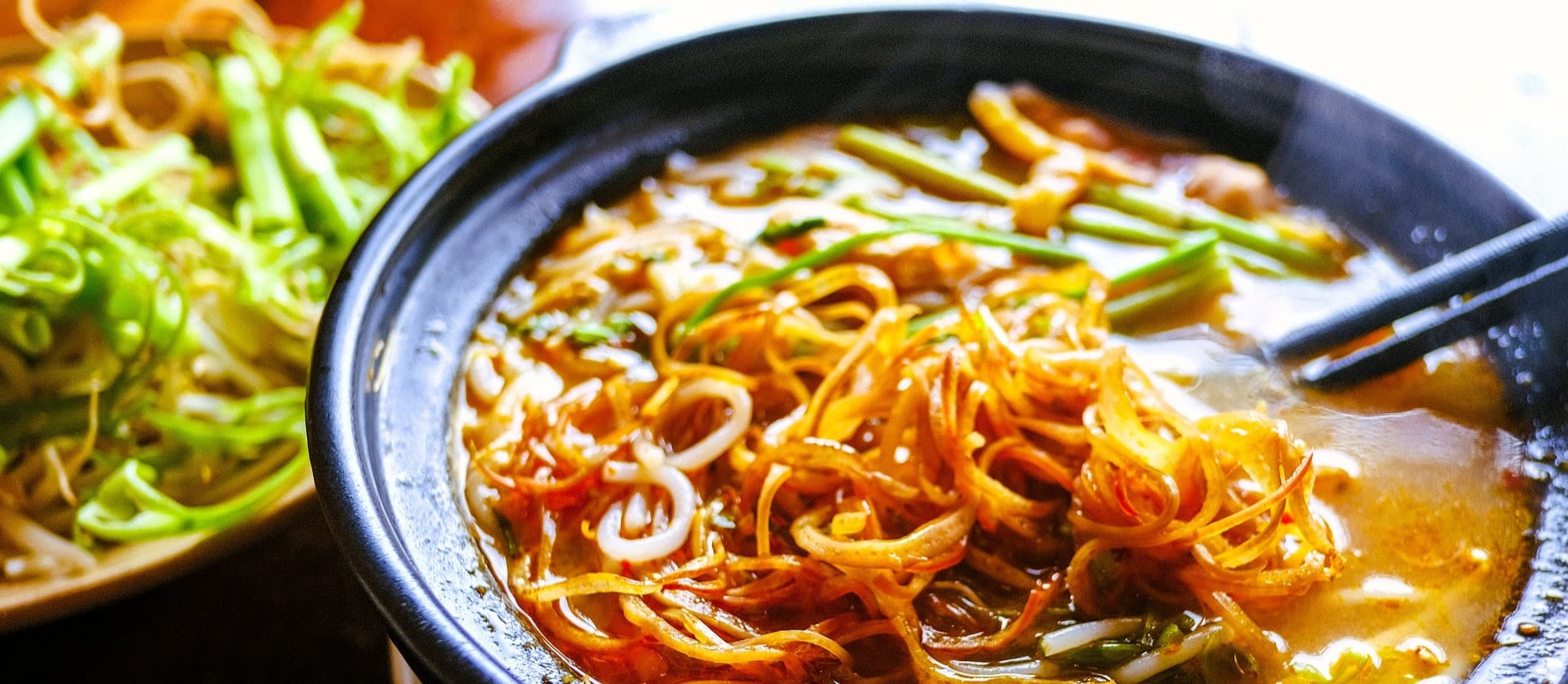
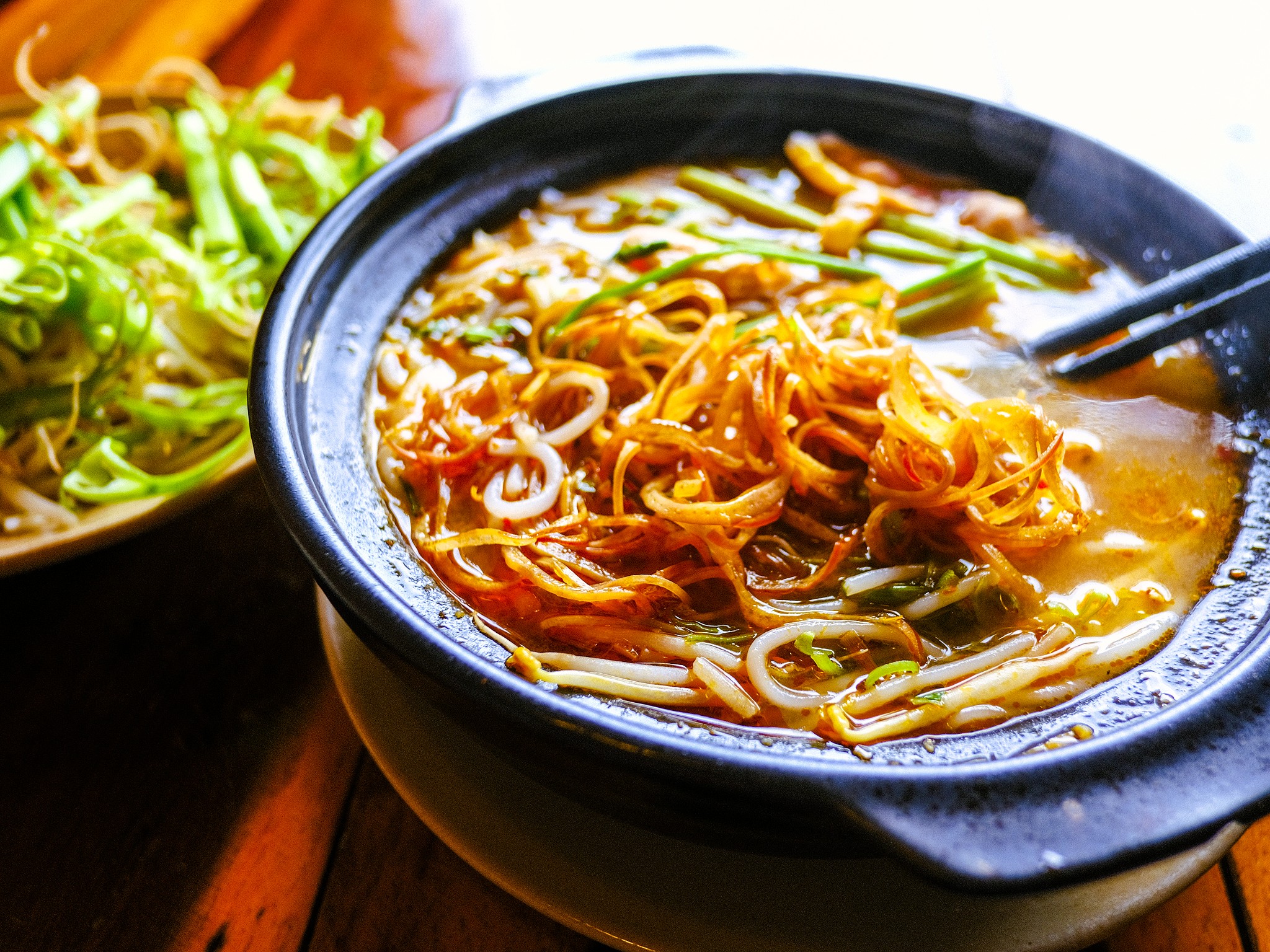
For most visitors to Đà Lạt, the dish of choice is lẩu cá tầm: a hotpot served in a sour and slightly spicy broth made from tomatoes and pineapple, simmered with lemongrass, fish sauce and chilli, then eaten with rice noodles and vegetables. Thick cuts of sturgeon are placed directly into the pot to boil before serving. Most restaurants only offer family-sized hotpots, which is arguably the best way to eat cá tầm in Đà Lạt, but eating one alone might be a tall order. Fortunately, A Huy restaurant offers a single-portion called bún cá tầm for solo diners. Portions come in bình thường (regular) or đặc biệt (special). I recommend paying the higher price for the ‘special’ option to get more generous cuts of fish. The clay pot arrives bubbling and needs a few moments to cool. Perfect for a cold, rainy day in Đà Lạt.
A Huy has been serving cá tầm since around 2005. In addition to noodle soups and hotpots, the menu also includes cá tầm sashimi, sturgeon fried rice and the larger family-sized hotpots found elsewhere in the city, making it a reliable option for both groups and solo diners. What A Huy lacks in scenery, it makes up for in practicality and accessibility.
Bánh Mì Xíu Mại:
❤️Like this guide? Support Vietnam Coracle with a donation or join my Patreon to help keep this website free & 100% independent. Thank you, Tom
WHERE TO EAT IT?
- Bánh Mì Xíu Mại Ri 79: 2 Đường Thông Thiên Học | 7:00-19:00 [MAP]
- Bánh Mì Hoa Lê: 1c Đường Nhà Chung | 7:00-16:00 (hours vary) [MAP]
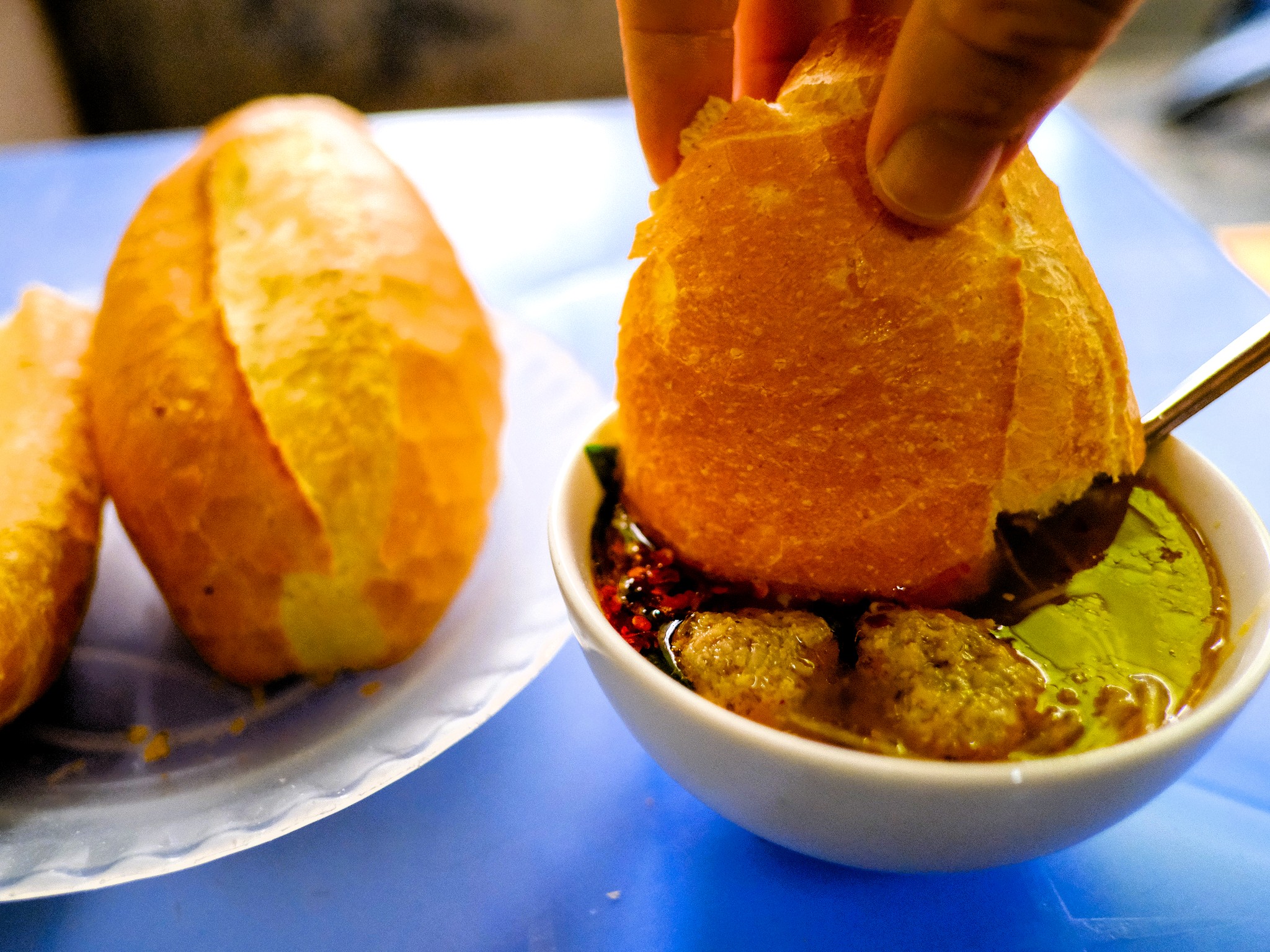
Whenever I spoke to Đà Lạt residents about popular local dishes, bánh mì xíu mại at Ri 79 came up almost every time. The dish consists of a mini-baguette served with pork meatballs in char siu marinade. In Đà Lạt, it appears in two forms: Bánh mì xíu mại chén is served with the meatballs in a small bowl (chén) of broth, separate from the bread. Diners tear the baguette into pieces and dip it into the soup, rather than assembling a sandwich. The second version – bánh mì xíu mại – is more conventional, with vendors serving the meatballs already tucked inside the bread and ready to eat.
I was hesitant to visit Ri 79 purely because of its popularity. However, it became unavoidable after all the recommendations. I arrived around midday, moments before the modest shop filled with domestic tourists. Operating from a pushcart situated at the front of a narrow townhouse, the two staff members were busy not only serving food but also directing customers where to sit and taking payments. Within minutes, the indoor space was full and tables spilled out onto the pavement and the porches of neighbours. What arrived at my table was simple: two baguettes and a bowl of broth containing shredded papaya and four meatballs. Strong first impressions are increasingly rare after living in Vietnam for so long, but dipping that first piece of bread into the broth brought genuine surprise and joy. It took just one bite to understand Ri 79’s appeal. Simple, comforting and deeply satisfying, it leans into that universal pleasure of crispy bread dipped into warm broth. At 25,000vnđ ($1) a serving, it’s a price anyone can afford. Ri 79 wouldn’t be out of place in a Michelin Guide.
One Đà Lạt resident suggested Bánh Mì Hoa Lê as an alternative to Ri 79. For her, the taste of Đà Lạt was bound up in the food that Cô Hoa Lê served her classmates when they attended the nearby secondary school. I went on a weekday morning to see for myself. Here, bánh mì xíu mại is offered in sandwich form rather than served separately, making it a practical choice for customers grabbing breakfast on the way to work or school. My baguette came filled with shredded papaya, meatballs, tender cartilage and a hint of spice. Although tasty, it didn’t deliver the same wow factor as Ri 79. Cô Hoa Lê isn’t trading in delicate gastronomy for tourist consumption but sustaining the everyday rhythms of students and workers that flow through the neighbourhood. The steady stream of regular customers and the affection with which the student spoke of Cô Hoa Lê’s stall suggest that its value lies beyond my own assessment.


Ốc Nhồi Thịt:
❤️Like this guide? Support Vietnam Coracle with a donation or join my Patreon to help keep this website free & 100% independent. Thank you, Tom
WHERE TO EAT IT?
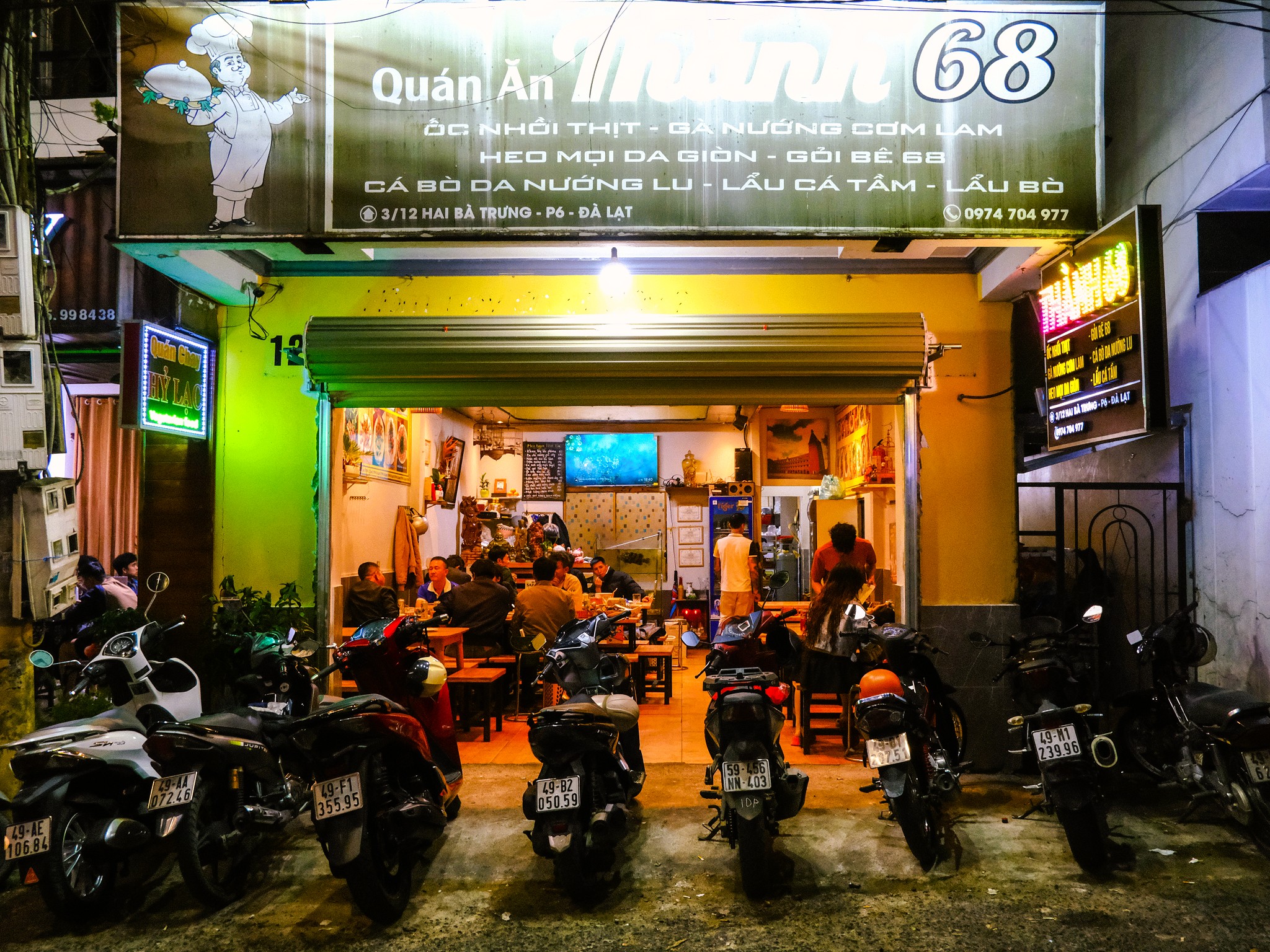
- Quán Ăn Thành 68: alleyway 12 đường Hai Bà Trưng | 10:00-23:00 [MAP]
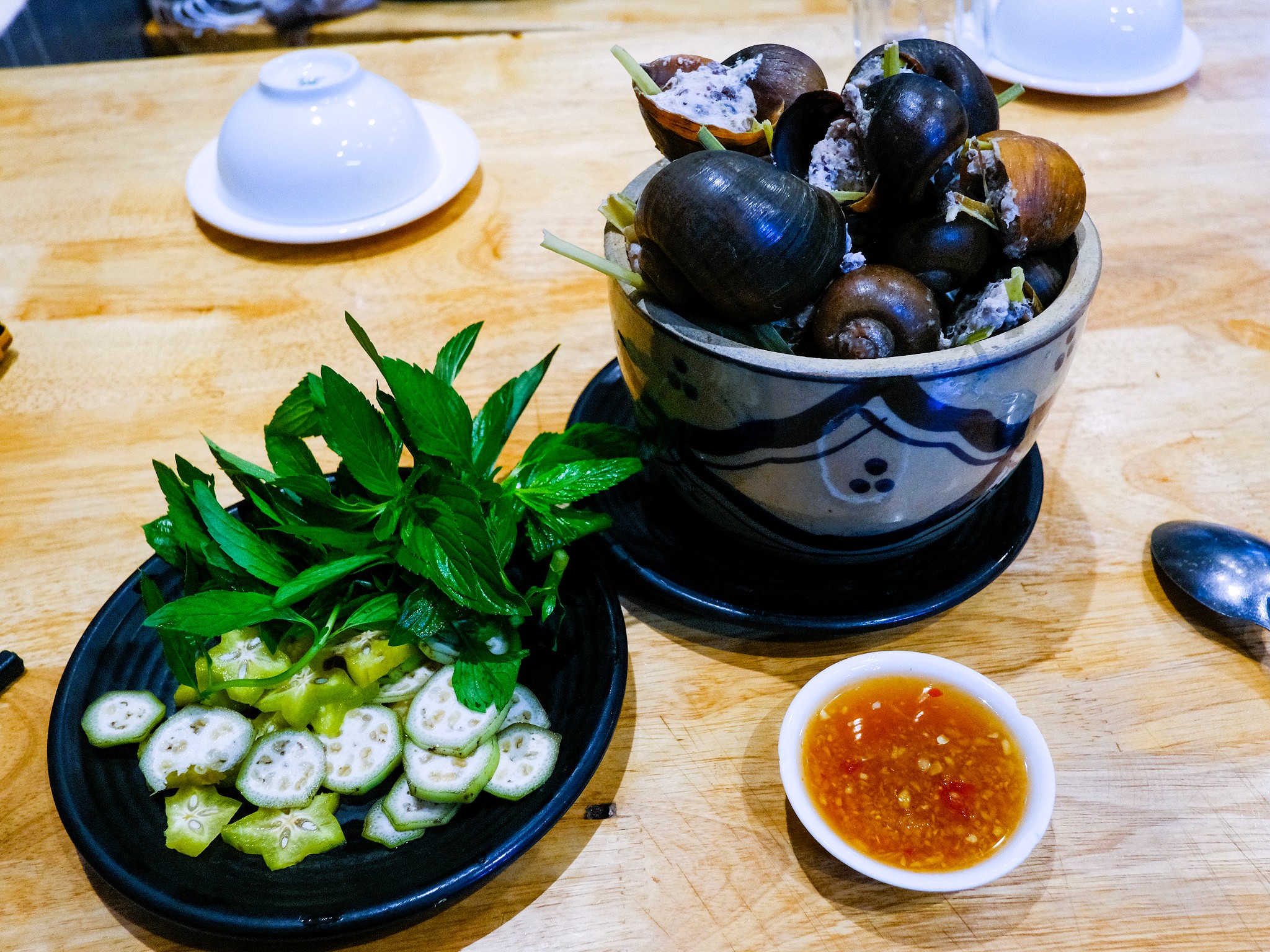
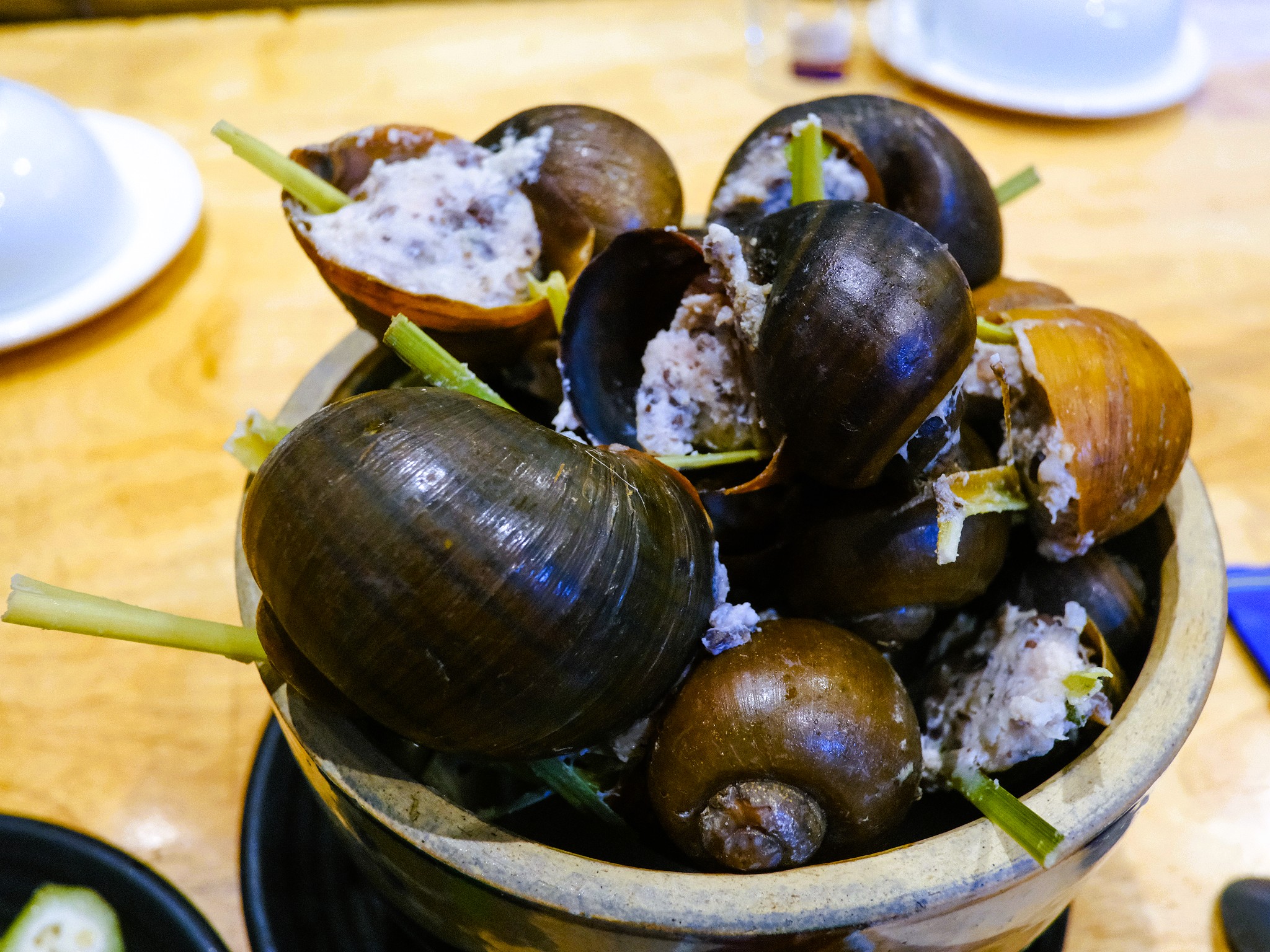
Ốc nhồi thịt is a seemingly unconventional dish of large pork-and-snail filled freshwater snail shells that are steamed and fitted with a stalk of lemongrass functioning as a handle to aid eating. Diners pull the filling from the shell using the lemongrass stalk, dip it into the accompanying ginger–fish sauce, then wrap it in a selection of herbs, leaves and starfruit before eating.
While snail cuisine is prominent throughout Vietnam, this dish is generally associated with Đà Lạt, as well as a few other locations. Numerous places in Đà Lạt sell ốc nhồi thịt. Many of these establishments include the number “33” in their name, a reference to a once-famous restaurant whose reputation became synonymous with the dish. Whether the name was later adopted by competitors or reflects an earlier expansion of the original business is unclear, but the number now functions more as a marker of the dish rather than a guarantee of quality. Needless to say, most Đà Lạt residents have their favourite place for the dish.
After being underwhelmed by two of the Quán 33 locations, I opted for the rowdier atmosphere of Thành 68, down an alleyway and away from the main road. Inside were two large tables of rowdy uncles well into their cases of beer and a reluctant young couple who were too far into their order to switch to a more peaceful restaurant. This was the right choice for me. I was surprised by the quality and the taste of my food. The meatballs were tender and all the ingredients were fresh. Delicious.
Xắp Xắp:
❤️Like this guide? Support Vietnam Coracle with a donation or join my Patreon to help keep this website free & 100% independent. Thank you, Tom
WHERE TO EAT IT?
- Xắp Xắp Cô Năm: alley 9 Nguyễn Đình Chiểu | 8:00-21:00 [MAP]
- Sữa Đậu Nành Dung Béo: 2 Nguyễn Văn Cừ | 15:00-00:00 [MAP]
- Xắp Xắp Bánh Bèo Bà Trưng: 2 Bà Triệu | 12:00-15:00 [MAP]
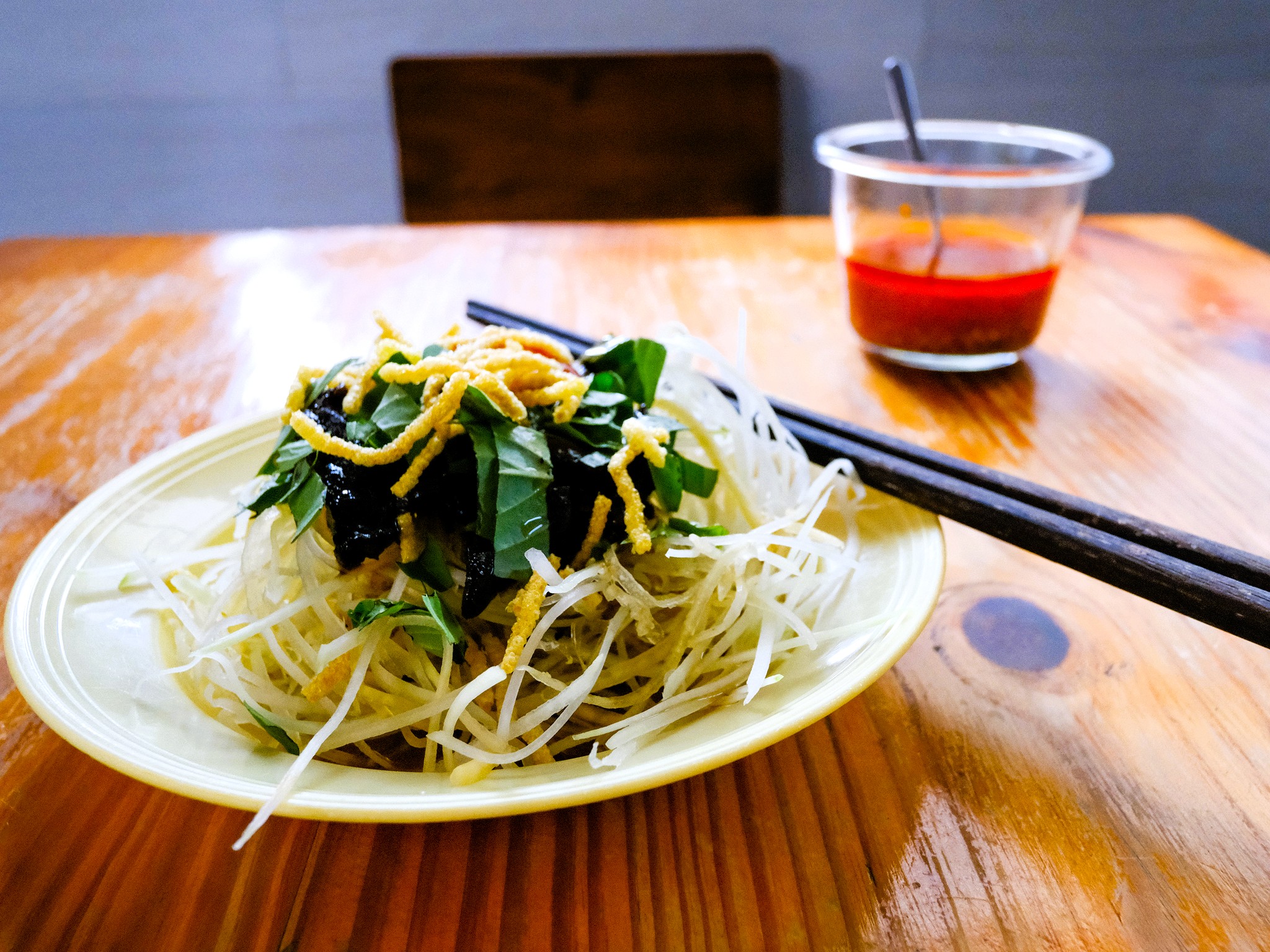
Xắp Xắp is a peppery papaya salad mixed with warm slivers of beef liver, crispy fried shallots and a lightly spiced broth. Xắp xắp functions as a light snack to tide you over before a larger meal or as part of a food-hopping itinerary. Its low price has traditionally made it a popular streetside snack, particularly among students, older patrons and curious Đà Lạt travellers.
The dish’s name is onomatopoeic: xắp xắp mimicks the sound of knives chopping meat. Like many dishes that excite visitors to Vietnam, xắp xắp is a food that is assembled in front of you, rather than something prepared out of sight. While this performance and its sound may be an integral part of the dining experience, I shamefully admit I failed to hear any xắp xắp sounds on my visit.
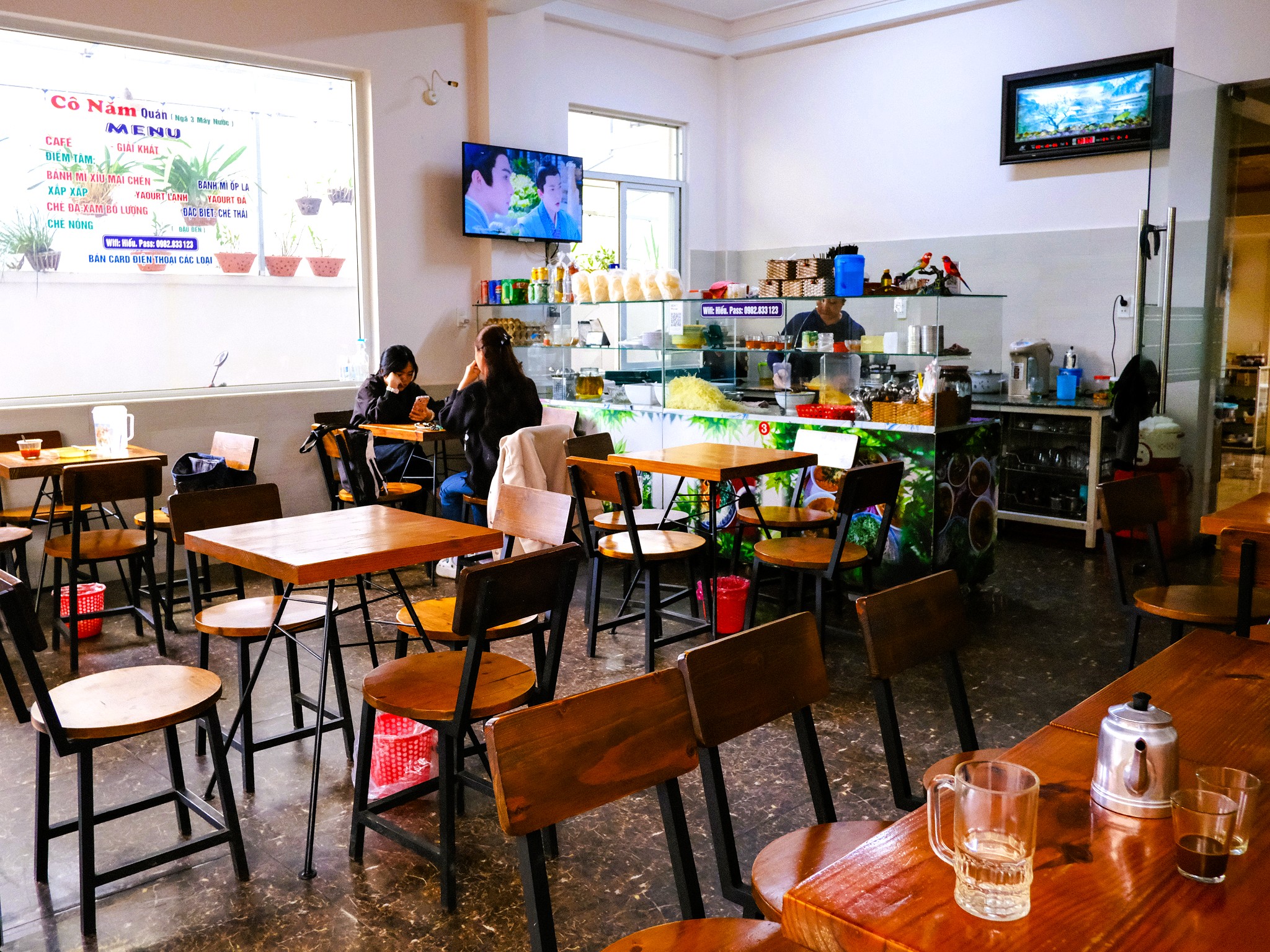
Domestic news outlets often frame xắp xắp nostalgically, celebrating it as a must-eat dish by Đà Lạt’s iconic Hồ Xuân Hương Lake on cold autumn evenings. Instead, I opted for a bike ride to Quán Cô Năm, a restaurant recommended by several sources, located north of the lake. For such an inexpensive dish, the restaurant was surprisingly clean and well set up to handle a steady flow of customers. The portion was small but well presented, and I particularly enjoyed the peppery broth. If you’d rather not make the trip out to Cô Năm, xắp xắp can also be found at other locations in the city, such as Dung Béo and Xắp Xắp Bánh Bèo Bà Trưng, where it sits alongside other dishes featured in this guide.
Lẩu Bò Atiso & Phở Atiso:
❤️Like this guide? Support Vietnam Coracle with a donation or join my Patreon to help keep this website free & 100% independent. Thank you, Tom
WHERE TO EAT IT?
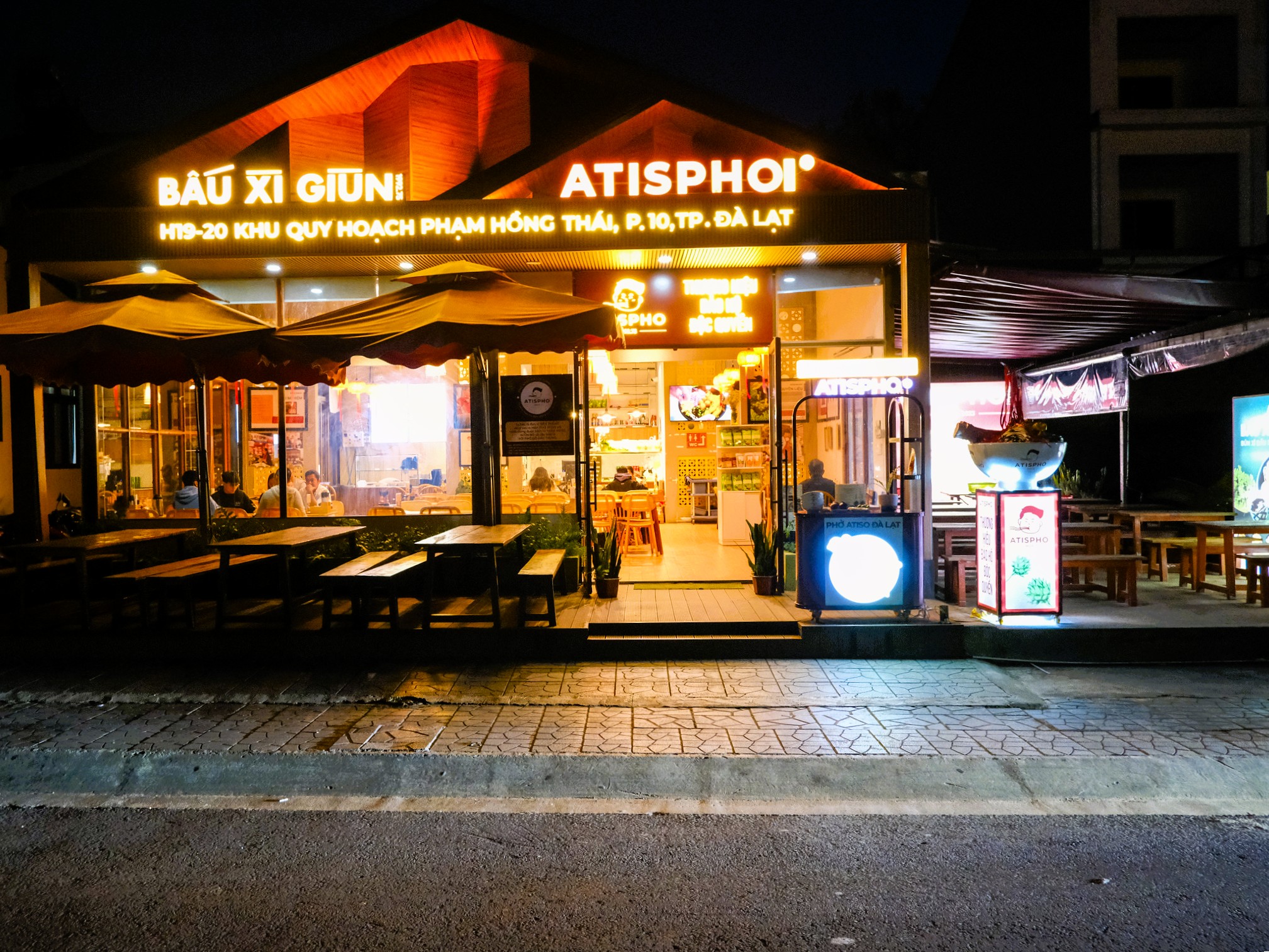
- Atispho: H19-20 Phạm Hồng Thái | 7:00 -20:00 [MAP]
Like strawberries, artichokes are both a legacy crop of Đà Lạt’s French colonial period and a marker of its affluent, contemporary agricultural identity. Their association with the city runs deep: one of Đà Lạt’s most recognisable landmarks, Lâm Viên Square (Quảng Trường Lâm Viên), features a building shaped like an artichoke. While the vegetable is most commonly linked to herbal remedies and tea, it also appears in some Đà Lạt dishes.
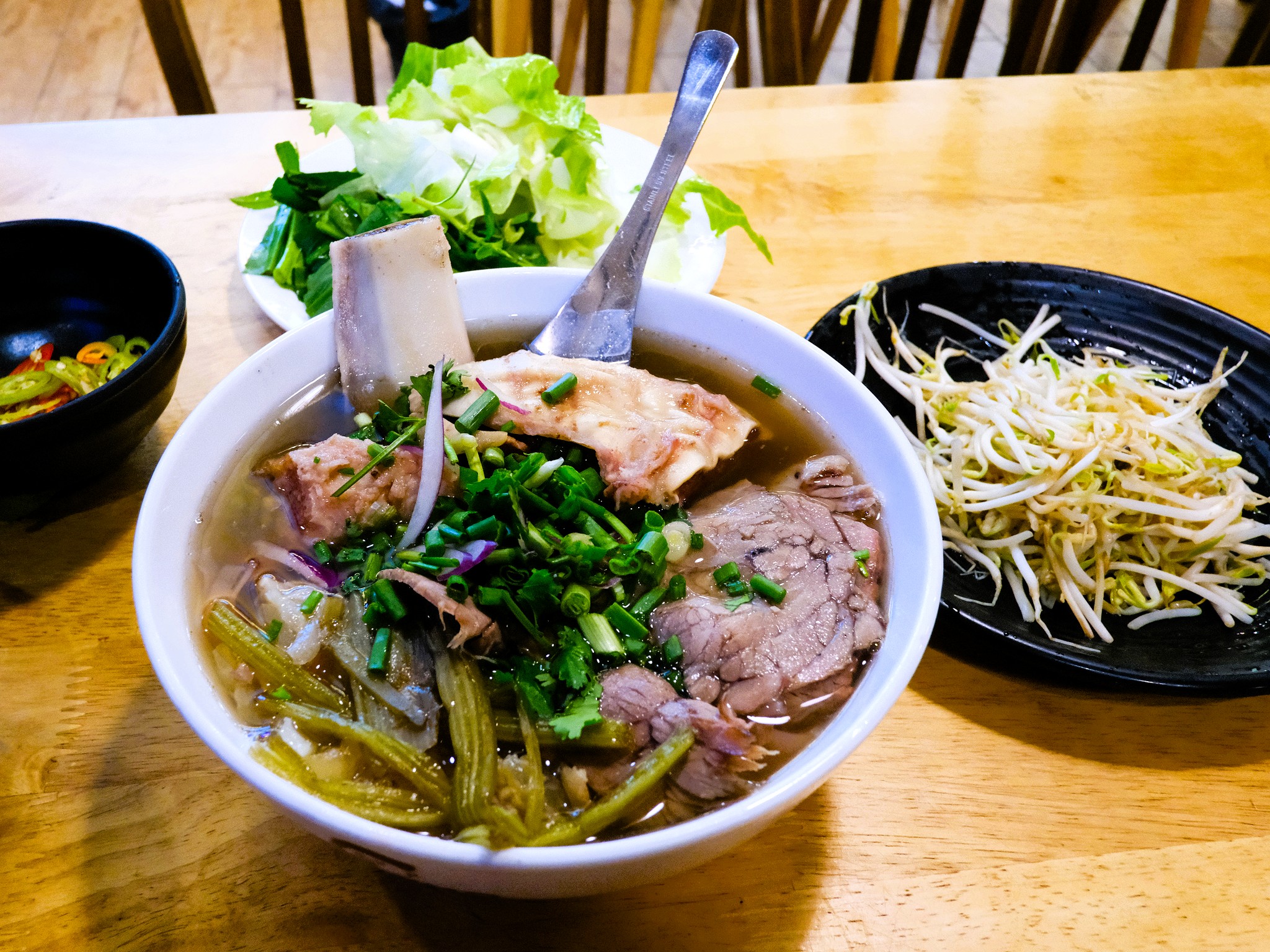
One of Đà Lạt’s most renowned artichoke dishes is lẩu bò atiso (artichoke and beef hotpot), served in several locations across the city. The precise ingredients of the dish vary by location but generally include cuts of beef, such as brisket and tendon, and a range of locally produced herbs and vegetables, primarily mushrooms. Diners in Đà Lạt comment that the artichoke creates a sweeter, more aromatic broth, one that tastes more herbal than a typical umami-flavoured hotpot.
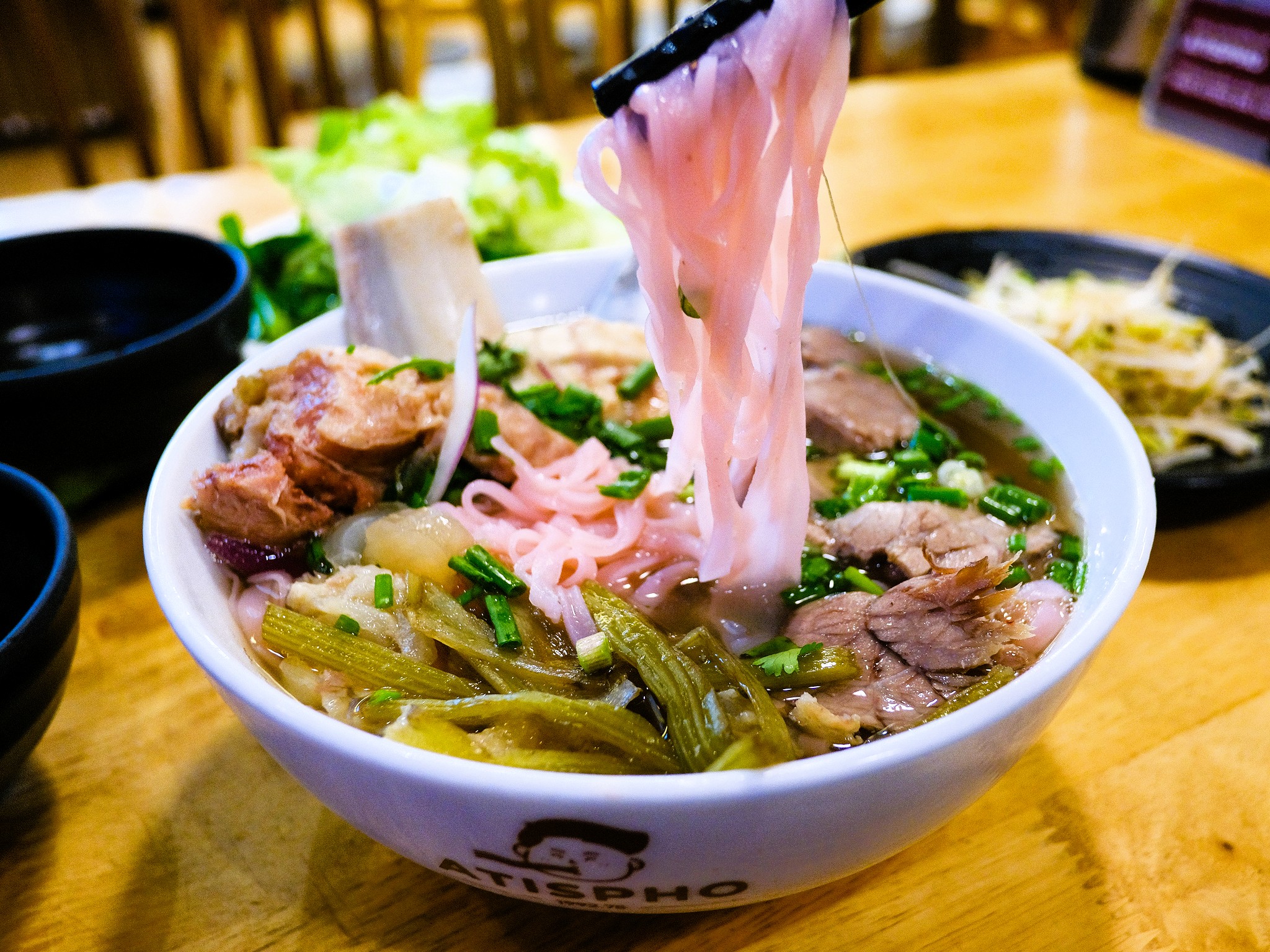
One restaurant has put a contemporary spin on the artichoke-and-beef hotpot, transforming it into ‘atispho’, an artichoke-infused version of phở, Vietnam’s signature noodle dish. The phở noodles take on a soft pink hue from the artichoke flower, and diners can choose their preferred cut of beef. The dish is then presented using different parts of the artichoke for decorative effect. Atispho restaurant has been operating in Đà Lạt since 1992 and claims to have invented the dish. Over its lifespan, Atispho restaurant has collaborated with various government departments and tourism projects, becoming a product that symbolises both the city and its cuisine. The restaurant is designed to appeal and cater to domestic and international tourists. The menu at Atispho is extensive, including other Đà Lạt dishes and vegan options for those who prefer something other than beef noodles. Atispho is undoubtedly gimmicky but it’s also good, tasty fun.
While it wasn’t a dish I especially enjoyed, Atispho remains worth visiting for what it represents: a dish deliberately curated to signify Đà Lạt’s gastronomy. Seen this way, it offers insight into how the Đà Lạt ‘experience’ has been cultivated into a self-conscious cuisine.
Lẩu Gà Lá É:
❤️Like this guide? Support Vietnam Coracle with a donation or join my Patreon to help keep this website free & 100% independent. Thank you, Tom
WHERE TO EAT IT?
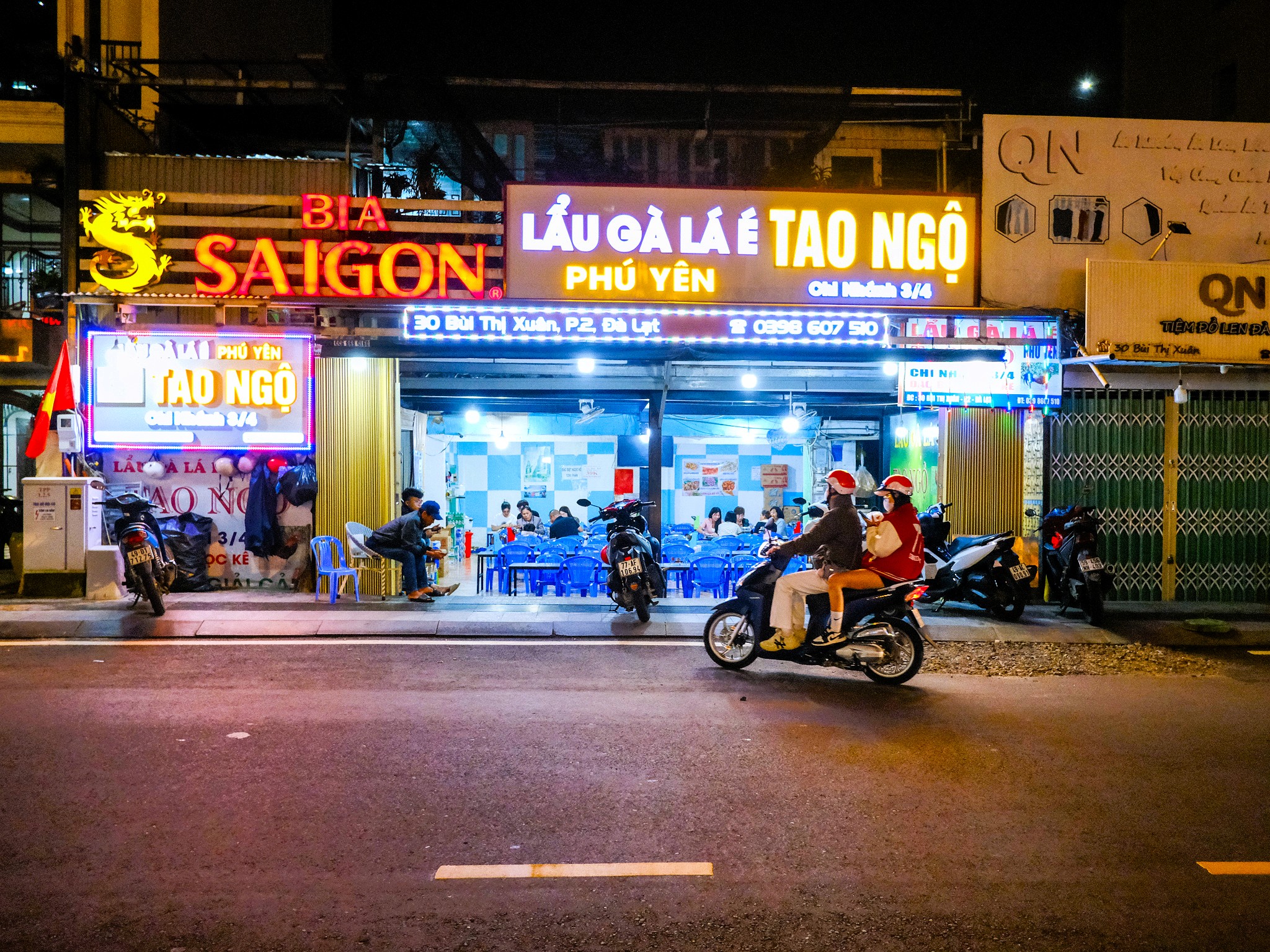
- Lẩu Gà Lá É – Tao Ngộ: 155 Bùi Thị Xuân | 9:00-23:00 [MAP]
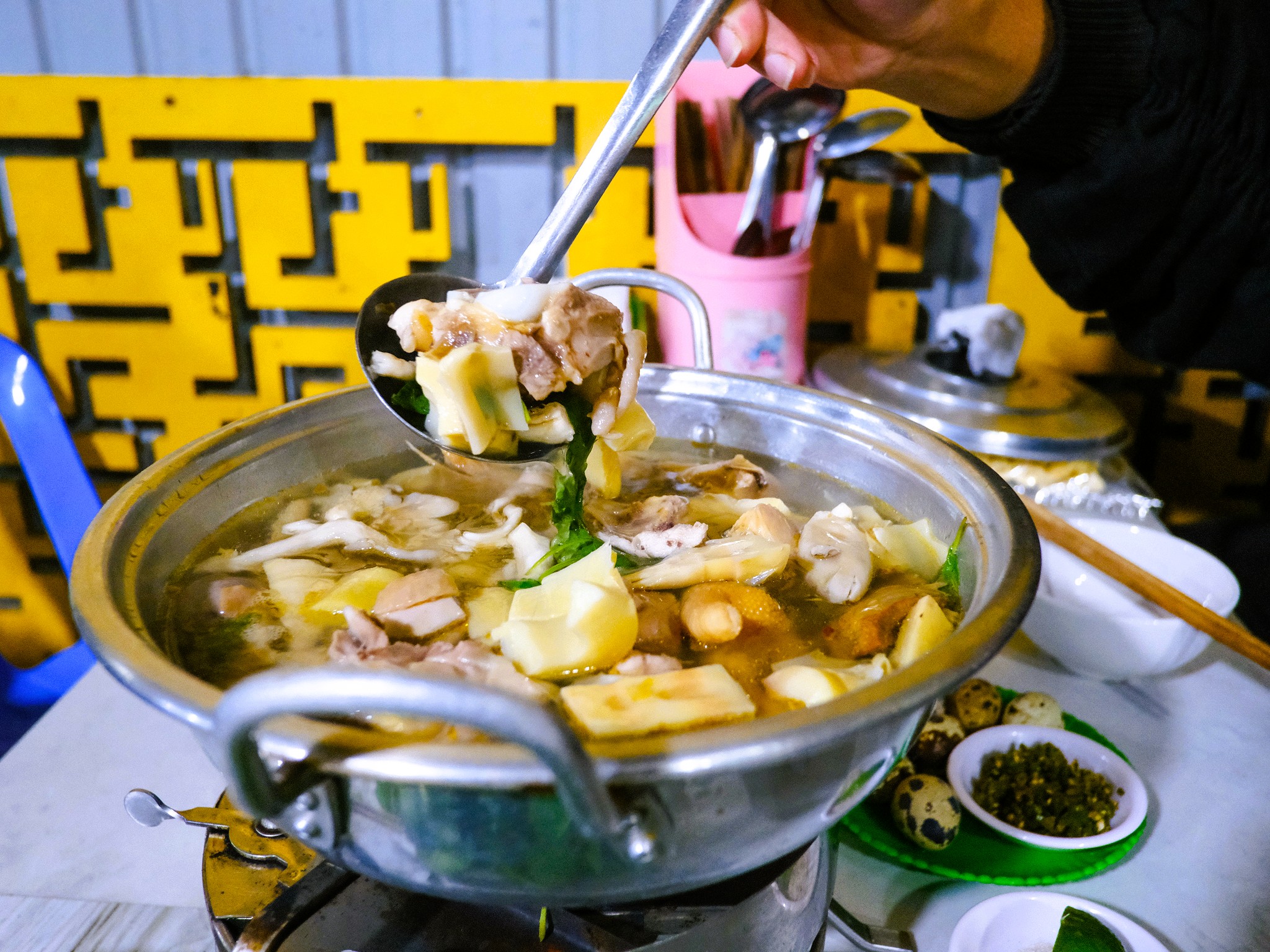
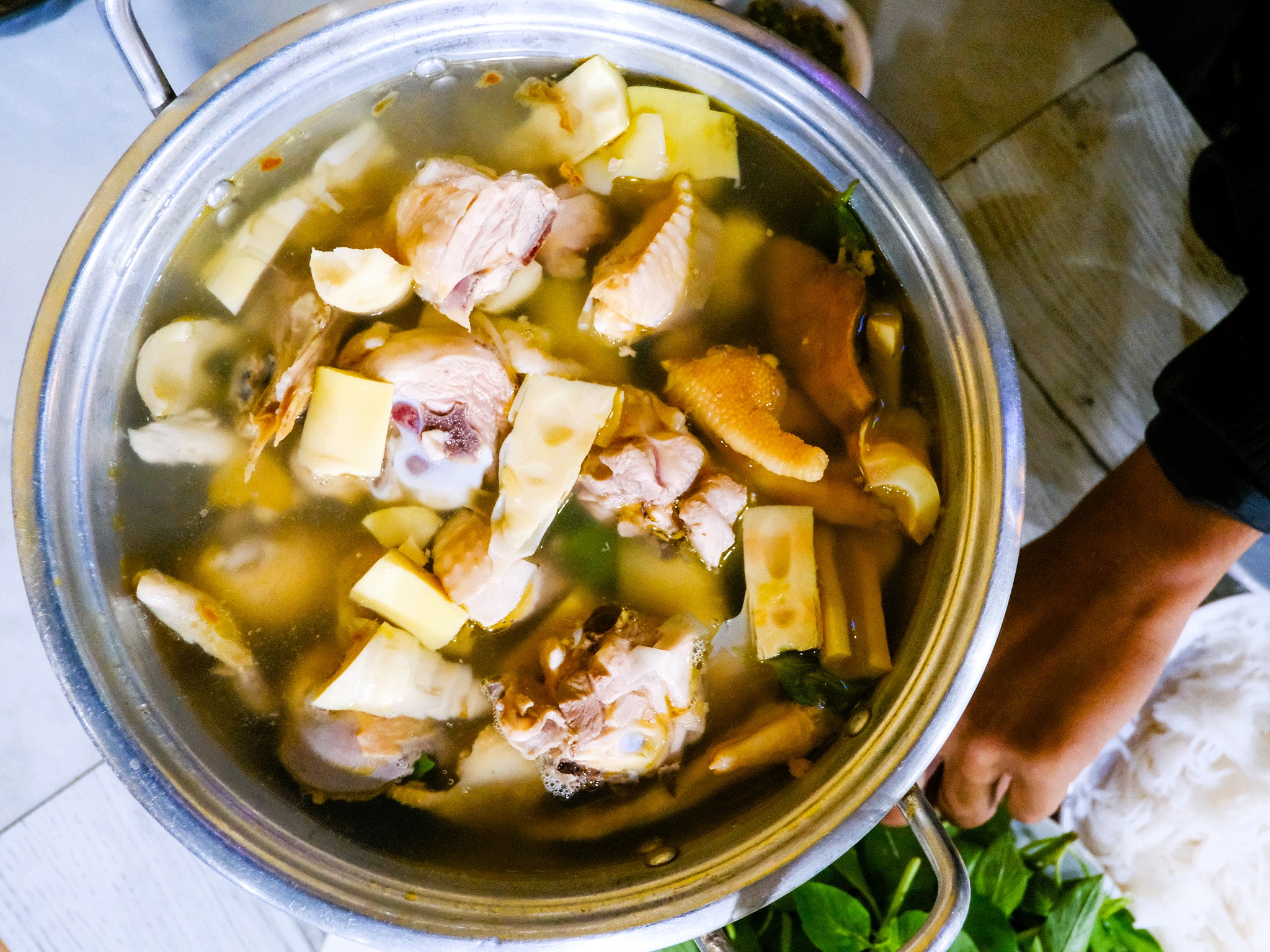
Another Đà Lạt favourite is lẩu gà lá é, a chicken hotpot originally from the south-central coastal province of Phú Yên, but one that has been readily adopted in the highlands thanks to its perfect pairing with the city’s cooler evenings. The dish centres on a slightly sour broth with generous cuts of chicken, eaten alongside rice noodles. Its defining feature is lá é, a herb belonging to the basil family. When fresh, it carries a minty aroma. Once boiled in the hotpot, the lá é flavour softens and disperses through the broth, adding a gentle sourness. This distinguishes lẩu gà lá é from other chicken hotpots, which tend to rely more heavily on the intensity of spices and dipping sauces.
I tried lẩu gà lá é at Tao Ngộ on Bùi Thị Xuân, one of the busier streets just north of the city centre. Tao Ngộ is a classic Đà Lạt-style hotpot restaurant: roadside, open-fronted and lively. Families, couples and small groups come to enjoy the warmth that a bubbling hotpot brings while lingering over a conversation as the evening air cools. As with other dishes in this guide, much of the pleasure lies in cooking at the table then experimenting with the combination of chicken, herbs and noodles to find the ‘perfect’ balance. You’ll see lẩu gà lá é restaurants all over the city.
Bò Tơ Dã Chiến:
❤️Like this guide? Support Vietnam Coracle with a donation or join my Patreon to help keep this website free & 100% independent. Thank you, Tom
WHERE TO EAT IT?
- Bò Tơ Dã Chiến – Hùng Bò: 116 Hùng Vương | 9:00-22:00 [MAP]
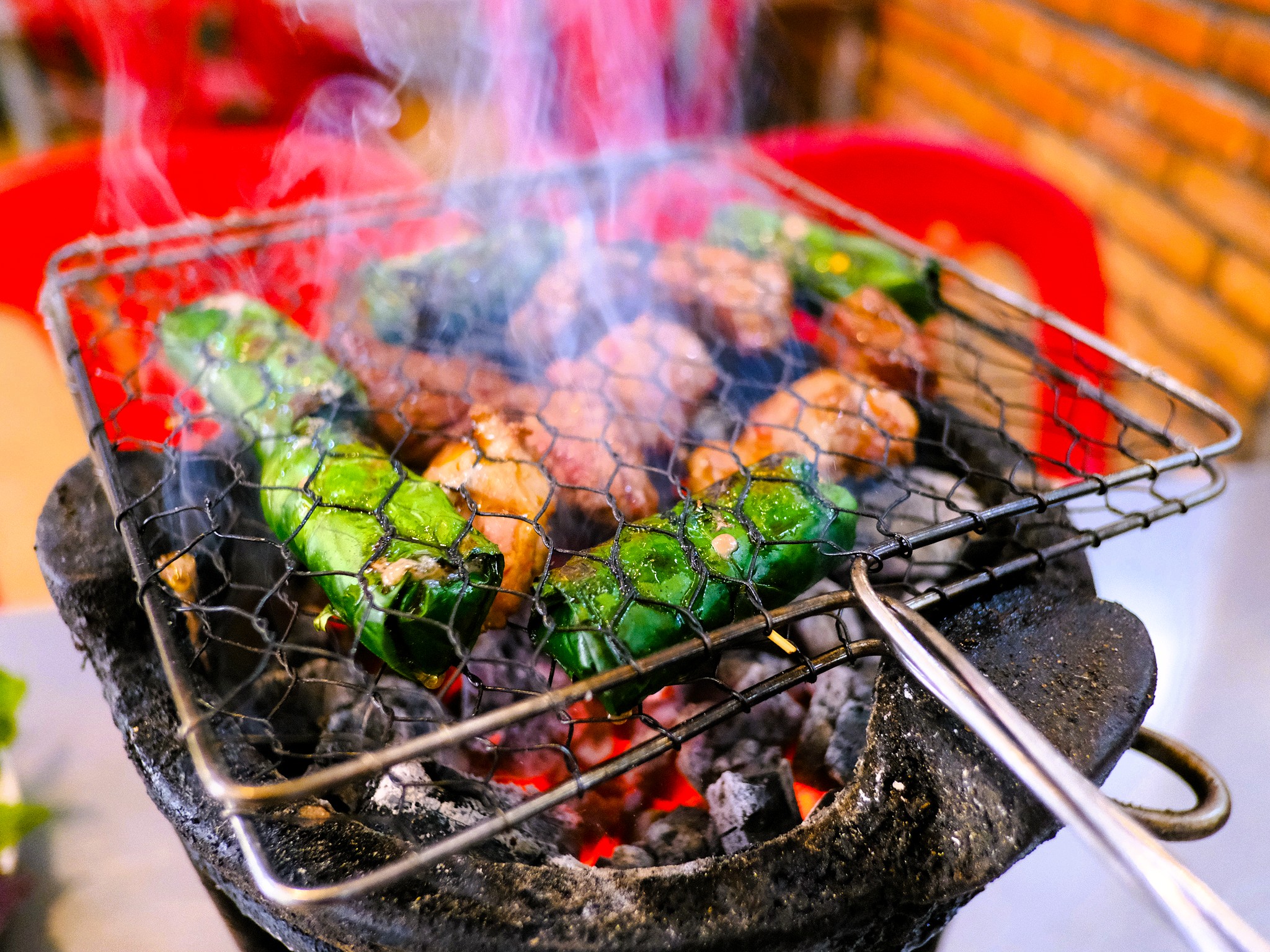
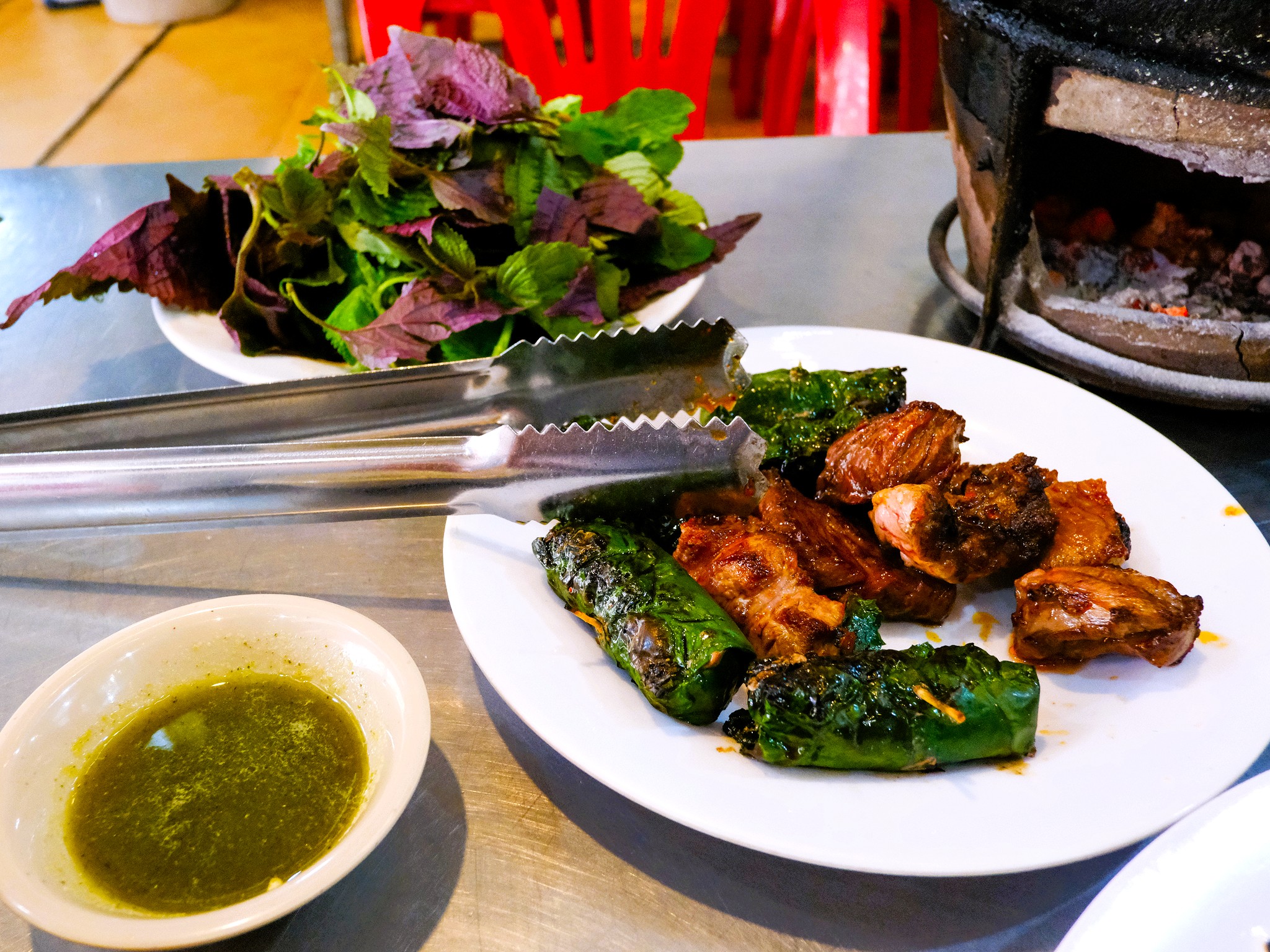
Đà Lạt’s mountainous scenery and cooler climate make it a natural fit for campsite-like grilled food. Across the city, restaurants specialise in barbecued meats and vegetables with some offering tabletop grills that turn cooking into a social event. One dish that extends Đà Lạt’s rugged topography onto the dining table is bò tơ dã chiến. Bò tơ refers to tender beef taken from young calves, while dã chiến evokes improvised, guerrilla-style cooking associated with rudimentary methods under wartime conditions. In practice, the beef arrives cut and marinated, ready to be grilled at the table over a small claypot stove. Once cooked, it’s eaten with a generous spread of leafy greens, herbs and green chilli dipping sauce. The charcoal-fuelled grills can get smoky but the cook-it-yourself format makes for a lively, communal dining experience. I was hopeless at managing my own grill, but thankfully a waiter was on hand to help me out. I wouldn’t make a good guerrilla.
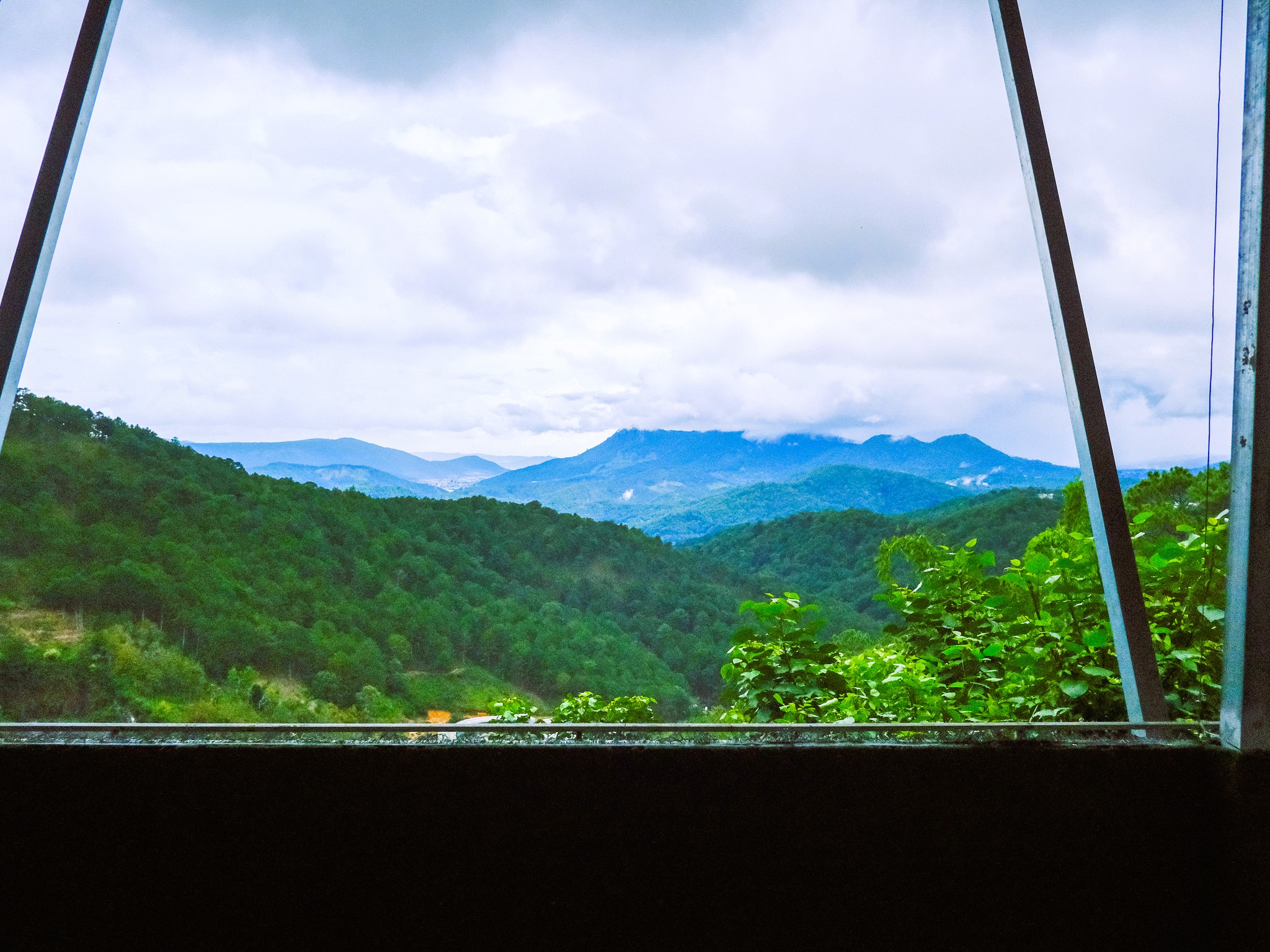
Although there are a several places to get grilled food around Đà Lạt, Bò Tơ Dã Chiến Hùng Bò is a restaurant that was highly recommended. The menu consists entirely of beef dishes. Besides the guerilla-style grilled beef, there is also lẩu (hotpot) and bò lá lốt (beef wrapped in betel leaves). All food comes in three portion sizes so you can determine how much to order based on the number of diners at your table. One additional feature of this bò tơ dã chiến restaurant is the view. The restaurant’s rear view over the rugged Đà Lạt terrain adds to its ‘guerrilla camping’ aesthetic. Admittedly, the drive out to Bò Tơ Dã Chiến Hùng Bò is a little far. If you’re looking for a restaurant closer to the centre and with more variety, then there is also the hugely popular, yet overpolished Khoai Lang Nướng, which is closer to the centre of town.
Dâu Tây Xí Muội:
❤️Like this guide? Support Vietnam Coracle with a donation or join my Patreon to help keep this website free & 100% independent. Thank you, Tom
WHERE TO EAT IT?
- Otome Farm: Vườn Dâu và Atiso: An Sơn Street | 8:00-17:00 [MAP]
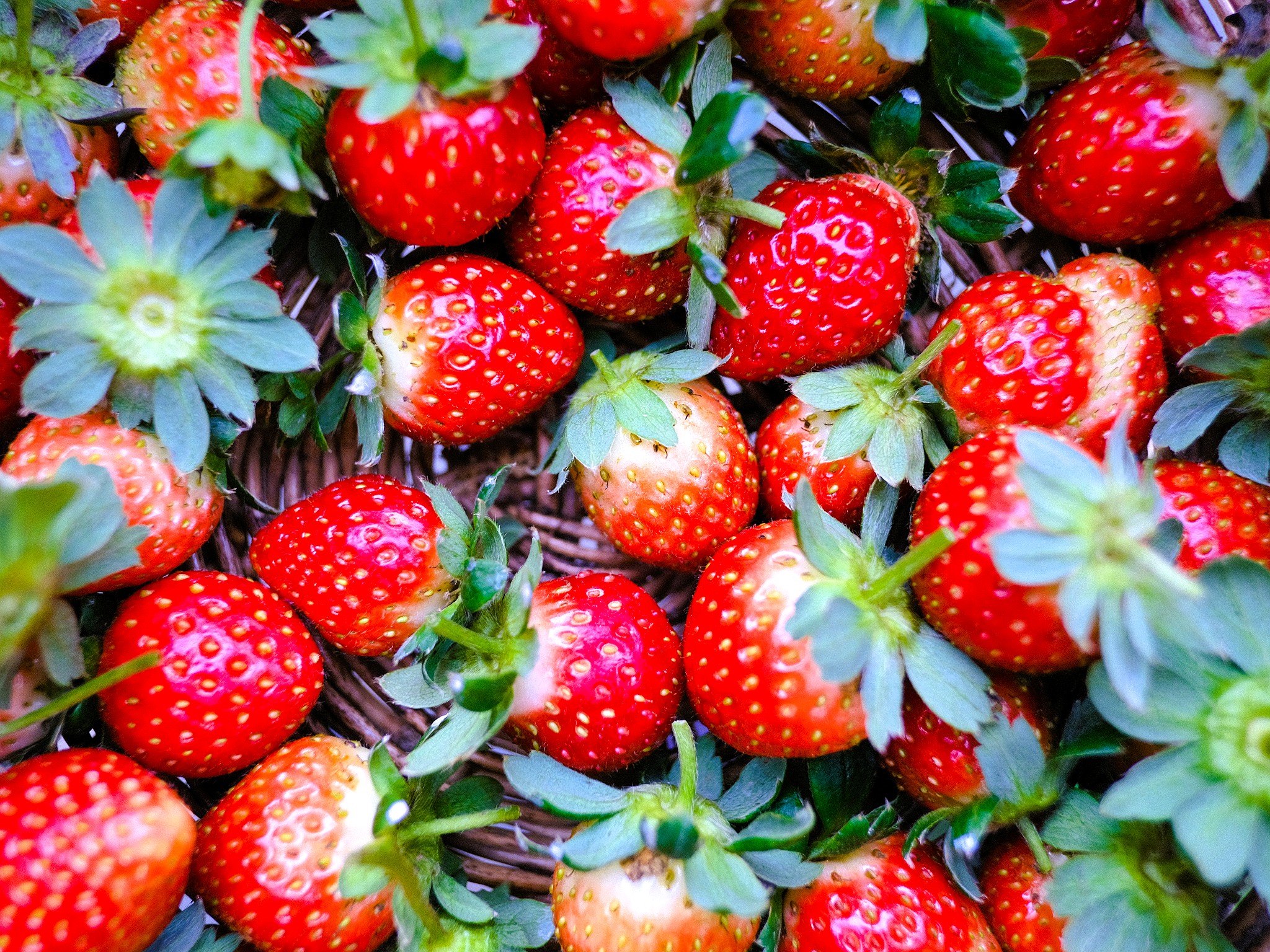
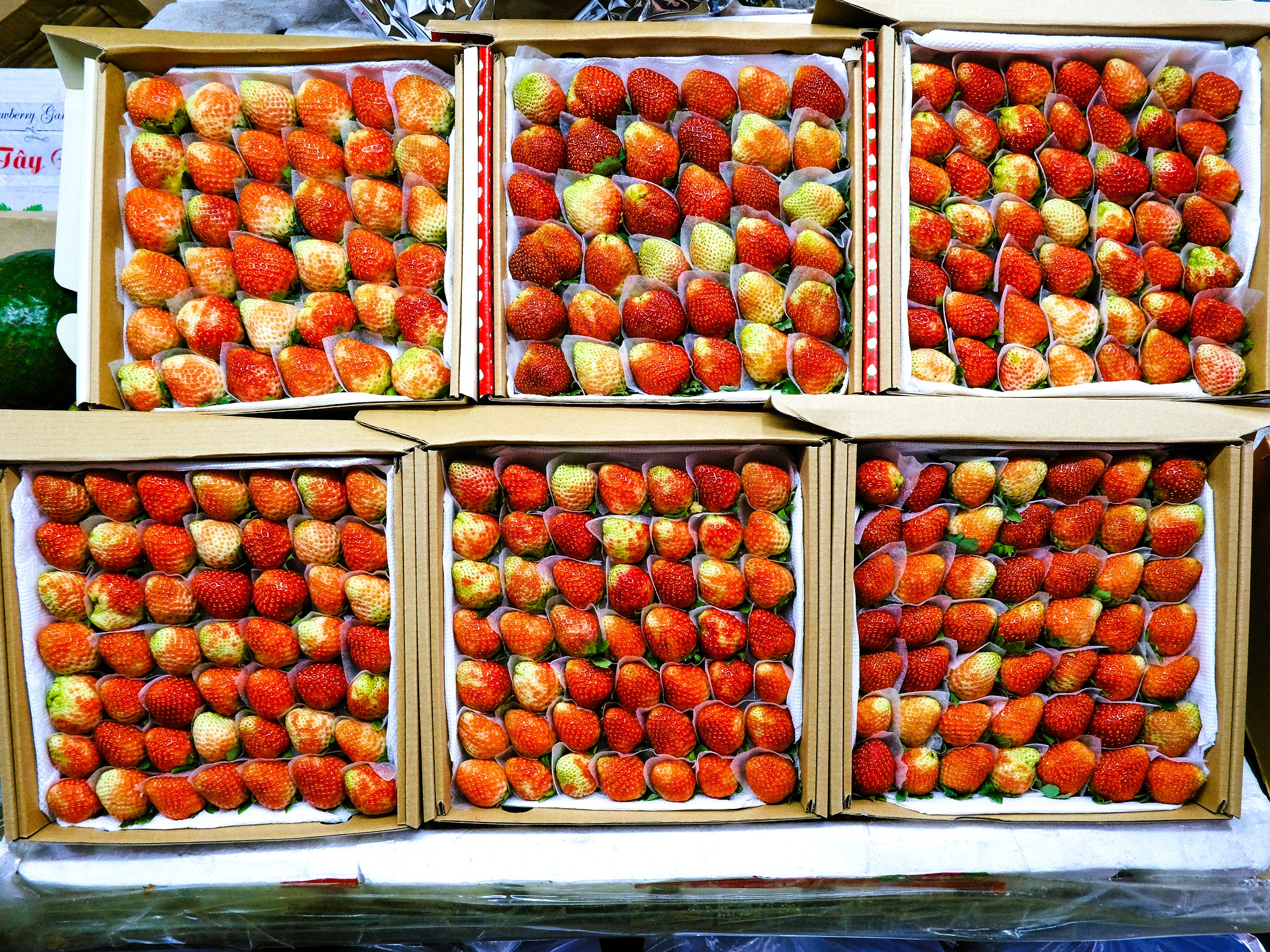
Đà Lạt has long been a source of non-native fruits and vegetables in Vietnam, a legacy that dates back to the French colonial period. Today, it remains a place where farmers cultivate non-indigenous produce. Across the hills surrounding the city, greenhouses have been built not only to grow strawberries but also to support the popular tourist pastime of strawberry picking. While strawberry harvests are most abundant between December and April, sustained demand has led farmers to grow them year-round under cover and increase the number of greenhouses around the city.
Despite not being indigenous to Đà Lạt, strawberries earn their place in this guide because of the distinctive way they are eaten. After picking, many farms provide visitors with a small pouch of muối xí muội, a dipping condiment made from dried plum, sugar and salt. Dipped into the mixture, the strawberries’ sweetness is sharpened by the salty-sour tang of the plum, intensifying the fruit’s flavour. It’s an unusual pairing at first, but one that quickly becomes addictive and reflects the broader Vietnamese technique of balancing sweet and sour flavours.
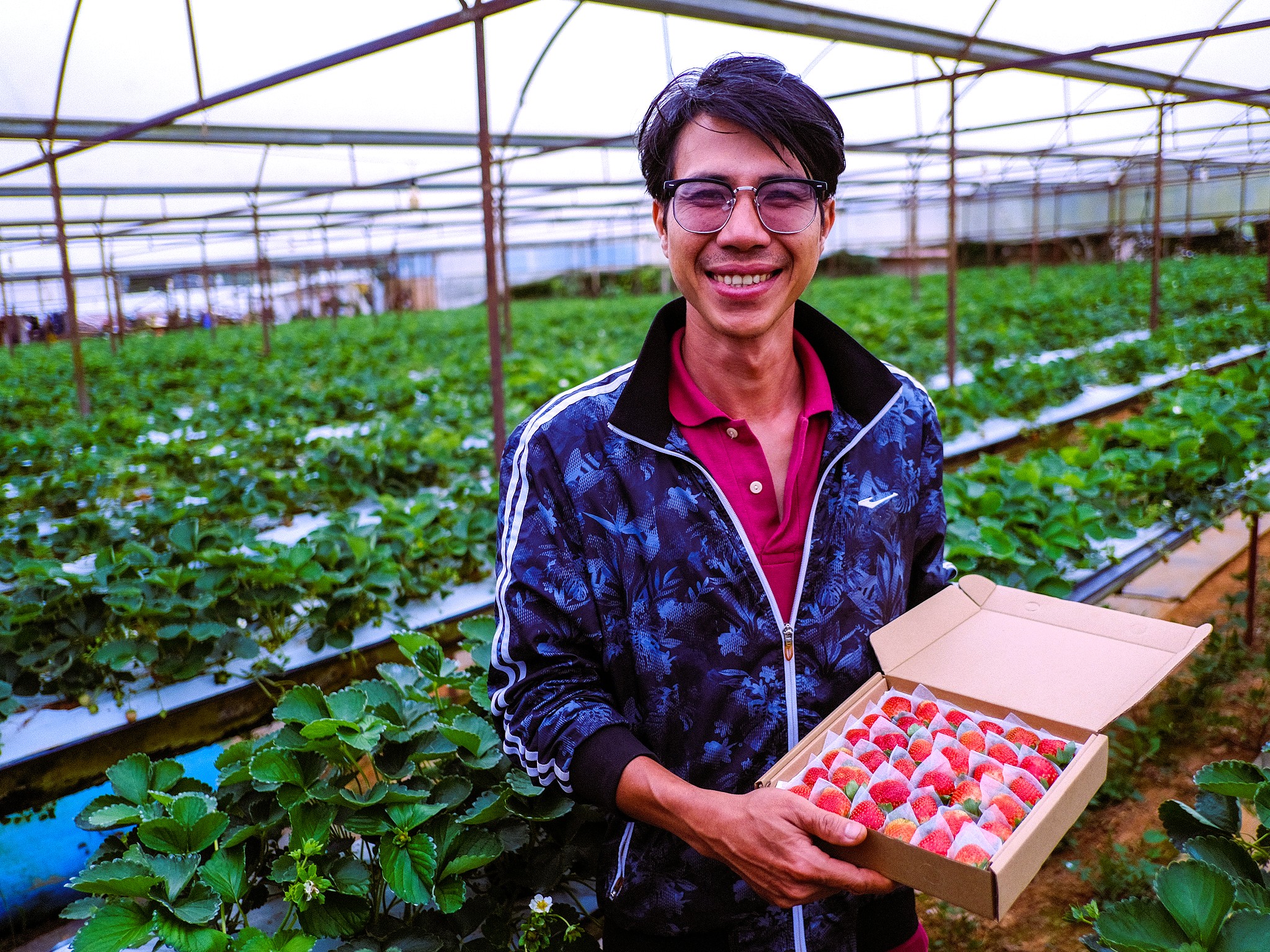
When looking for a place to pick strawberries, my accommodation recommended Vườn Dâu Chú Hùng north of the city. However, I opted for Otome Farm instead, which was closer to where I was staying. On arrival, I was greeted by husband and wife Kiên and Trang. Kiên led me into the adjacent greenhouses and gave me free rein to pick whatever strawberries I could find. After inspecting several rows, I filled my basket about a third of the way before returning to Trang to have it weighed and bagged.
Trang and Kiên’s story is a familiar one in Đà Lạt. Both had previously lived and worked in Ho Chi Minh City, where they grew disenchanted with the cost of living, the pace of urban life and the difficulty of owning property. When it came time to settle down, they chose to return home and begin growing artichokes and strawberries. Despite a rocky start during the pandemic years, they’ve since found stability, community and steady business growth.
Greenhouse farming has become synonymous with Đà Lạt. It’s now difficult to leave the city without passing hills and valleys covered in plastic sheeting. Yet the rapid expansion of greenhouse agriculture has also raised environmental concerns. Altered drainage patterns and runoff have contributed to soil instability, and in recent years the city has experienced several landslides that commentators widely link to greenhouses. Strawberries may be one of Đà Lạt’s most appealing exports, but their popularity carries environmental costs that are hard to ignore.
Sữa Đậu Nành & Pastries:
❤️Like this guide? Support Vietnam Coracle with a donation or join my Patreon to help keep this website free & 100% independent. Thank you, Tom
WHERE TO DRINK IT?
- Sữa Đậu Nành Dung Béo: 2 Nguyễn Văn Cừ | 15:00-00:00 [MAP]
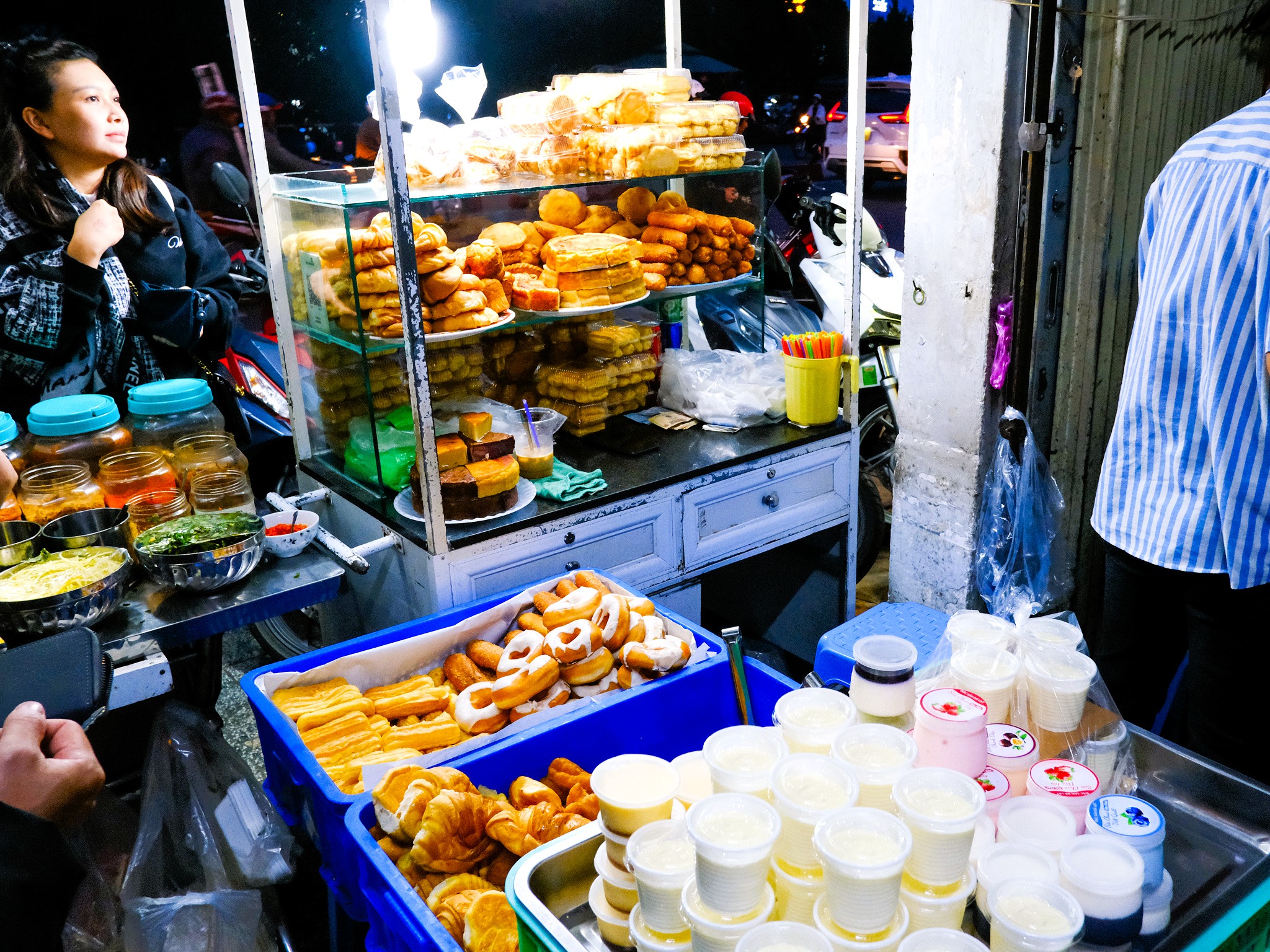
The archetypal “romantic Đà Lạt” itinerary usually involves travelling with a love interest, layering up in winter clothes, ticking off the foodie bucket list and ending the day with flavoured milks and doughy treats. The appeal of milk and dough in cooler climates may be obvious, but I was genuinely surprised by the subtle magic of this pairing. In some ways, this nighttime activity is even more enjoyable than visiting one of the city’s many bars (look out for my Đà Lạt drinking guide, coming soon!).
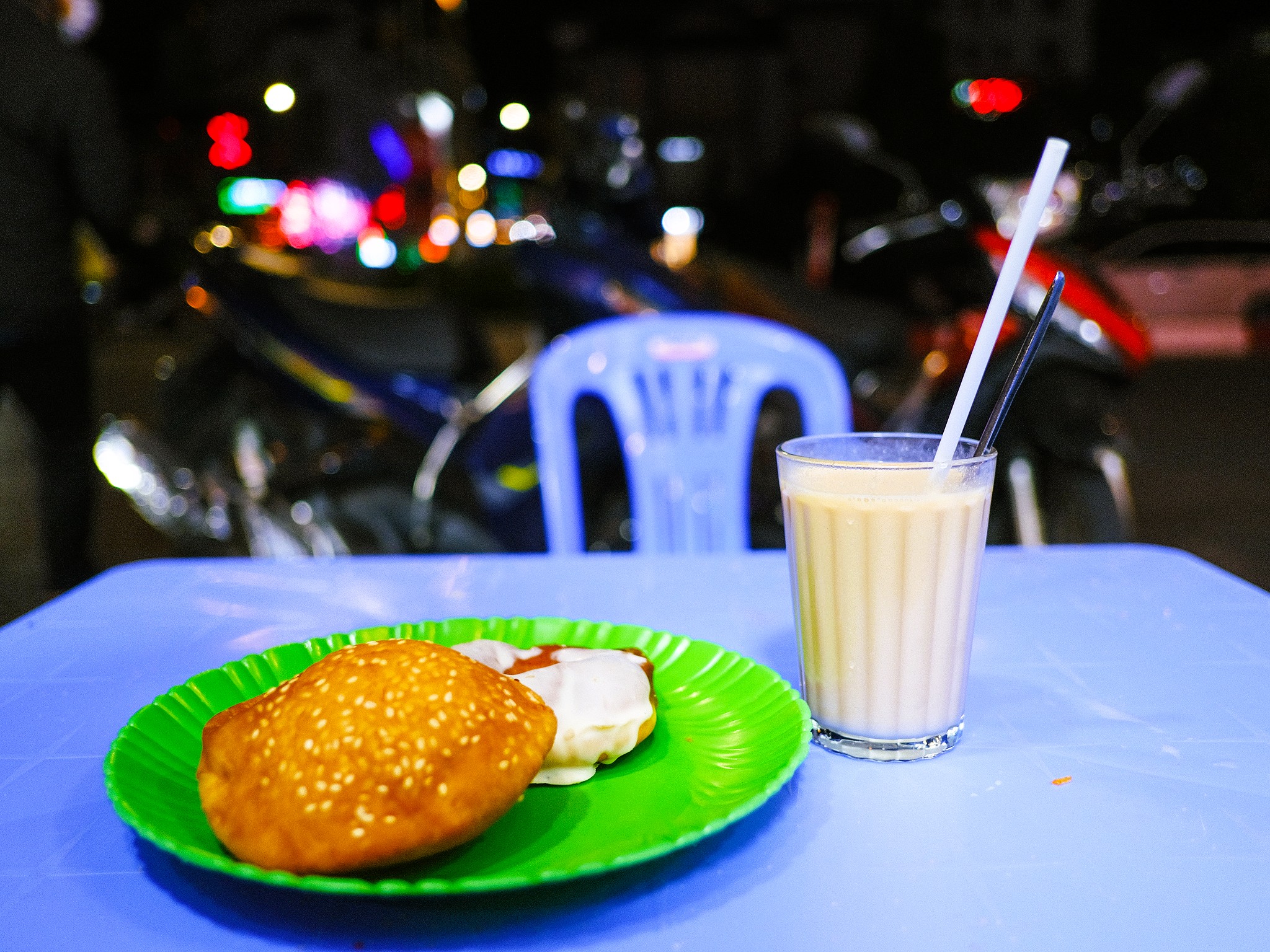
Menus across the city list a range of pressed milks: peanut milk, sesame seed milk, corn milk, pumpkin milk, mung bean milk and soya milk. These are typically paired with fried dough pastries in various shapes that sometimes come glazed and filled. It’s a simple, inexpensive combination but a deeply satisfying one: a gentle way to close out the day. Choose a spot with a view, add conversation and people-watching and you’ve got the full experience.
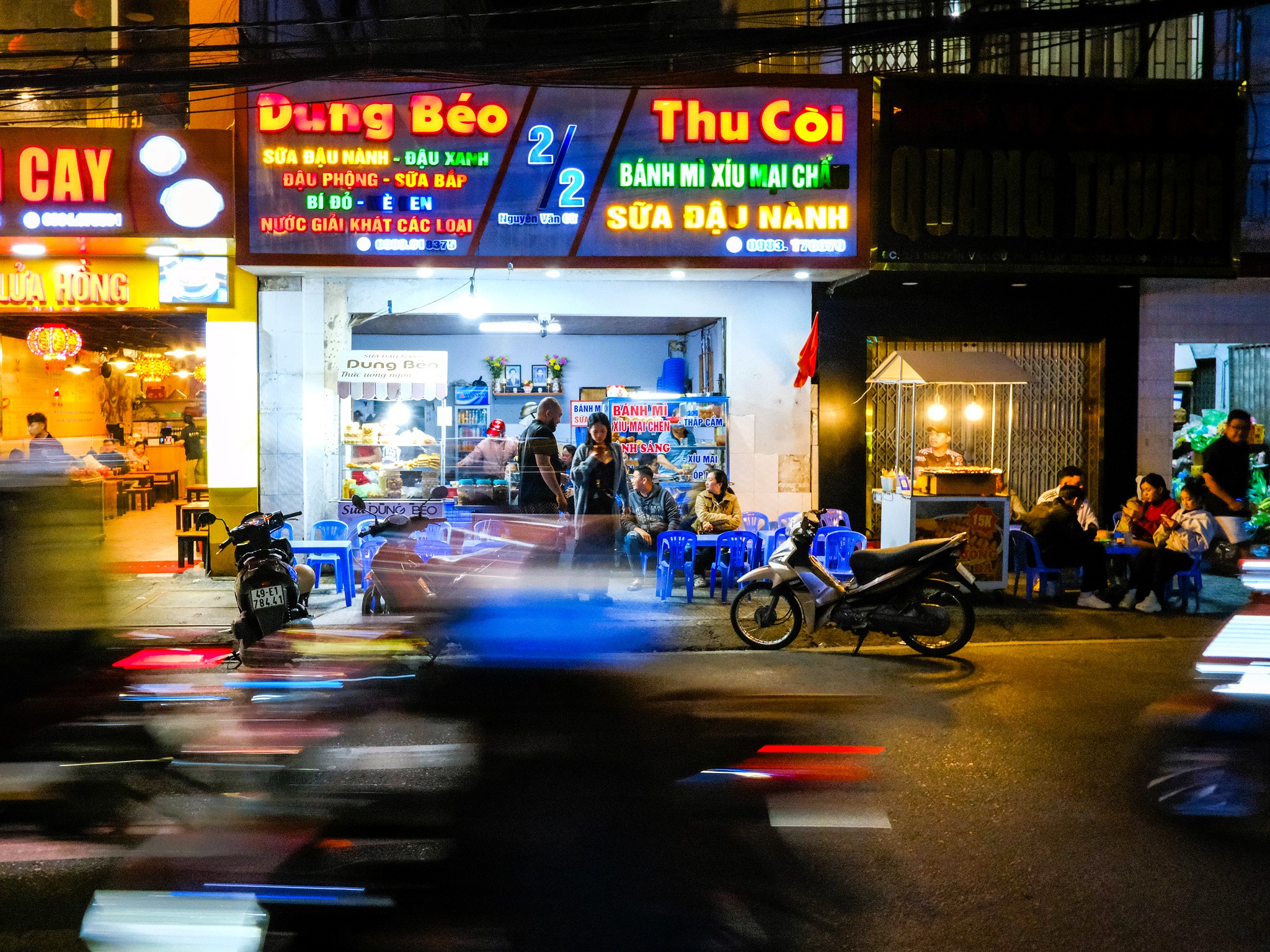
There are countless places to drink milk and eat pastries around the city, particularly near the (very touristy) Đà Lạt Night Market. My personal favourite, however, is Sữa Đậu Nành Dung Béo. Dung is the owner’s name, while béo means fat or plump, perhaps hinting at some over-indulgence of one’s own products. If so, this indulgence has done little to harm the business’s success. The crowds that gather here nightly demonstrate a strong, continued popularity.
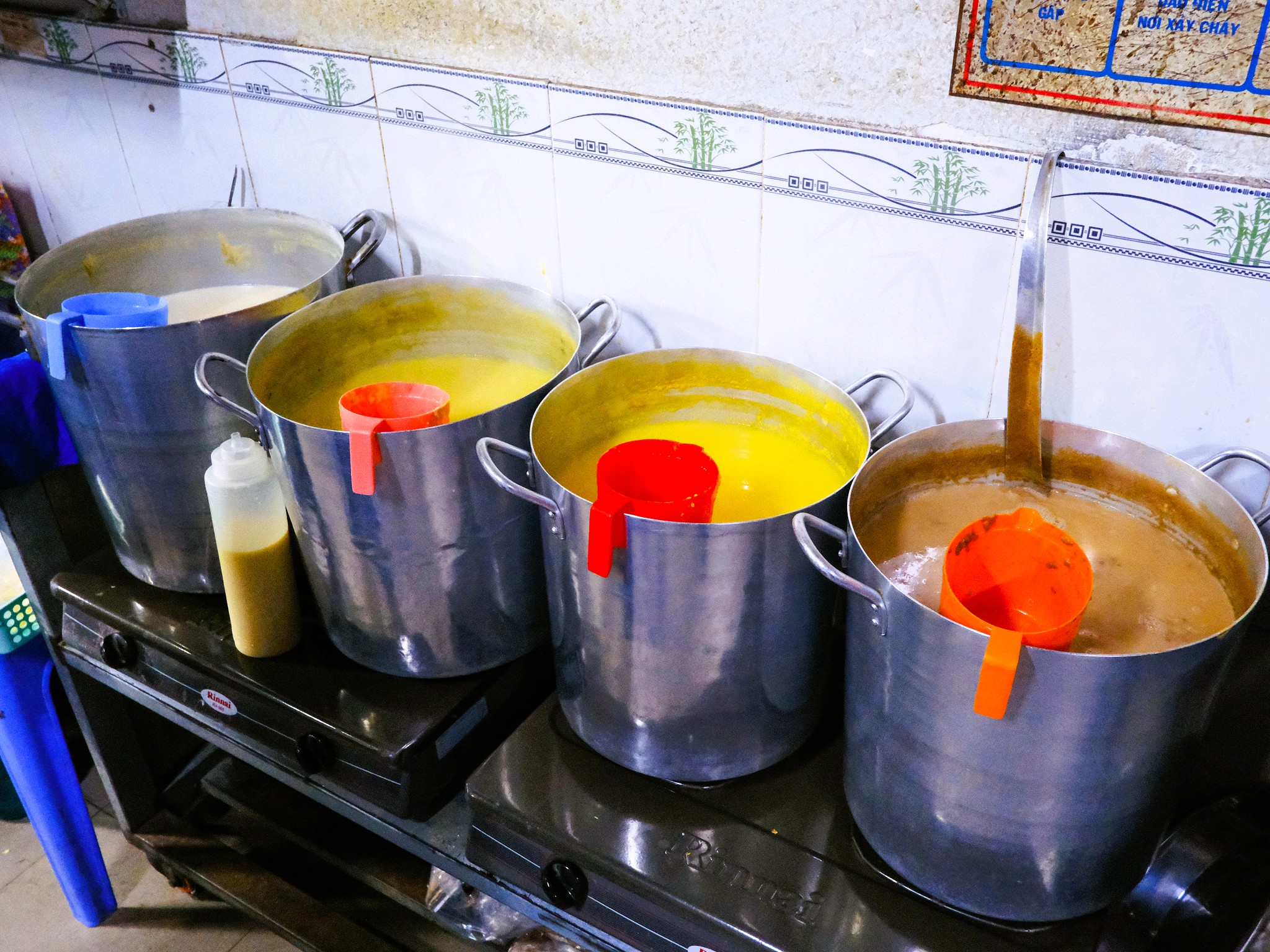
Sữa Đậu Nành Dung Béo attracts a broad mix of customers: tourists and residents, couples and families, young and old. Plastic chairs spill from the interior out towards the roadside, while vats of freshly pressed milk are kept gently simmering along one wall. A trolley near the entrance displays stacks of pastries, though the selection dwindles as the evening wears on. Situated at a busy city-centre intersection, it’s not the most tranquil place to linger. Customers constantly circulate, seats are rarely empty and the atmosphere is lively rather than calm. Still, the appeal lies in the basics done well. Warm milk, sweet pastries and the pleasure of watching Đà Lạt in motion. It’s hard to argue against its appeal.
Support My Work
Free | Independent | No Sponsored Content
“Hello, if you enjoy my website, please support it.
Thank you.” Tom
*Disclosure: Vietnam Coracle content is always free and independent. Luke has written this guide because he wants to: he likes these places to eat and he wants readers to know about them. For more details, see the Disclosure & Disclaimer statements and my About Page
RELATED GUIDES




Tom and crew, thanks for another insightful article,
Just a question about travel from Ho Chi Minh to Dalat, would you suggest airplane or bus (day light)?
Speed and convince vs is there much to see travelling buy road. The few extra dollars or extra time aren’t a factor.
Really enjoy your work regards Jason
Hi Jason,
The flight is just 45 mins, but it’s another 30 minutes from the airport (Lien Khuong) to Da Lat city centre. However, that 30 minutes includes the Prenn Pass which is pretty.
The bus journey takes between 6-8 hours. Although there are parts of the journey that are either interesting or beautiful, all buses take the main road so it’s not the most scenic journey in Vietnam. Buses go all day and night and some are very comfortable.
Best,
Tom