First published March 2026 | Words, photos and video by Vietnam Coracle | Read time 15 minutes

Tom Divers is the founder and creator of Vietnam Coracle. In 2005 he moved from his native London to Vietnam, where he has been living, working and travelling ever since. He pays rent in Ho Chi Minh City but is more often on the road, riding his motorbike a quarter of a million kilometres across Vietnam to research guides to the farthest-flung corners of the nation. When he’s not in the saddle, you’ll find him on a beach with a margarita, in a tent on a mountainside or at a streetside noodle house: in other words, at the ‘office’. Read more about Tom: Q&A, About Page, Vietnam Tourism website.
Camp in a Wide Valley with a Boulder-Strewn River Running Through it
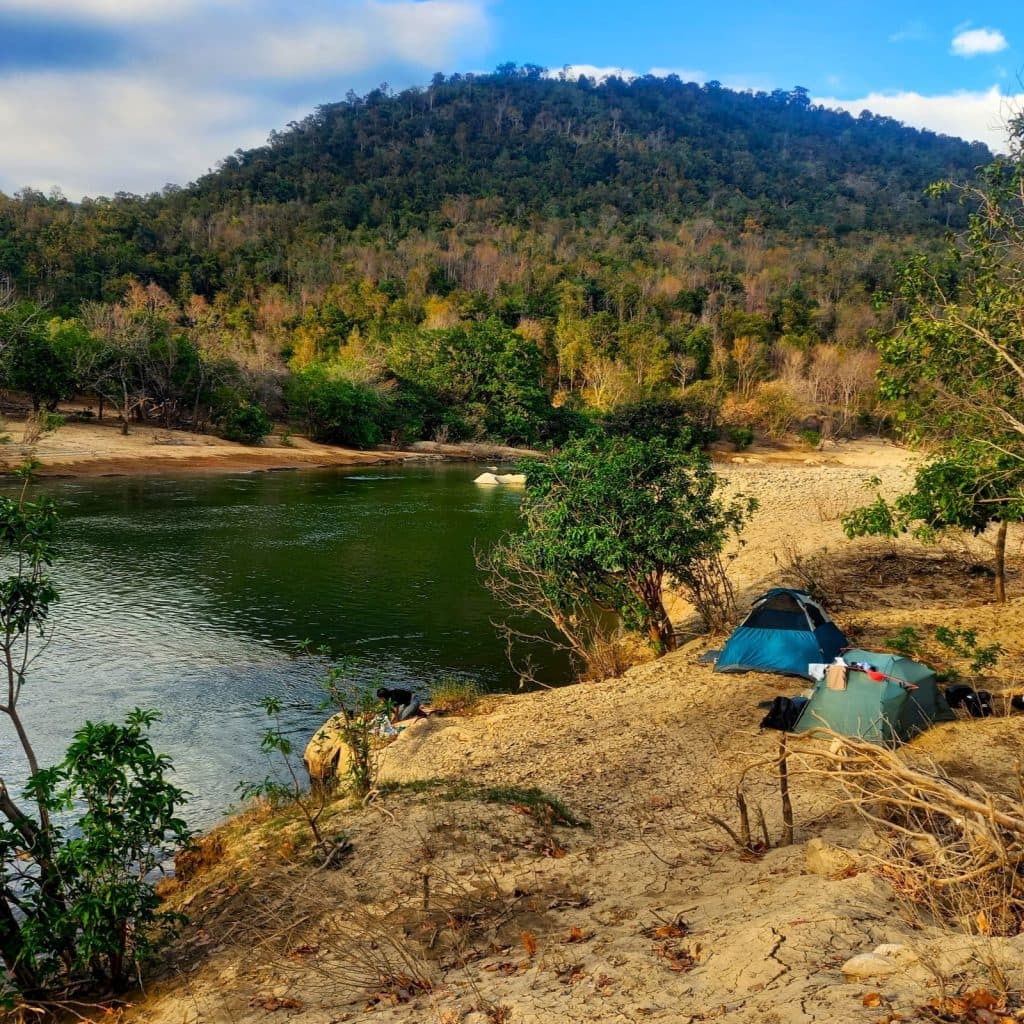
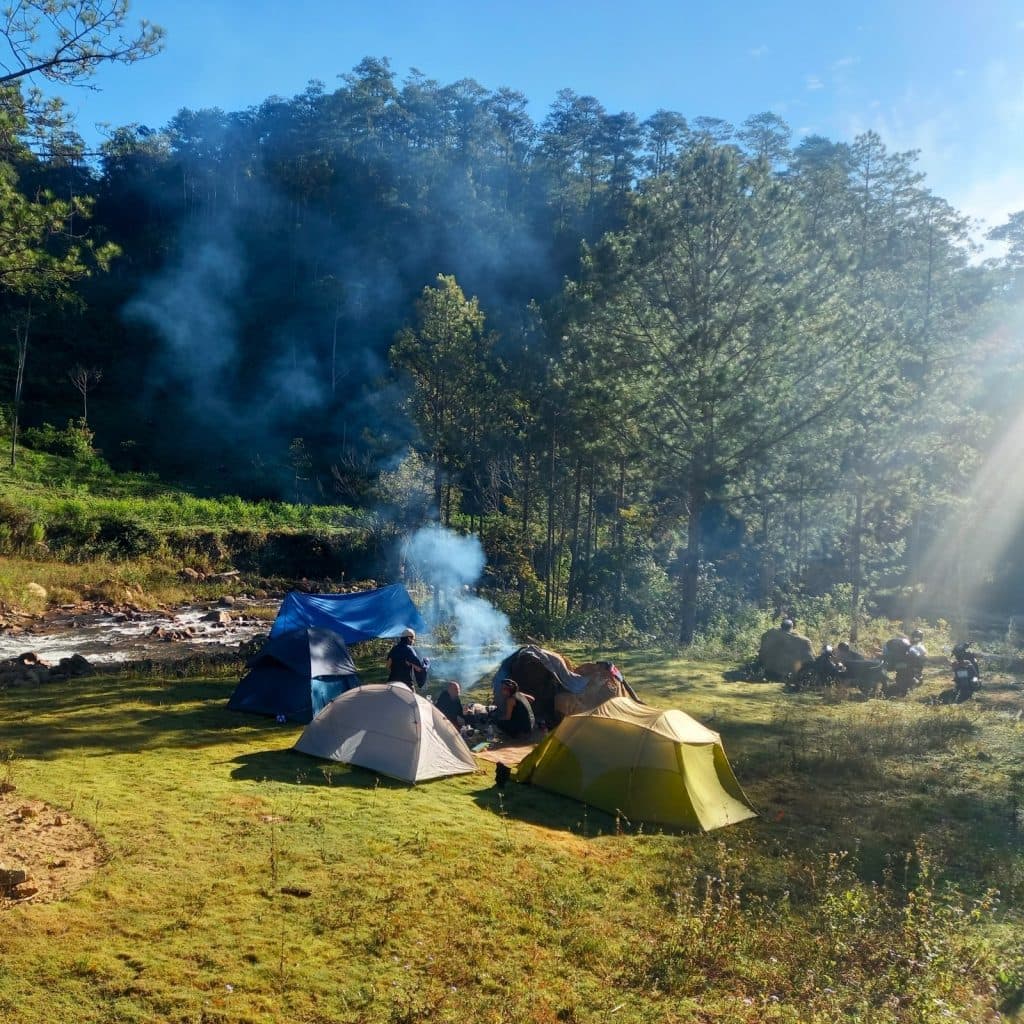
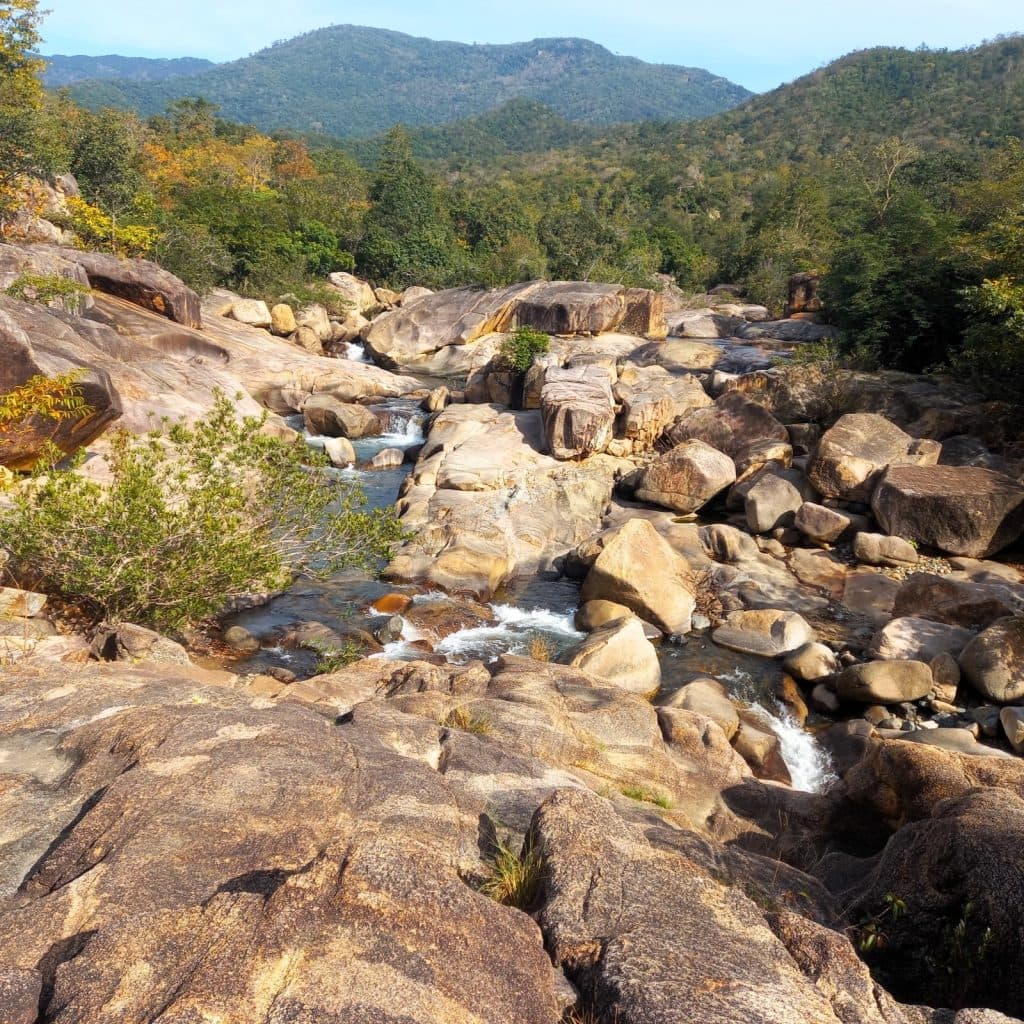
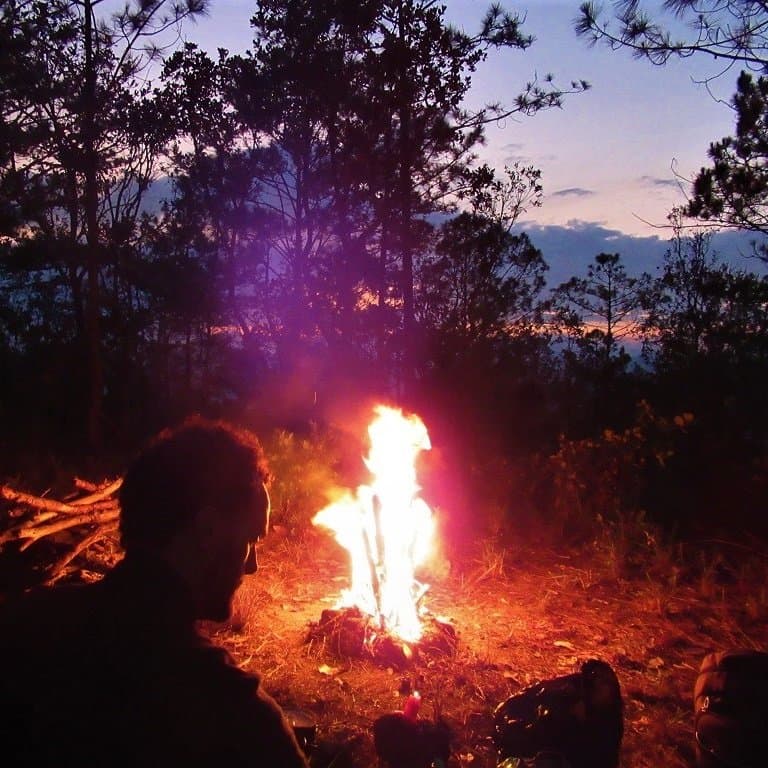
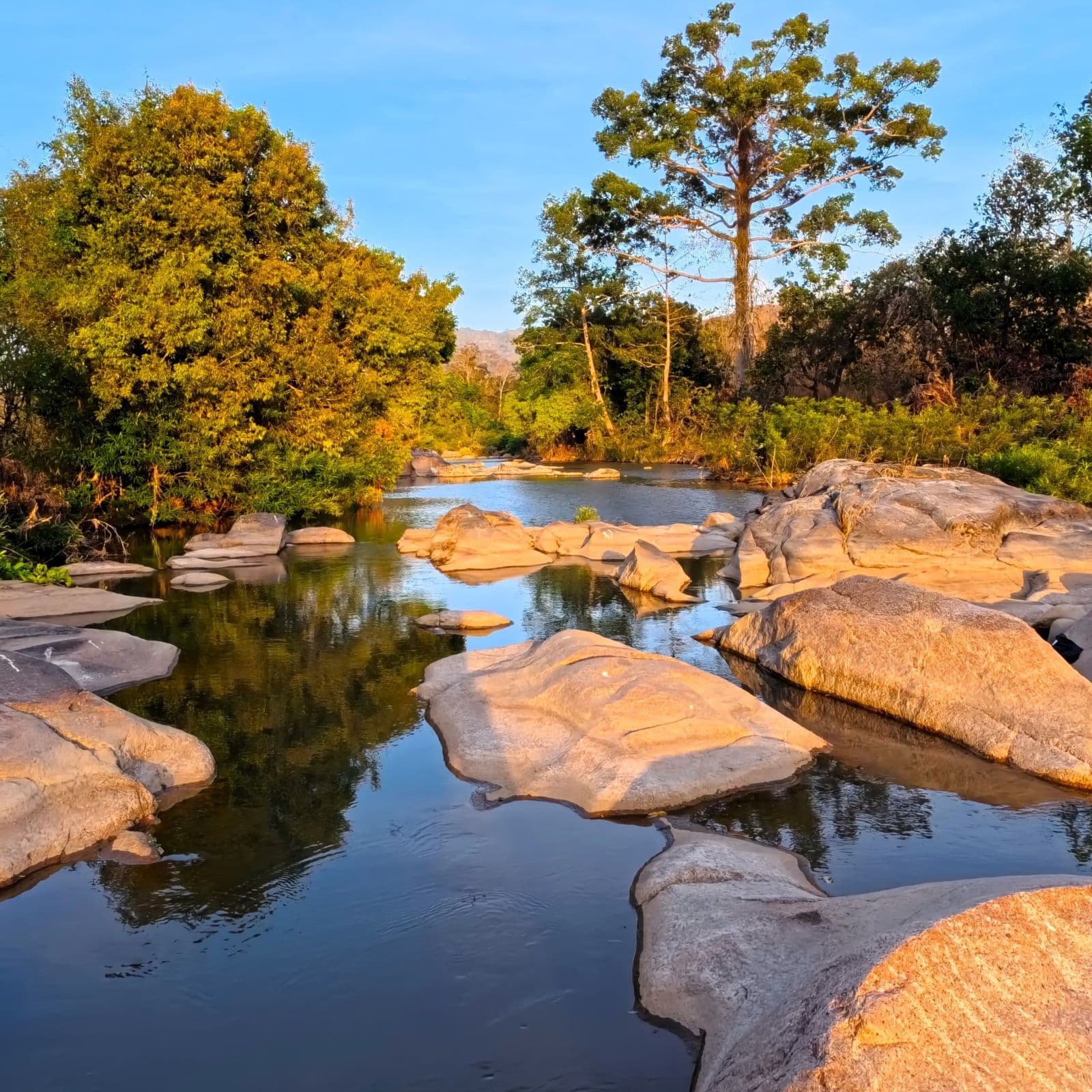
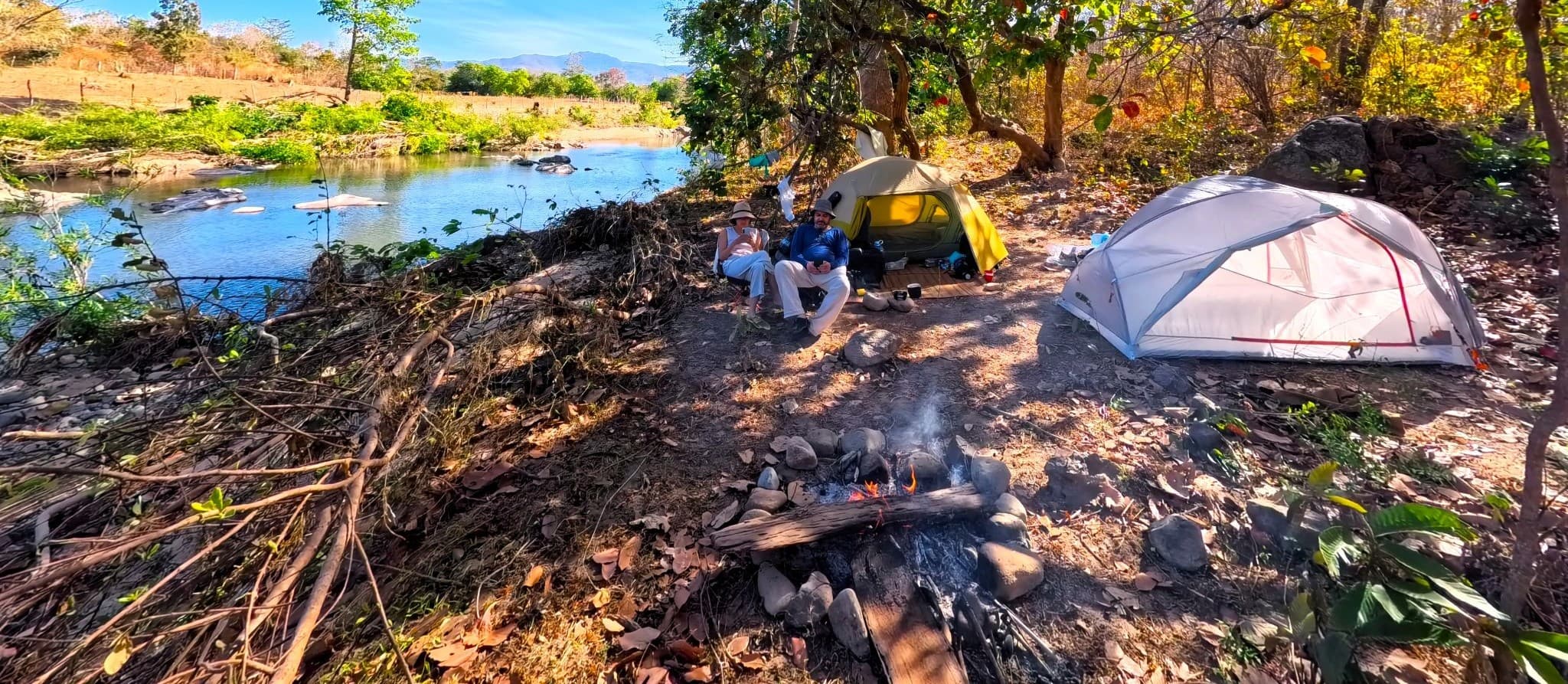
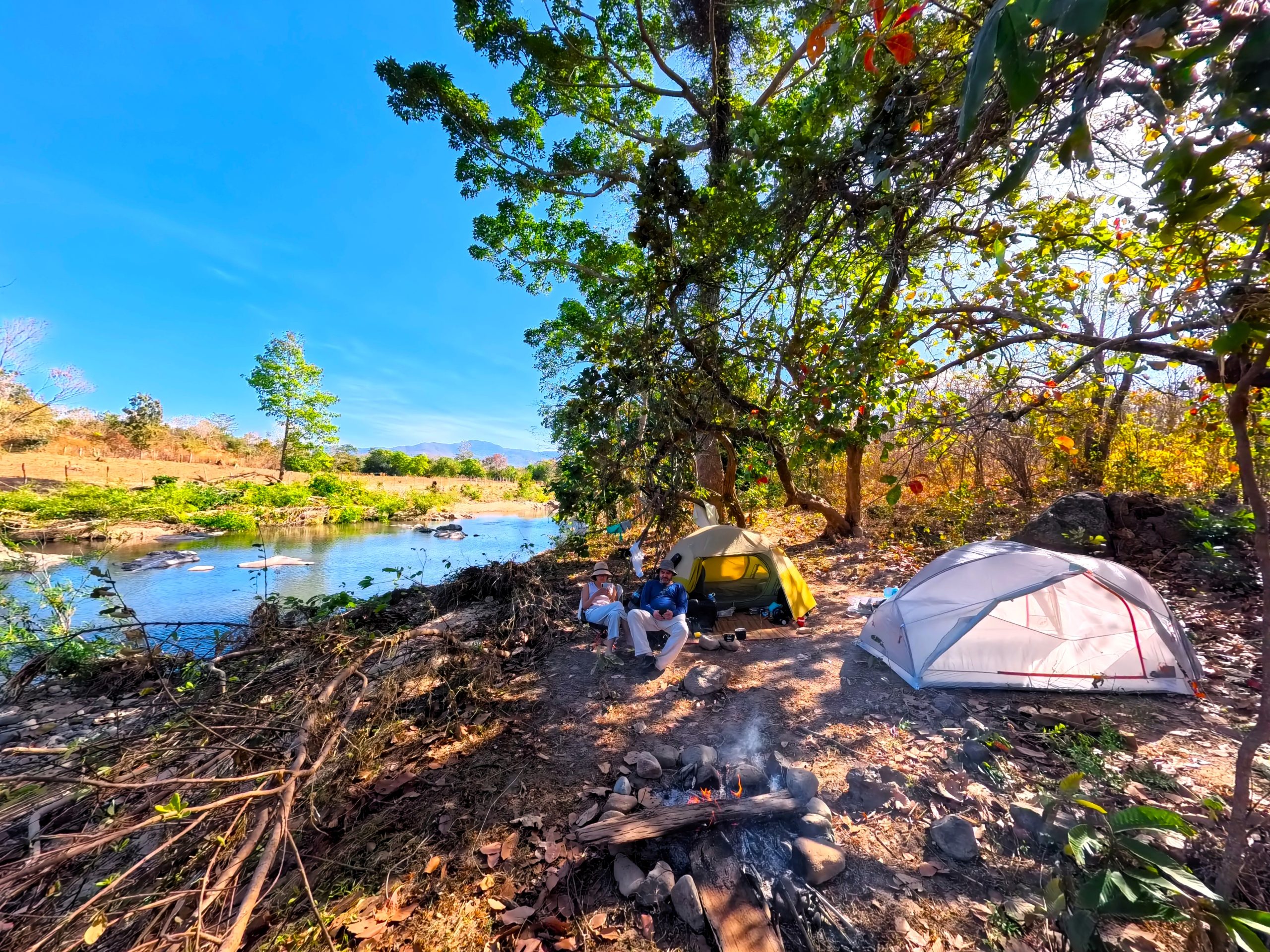
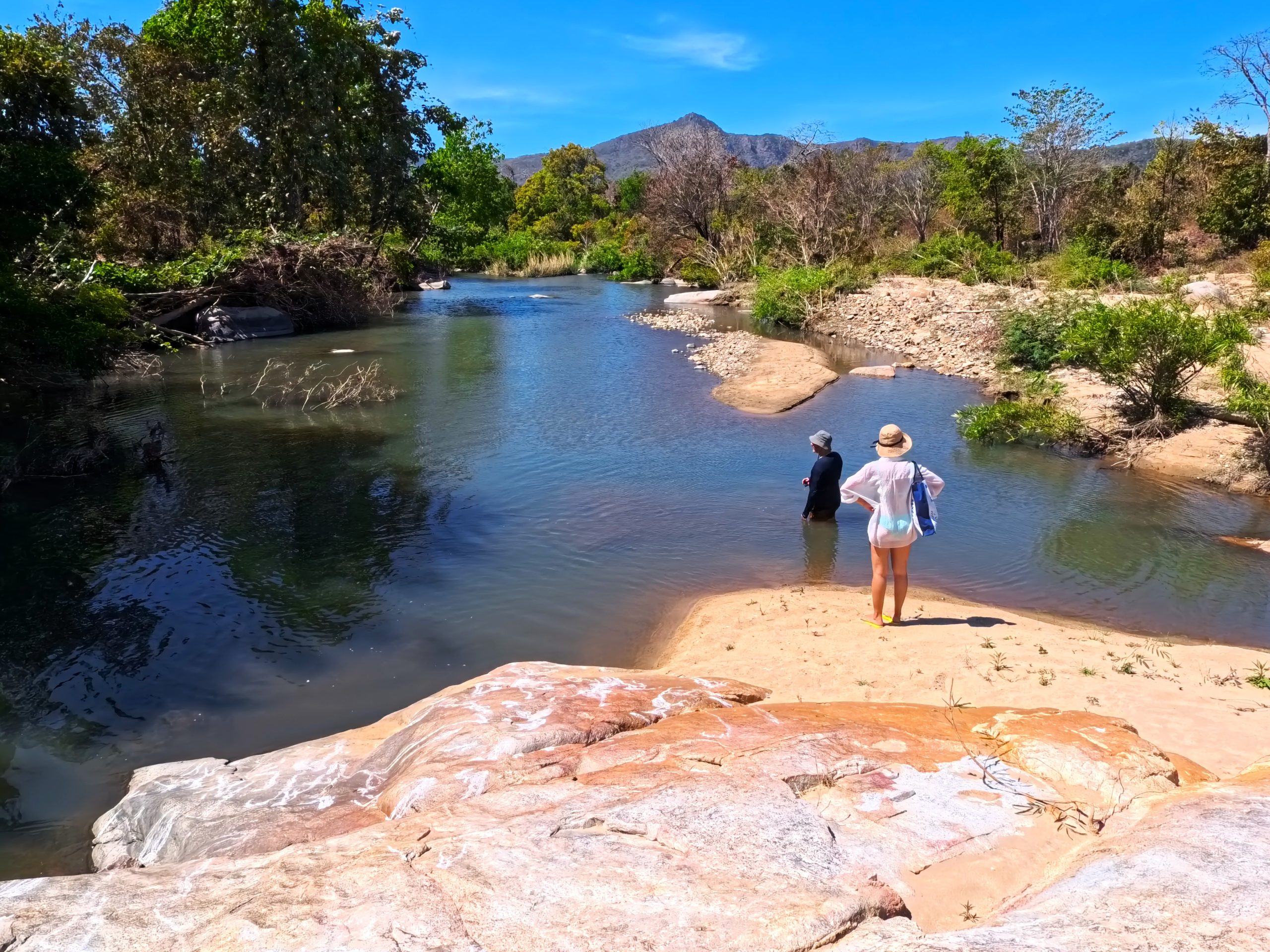
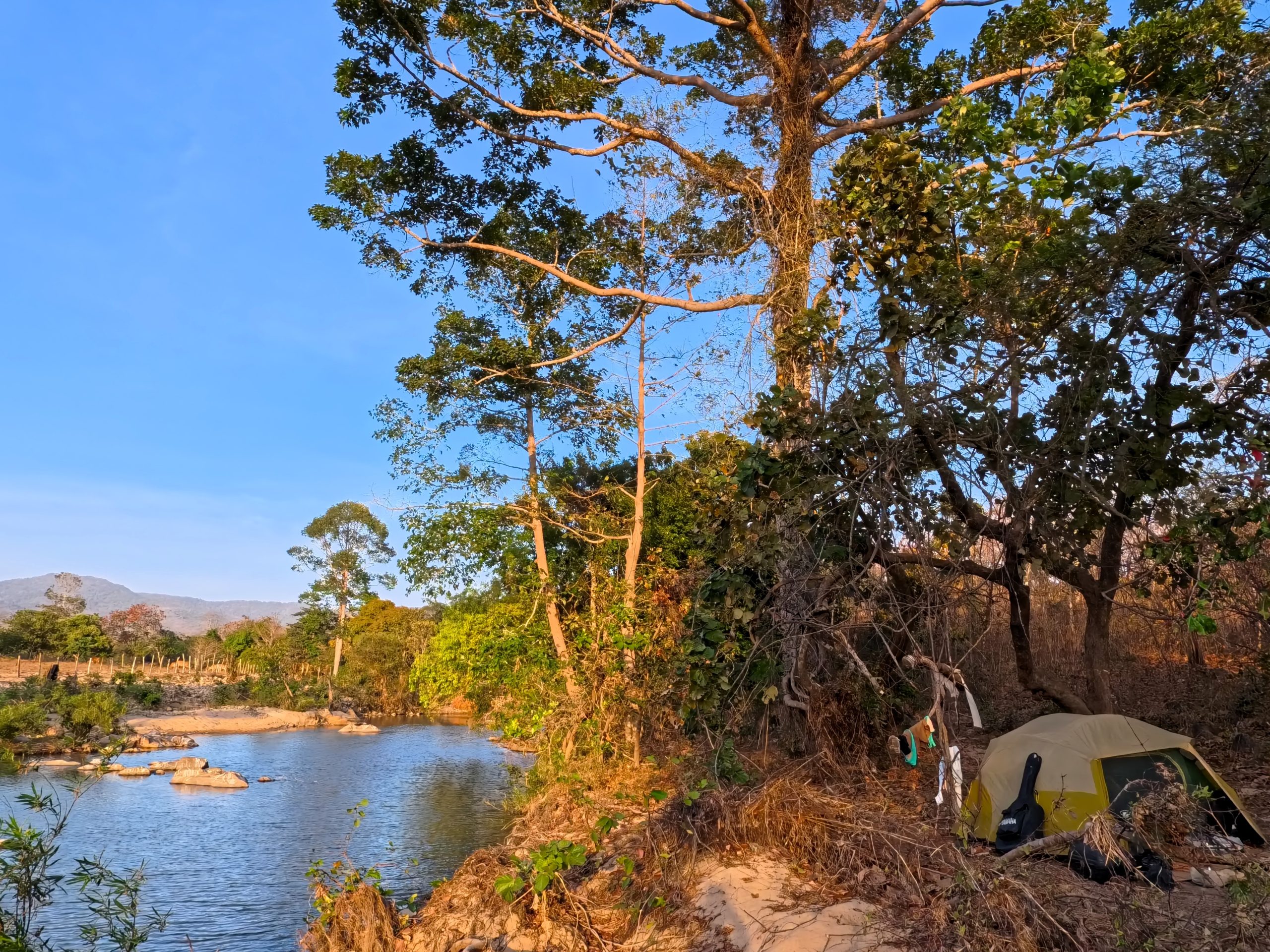
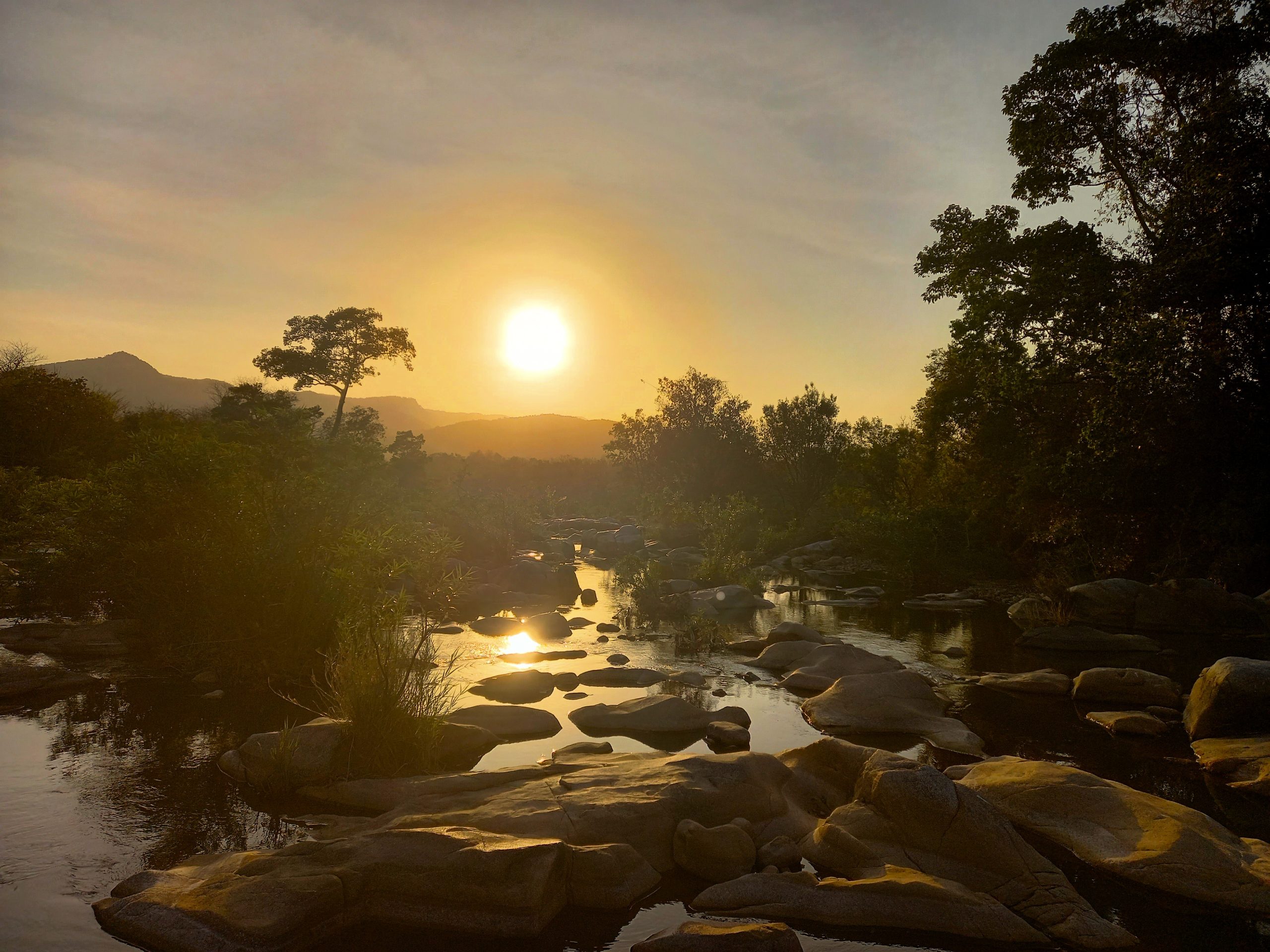
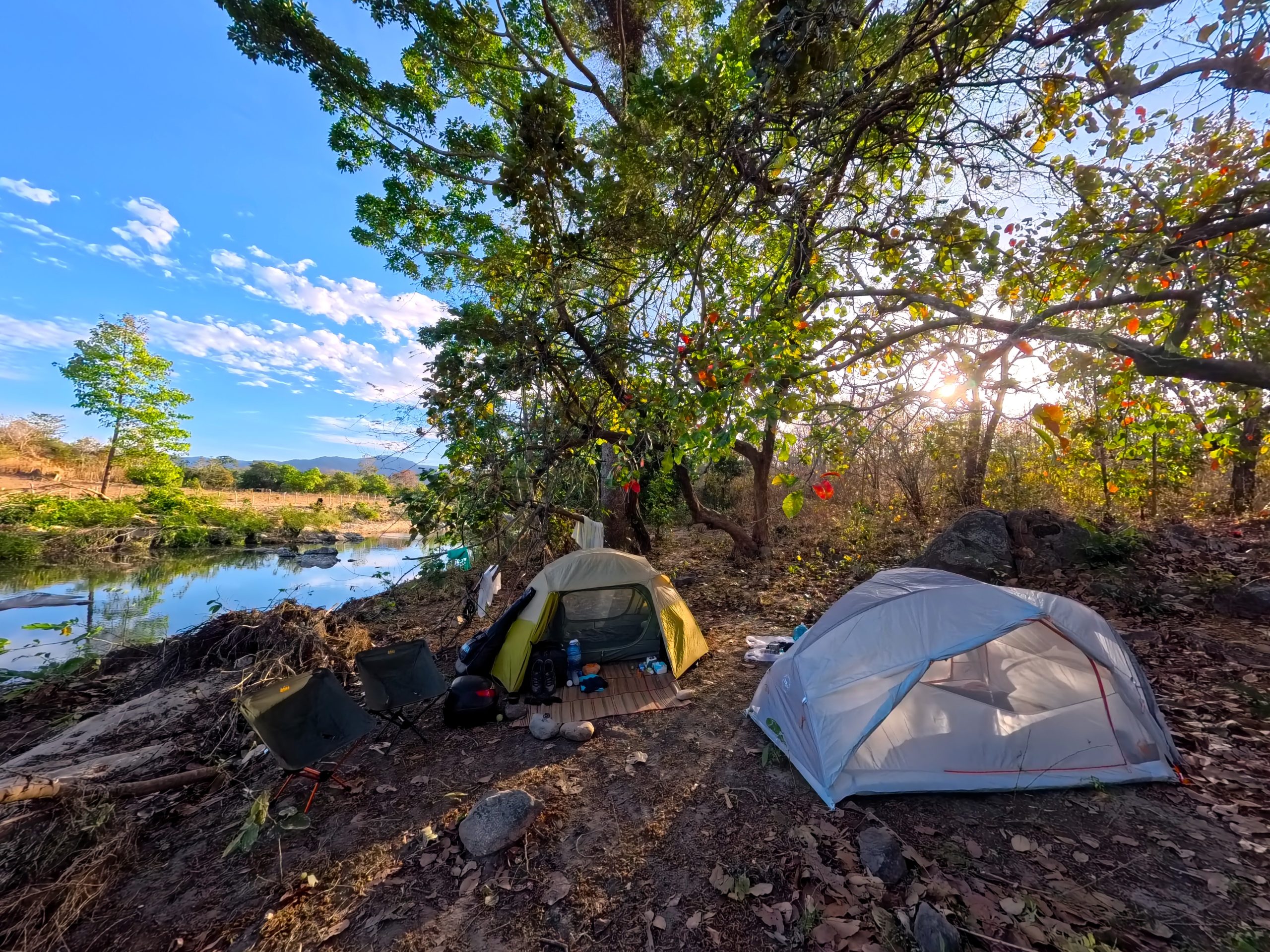
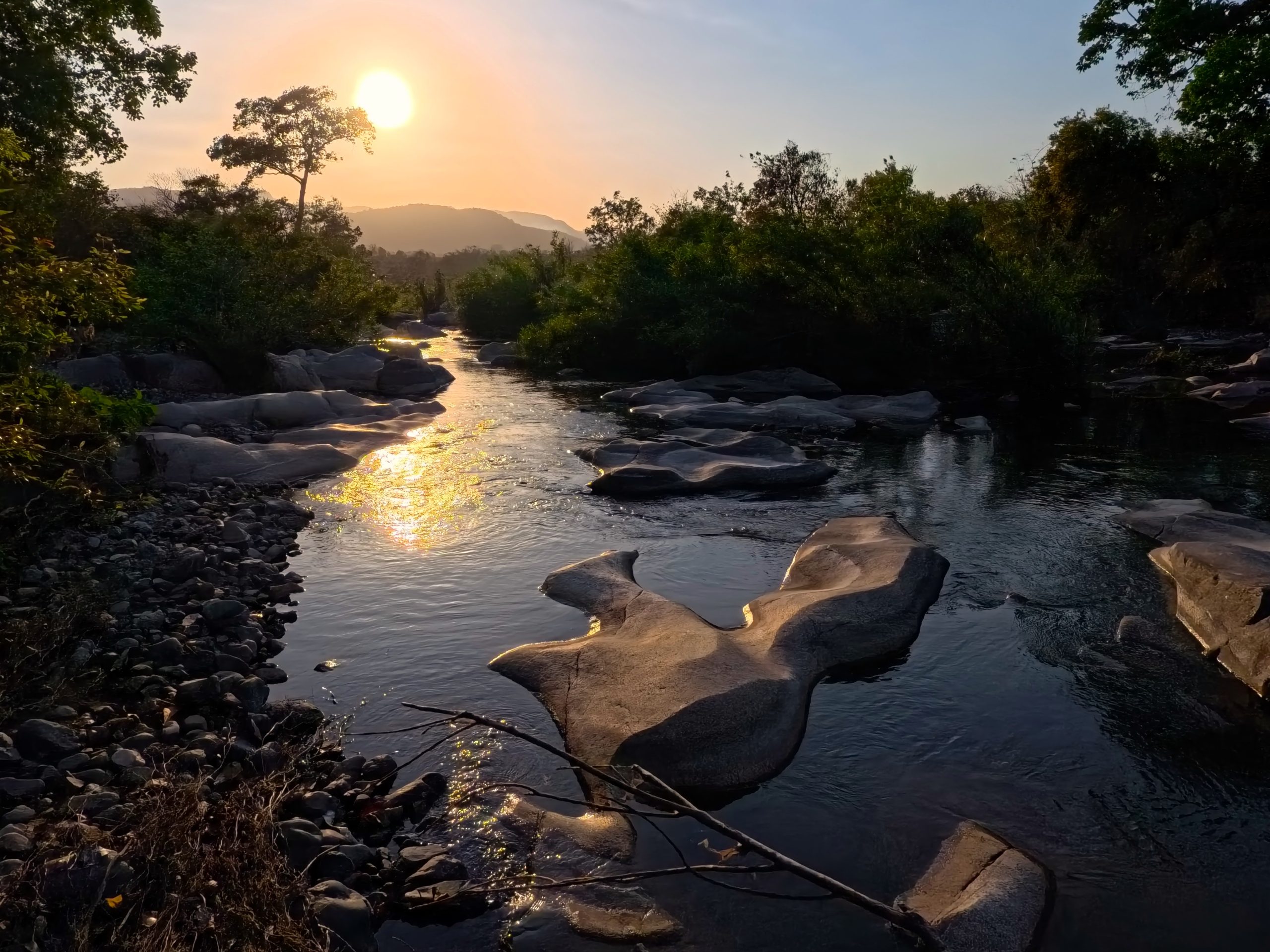
Equidistant from the coast and the highlands, the Lòng Sông River glides through forested valleys gloriously lit by the southern sunshine. Somewhere between the arid coastline and the jungled-covered Central Highlands, the Lòng Sông River flows gently over smooth boulders strewn across sunbaked plains. The banks are gilded with tropical trees, beyond which a vast brush of brittle, crispy foliage extends to the horizon. A single paved road leads into the valley splintering into dirt pathways along the river and its tributaries to potential campsites on the sandy shores. Despite being near the endpoint of the popular Tà Năng-Phan Dũng hike through Sông Mao Nature Reserve, hardly anyone travels here. The sounds that fill the day are all natural: leaves rustling in the breezes, water trickling over stones, birds chirping in the trees, fruit falling and insects burrowing. At night, there’s not a single electric light in the landscape – the panorama from your campsite is lit only by moonlight and starlight, making silhouettes of the mountain ridges and giant trees. These are the kind of travel experiences that only wild camping can produce – no hotel or resort, no matter how fantastically located, can compare. ❤️If you enjoy my work, please support this website with a donation or join my Patreon community or purchase an Offline Guide & Map – I run this website at a consistent loss. Thank you, Tom
🎬 2-minute film (watch in 4K quality for best viewing)
📺Watch on YouTube | 🔔Subscribe to My Channel | 📜 Full guide below👇

Support My Site
Free | Independent | No Sponsored Content
“Hello, if you enjoy my website, please support it.
Thank you.” Tom
[Back Top]
THE GUIDE:
How to Find a Good Campsite on the Lòng Sông River
In this guide, I introduce the Lòng Sông River valley as a potential location for finding good wild camping spots. My map shows the general area and the best way to get there from the coast. I’ve also included a section on useful equipment and supplies to take with you on a trip such as this. As with all wild camping, there are potential risks and hazards, some of which are specific to this region: please make sure to read the Safety & Hazards section of this guide before camping along the Lòng Sông River. Click from the contents below for details. (For more camping guides, see Related Posts.) ❤️If you enjoy Vietnam Coracle, please support this website with a donation or join my Patreon community or purchase an Offline Guide & Map.
Contents:
📍 Map
❤️ Support Us
❤️If you like this guide, please support Vietnam Coracle with a donation or become a member of my Patreon community or purchase an Offline Guide & Map. This website relies on reader support to maintain its independence & quality. Thank you, Tom
📍MAP:
Wild Camping | Lòng Sông River
*Respectful Camping: If you wild camp in Vietnam, please do so respectfully & safely. Be prepared, be sensible, be conscious of the people & natural environment around you. Please read the Safety & Hazards section.
🌄 Location & Things to Do:
❤️Like this guide? Support Vietnam Coracle with a donation or join my Patreon to help keep this website free & 100% independent. Thank you, Tom
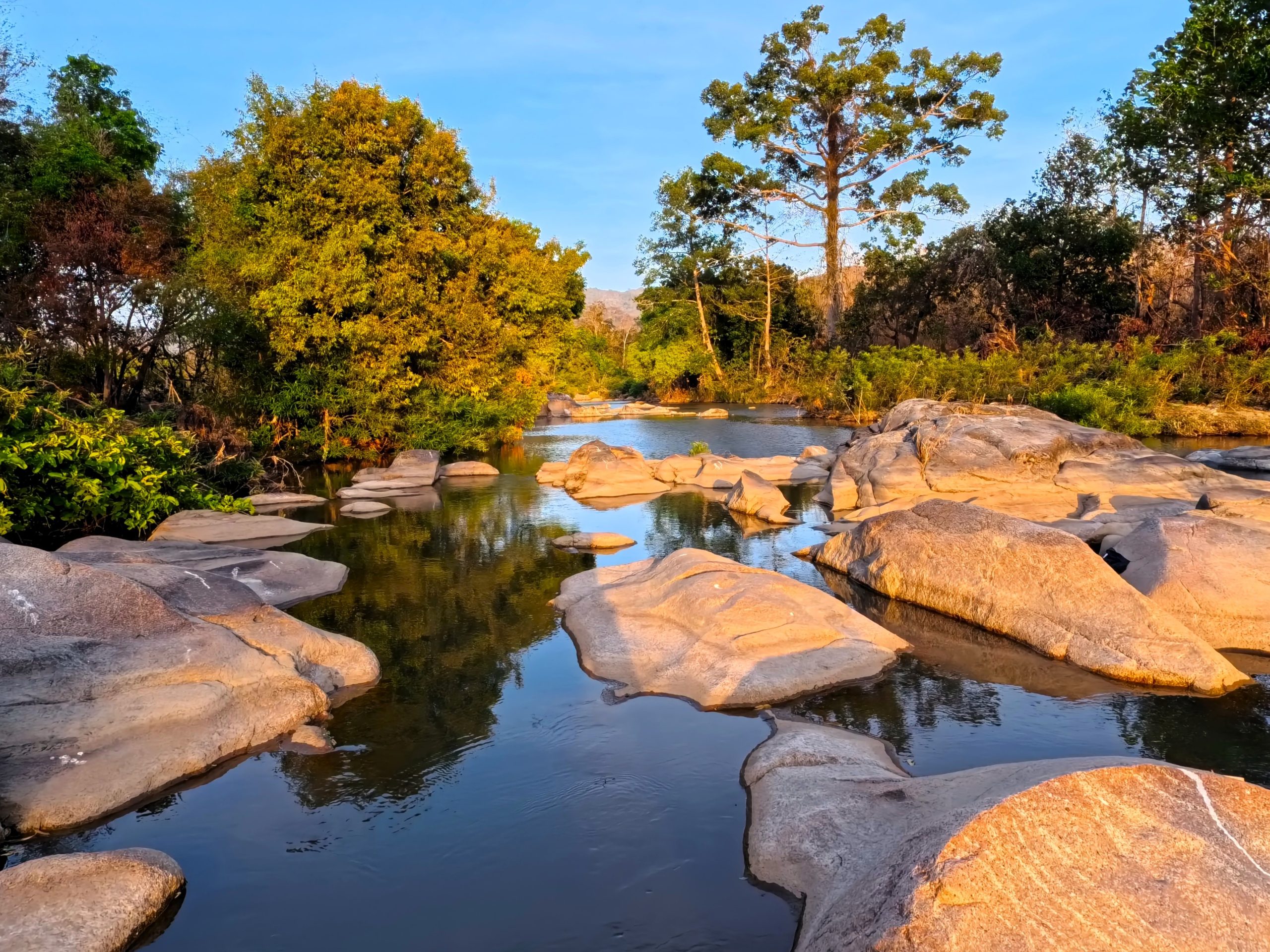
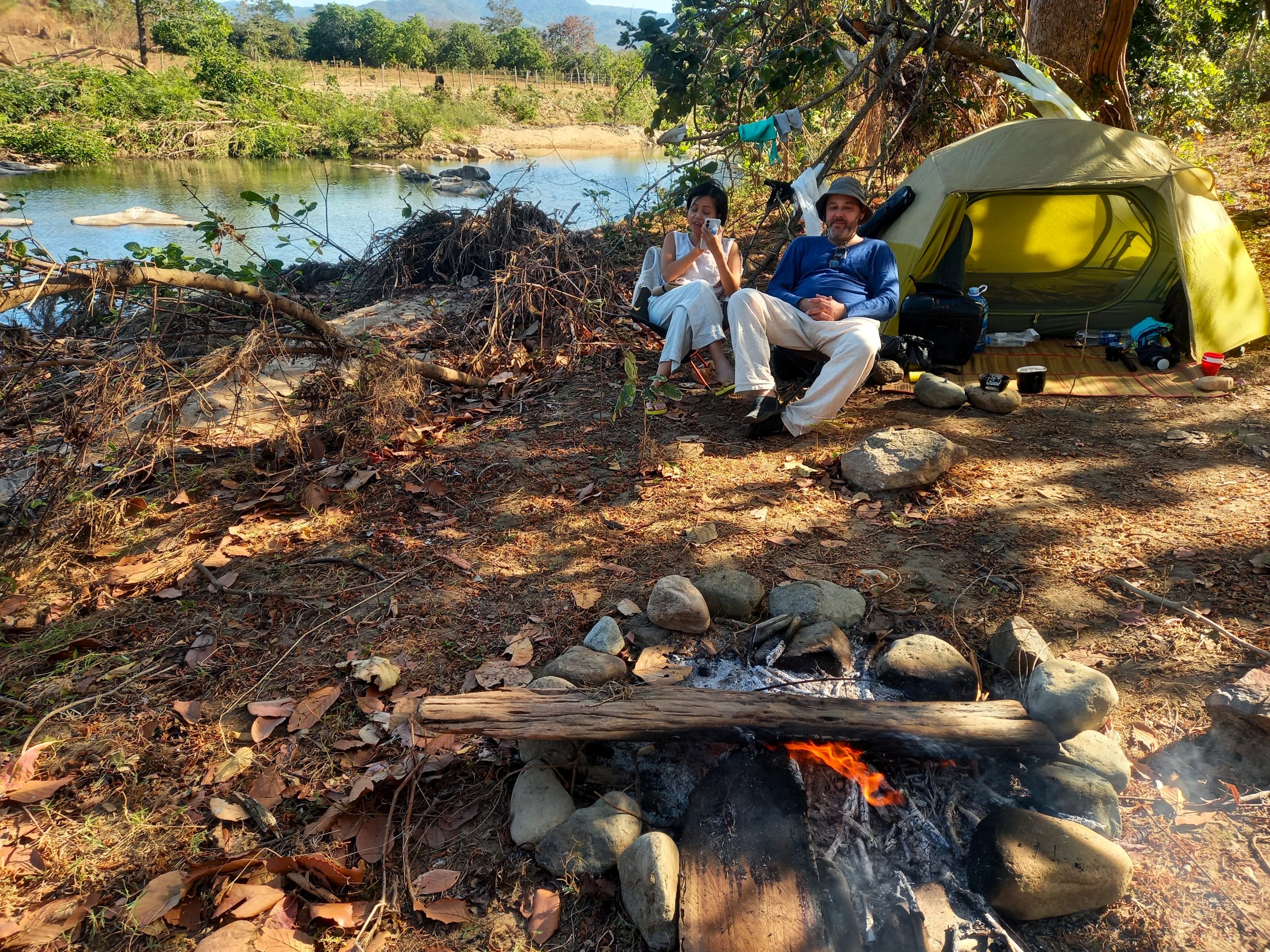
The Lòng Sông River flows from the mountains of Lâm Đồng Province, skirting the borders of Sông Mao Nature Reserve and into the valleys and plains of what was until recently Bình Thuận Province, finally emptying into the East Sea at Liên Hương. In what was once an area dominated by the Kingdom of Champa, many people living in the Lòng Sông valley today are ethnic Chăm, among other ethnolinguistic minority groups. Roughly 20km due north of the coast and 20km due south of its source in the Central Highlands, the Lòng Sông River cuts a pretty valley between gentle hills and wide plains. This is the area that’s best-suited to wild camping as it can be accessed by a combination of paved roads and dirt pathways (see How to Get There). The water here is clean and calm as it rolls across smooth boulders surrounded by trees. The surrounding landscape is arid, dry and sparsely populated. The air is clean and fresh, and the days and nights are quiet and serene. If you can find a good spot, camping here can be a memorable experience. Bear in mind that finding a really good site can take time and effort, but it’s worth it.
Use Google Maps satellite view to find the river and its tributaries, then zoom in to see the dirt lanes and goat paths leading alongside the waterways, going deeper into the jungles and mountains. I’ve marked several general areas and pathways on my map that are worth exploring for campsites. Obviously, a motorbike or bicycle is the best way to search this area; a car would be too big to go down many of the dirt paths, although it is still possible to find some decent campsites on four wheels. The nearest big town is Liên Hương, on the coast some 25-30km away. Apart from that, there are a few little hamlets selling some food supplies and gasoline, but not much else. Swimming in the river is good and there are also a couple of waterfalls in the area, but you’ll need a good sense of direction to find them. In addition, Tháp Po Dam is an ancient Cham temple site located just off the road on the way to Lòng Sông River that’s worth a quick detour.
Weather conditions are best from December-April, which is the dry season. During these months, conditions should be sunny, bright and clear; hot during the days but pleasantly cool at night. By contrast, May to November can see a lot of rain. This changes the landscape – it becomes greener – and the waterways, which become swollen, fast flowing and potentially dangerous. You must be extremely careful of the water if camping at this time of year (see Safety & Hazards). If you’re concerned about rain, use Windy.com and select the ‘rain, thunder’ option from the menu, zoom in on the region and run the satellite for the next 48 hours or so: it’s generally very accurate.

🛵 How to Get There:
❤️Like this guide? Support Vietnam Coracle with a donation or join my Patreon to help keep this website free & 100% independent. Thank you, Tom
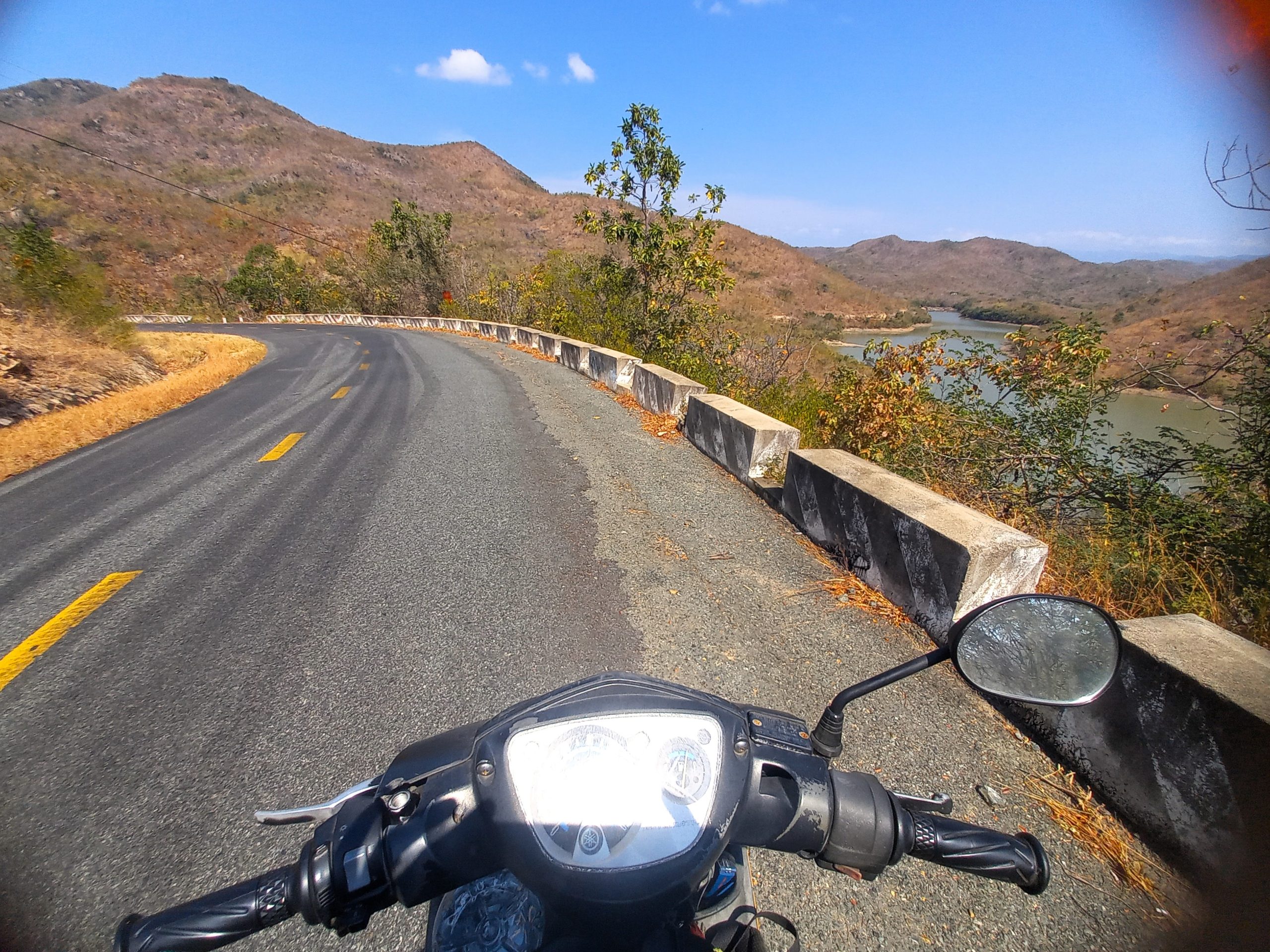
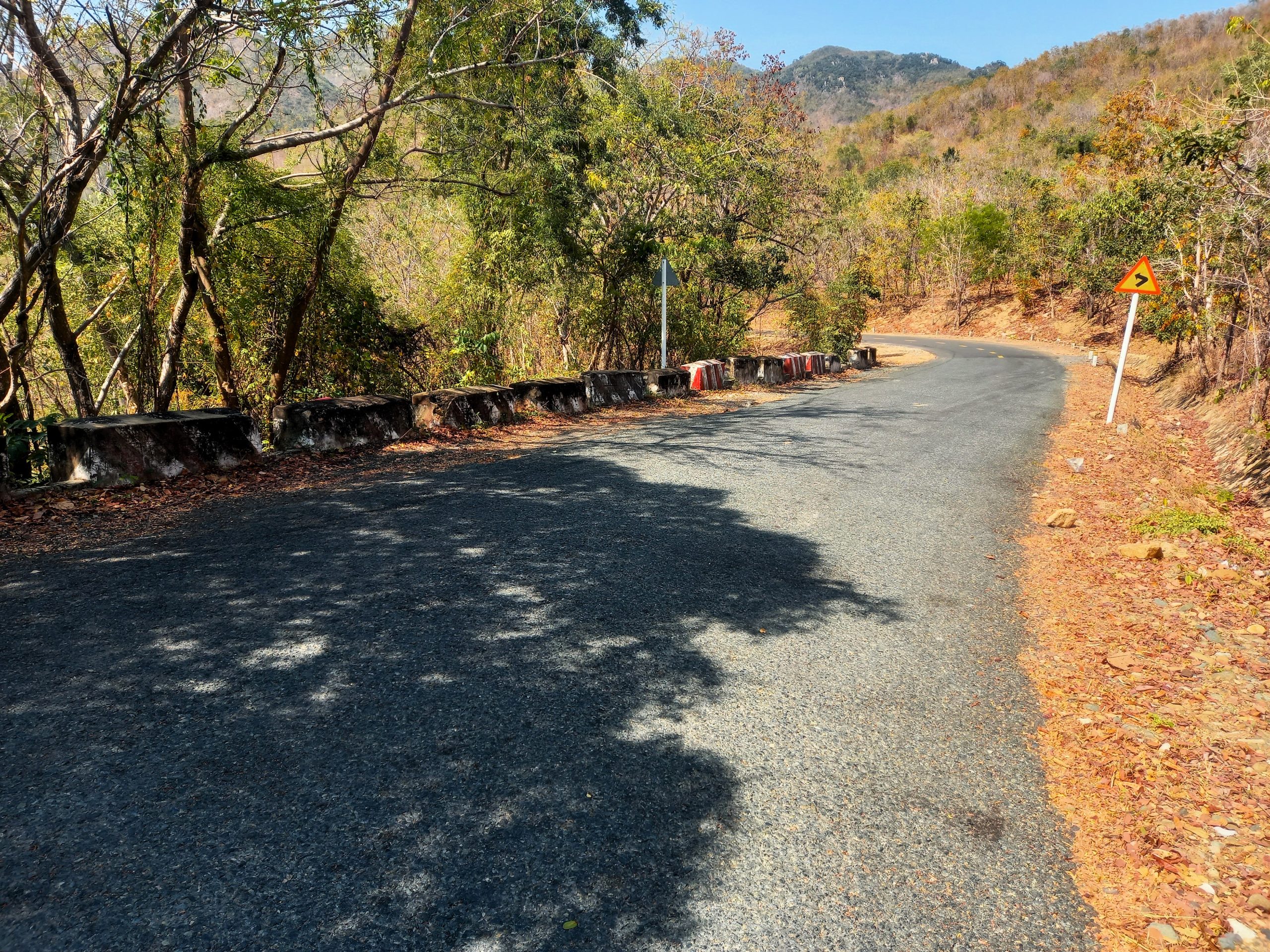
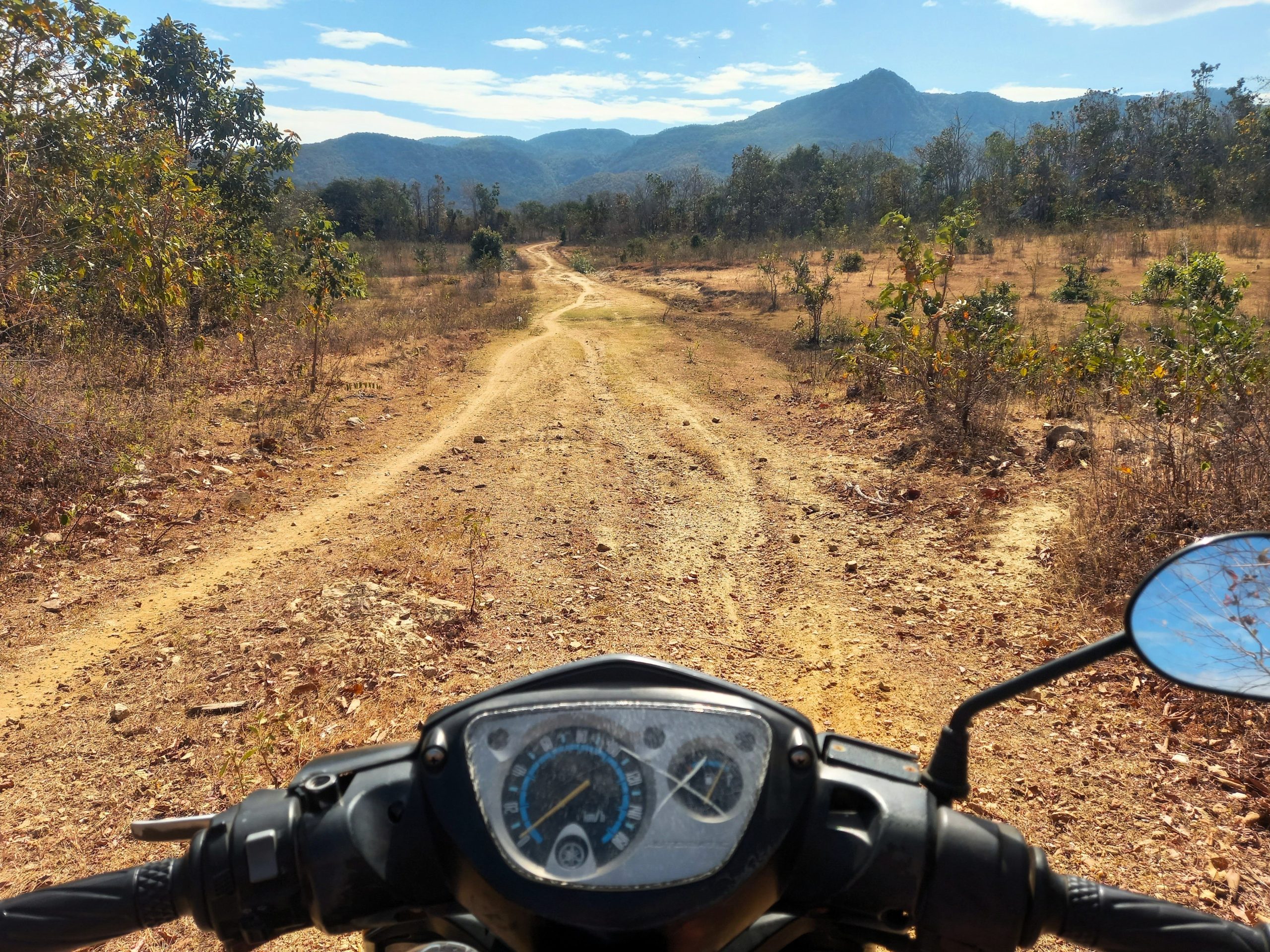
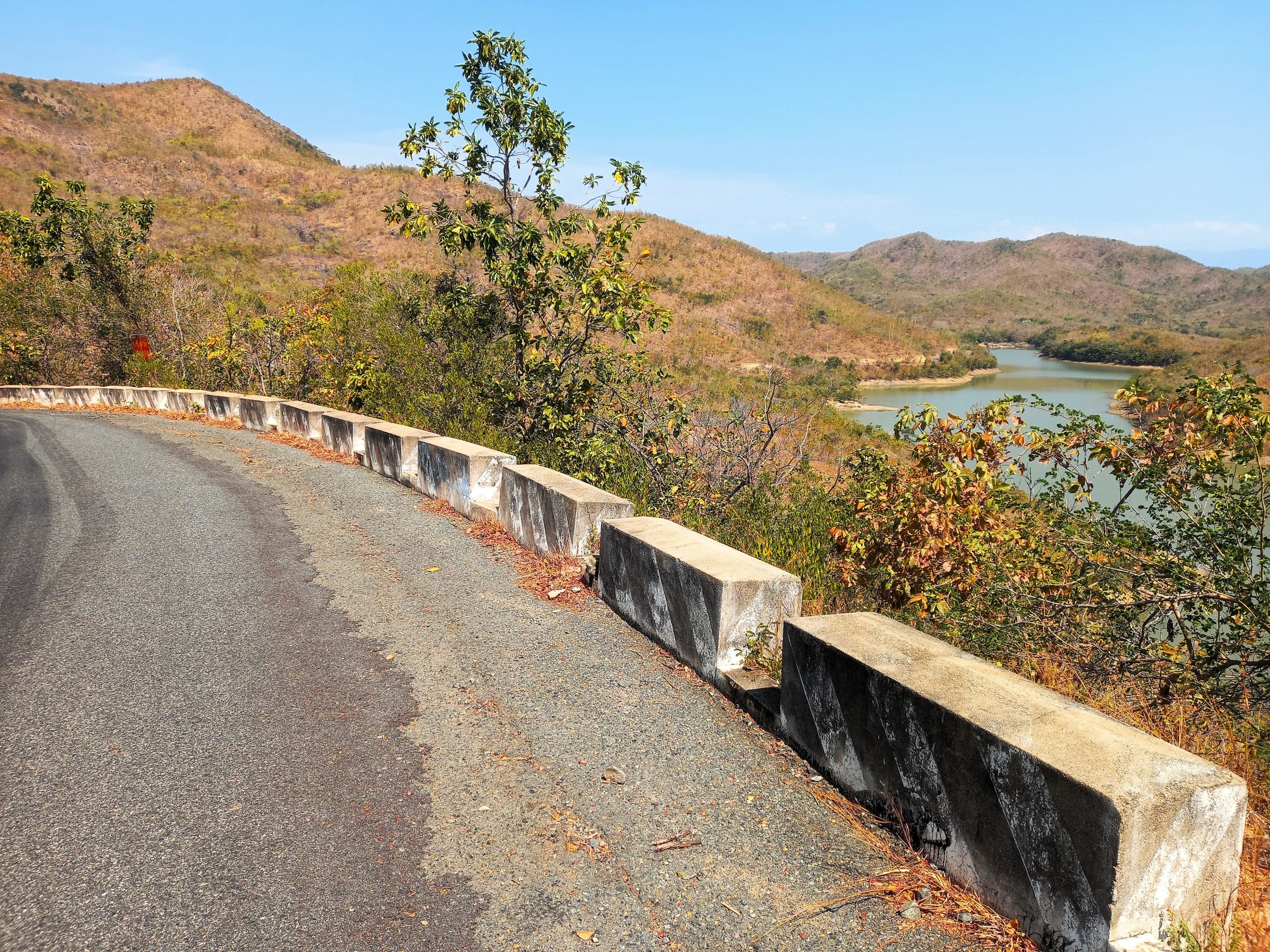
There is only one road into the Lòng Sông River valley. This is an excellent paved road heading due north from Phong Phú village near the junction with CT01 all the way to Phan Dũng (20km). To get here from the coast, the best route is to go to Liên Hương town and then head northwest on a good paved road for 10km before taking the overpass across the CT01 expressway (CT01 is for cars only) and arriving at Phong Phú. From here, the road climbs steeply over the mountains and then winds down the other side skirting the edge of Lòng Sông Reservoir. This is a great ride and very scenic. All the way between the reservoir and Phan Dũng, small dirt lanes and pathways lead off both sides of the main road. Many of these meet the Lòng Sông River or its tributaries and then follow the waterways upstream into the jungles. These are the pathways that you want to explore on your motorbike to find potential campsites. I have marked some of these dirt paths on my map with red lines, but there are many more. Ride carefully and make sure you have Google Maps satellite view of the general area preloaded before you get there, because there’s only intermittent phone signal. Google’s satellite view is the only way that you can see those little dirt pathways leading off the main road and along the river. Obviously, riding off-road requires caution, especially in damp or wet conditions. Ride slowly and carefully. Getting a puncture out here would be very inconvenient; having an accident could be very serious.
*Respectful Camping: If you wild camp in Vietnam, please do so respectfully & safely. Be prepared, be sensible, be conscious of the people & natural environment around you. Please read the Safety & Hazards section.
⛺ Equipment Check-List:
❤️Like this guide? Support Vietnam Coracle with a donation or join my Patreon to help keep this website free & 100% independent. Thank you, Tom
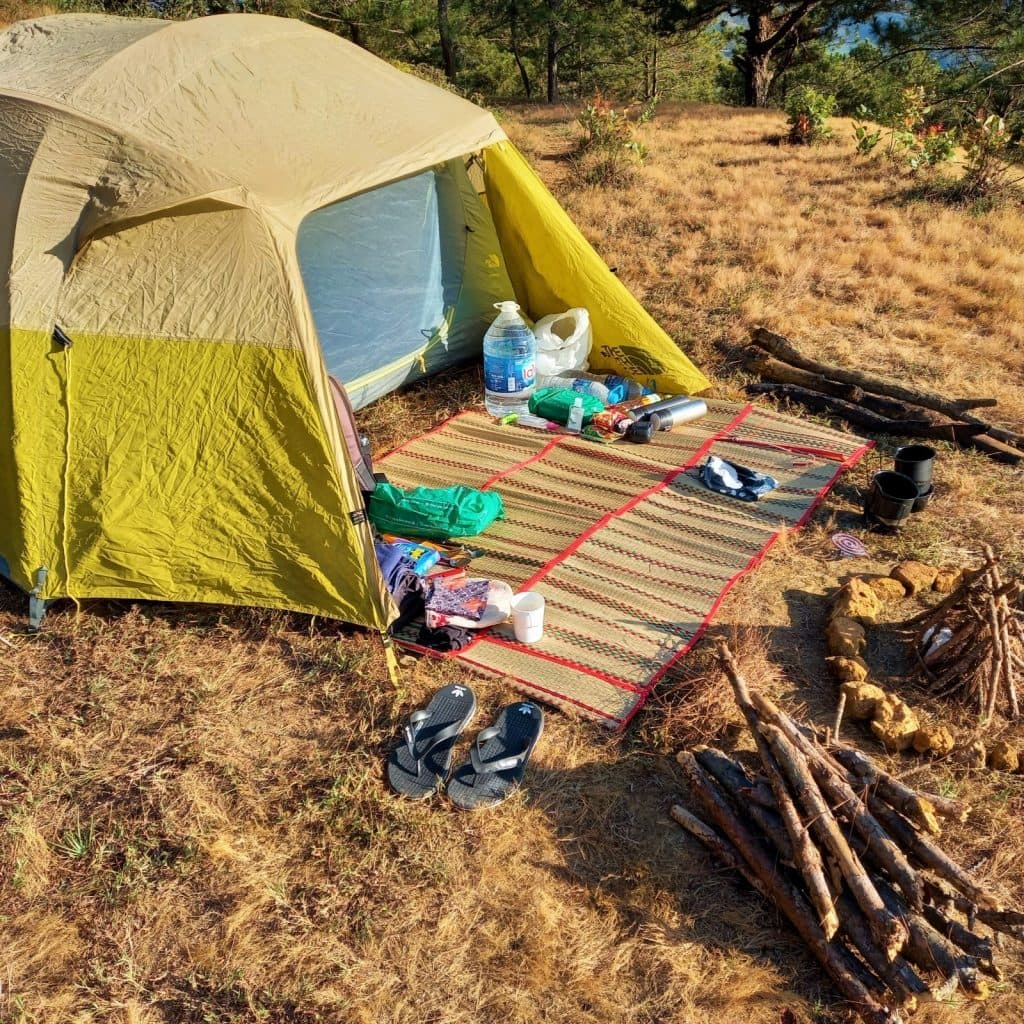
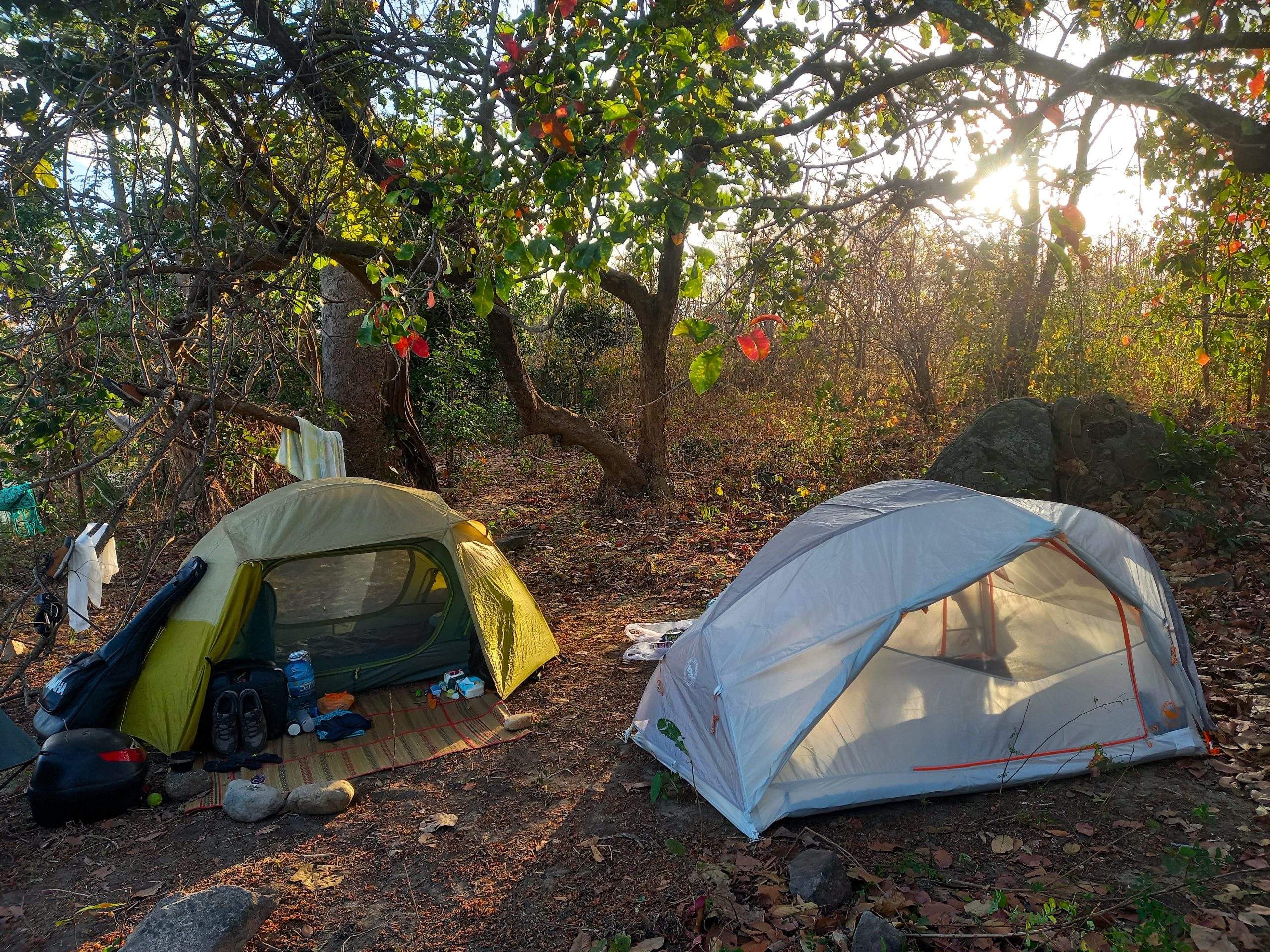
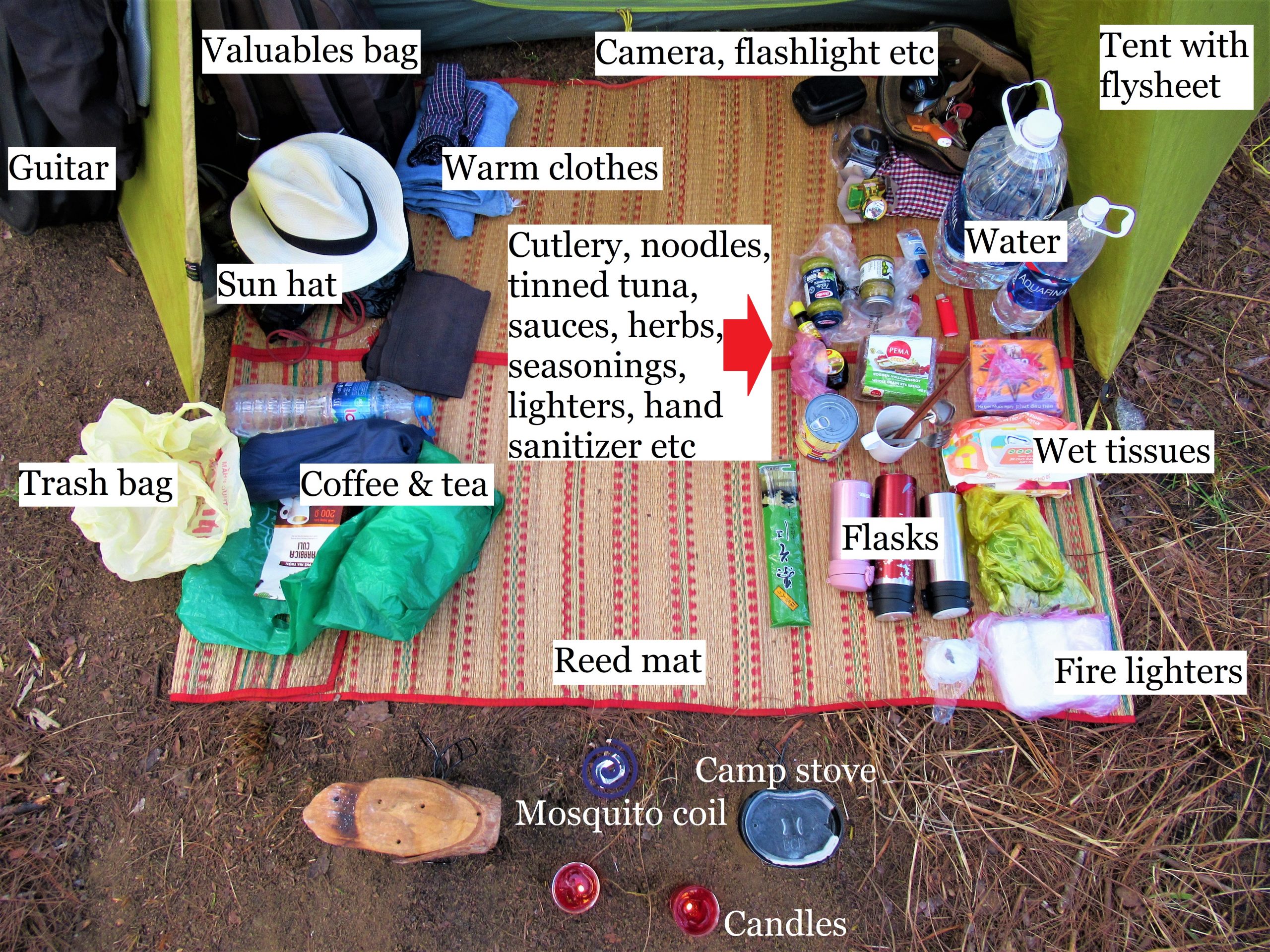
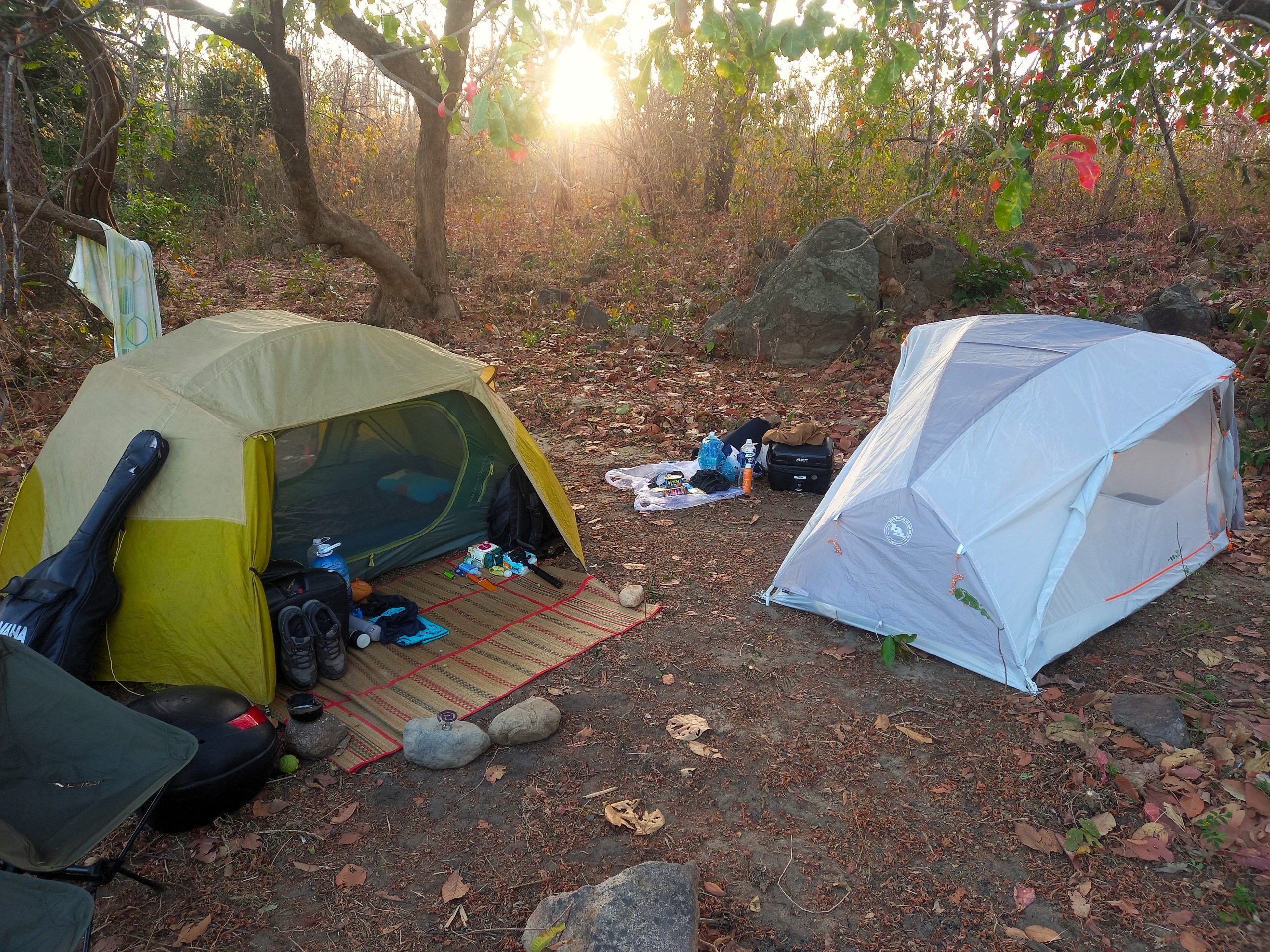
Below is a brief, far from exhaustive equipment check-list for camping on Lòng Sông River. To a certain extent, the success of your camping trip hinges on how prepared you are. I haven’t covered everything here – just some essentials and optional extras which I personally like having with me. If you’ve camped in other places in Vietnam, you’ll already have the equipment down to an art. It certainly isn’t necessary to have all the modern, trendy camping gadgets and accessories in order to have a highly successful camping trip. In fact, to a certain degree, you can end up making yourself too comfortable if you bring too much equipment, and then it doesn’t really feel like camping anymore. However, having the basics does make all the difference – being too cold at night or only eating instant noodles and Pringles, for example, is pretty miserable. The following list is rambling and in no particular order (the annotated picture below might also be helpful):
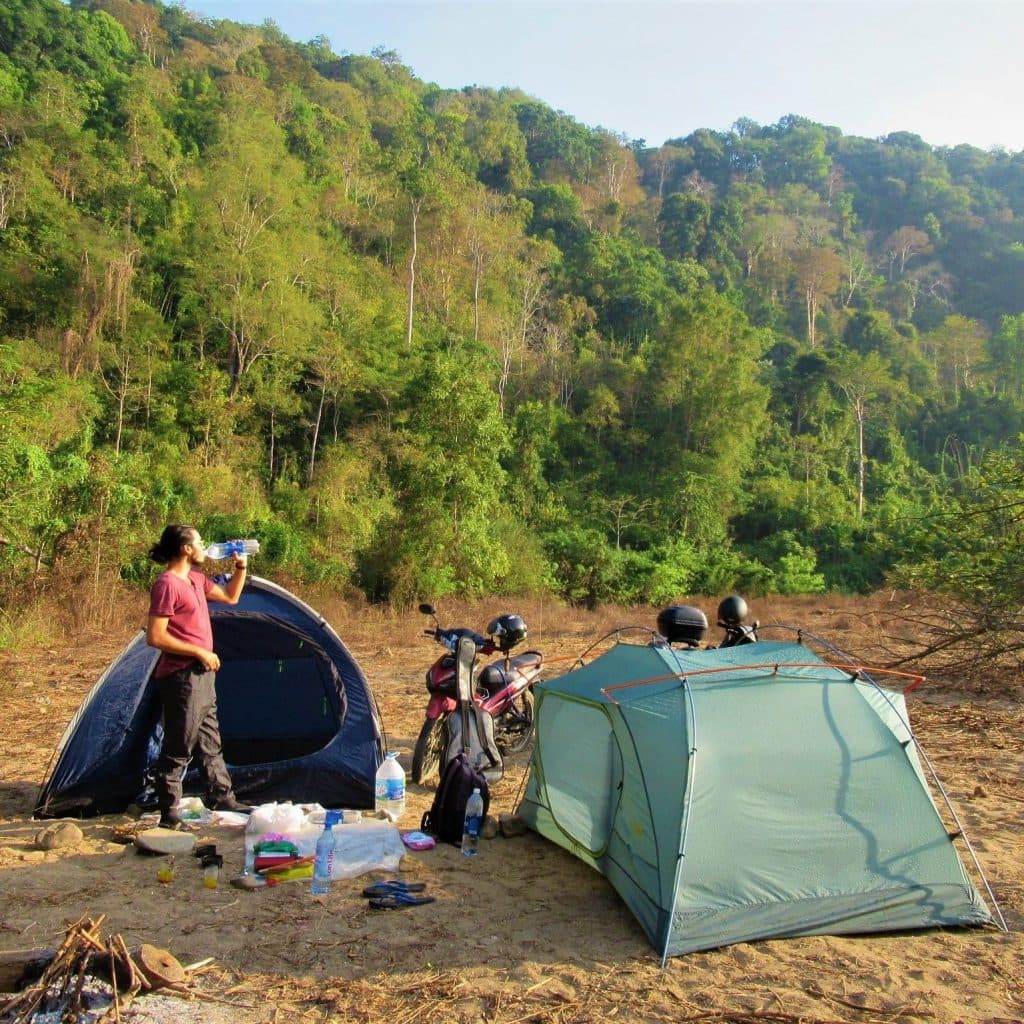
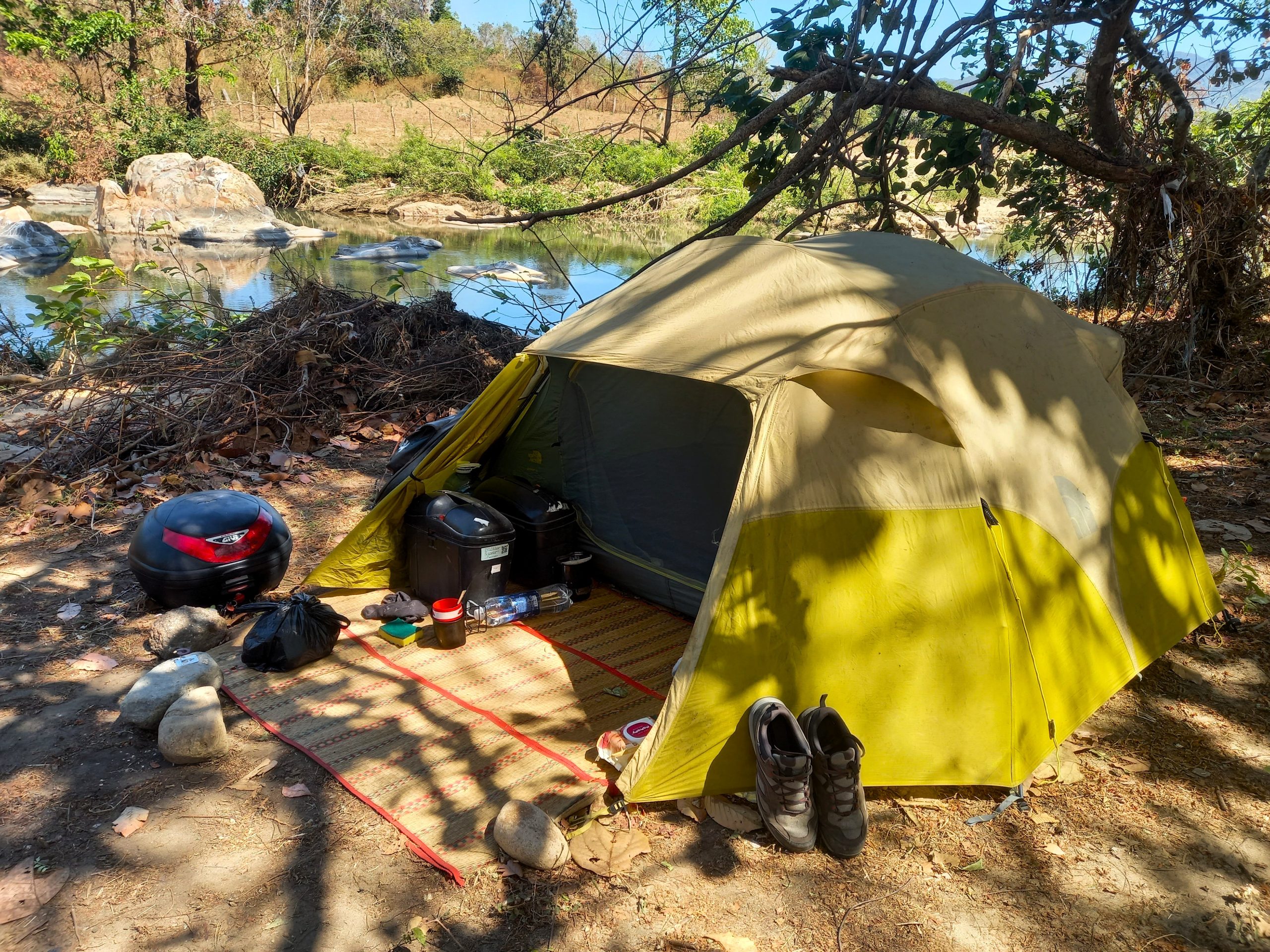
Check-List: Tent or camping hammock (I much prefer the former, but both available to buy in Vietnam; try the FanFan stores in several cities or just search on Shopee.vn), cell phone, Viettel SIM card and data (best coverage when off the beaten path), pre-load Google Maps satellite view of potential camping areas before departure, USB power-bank, flashlight and/or head torch (with extra batteries or a USB-charged flashlight is a good option), money for emergencies stashed in three different places (in your luggage, your motorbike, and about your person), a camp stove, firelighters (cồn khô in Vietnamese; available in most local countryside stores), a couple of cigarette lighters, food and snacks (dried and tinned food is easiest, but you can be surprisingly creative when it comes to camping food), big bottles of water (5-6 litre bottles are available in most stores), a water filter (optional but useful, especially if camping next to a clean river or stream), thermos flasks (for storing boiled water), coffee and tea, some form of alcohol to keep the spirits up at night, such as local liquor (rượu), light-weight warm clothes (it can be cool during the night, but not cold), socks (underrated camping asset – great for walking around your campsite without getting sandy or dirty feet), a mat for sitting on, sandals and a pair of decent shoes (for hiking), motorbike check-up prior to departure (you don’t want to breakdown in the middle of nowhere; punctures are common – I use tubeless tyres that have served me well for years), reading material or a Kindle, long-burning candles (comforting at night, safer, less effort and less attention-drawing than a campfire), mosquito coil and bug spray, guitar/ukulele (optional), cutlery, a good knife, waterproof rain-suit, sunscreen, hat, toothbrush, towel, GIVI box or bungees for securing your luggage on your motorbike, inflatable sleeping mat or yoga mat (makes all the difference if you actually want to get any sleep), pillow or inflatable travel cushion, a light sleeping bag, wet ‘baby’ tissues (great for cleaning utensils), hand sanitizer, passport, lots of common sense.
⚠️ Safety & Hazards:
❤️Like this guide? Support Vietnam Coracle with a donation or join my Patreon to help keep this website free & 100% independent. Thank you, Tom
Camping on Lòng Sông River is a lot of fun, but there are several precautions to take and potential hazards to be aware of. Camping is an increasingly popular activity across Vietnam, but it is not that common in this particular area. Anyone who decides to camp should do so as responsibly as possible. Below are a few things to keep in mind when camping in this region. Click from the list below for details:
- Fires
- Rivers & Dams
- Trash & Environment
- Personal Safety & Possessions
- Animals & Wildlife
- People & Authorities
- Riding Off-Road

[Back]
Fires:
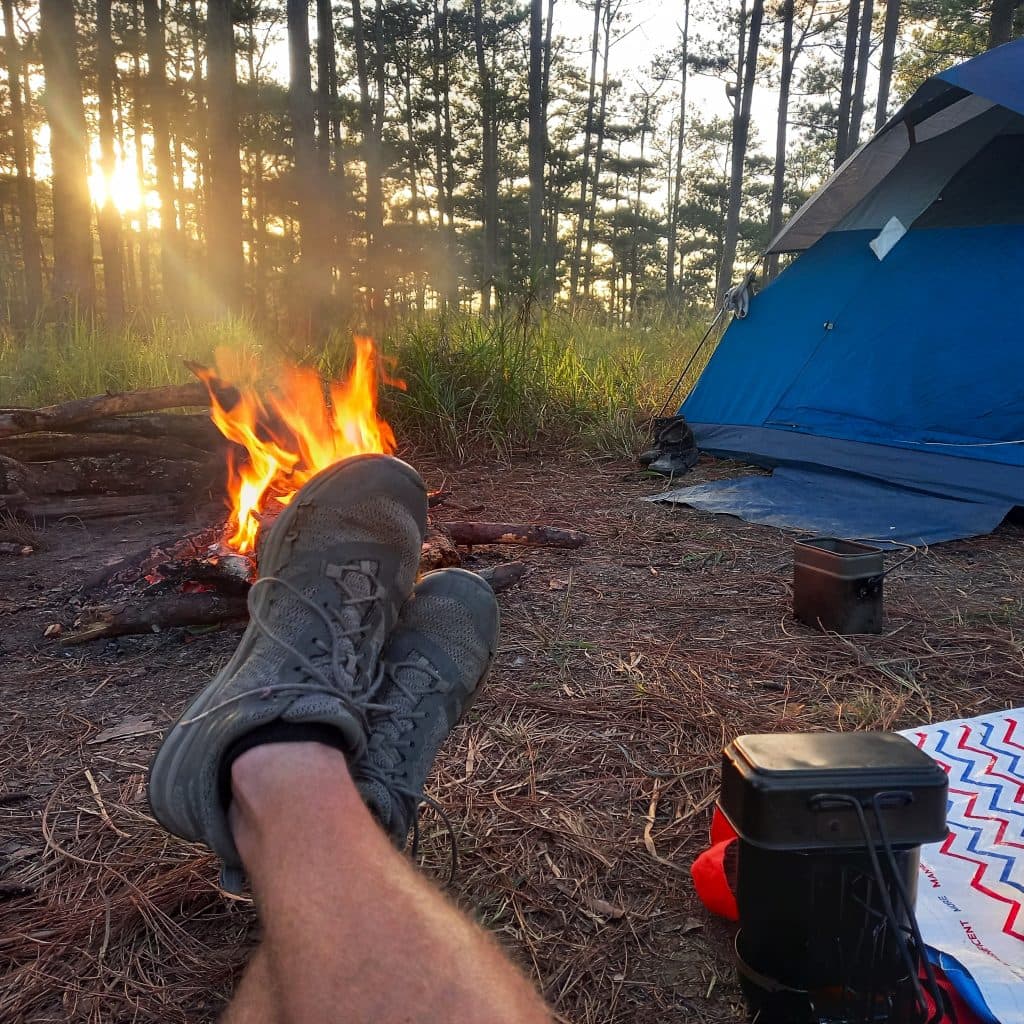
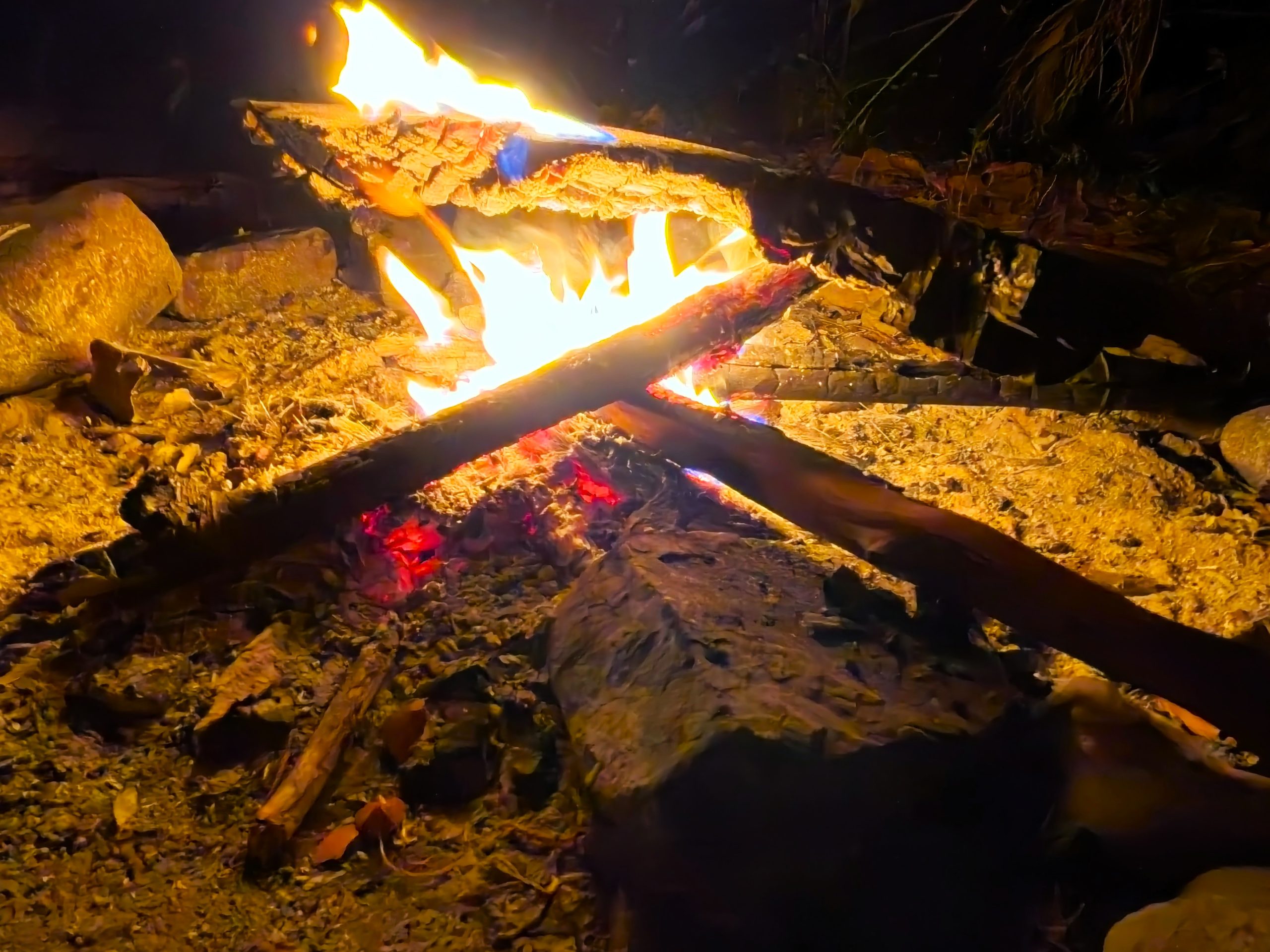
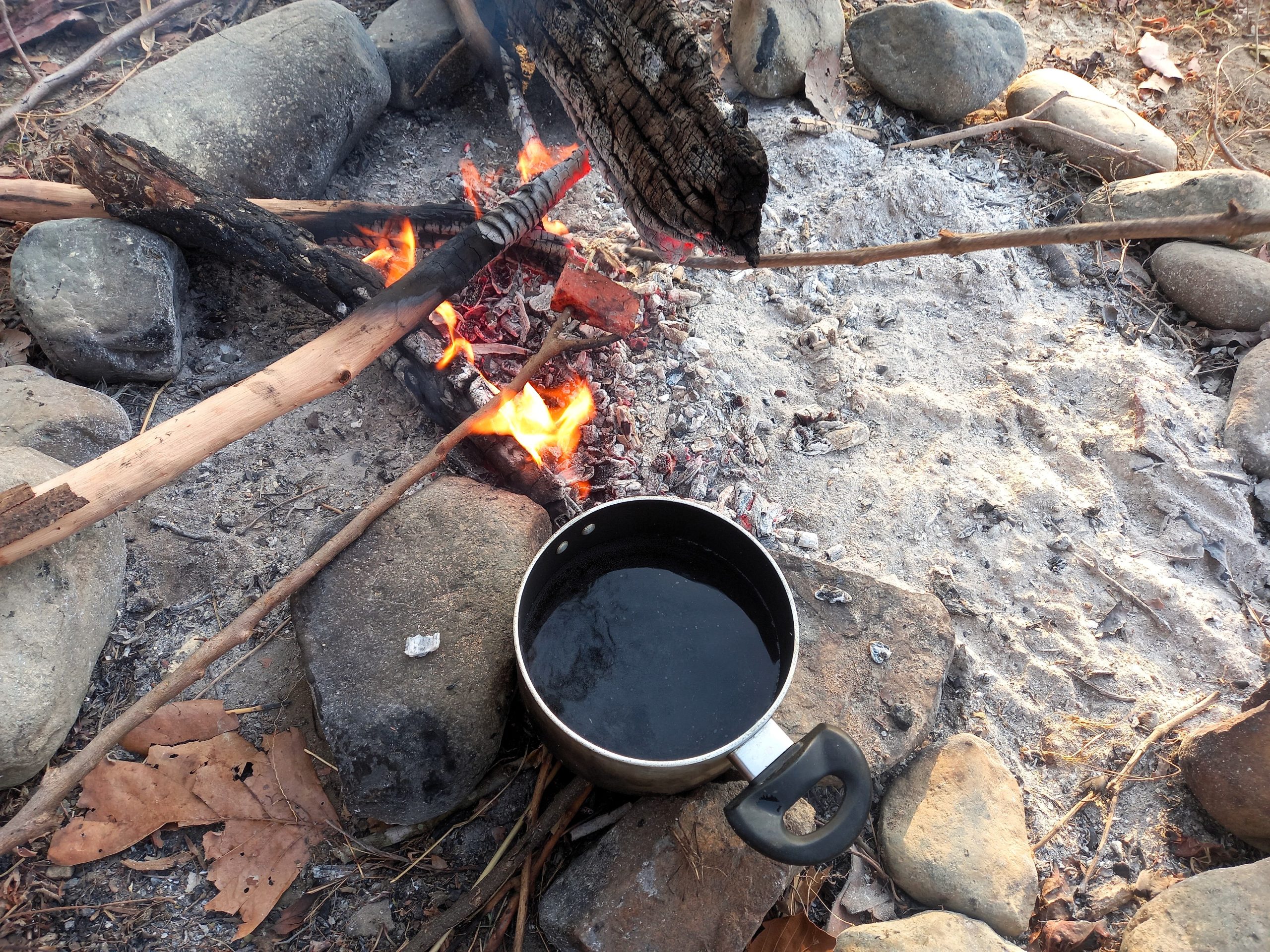
It should go without saying that if you make a campfire, you need to be extremely careful, especially in the dry season, when everything is crisp, brittle and easy to ignite. At this time of year, the forests are very arid and fire can spread quickly and easily. Be sensible: if you make a campfire, keep it small and under control, and don’t take anything for granted.
[Back]
Rivers & Dams:
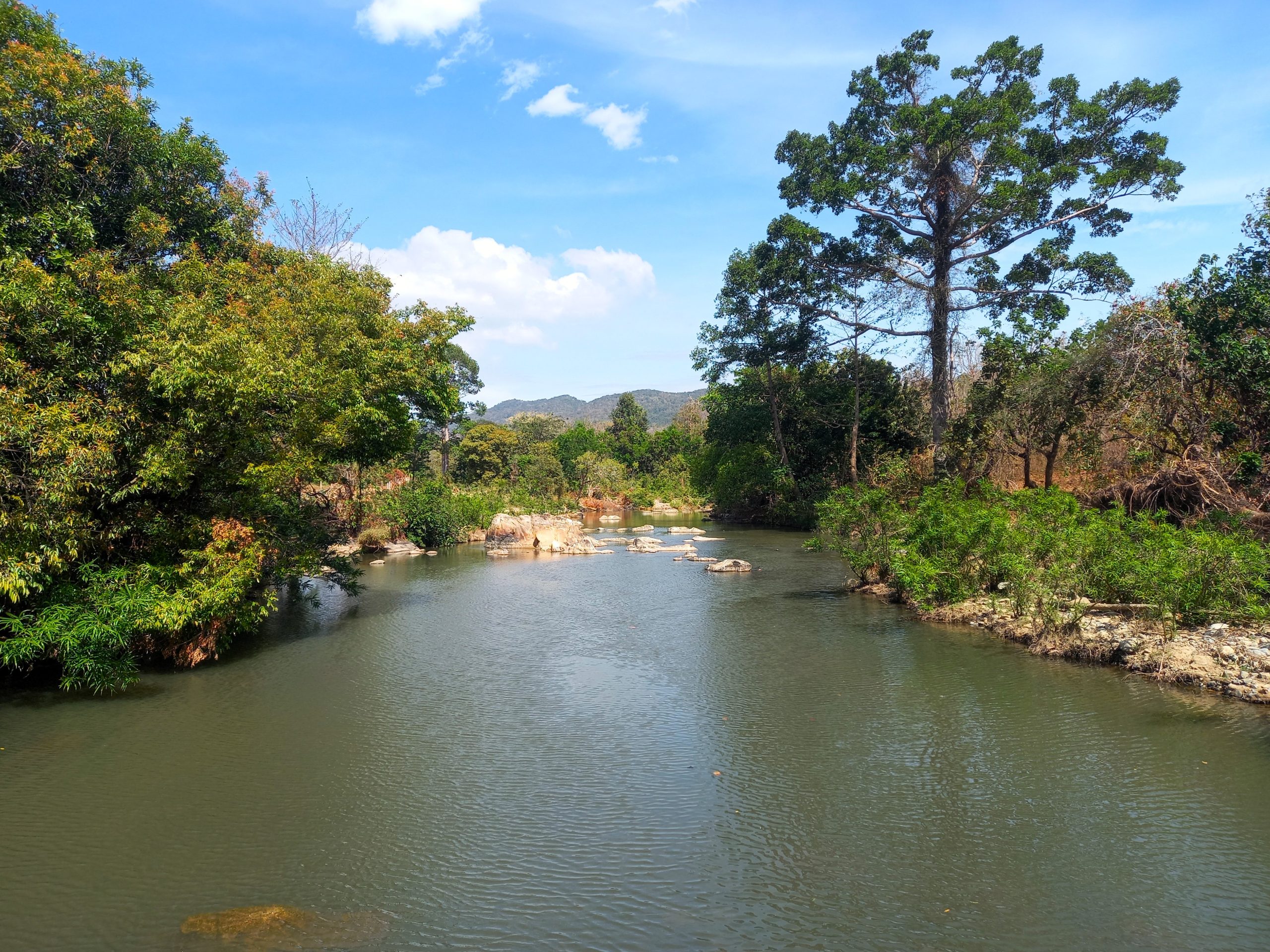
In Vietnam, almost every river of any size is dammed at some point along its course – indeed, often at multiple points. This means that the water flow of many rivers is regulated by dams upstream. If so, the water level of the river can change dramatically up to twice every day when the sluices of the dam are opened and closed. As a result, you must be extremely careful when choosing a campsite next to water or when bathing in a river. Make sure you pitch your tent above the high water mark, not on a ‘beach’, because the latter may be flooded under a metre of water if the sluices are opened upstream. Likewise, when swimming in rivers be careful of a sudden change in flow and volume if the dams open their gates. What’s more, if you’re camping in the rainy season (May-November), heavy rainfall upstream will swell the rivers considerably downstream (even if it’s not actually raining where you are), often resulting in dangerous flash floods. In addition, some of the larger rivers may have very strong currents, so be careful if swimming or bathing.
[Back]
Trash & Environment:
It is a sad fact that litter is a huge problem in the Vietnamese countryside, especially ‘casual items’, such as instant noodle packages, soft drink cans, water bottles, candy wrappers and little sachets of shampoo. Trash is not only discarded by people living locally but also by travelling visitors: indeed, some of the worst-affected areas in Vietnam are the most-popular tourist destinations, including camping spots. Set an example by making sure you leave your campsite spotless. Try to limit the amount of single-use plastic you consume while camping by bringing along items such as flasks, reusable food containers, and a water filter. Any litter you do generate, tie up in a bag and dispose of properly in the nearest town the next day. When going to the toilet outside, dig a little hole in the ground and cover it up again. This serves two purposes: it will enrich the soil and won’t ‘disturb’ any passersby.
[Back]
Personal Safety & Possessions:
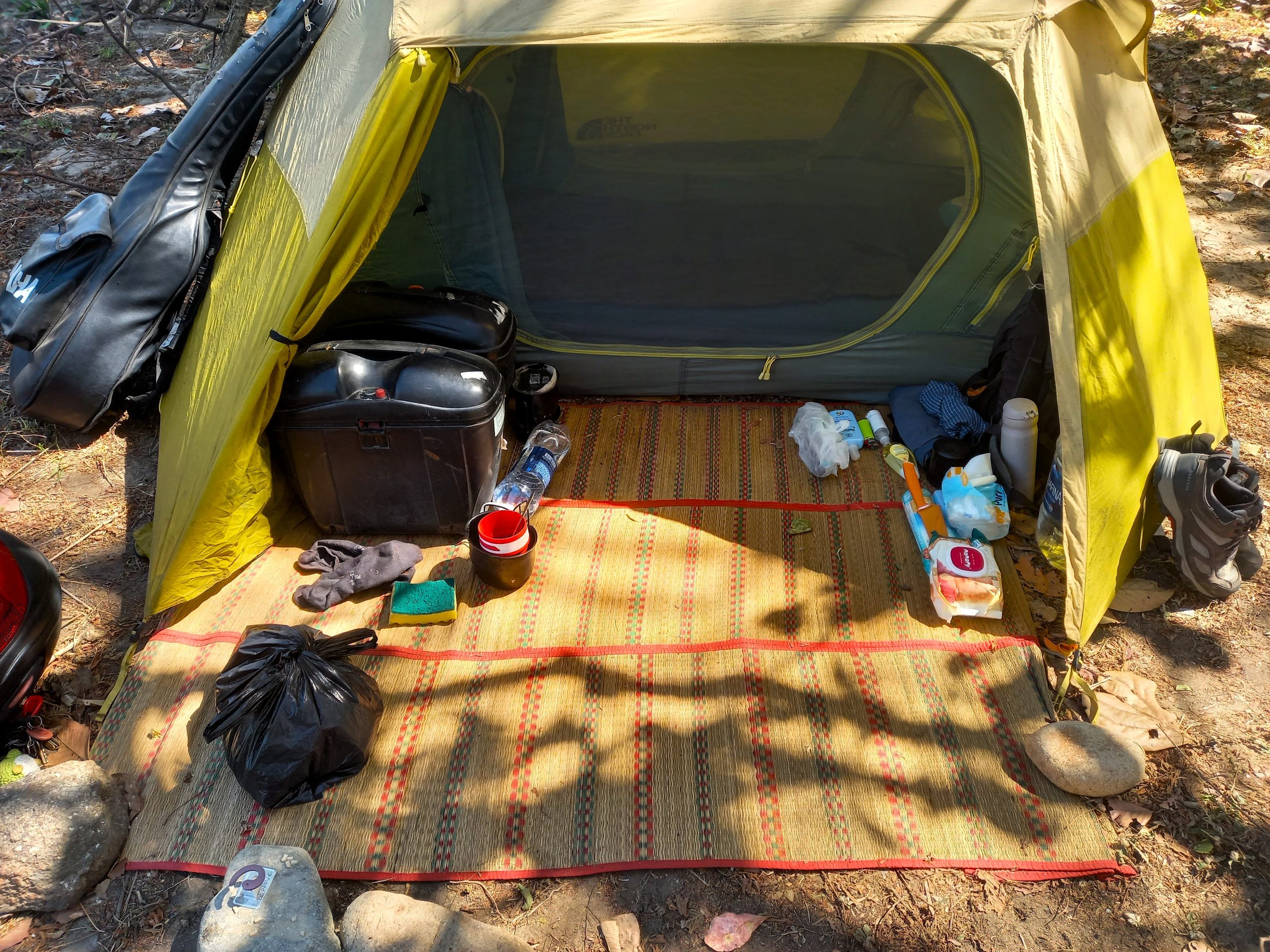
Vietnam is generally a very safe country in which to travel. But it’s still wise to be careful with your most valuable possessions. At night, lock the wheel of your motorbike and keep it close to your tent. I also leave my bike facing in the direction of ‘escape’, if for some reason I need to make a quick exit during the night (bad weather, perhaps, or some unforeseen circumstance). When you go to sleep, make sure you have all of your most important and valuable possessions with you inside the tent, such as money, passport, phone, etc. I also keep my knife at arm’s reach in the tent at night. UXO (unexploded ordnance) leftover from the wars of the last century is still a danger in Vietnam (although generally not is this particular region). Use your common sense: don’t forge a path into untrodden forest and jungle, don’t dig deep holes in the ground, and don’t touch any metallic object you see in the earth. Move carefully and with purpose – even a twisted ankle out here would be a big problem: you’d need to drag yourself to the nearest hamlet and then get a lift to the nearest medical centre. Always be careful and do your best to avoid any kind of injury.
[Back]
Animals & Wildlife:
Most of the big animals and predators that used to roam this region – tigers, crocodiles, white rhino, elephants, black bears – are now long gone: hunted and poached to near extinction. Nonetheless, nighttime can still be a scary and sobering experience: the darkness belongs to animals, not humans. You get a real sense of this as you lie in your tent, listening to the chorus of animals and insects outside in the big, black landscape. Don’t leave food outside your tent at night: clean your utensils, stash your food in a container, and tie up your litter in a bag. Snakes and mosquitoes are probably the most dangerous animals you’re likely to encounter, neither of which like fire. Snakes, apparently, don’t like heavy footfall and are unlikely to seek out a place of human activity. (I’ve seen many snakes in Vietnam, but none when I’ve camped.) For mosquitoes, burn a coil throughout the evening and night, and bring bug spray if you need it. In the night, there are occasional howlings, animal calls, and rustling in the trees and brush. It takes some getting used to, but after a few camping trips, these nighttime sounds become a comfort rather than a concern.
[Back]
People & Authorities:
I’ve camped dozens of times all over Vietnam: I’ve never been told not to camp and I’ve never had any major problems with people or local authorities. However, as a general rule, try not to draw attention to yourself: wild camping is still quite unusual in this part of Vietnam, so anyone who sees a traveller (especially a foreign one) setting up their tent in the middle of nowhere will naturally be curious or even, in some cases, suspicious. Try to be as inconspicuous as possible: it’s best to make sure no one sees you setting up camp and that you aren’t visible from any road, lane or pathway. This is because you don’t want to attract the curiosity of any passersby. If you do encounter anybody, the right thing to do is to ask permission to camp: in almost every situation in my experience, people will be happy to let you (albeit confused as to why you’d want to). And, obviously, pay attention to your surroundings: make sure you’re not camping on someone’s farmland or close to a military post or a national border. In some areas you may encounter local authorities who question you if they find your campsite. In general, this is just because they’re incredulous as to why you’d choose to camp out rather than stay in a nice hotel by the beach. If this happens, be polite, smile, try to explain that you just love the landscape and being outside and that you have no intention other than to sleep out and maybe bathe in the river. In most cases, you will be given permission; in some cases you might be asked to register at the local authority with a photo of your passport; in rare instances, or if you behave insensitively, you could be asked to leave.

[Back]
Riding Off-Road:
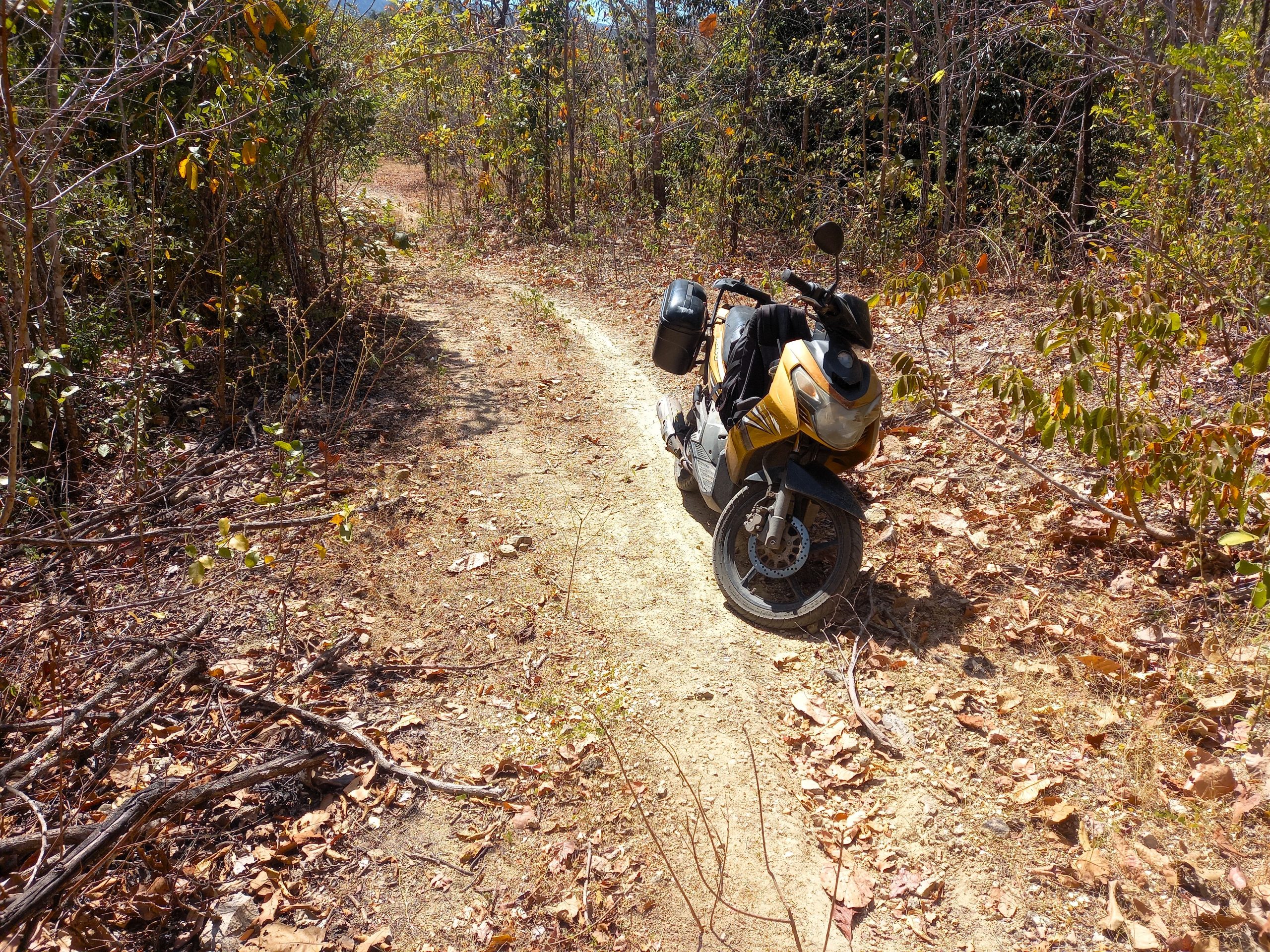
In order to find the best possible camping spots near Lòng Sông River, it will almost certainly be necessary to ride off-road for some distance. Paved back-roads turn into pot-holed lanes, dirt roads into rocky goat paths and narrow footpaths. Riding off-road can be tough, slow and dangerous, especially if, like me, your motorbike wasn’t designed for such use. However, with care and patience even an old automatic like my motorbike can do it. Ride slowly and carefully, because punctures and falls are highly likely if you ride recklessly off-road. Also, riding on dirt roads is much easier in the dry season (December-April): the same roads when wet can be extremely difficult and treacherous.
Support My Work
Free | Independent | No Sponsored Content
“Hello, if you enjoy my website, please support it.
Thank you.” Tom
*Disclosure: I never receive payment for anything I write: my content is always free and independent. I’ve written this guide because I want to: I like camping here and I want my readers to know about it. For more details, see my Disclosure & Disclaimer statements and my About Page