First published April 2026 | Words, photos and film by Vietnam Coracle | Read time 15 minutes

Tom Divers is the founder and creator of Vietnam Coracle. In 2005 he moved from his native London to Vietnam, where he has been living, working and travelling ever since. He pays rent in Ho Chi Minh City but is more often on the road, riding his motorbike a quarter of a million kilometres across Vietnam to research guides to the farthest-flung corners of the nation. When he’s not in the saddle, you’ll find him on a beach with a margarita, in a tent on a mountainside or at a streetside noodle house: in other words, at the ‘office’. Read more about Tom: Q&A, About Page, Vietnam Tourism website.
A Tropical Island in a Beautiful Bay with a Sustainable Beach Resort
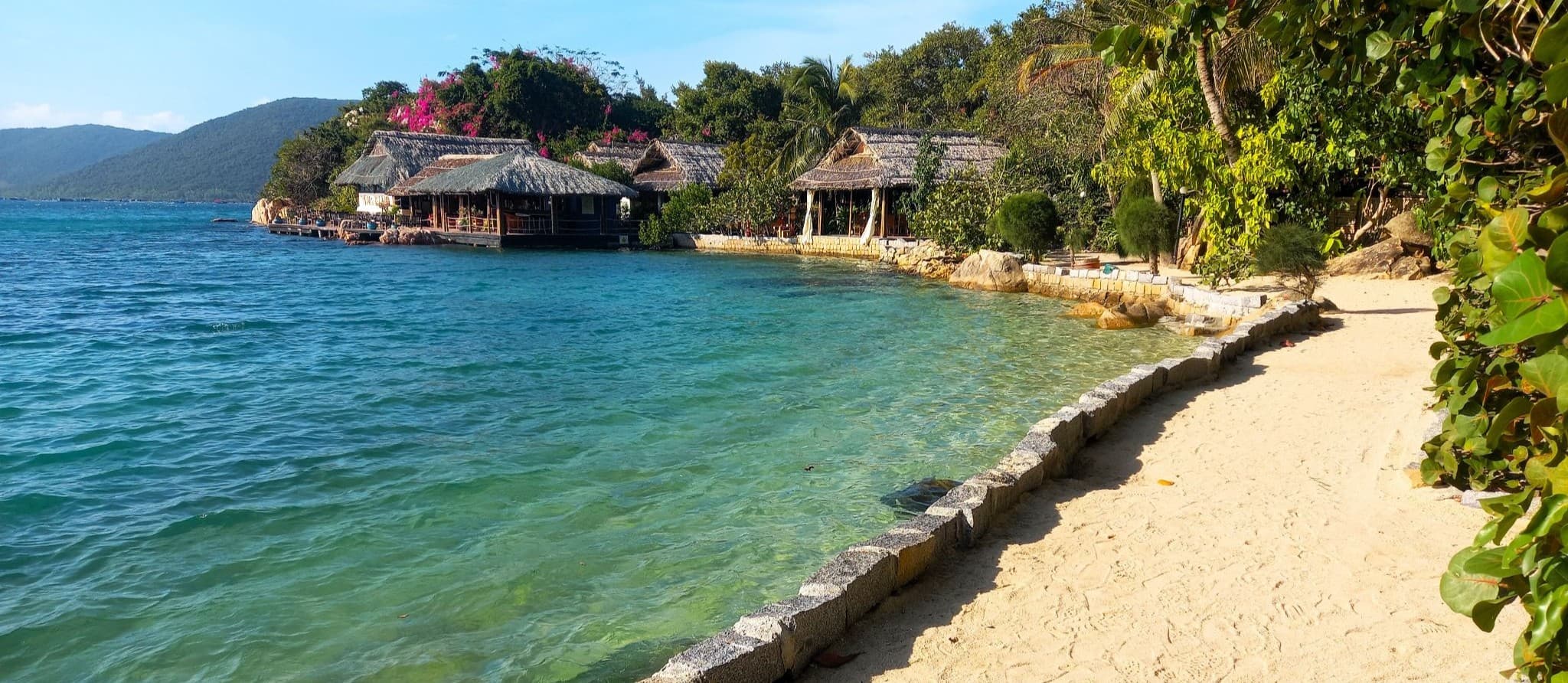
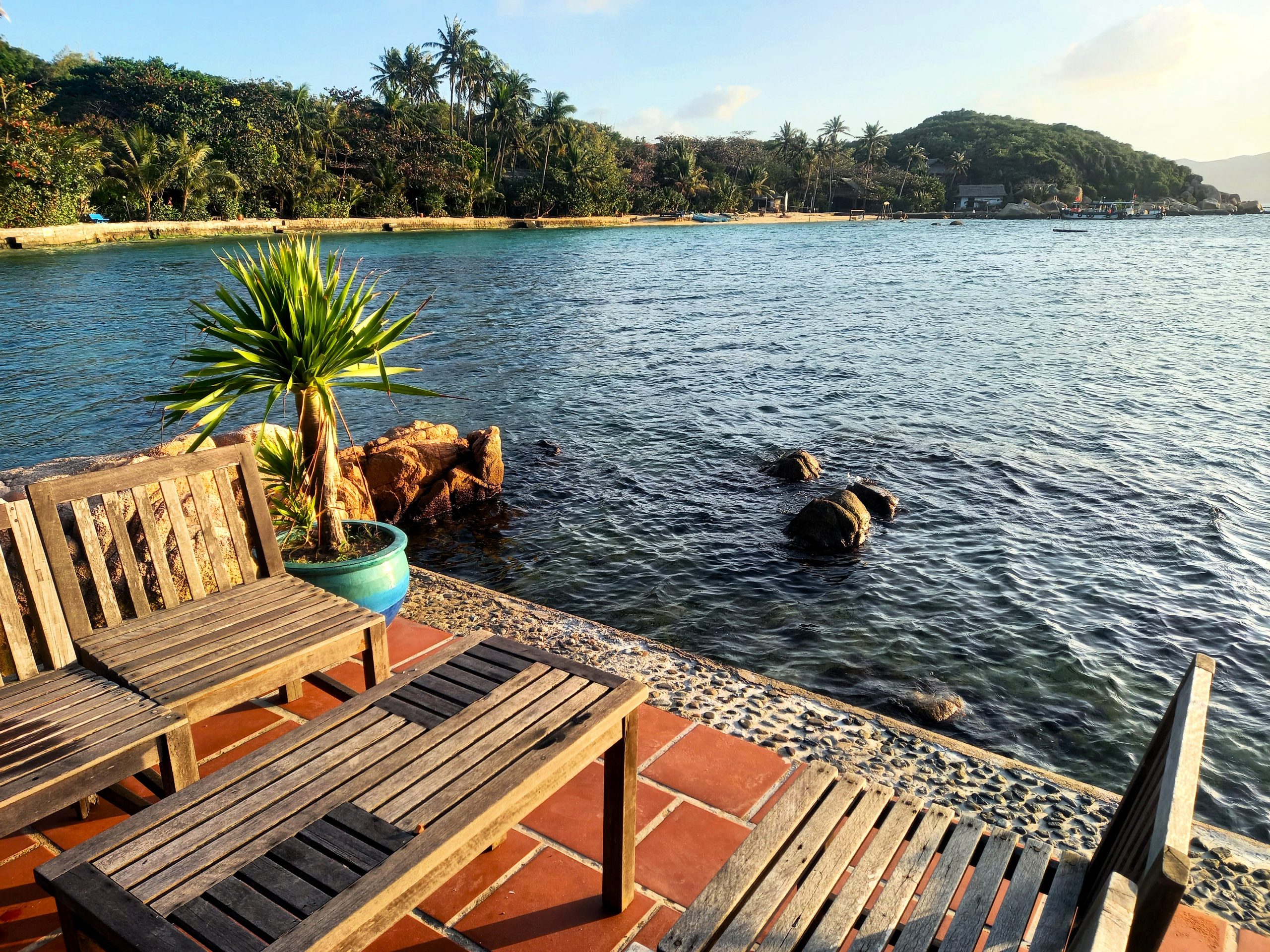
Located in a sheltered bay surrounded by forested mountains, green islets and floating lobster farms, Whale Island (Hòn Ông) is home to a sustainable resort run on renewable energy supplied by its own solar field. Only accessible by boat, there are no roads or vehicles on Whale Island, nor any settlements or shops. Apart from the resort, which occupies a single bay, the island is completely deserted. Named after the whales that have apparently been spotted in the bay and linked to local legend, the resort was founded by French-Vietnamese couple Michel Galey and Lan Phương in the late 1990s. To maintain its astonishing natural setting, Whale Island is committed to protecting the environment and supporting the local community. The bamboo, wood and thatch bungalows lining the beautiful beach do not feature air-conditioning, TVs or telephones. There’s no swimming pool on the island and Wi-Fi is only available in the bar and restaurant. Meals are set menus on a daily rotation and most room rates are either half- or full-board. Although conducive to relaxation, Whale Island is setup as an active retreat, offering good sea swimming, snorkeling, diving, hiking, kayaking and more. For the best chance of good weather and sea conditions, visit from March-September. Staying at Whale Island requires a bit of pre-planning. Upon booking, before payment is finalized, guests receive an email with information about the resort’s amenities, transportation, dining and ethos in order to manage expectations and make arrangements. Rates vary from $50-$150 per night depending on room and board type. 👉Check rates on Agoda.com or Whale Island website or email: info@whaleislandresort.com.
🎬 2-minute film (watch in 4K quality for best viewing)
📺Watch on YouTube | 🔔Subscribe to My Channel | 📜 Full review below👇

Support My Work
Free | Independent | No Sponsored Content
“Hello, if you enjoy my website, please support it.
Thank you.” Tom
[Back Top]
THE REVIEW:
📍Address: access via boat Đầm Môn pier, Vạn Thạnh commune, Vạn Ninh district, Khánh Hòa Province, Vietnam [MAP]
💰Average Rates: $50-$150/night| BOOK HERE | info@whaleislandresort.com | (+84) (0) 935-466-245
Contents:
📍 Map
🤔 Summary
❤️ Support Us
Search Box: Check Rates & Book👇
❤️Vietnam Coracle reviews are 100% independent. I was not paid or sponsored in any way to stay at Cham Villas. I stayed at my own expense and have written this review on my own terms. If you value independent travel writing, support Vietnam Coracle with a donation or become a member of my Patreon community or purchase an Offline Guide & Map. Thank you, Tom
📍MAP:
Whale Island (Hòn Ông)
⚓ Getting There:
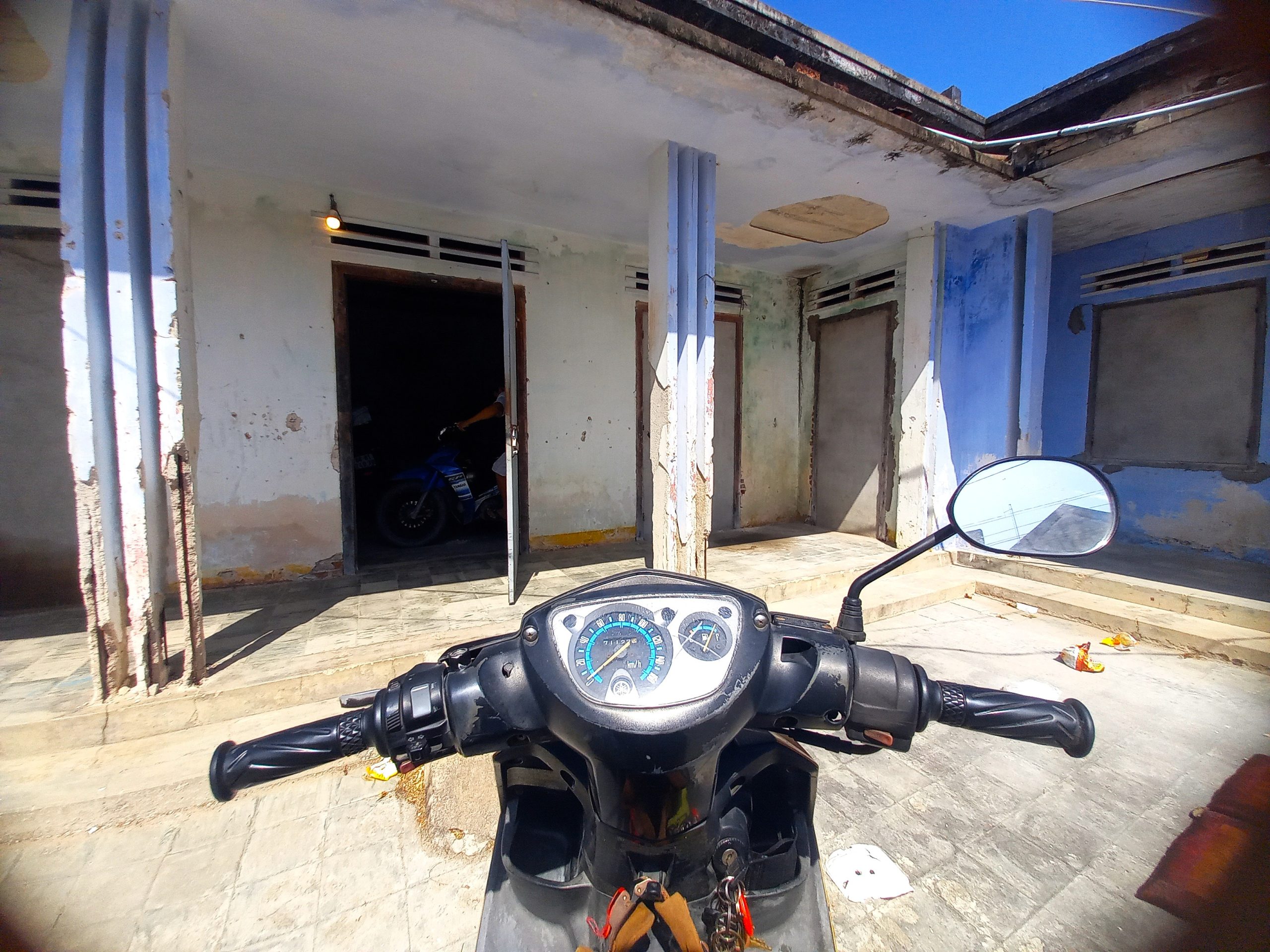
Whale Island is only accessible by boat. Getting there requires a bit of pre-planning: it’s not the kind of place you can just show up at on the spur of the moment. Firstly, you need to get to Đầm Môn Port (Bến Tàu Đầm Môn), located halfway along a scenic peninsula jutting south into the ocean 110km north of Nha Trang and 55km south of Tuy Hòa. Both Nha Trang and Tuy Hòa have airports with regular flights to/from domestic hubs, such as Hồ Chí Minh City and Hà Nội. Whale Island can arrange transfers between Nha Trang’s Cam Ranh Airport (2,100,000vnđ, 3 hours) or Tuy Hòa Airport (1,500,000vnđ, 90 minutes). There’s also a twice-daily shuttle between the Rainbow Divers Center in Nha Trang and Đầm Môn Port ($25). Alternatively, you can arrange your own transportation to Đầm Môn, such as using a ride-hailing app like Grab or Xanh SM, or riding there yourself by bicycle or motorbike (there’s a parking garage near the port). Note that transfers should be booked 2 days in advance through Whale Island staff.
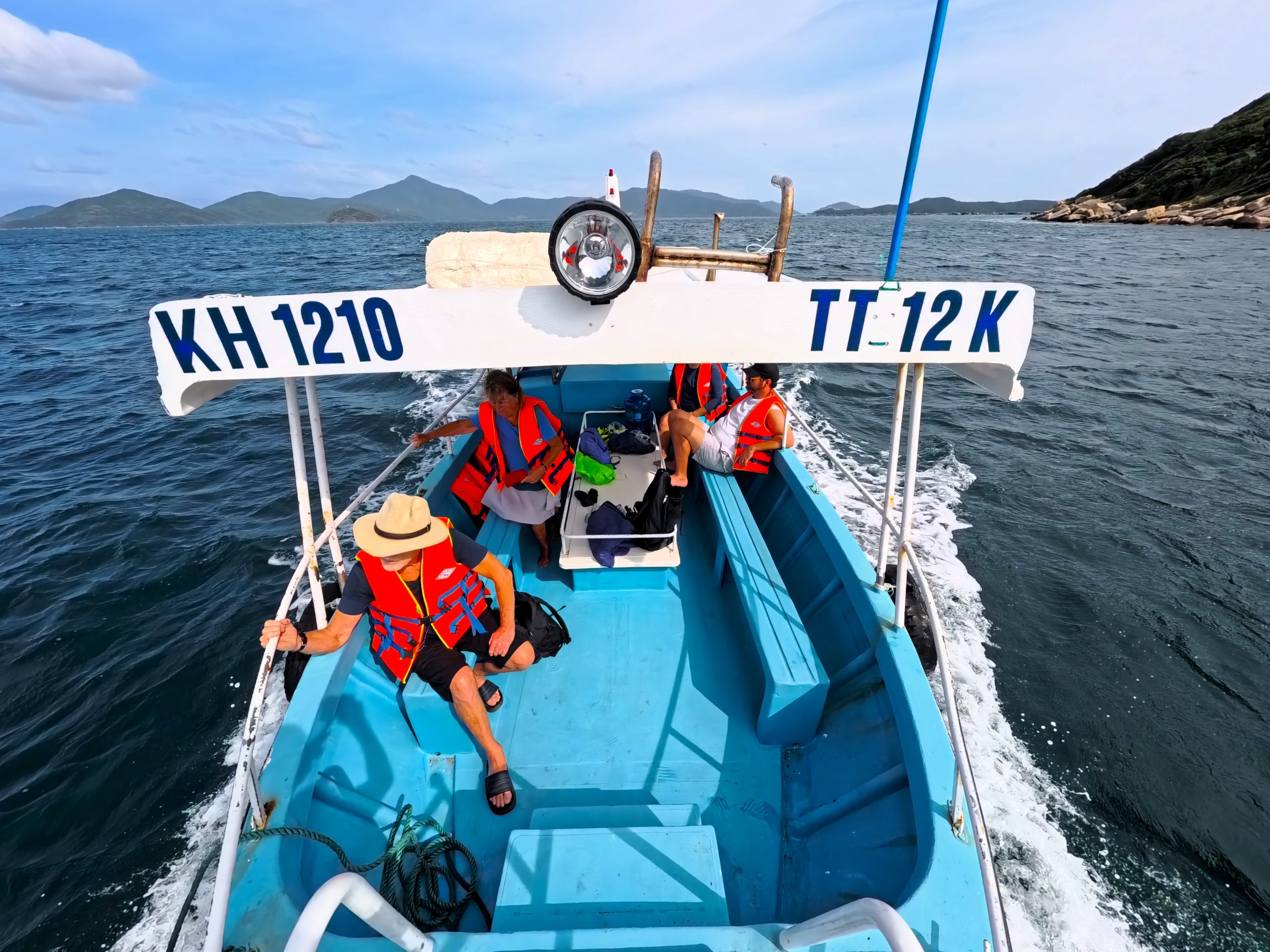
The boat trip from Đầm Môn Port to Whale Island takes about 15 minutes. One return voyage is included in the room price; any additional trips cost 500,000vnđ per voyage. Boats depart 6 times a day in each direction from dawn until dusk: 7.00, 9.00, 11.00, 13.30, 16.00, 17.30. As with vehicle transfers, let staff know at least a day in advance if you want to take the boat.
♻️ Environment & Location:
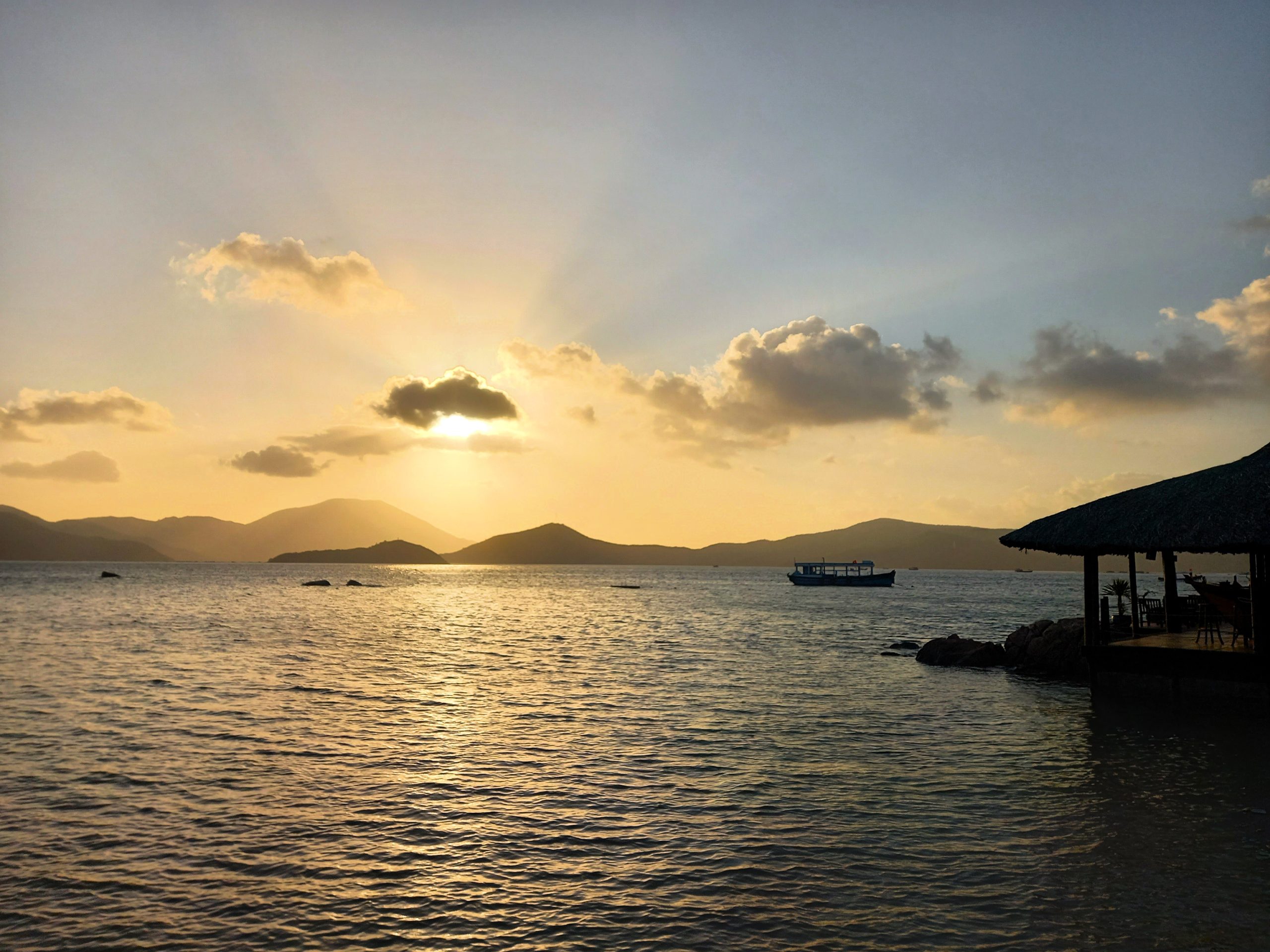
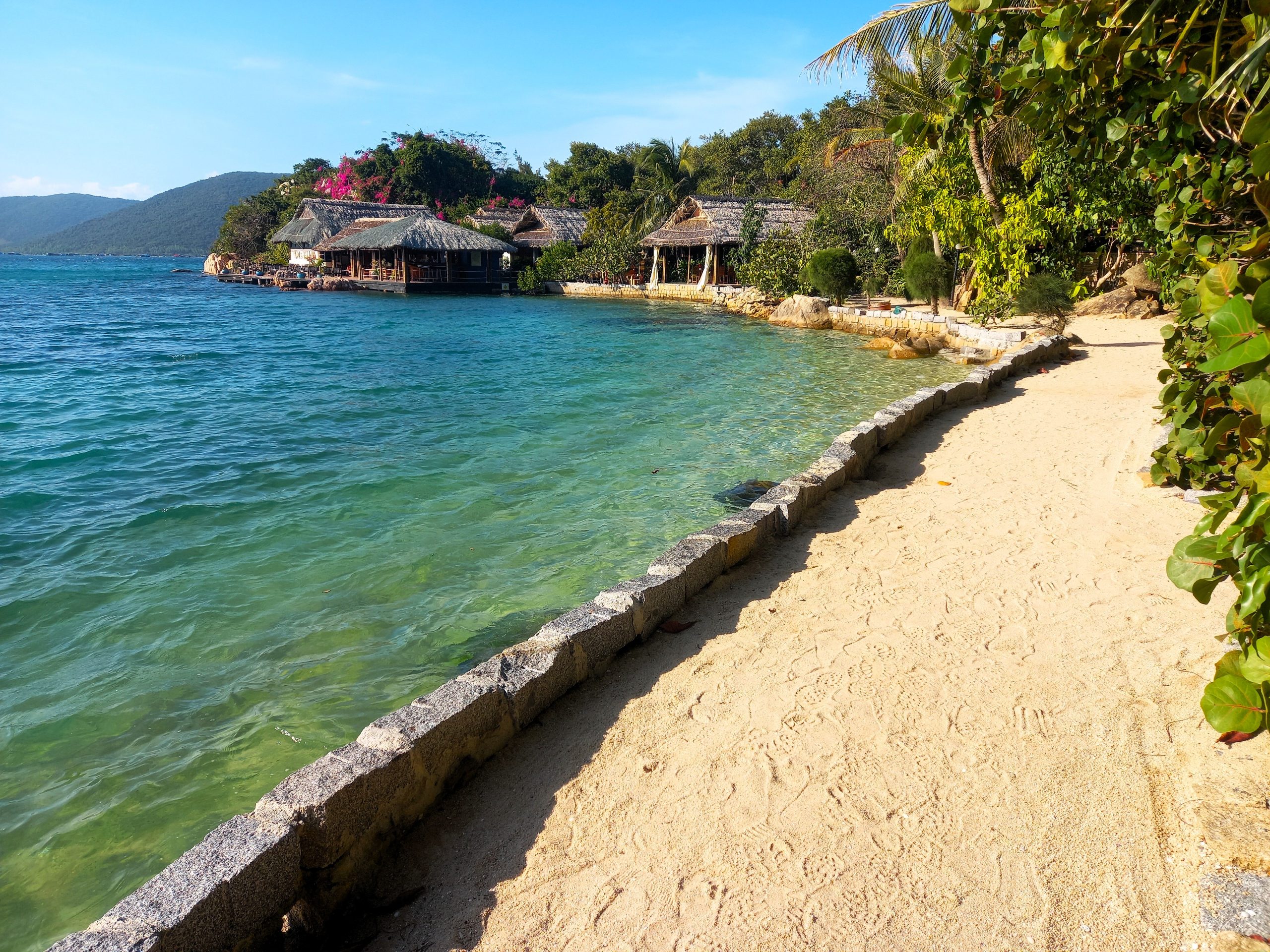
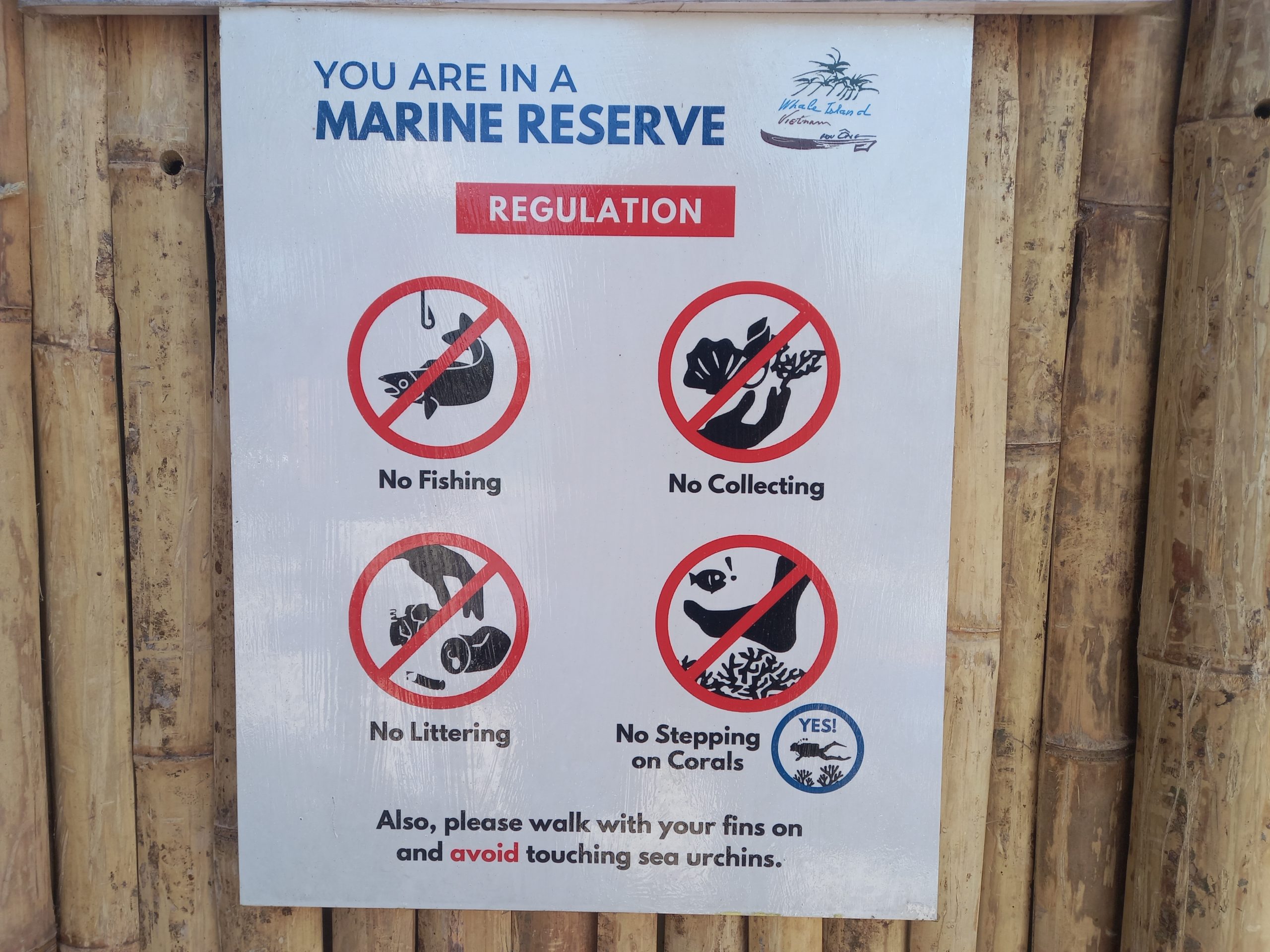
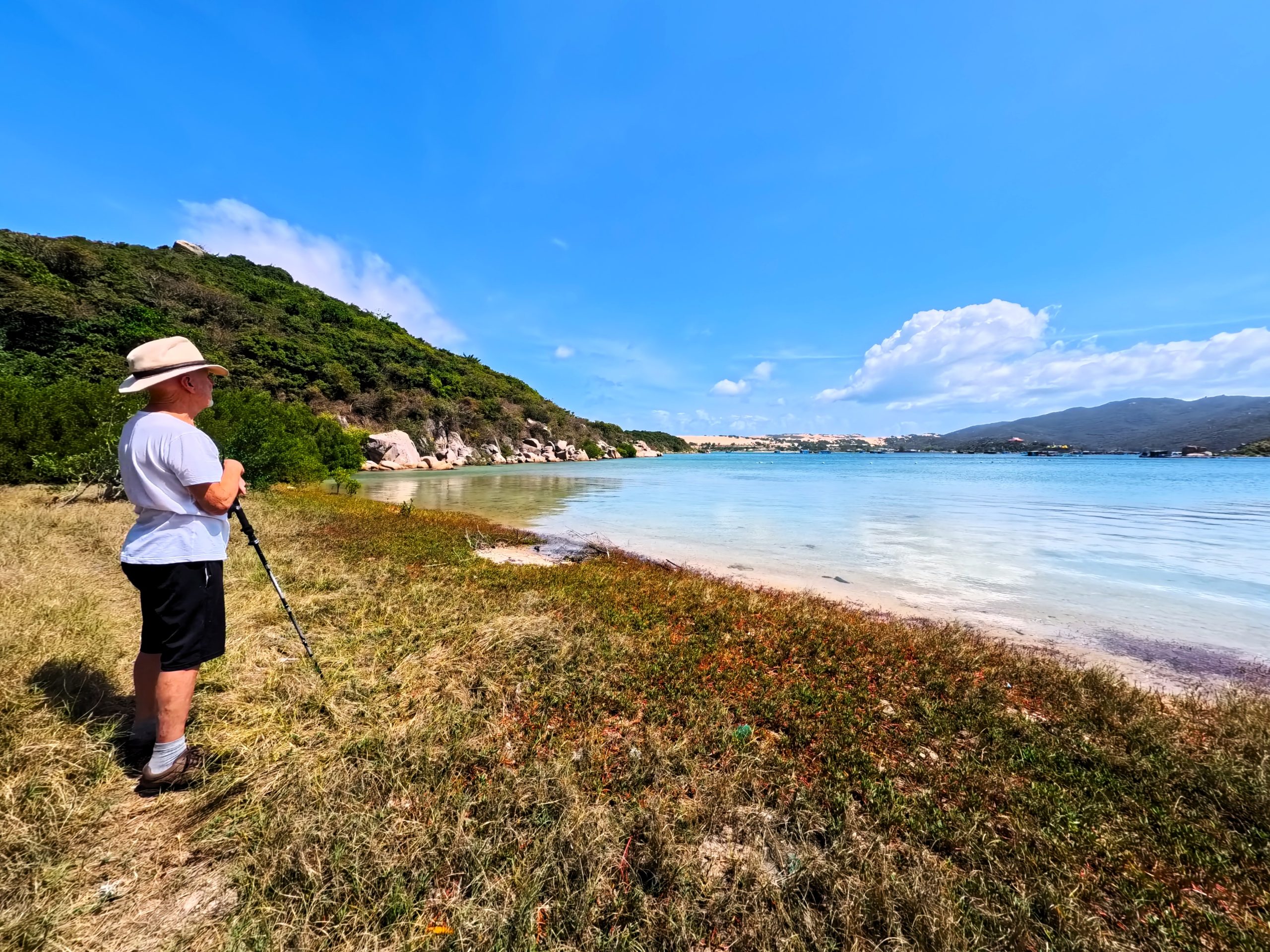
Located in a highly scenic bay, Whale Island is enclosed to the north, south and east by a long, mountainous promontory jutting into the sea from the mainland; to the west the large, jungle-clad, boulder-strewn island of Hòn Lớn looms. Whale Island is small – just 800m at its widest and 1.2km at its longest – but rugged and green. Apart from the resort, the island is entirely uninhabited. There are no cars, motorbikes, villages or shops. Formerly under military administration, Whale Island explicitly describes itself as an ‘eco-friendly beach resort’ with a ‘fully sustainable energy model relying entirely on solar power’ provided by its own solar farm. The resort is committed to protecting the natural environment and supporting the local community. There’s no air-con, no TV, swimming pool or telephone, and Wi-Fi is only available in the bar/restaurant area. Staff are all local. Single use plastic is discouraged and so too is, of course, littering. The main beach and most of the rest of the island are kept clean by Whale Island staff (and guests too, hopefully), but not everyone in this beautiful bay sees the maintenance of the natural environment as a priority.

Over the last decade or so, hundreds of fish farms, including lobster, have populated the bay. These floating rafts produce much of the fish consumed domestically and form an important part of Vietnam’s export market, not to mention providing a living for many thousands of people. Blue fishing boats ply back and forth from the mainland to supply the floating farms and transport the produce ashore. This sea traffic, while pretty, fascinating and more than a bit ‘romantic’, can be quite loud and, during the ‘rush hours’ at dawn and dusk, it can be constant. This is why ear plugs are provided in every guest room at Whale Island, otherwise the chance of the boat engines disturbing your sleep is high. Other noise pollution may come in the form of karaoke blaring out across the bay from amps onboard the fish farms. Of course, there’s little that Whale Island can do about this. The same is true of the trash produced by the floating farms and the fishing industry more broadly. Considerable plastic waste – in the form of polystyrene boxes, empty bags of fish feed and personal litter, such as beer cans and instant noodle wrappers – is thrown into the sea, then washed up on the island’s coves and beaches, getting hopelessly caught on the jagged rocks and boulders. None of this (sadly) is unique to this region of Vietnam’s coast. It’s just something that’s worth being aware of in advance of your visit in order to manage expectations.
🌴 Grounds & Layout:
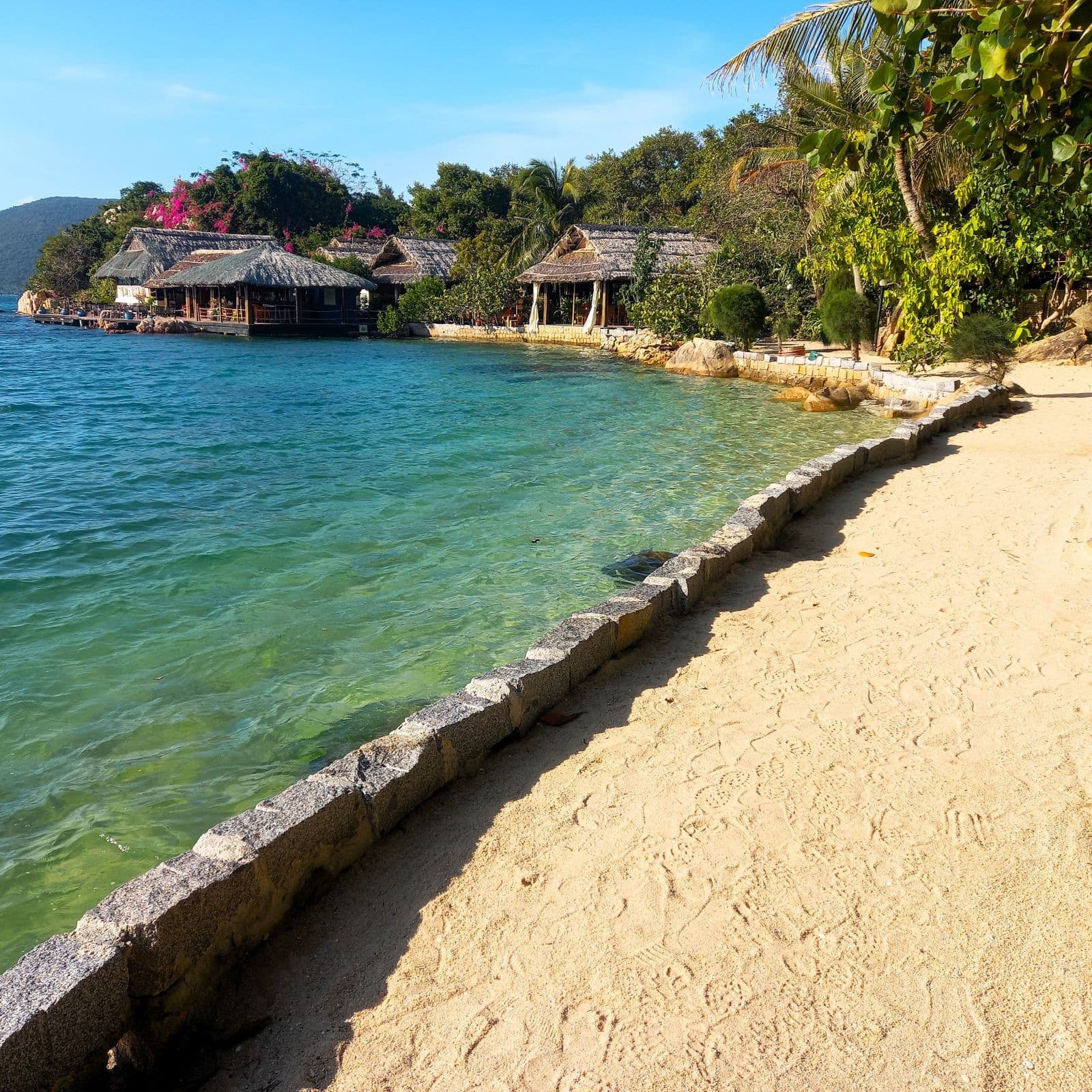
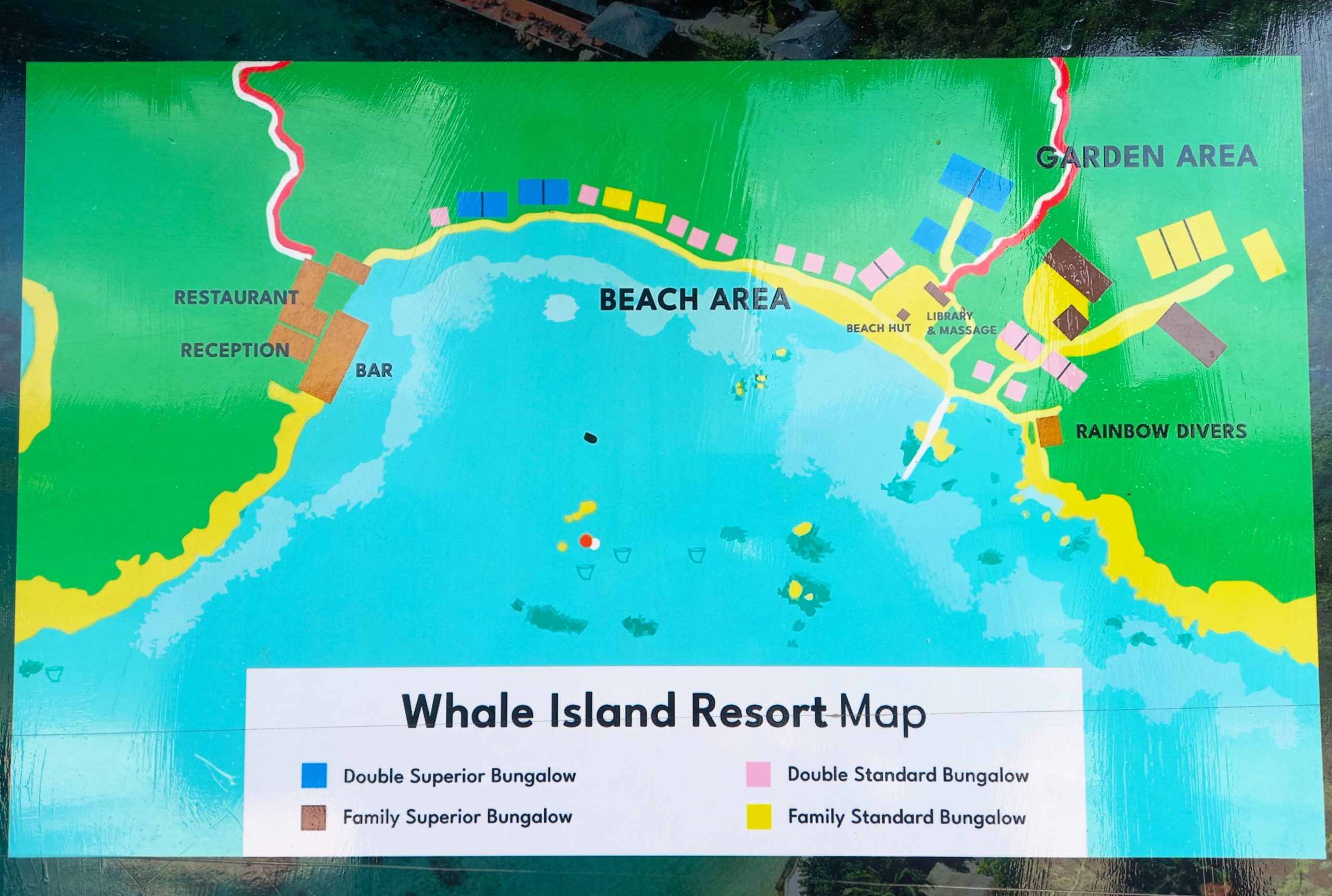
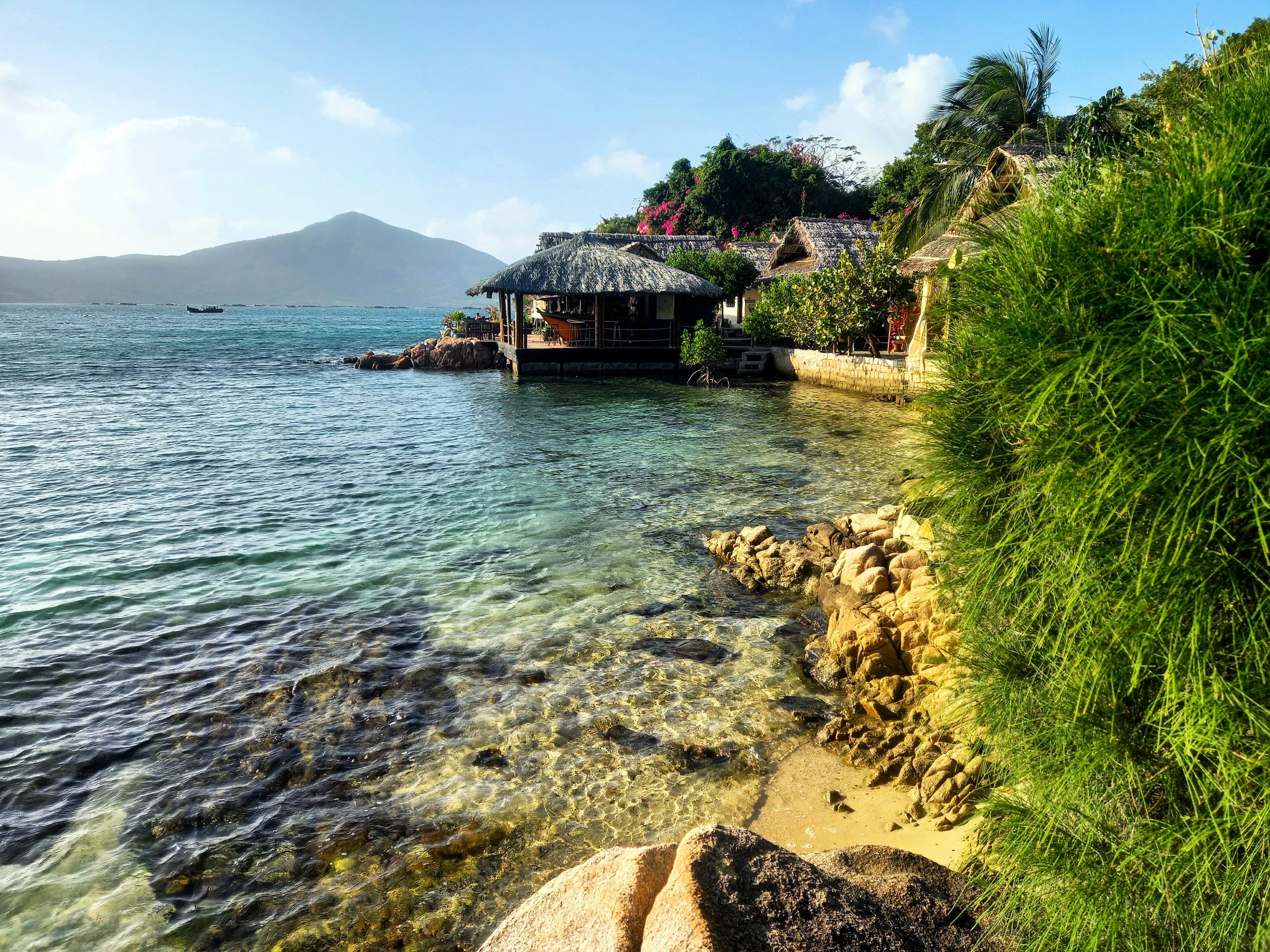
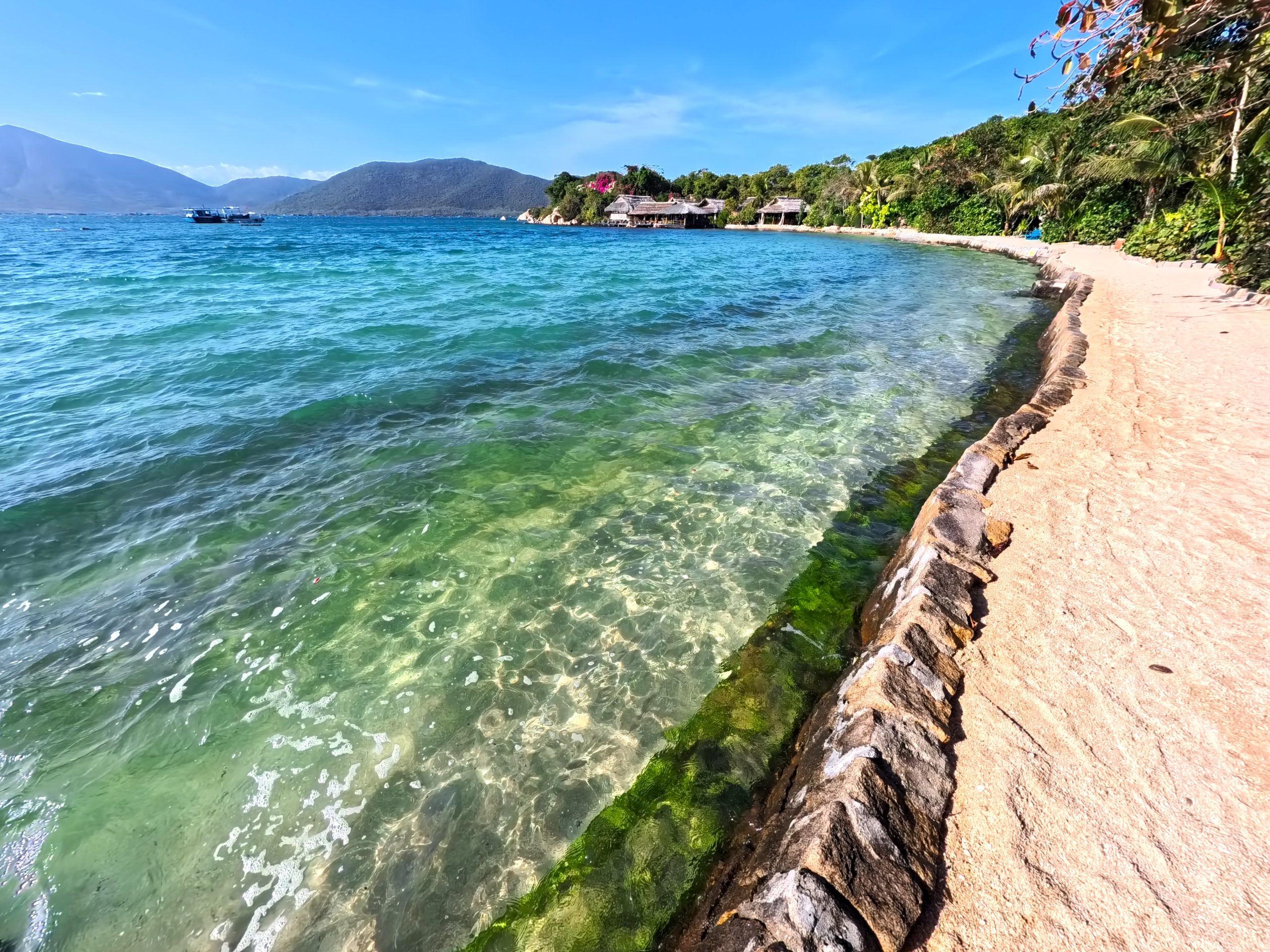
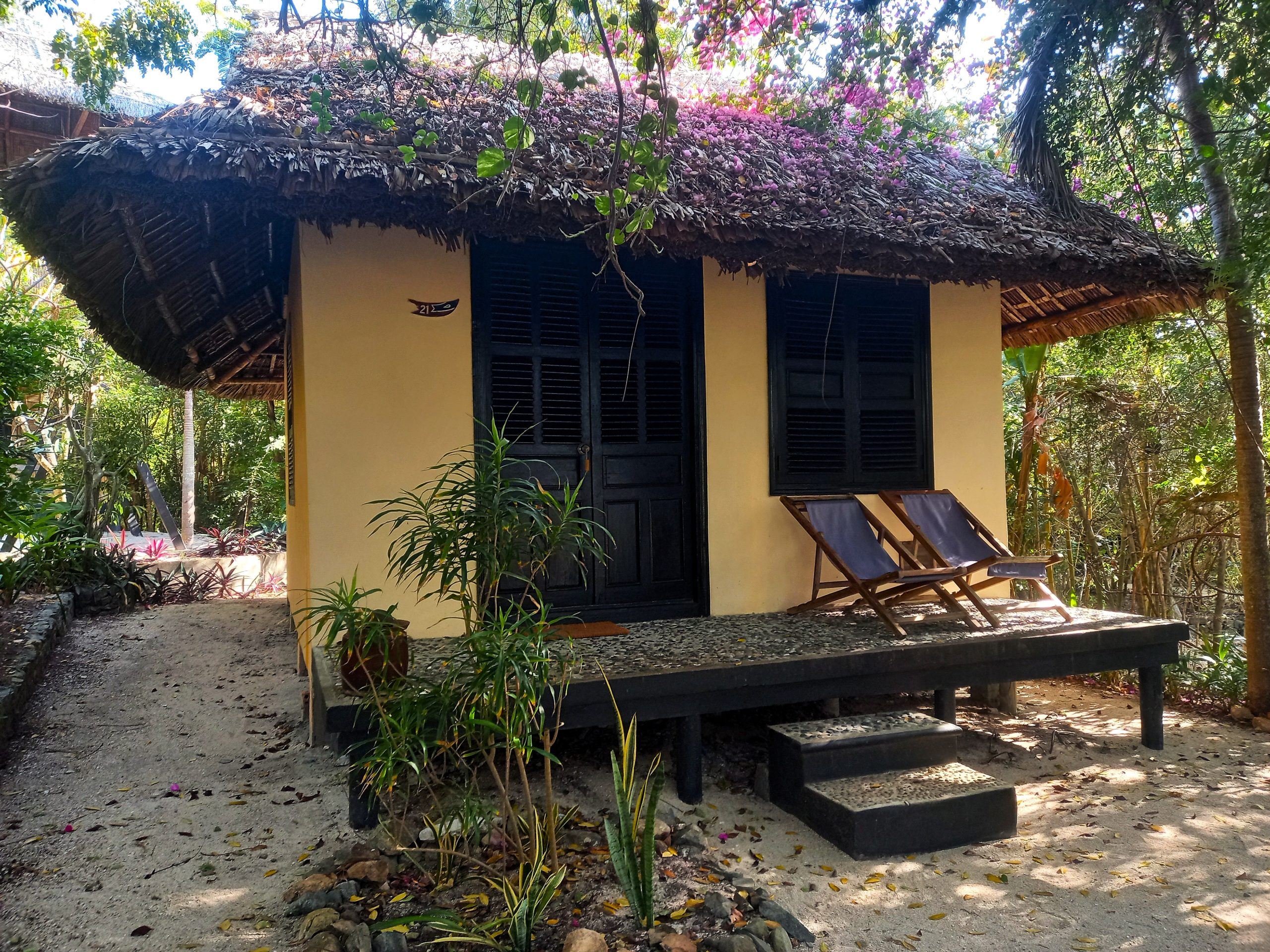
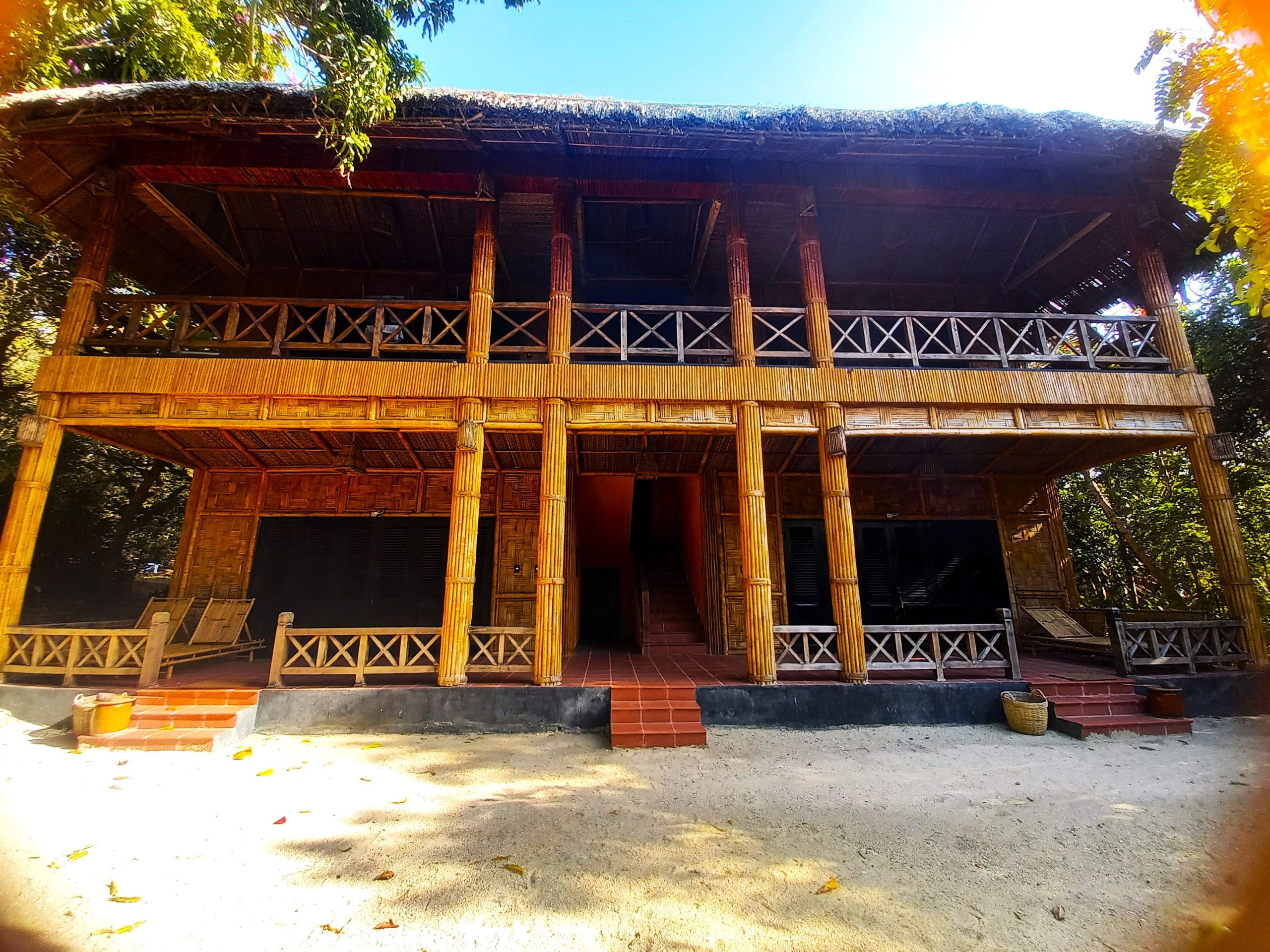
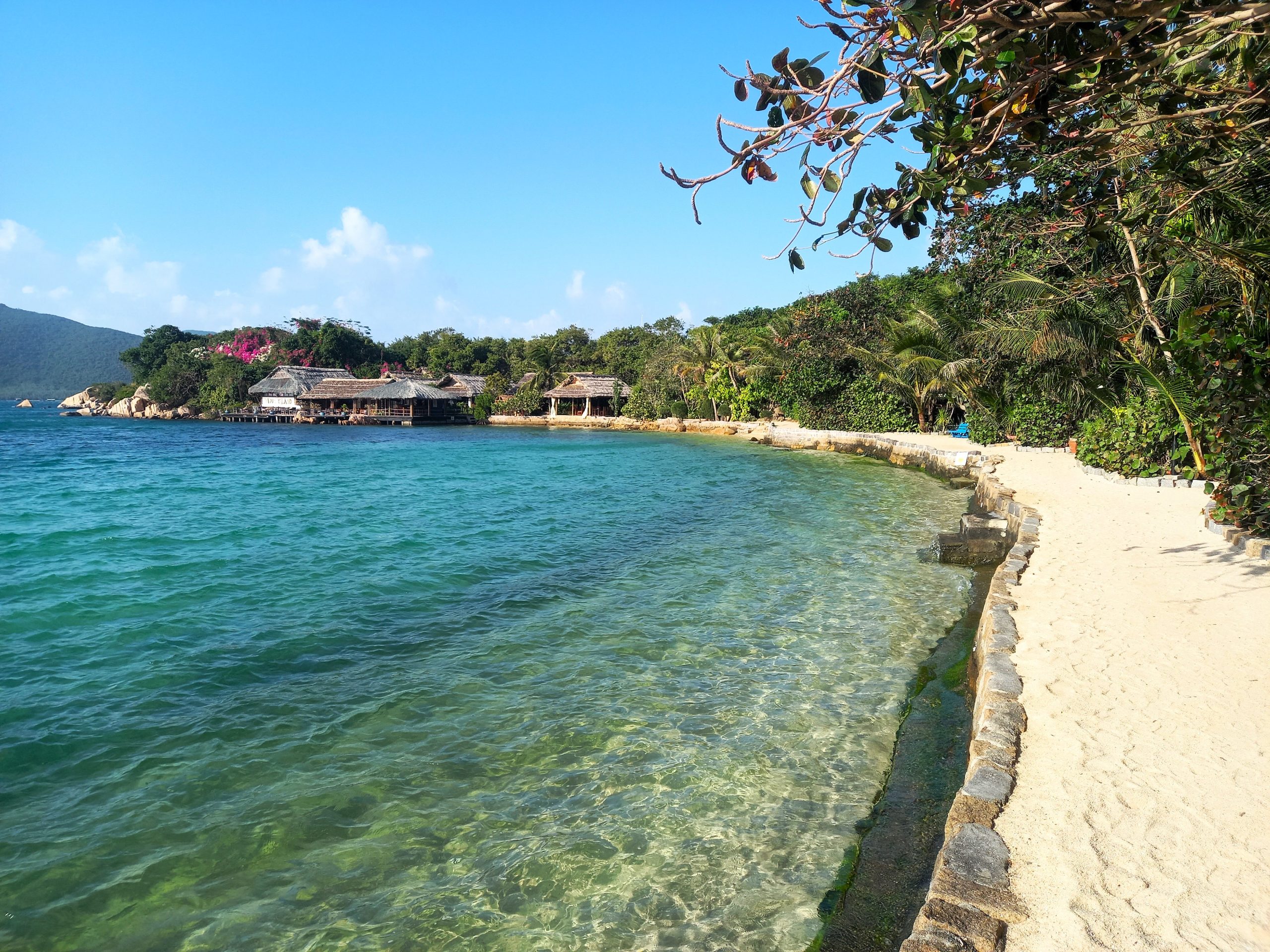
The resort only occupies a small portion of Whale Island: a sandy bay on the northwest shore. At the southern end of this beach is the boat pier and at the northern end is the restaurant and bar. In between are several clusters of thatched bungalows (the guest rooms), some right on the seafront, others set back a bit on the hill. Apart from that, the island is practically deserted, covered in thick brush and tropical foliage, including fruit trees. The coastline is mostly rugged and jungle-clad with the exception of the main beach and also the southeastern bay which is a horseshoe cove with shallow water sheltered by two headlands. All structures are designed to blend in with the natural setting, using bamboo, wood and thatch as much as possible. No structure exceeds two-storeys in height. A sandy pathway runs along the seafront of the main beach, connecting the boat pier and all the bungalows with the restaurant and bar. In addition, hiking trails lead inland and around the island (see Beach & Activities for details).
🌊 Beach & Activities:
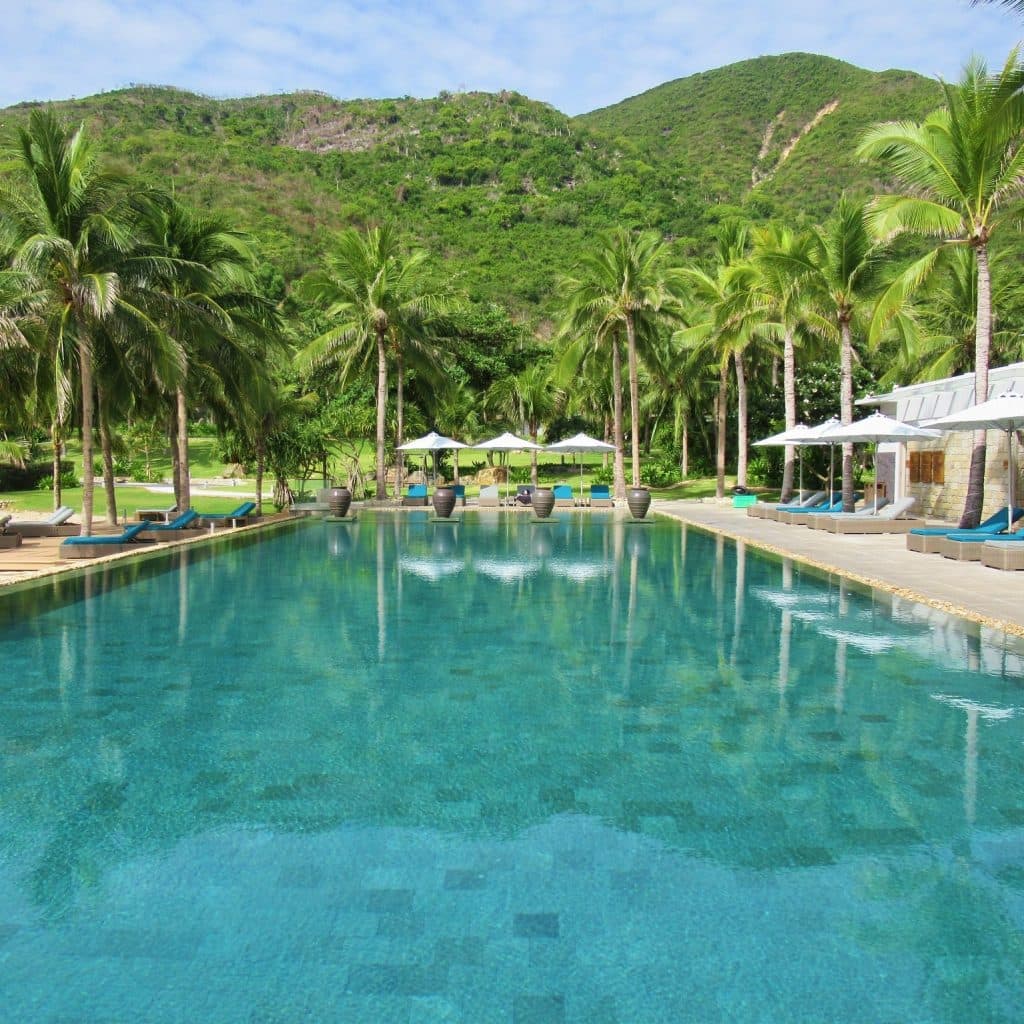
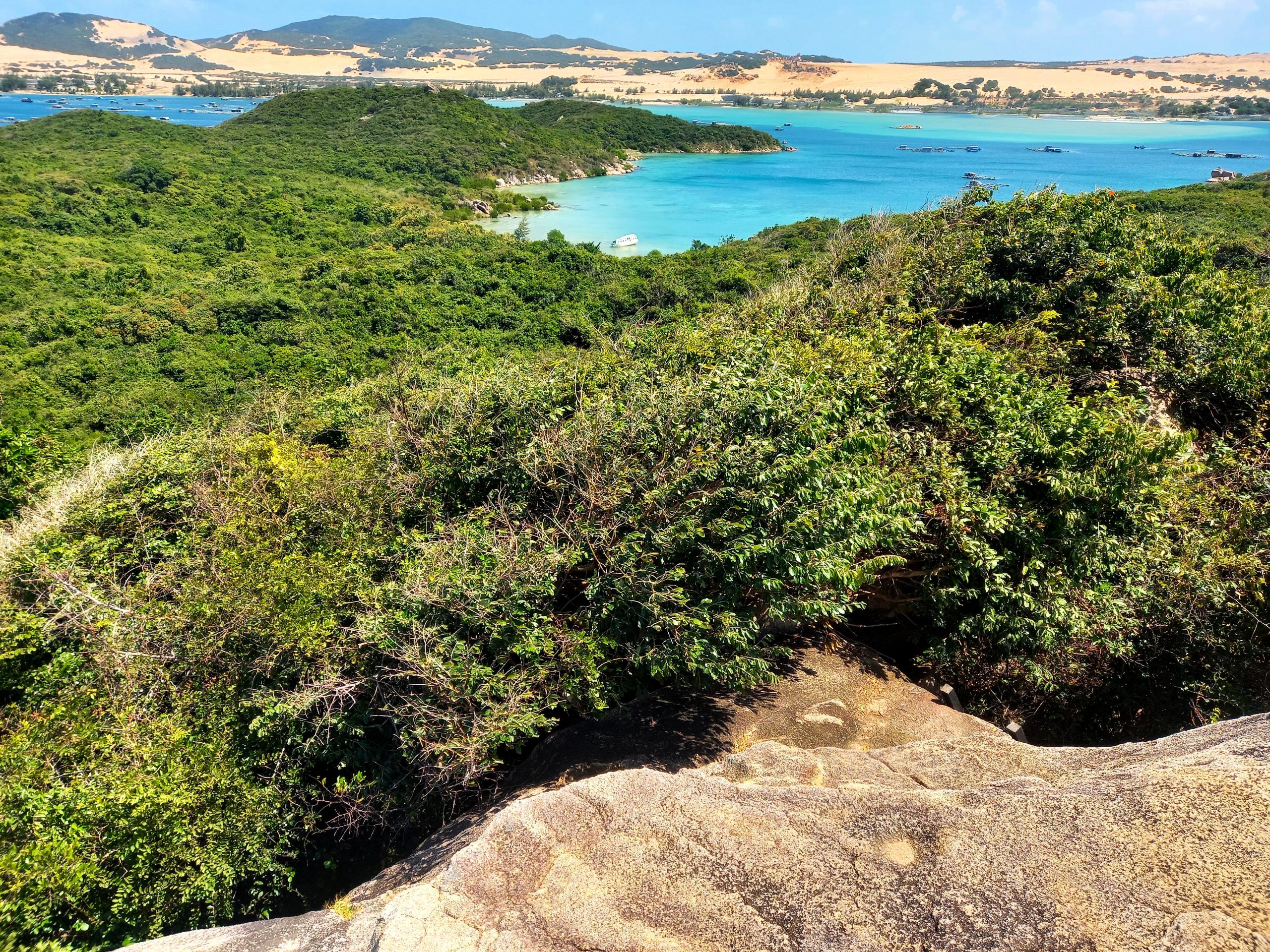
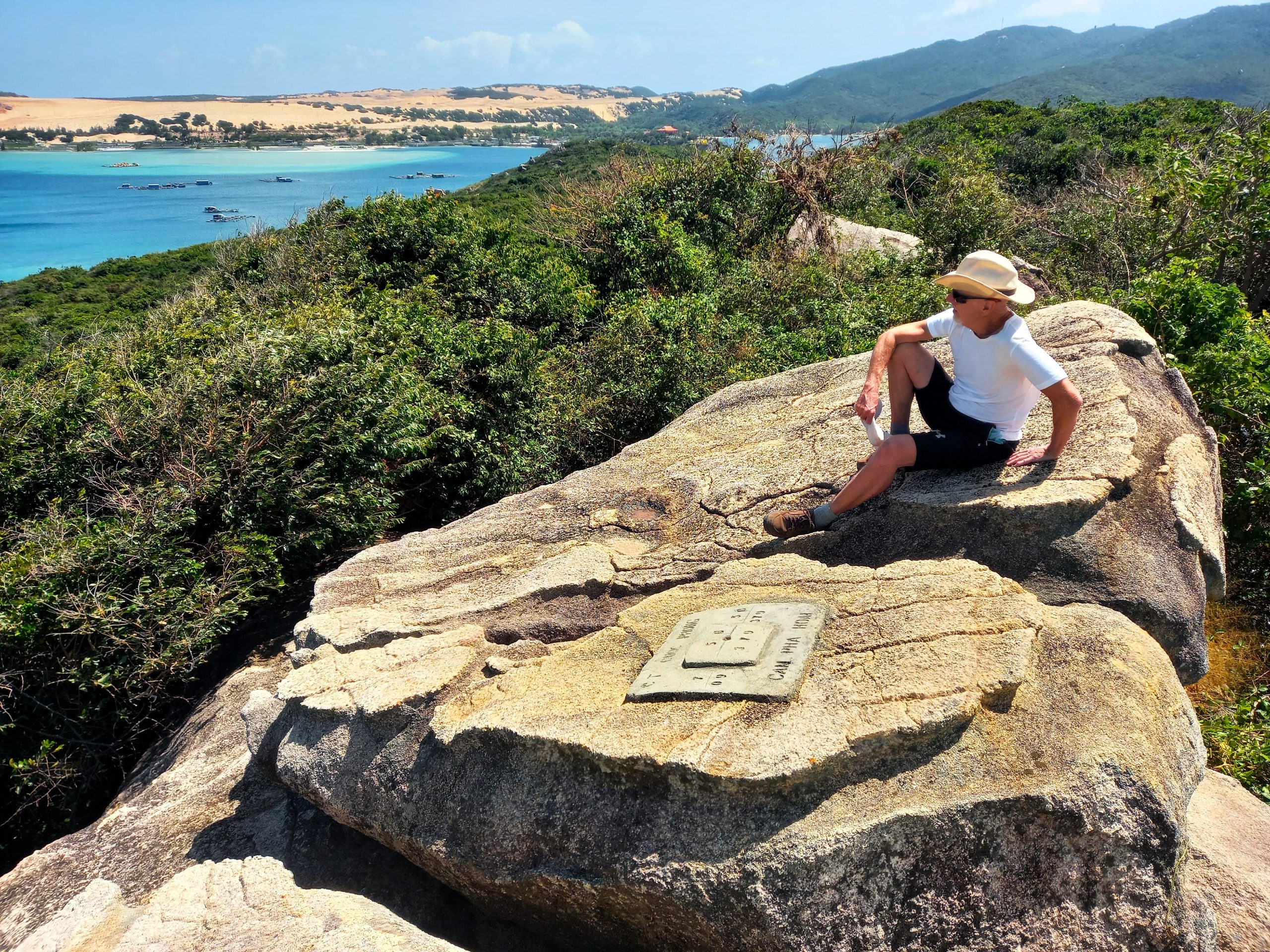
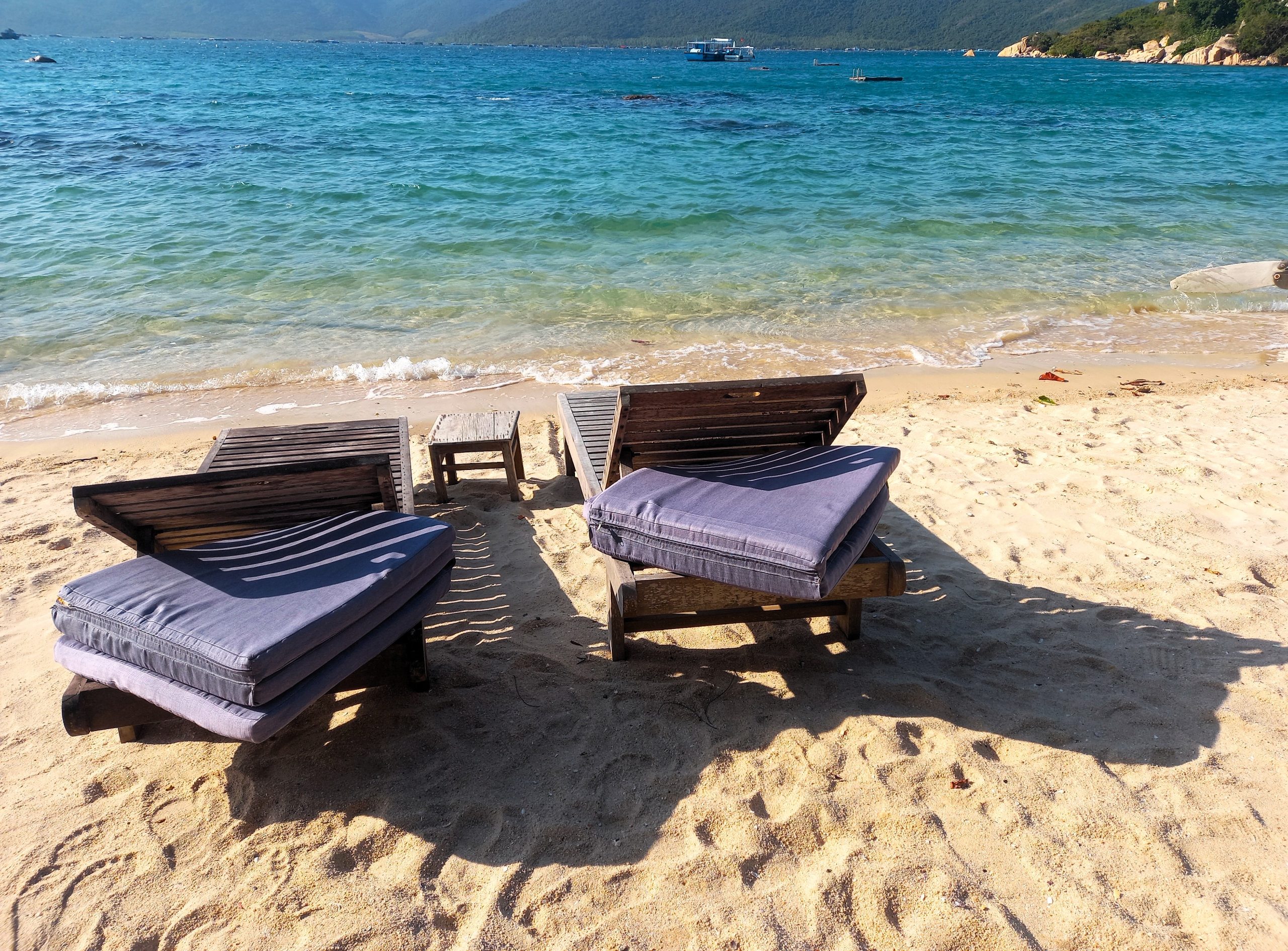
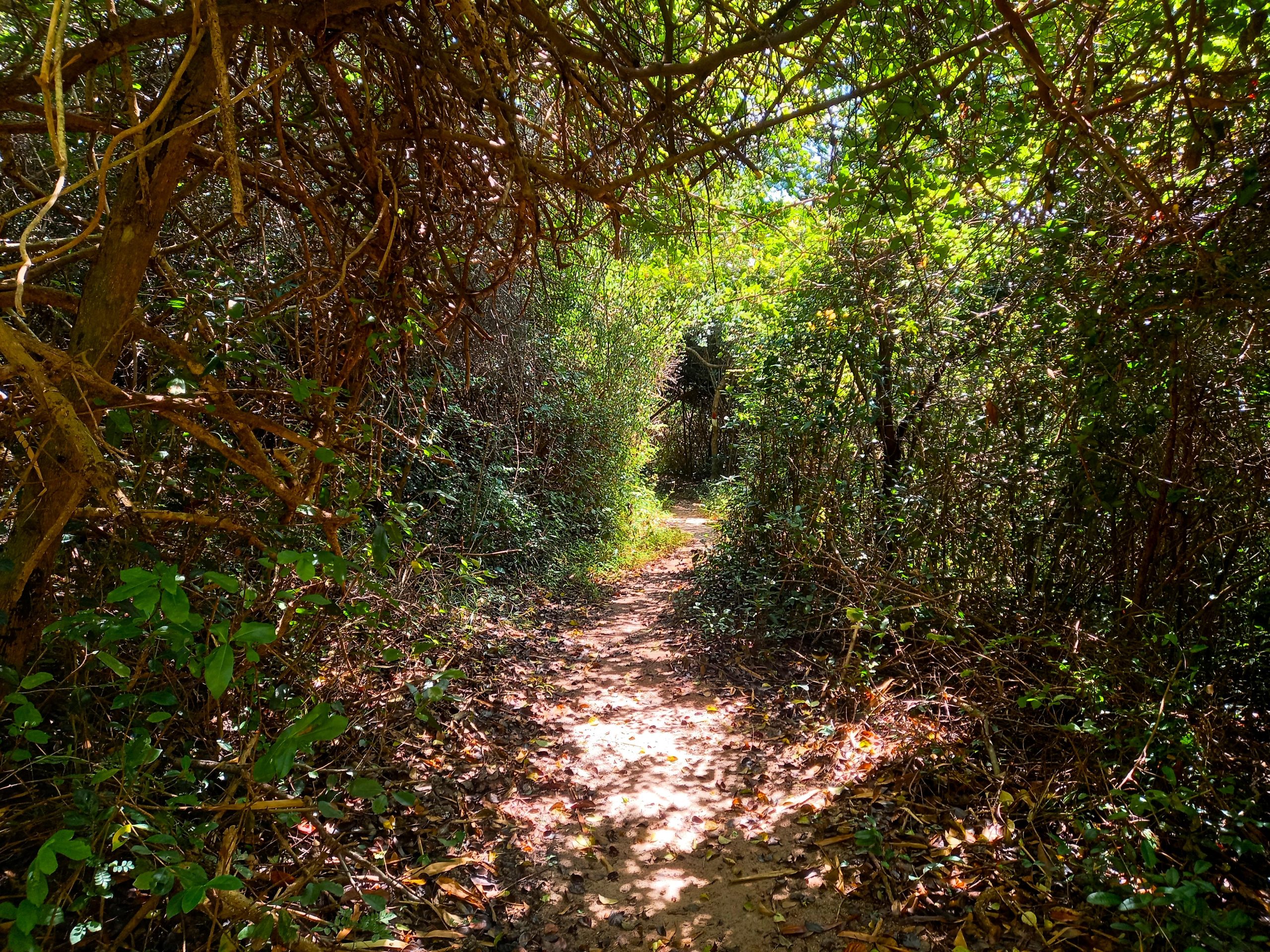
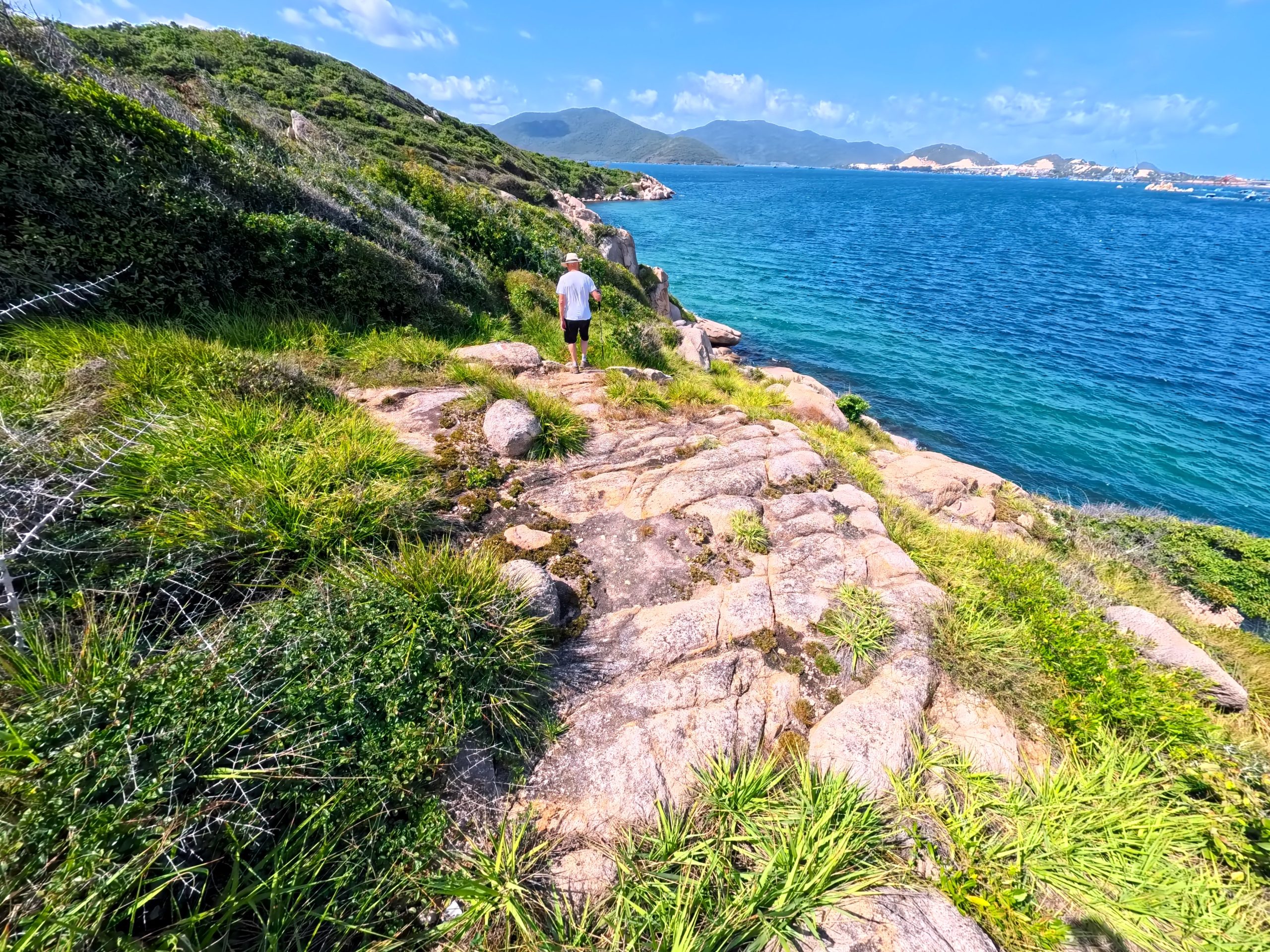
Although, of course, Whale Island is well-suited to relaxing by the beach and reading a book, it is actually set up as an active retreat. Guests are encouraged to explore the island, engage with the natural setting and interact with the marine environment. Swimming, snorkeling, diving, kayaking, canoeing and windsurfing are all available from Whale Island’s beach. Rainbow Divers has an office on the island and there’s a daily snorkeling boat trip (230,000vnđ/person) leaving at 9am and returning by midday, which takes guests far out into the bay where the coral is pretty good. (There’s a map of dive/snorkel sites by the beach bar.) All other water sport equipment is available to rent from the activities hut on the beach, as well as some ball games, such as volleyball. A map of hiking trails around the island is provided to guests upon arrival. The Blue Trail (20-30 minutes) crosses the island from west to east, ending up at an attractive, sheltered bay. The Red-and-White Trail (roughly 2 hours) circumnavigates the entire island, including a spectacular view point atop a giant boulder with panoramic views across the bay. The island’s main beach is located on the northwest shore. The sand is fine and white, the water clear and clean and the swimming is very good. The bay is sheltered so the sea is rarely too rough to swim. There’s no swimming pool on Whale Island but, unless the weather is really bad, there’s no need for one. Massages can be arranged near the beach activities hut where there is also a small library. Boardgames and card games are a good idea too, especially if conditions are wet. There’s plenty to keep you busy (or not busy) on Whale Island for at least several days, if not more. If you run out of things to do on the island, you can always take the boat across to Đầm Môn on the mainland and spend a few hours exploring the fishing village on foot.
🛌 Rooms & Decor:
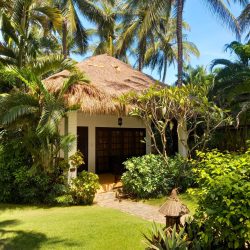
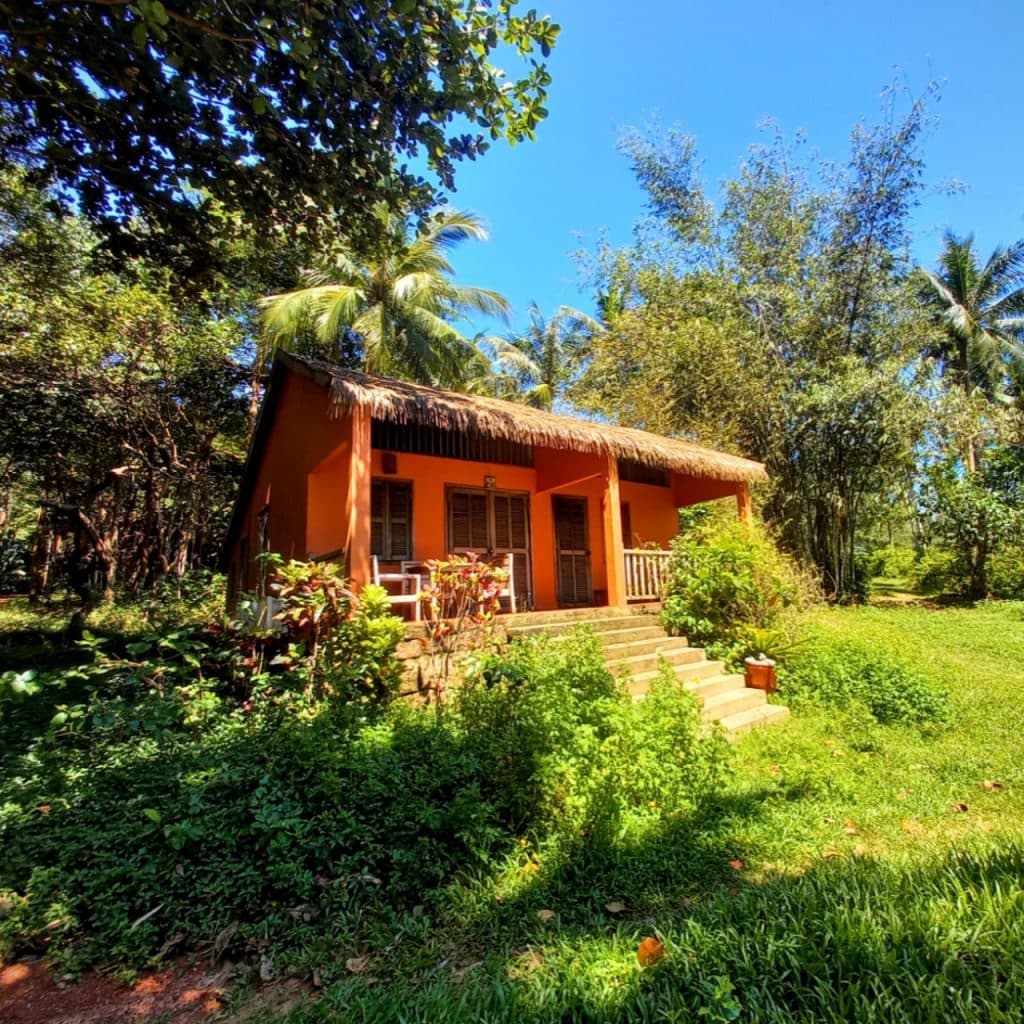
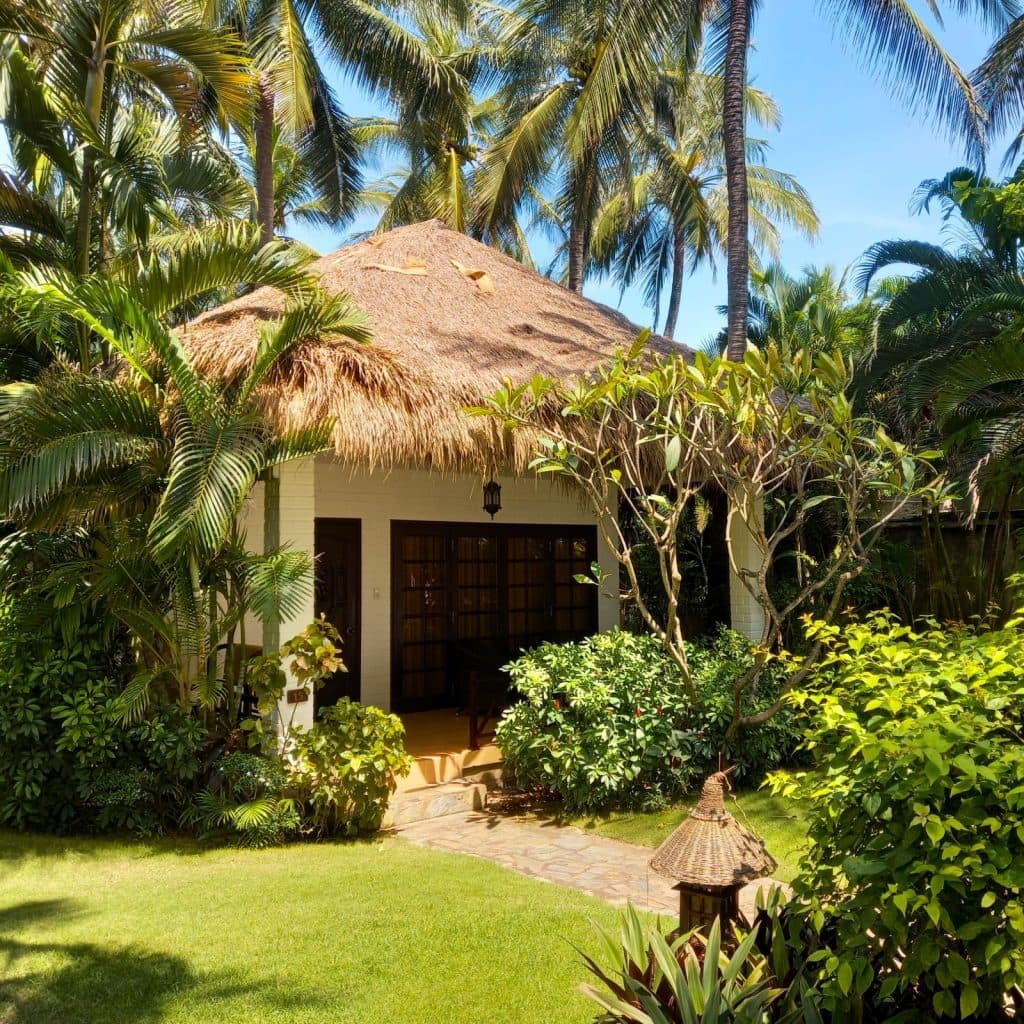
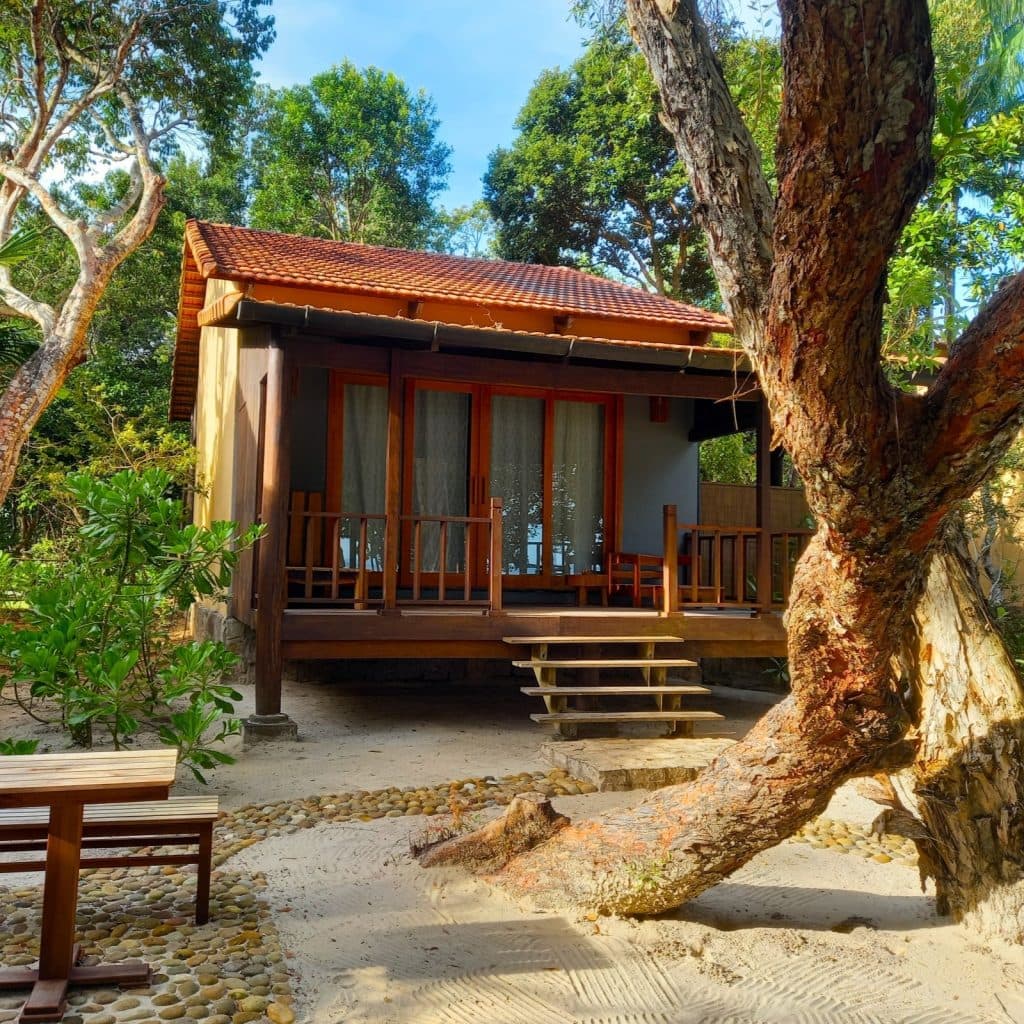
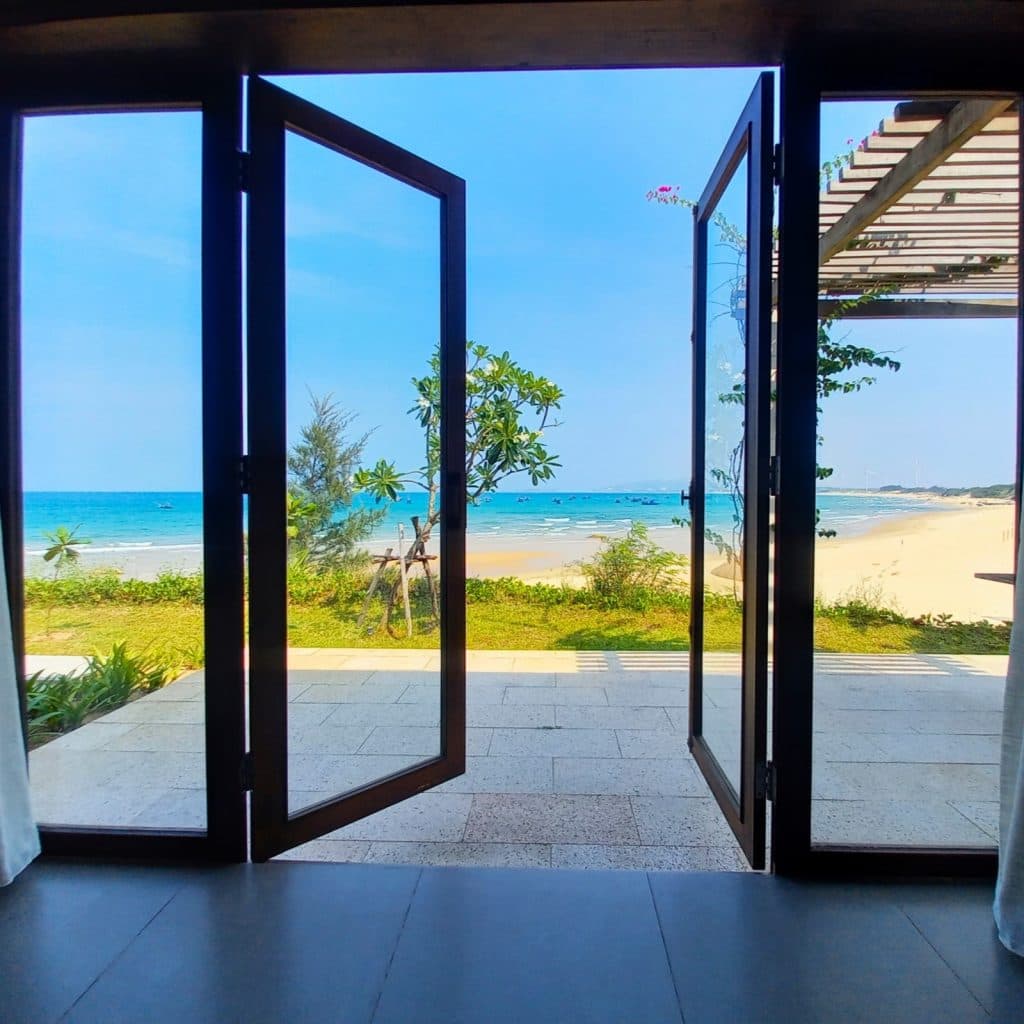
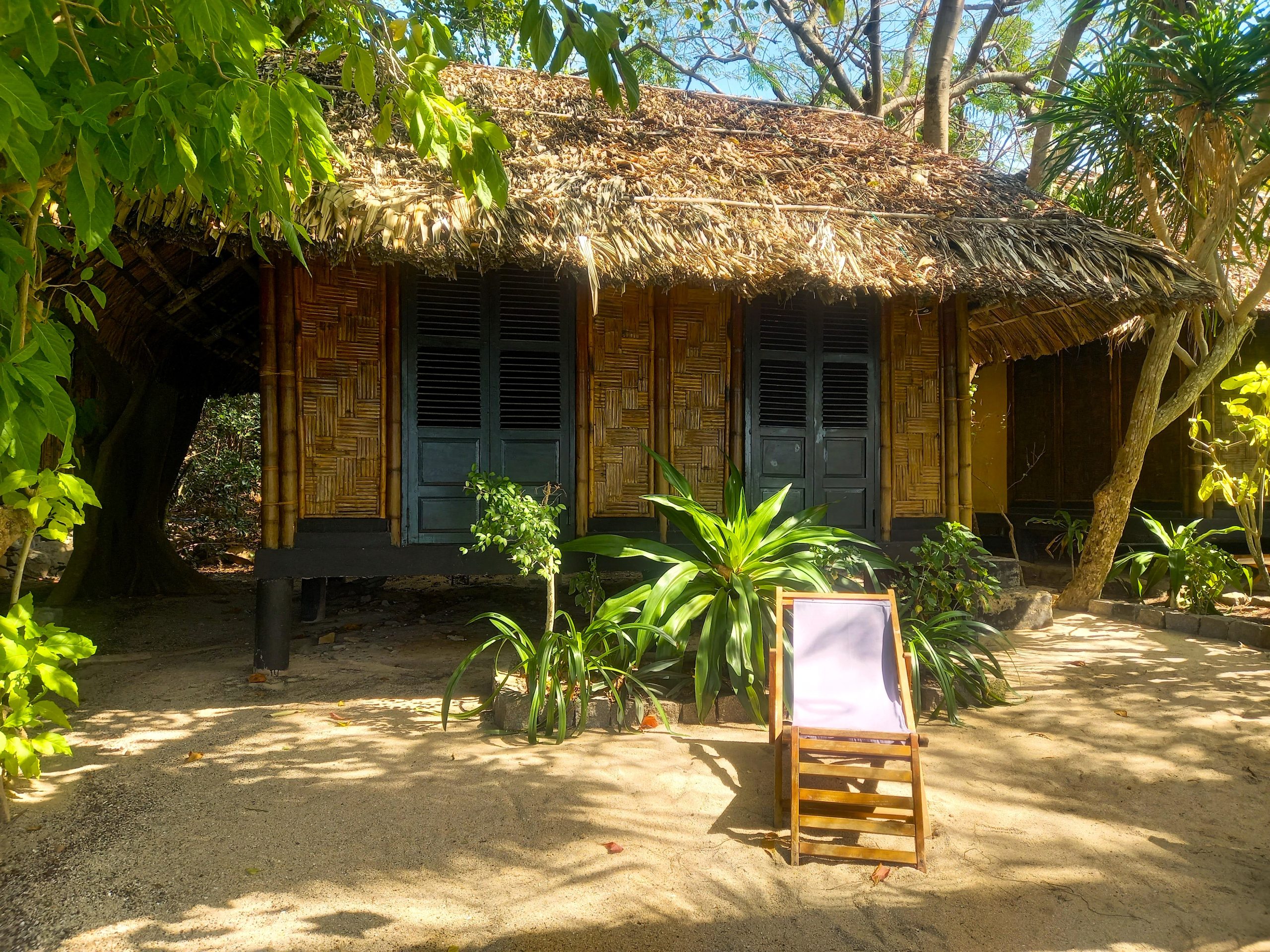
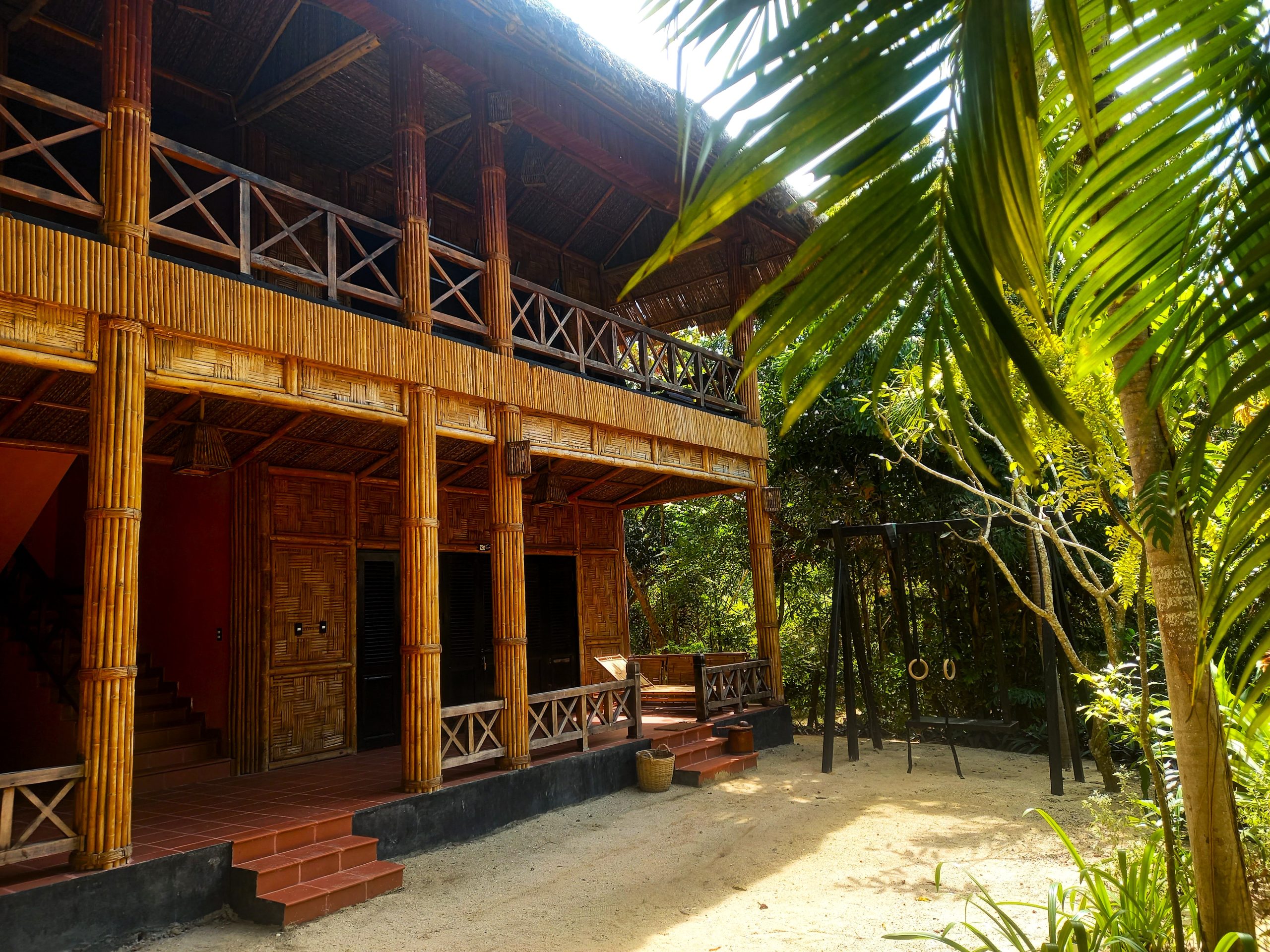
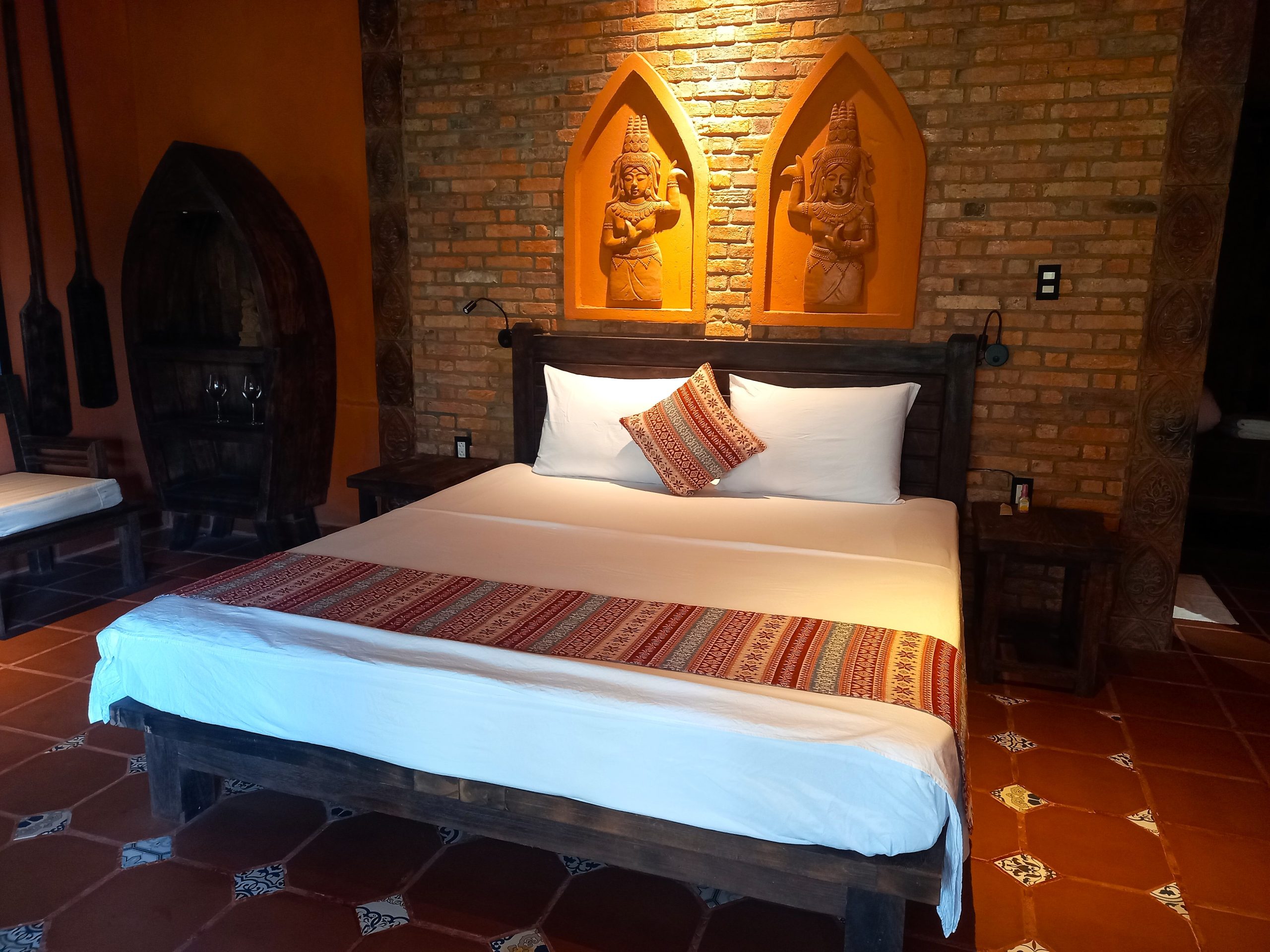
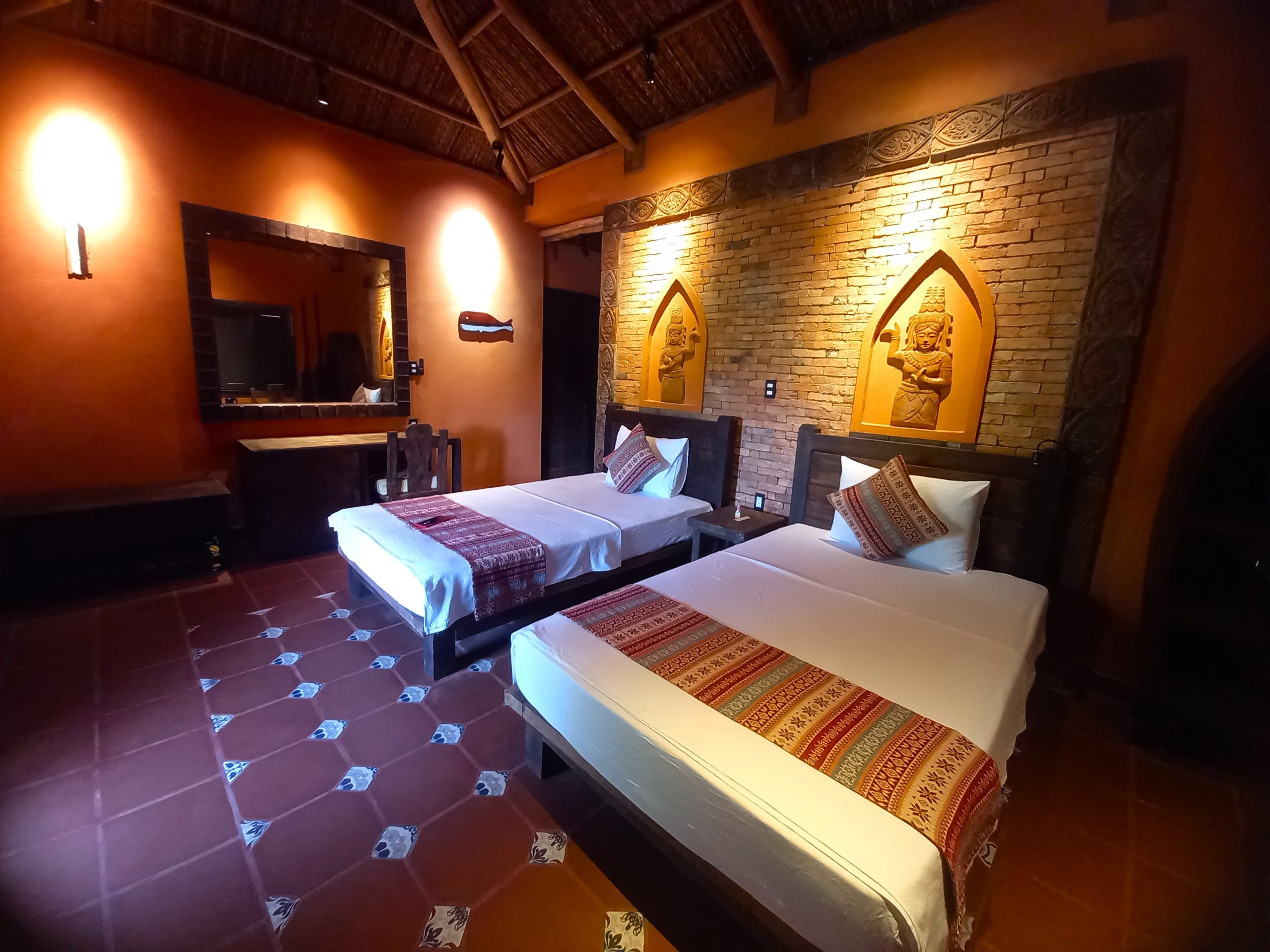
With just over 30 rooms scattered along the beachfront and hillside, accommodation on Whale Island is simple, tasteful and attractive but quite basic considering the rates. Designed to blend in with the natural setting, the vast majority of rooms are single-storey bungalows of bamboo, wood and thatch with tiled floors and an outdoor stone patio raised above the sand or garden. Décor is restrained and plain with occasional nods to local Cham culture in the form of motifs and carvings. In much the same way that the fishermen and plantation bungalows at Mango Bay used to function, rooms are designed to be self-ventilating. There’s no air-conditioning, but there are floor and ceiling fans and the shutters on the doors and windows can be left fully open to the cool night breeze thanks to in-built mosquito netting, allowing the fresh air to enter the room while keeping the bugs out. Personally, I love this kind of setup. However, during my visit, it seemed that most guests simply kept all their doors, windows and shutters closed at all times. Several different room types are available and there are also various deals, including half- and full-board, dive-and-stay packages, and more. It’s worth spending some time before deciding on which room type and package best suits your needs and tastes. Check rooms and rates on Agoda.com or the Whale Island website or email.
🍹 Dining & Drinking:
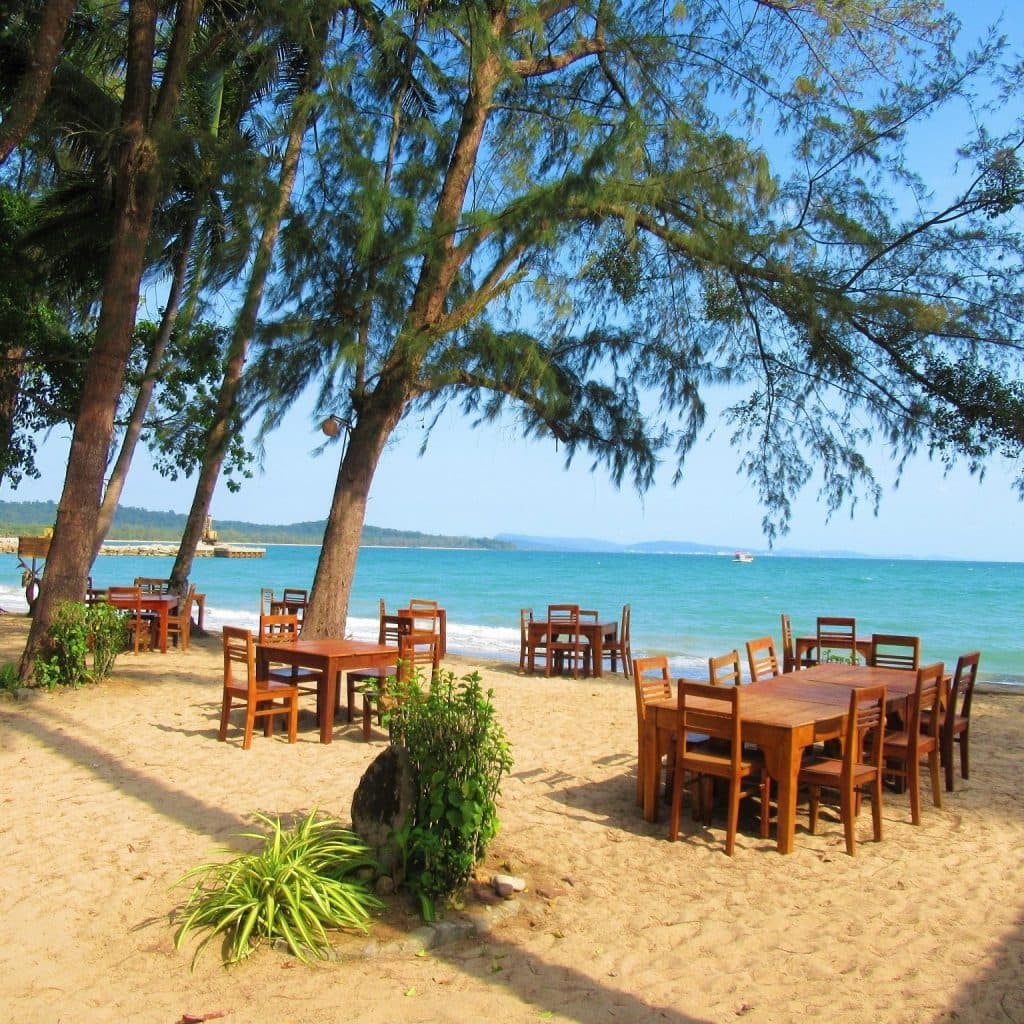
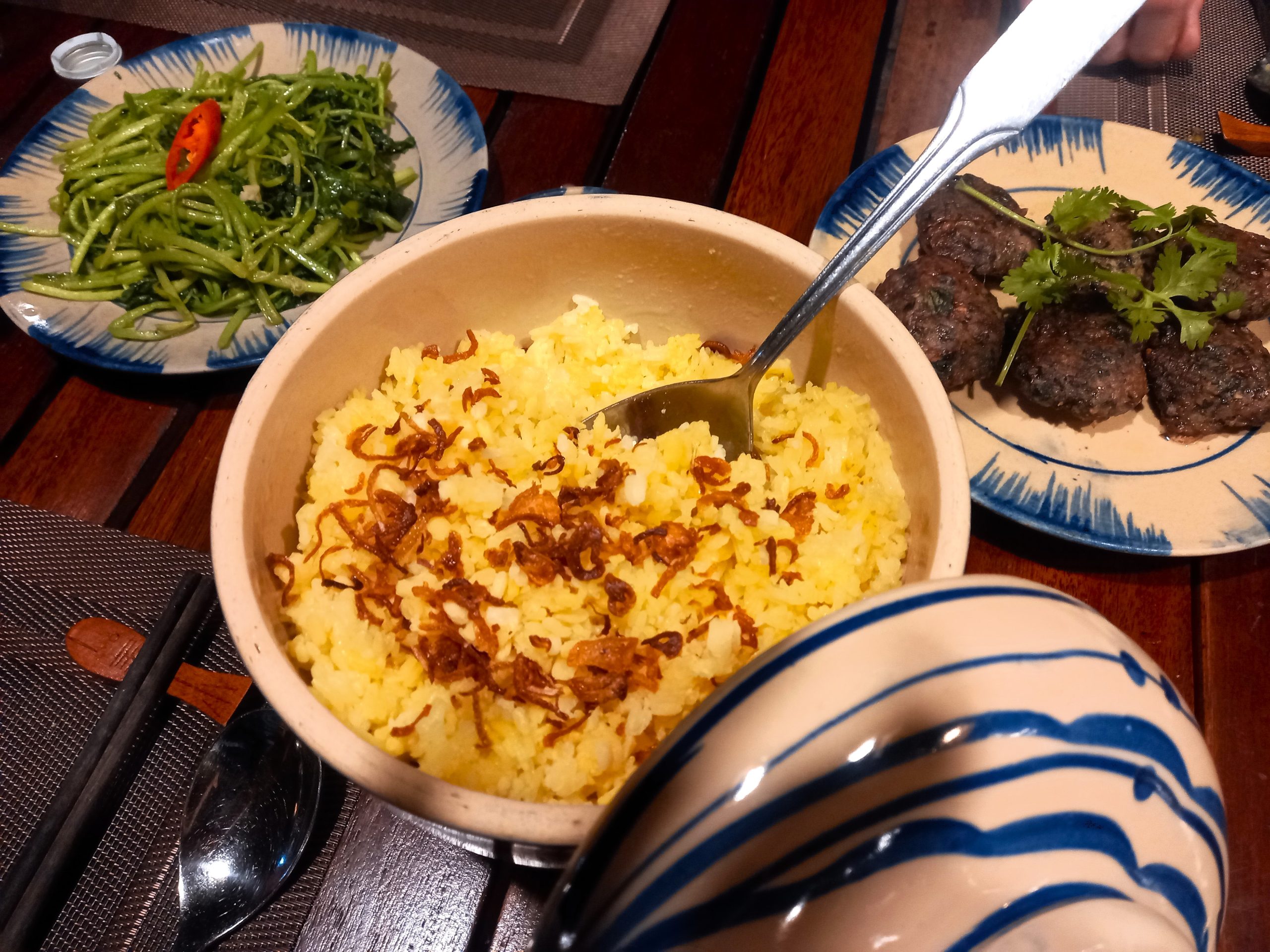
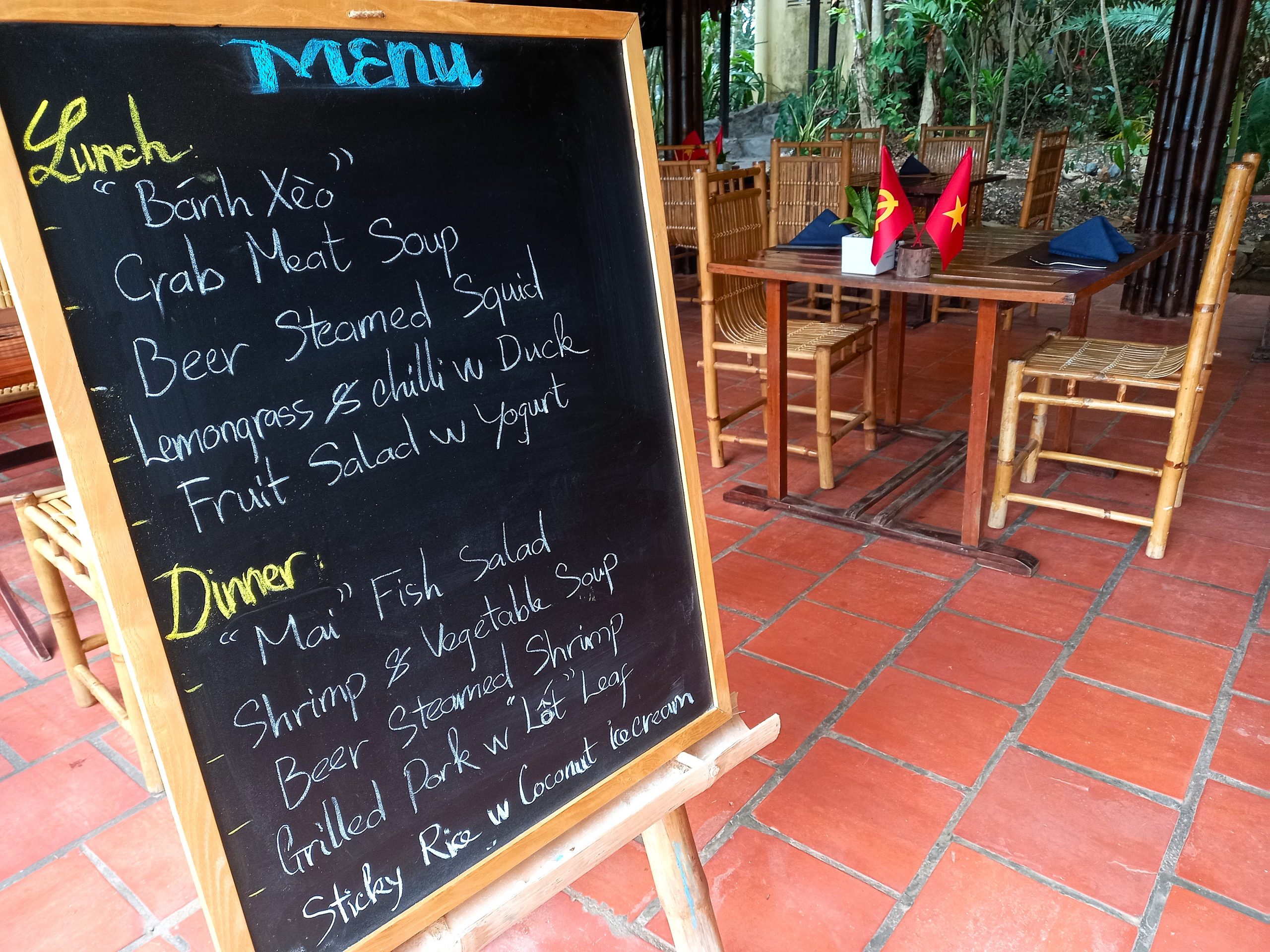
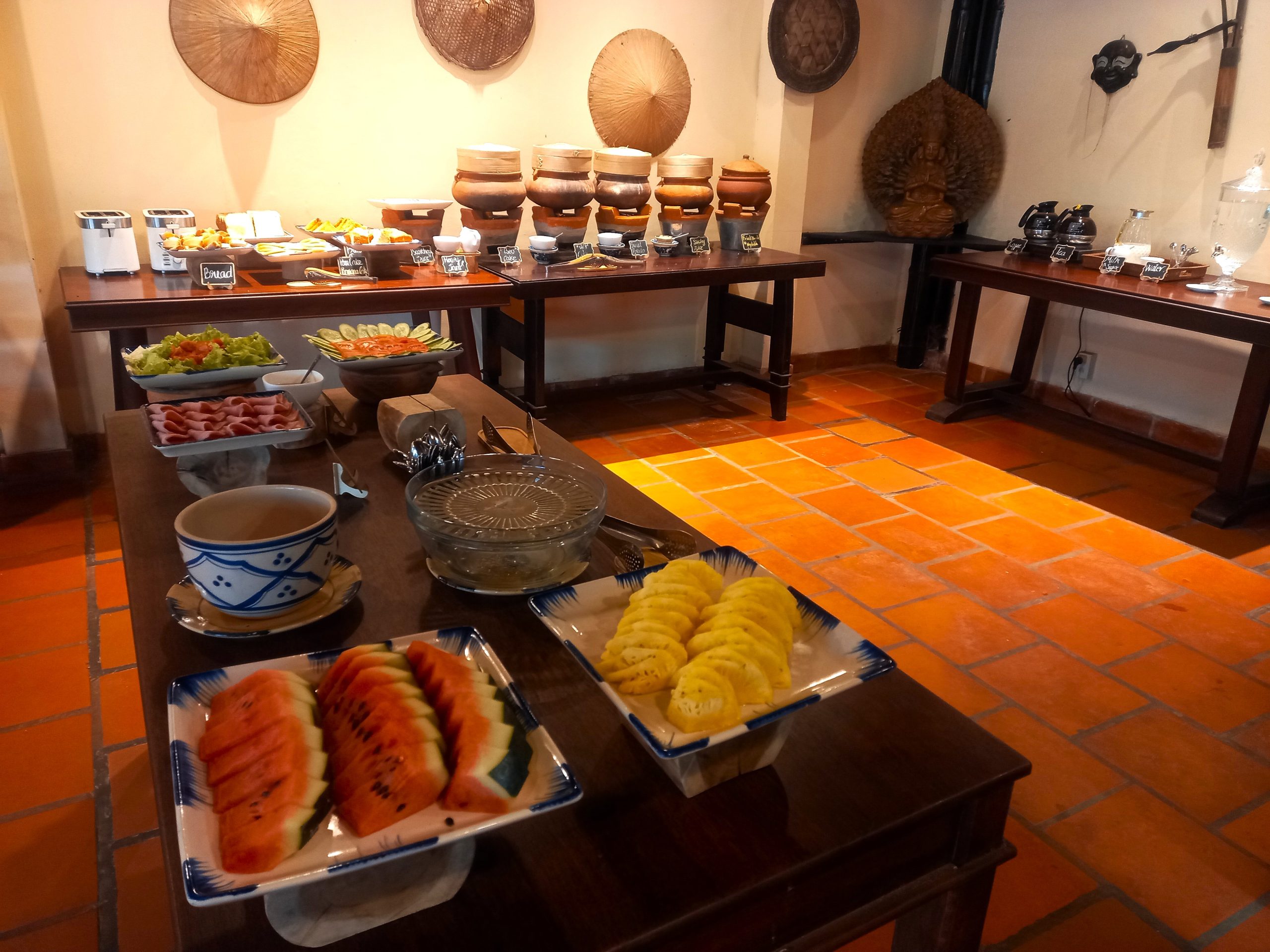
Because there are no shops or villages on the island and the only way to get to the village on the mainland is by boat, you will be eating all your meals at the resort restaurant. Located at the northern end of the main beach, Whale Island’s restaurant is set near the sea in an open-sided thatched structure with tables and chairs dotted around a tiled floor. When booking your room, make sure to take note of the rates with meals included in the price: from bed-and-breakfast to half-board to full-board. As no outside food or drink is permitted on the island (unless you pay a 250,000vnđ fee) and the à la carte menu is limited to simple dishes (100,000vnđ/dish), such as fried rice, noodles and French fries, booking at least half-board is highly recommended. Otherwise, you can order set menu meals for 320,000vnđ per person, but you must do so a day in advance so that the kitchen can prepare enough food. Likewise, guests with any kind of dietary needs, must inform staff prior to arrival on the island. Breakfast is a modest but fine buffet, including a Vietnamese noodle soup, eggs, tropical fruit, bread, sticky rice and (pretty bad) coffee and tea. Lunch and dinner, however, are both set menus consisting of several courses of local food made using local ingredients sourced as much as possible from the local market and suppliers. Each day the set menu is chalked up on a board outside the restaurant. In general, the standard is very good, with some classic Vietnamese dishes such as taro soup with coriander, braised tuna in a clay pot, beef patties with aromatic betel leaf, and much more besides. Meals are served at specific times: breakfast 7.00-9.00, lunch 12.00-14.00, dinner 19.00-21.00.
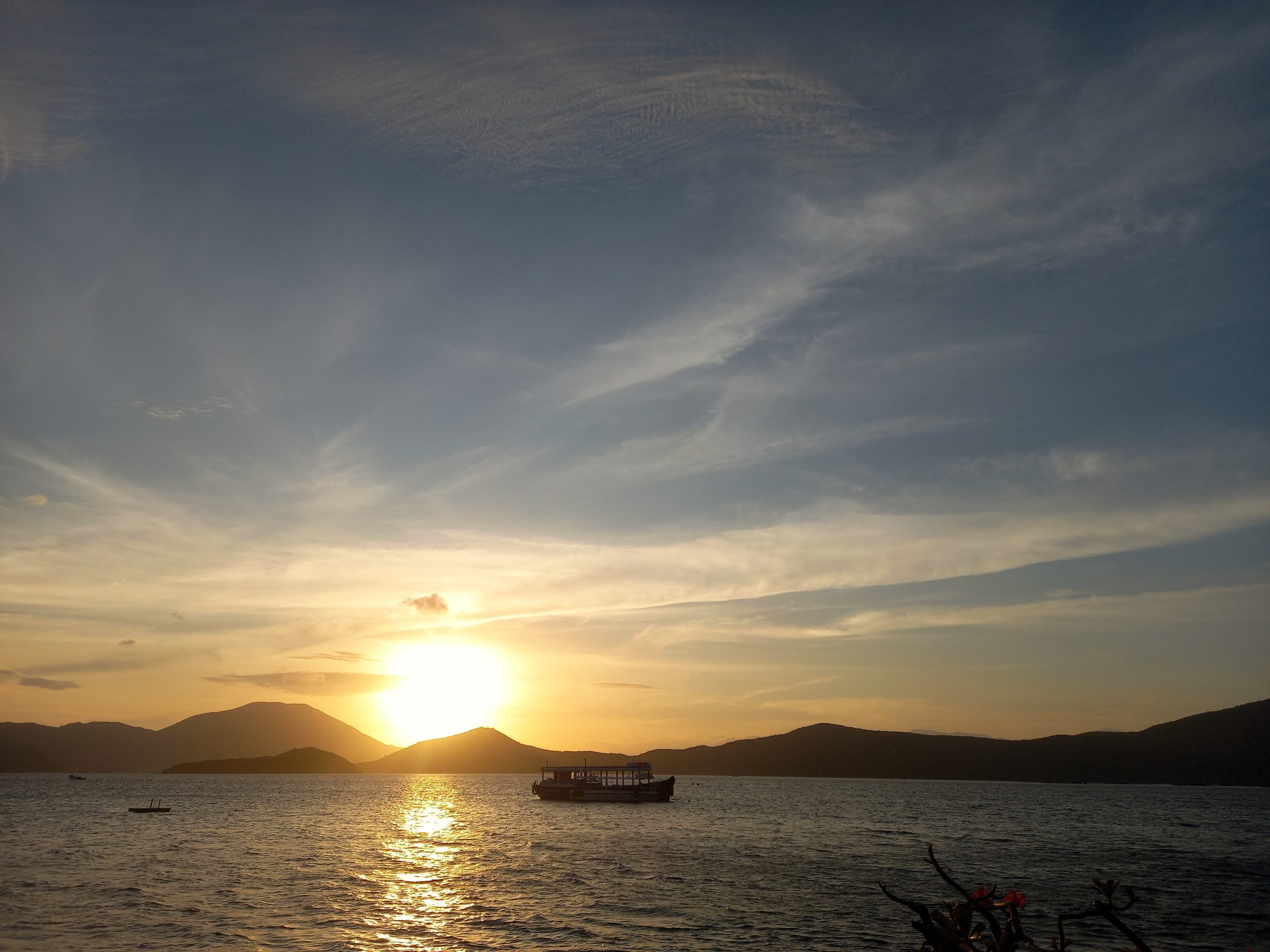
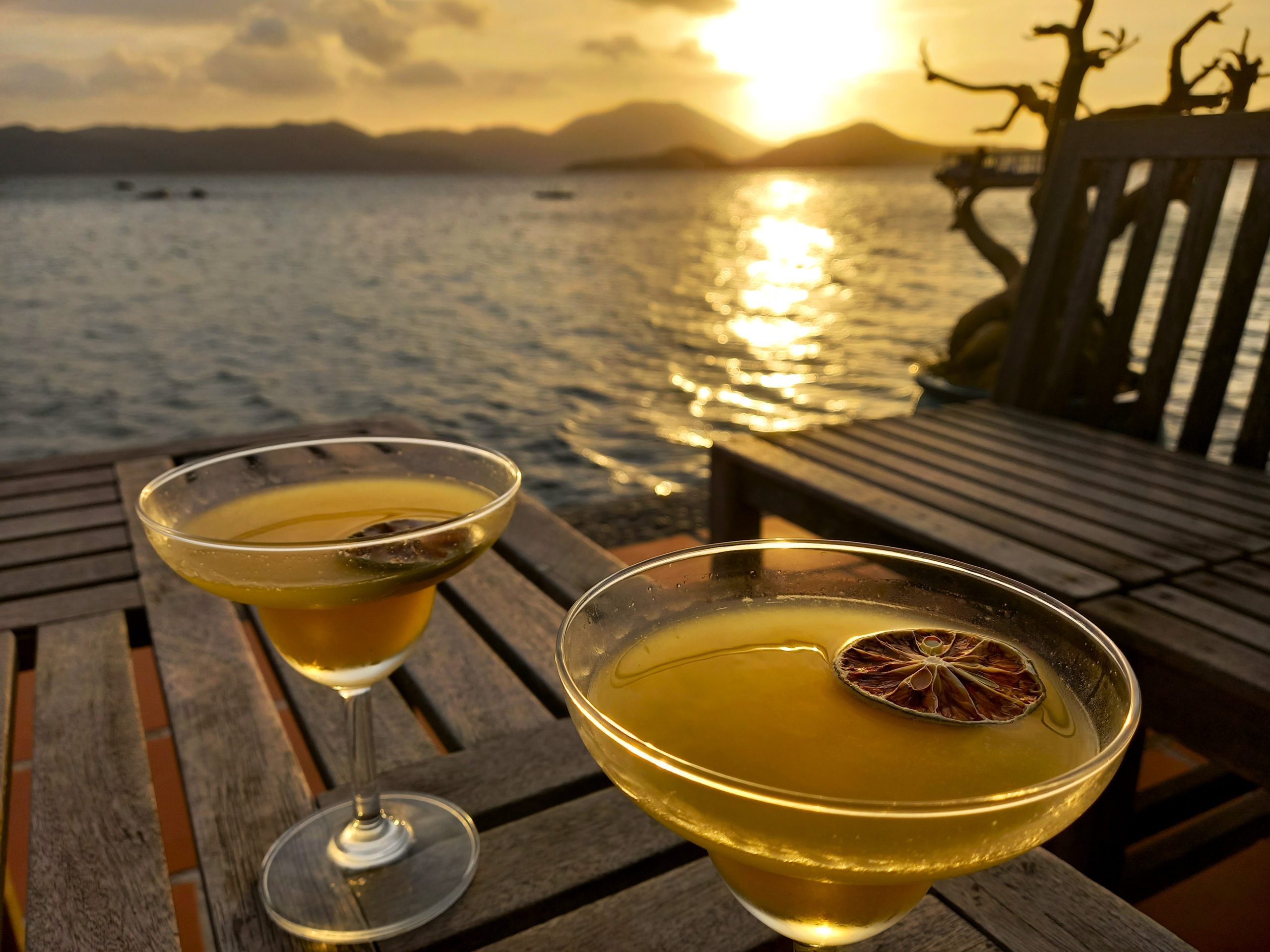
Drinks are not included in any of the room rates, apart from drinking water which is available at refill stations across the property. Whale Island’s bar is spectacularly located on a deck above the sea looking out across the bay and islands. Sadly, there’s no sunset happy hour – it would be great to indulge in a couple of 2-for-1 cocktails while watching the sun fall over the bay and whiling away the time before dinner is served at 7pm. However, drinks are quite reasonably priced, especially considering this is the definition of a captive market, and the list is long: from wines to spirits to juices to cocktails.
🤔 Summary:
Good for couples, families with children, friends or even solo travellers, I think it’s safe to say that if you’re a regular reader of Vietnam Coracle and generally share my tastes, you will almost certainly enjoy Whale Island. It’s not a budget accommodation but neither is it out of most people’s price range for a couple of nights. Bearing in mind the location and prices of comparable private-island resorts in Vietnam, Whale Island is not particularly expensive and actually represents good value, especially with meals included. One could think of Whale Island as a poor man’s Six Senses Ninh Vay Bay. Personally, I would recommend a visit between March-September for best weather and sea conditions, and a stay of at least several nights so as to make the most of the location and all it has to offer. There’s plenty to keep you active and engaged for a few nights. Possible issues might include: Bad weather if visiting over the winter months (October-February). Waiting for meal times – if you’re very hungry after an active day, if can be an agonizing wait for dinner to be served at 7pm. And, joking aside, it really would be good to have a sunset buy-one-get-one-free happy hour at the bar as this would help tide you over until the set menu meal is served after dusk. Finally, I communicated with staff, most of whom were very friendly, hard-working and efficient, in Vietnamese, but I did observe some guests struggling to be understood when communicating their needs in English.
❤️Check Rates & Book Here for Whale Island Resort
*Disclosure: I never receive payment for anything I write: my content is always free & independent. I’ve written this review because I want to: I like this resort & I want my readers to know about it. For more details, see my Disclosure & Disclaimer statements & my About Page
[Back Top]