
First published October 2025 | Words and photos by Vietnam Coracle | Read time 20 minutes | 2 comments

Tom Divers is the founder and creator of Vietnam Coracle. In 2005 he moved from his native London to Vietnam, where he has been living, working and travelling ever since. He pays rent in Ho Chi Minh City but is more often on the road, riding his motorbike a quarter of a million kilometres across Vietnam to research guides to the farthest-flung corners of the nation. When he’s not in the saddle, you’ll find him on a beach with a margarita, in a tent on a mountainside or at a streetside noodle house: in other words, at the ‘office’. Read more about Tom: Q&A, About Page, Vietnam Tourism website.
Rich Birdlife in a Shimmering Wetland Forest in the Mekong Delta
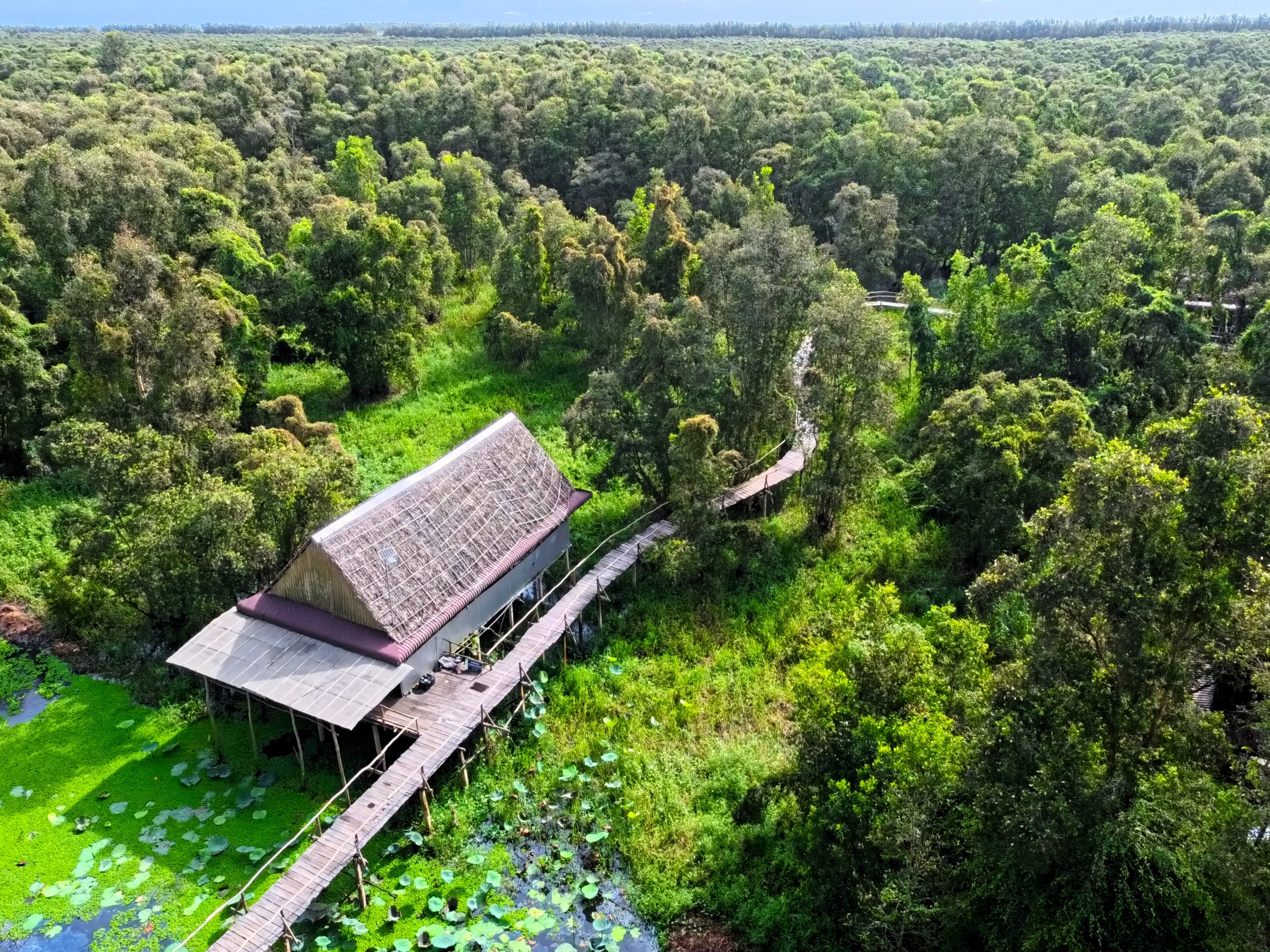
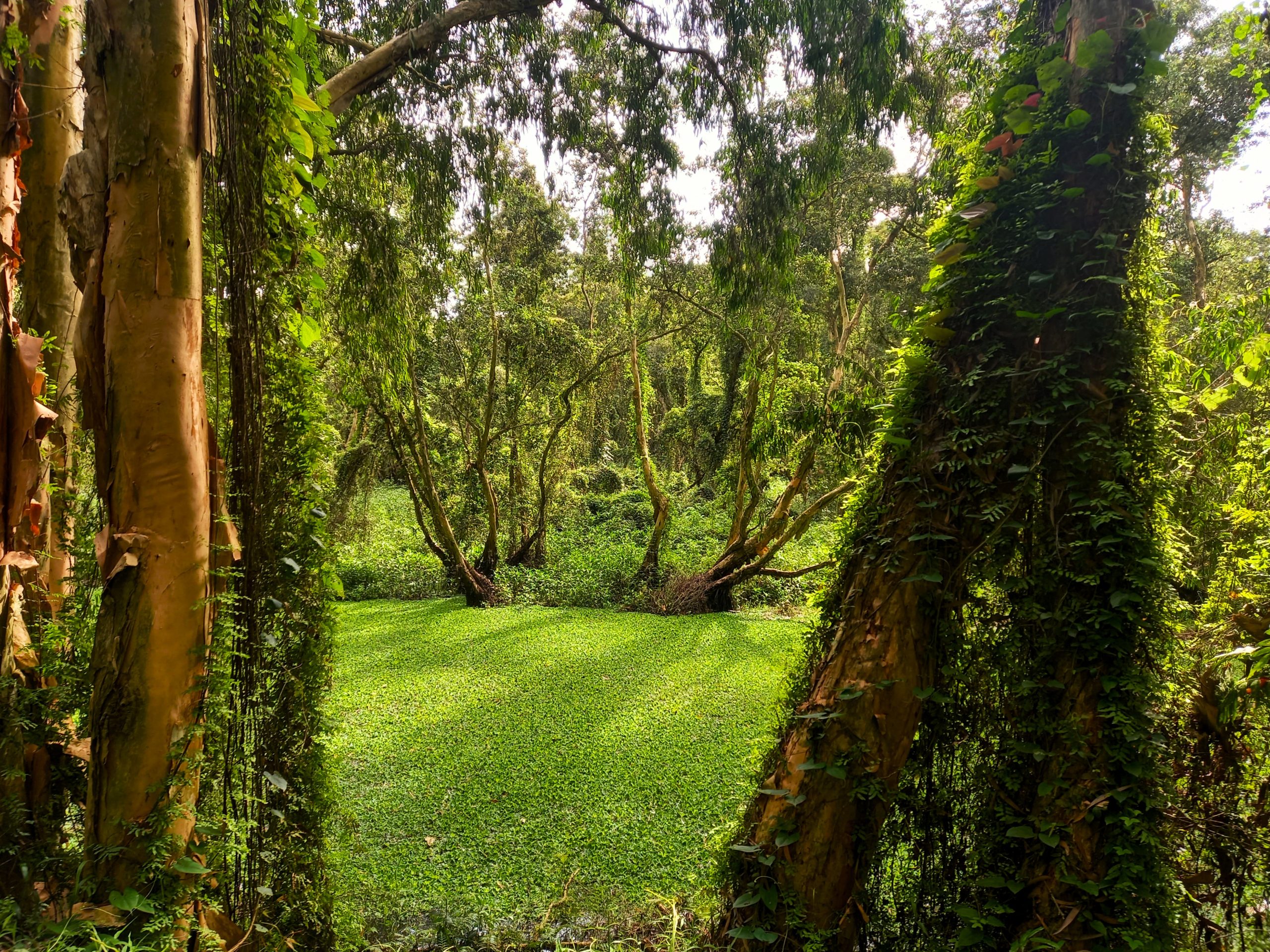
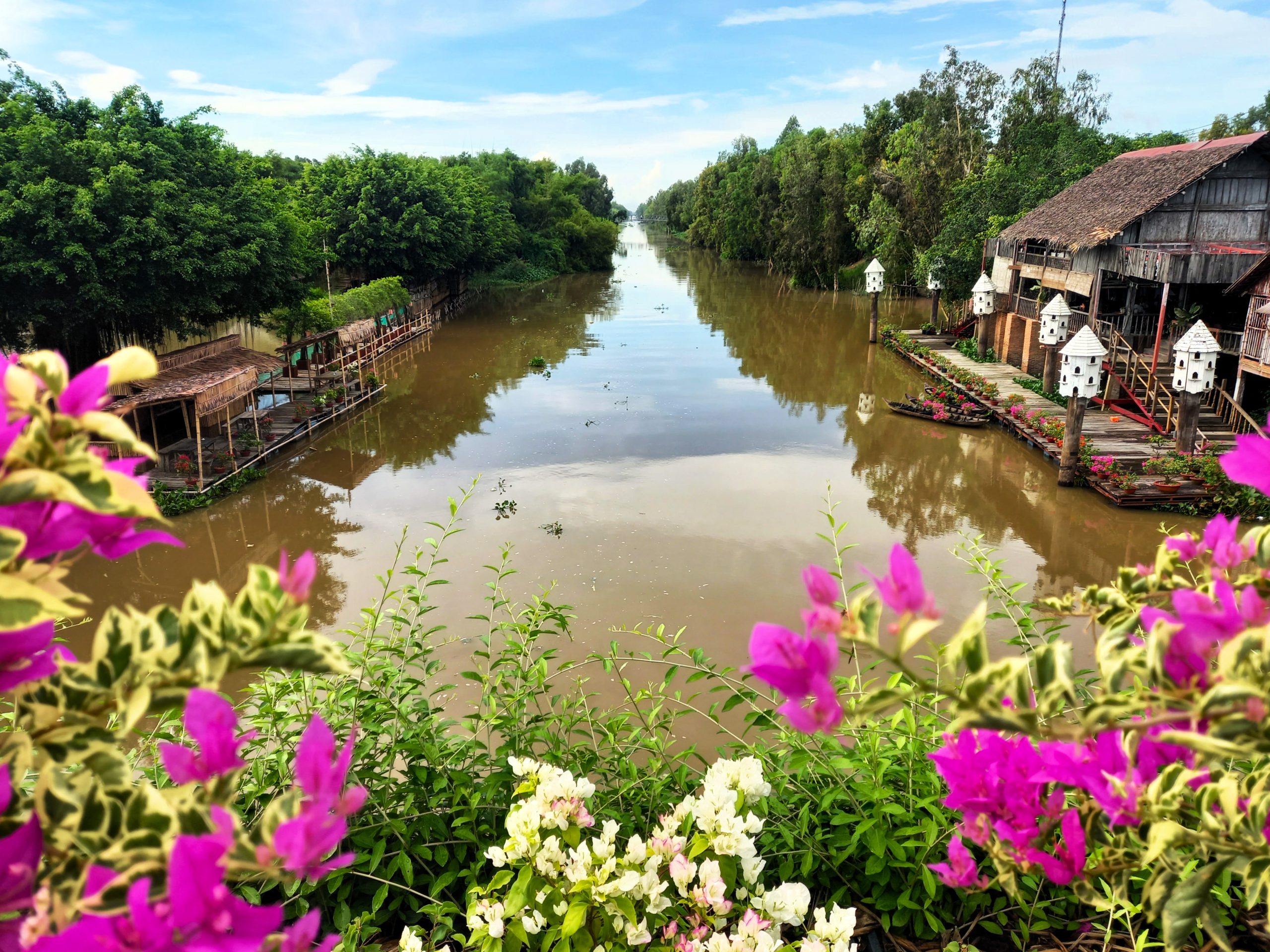
Gliding silently through cajuput trees in a sampan via a labyrinth of swampy backwaters – listening to the chirping chorus of thousands of birds in the treetops and other wildlife hidden within the shimmering canopy – a visit to Trà Sư Forest (Rừng Tràm Trà Sư) can be a magical, even moving, experience. In the far western corner of the Mekong Delta, Trà Sư is part of An Giang Province, 20km by road from Châu Đốc city and just over 10km from Cambodia as the crow flies. A large, protected stand of cajuput forest in a vast wetlands, Trà Sư is perhaps what much of the Mekong Delta would have been like before large-scale dredging encouraged cultivation, leading to the region becoming the rice bowl of Vietnam and the densely populated, agricultural powerhouse it is today. A plethora of activities encourage visitors to engage with the natural surrounds, including walking, cycling, boating, birdwatching, fishing, and dining on local specialities. For the most part, Trà Sư is an impressively managed and maintained ecological tourism site; one that should be an example for other natural attractions in Vietnam. Trà Sư is a poignant, remarkable but also somehow heartbreaking reminder of Vietnam’s historical biodiversity: what is left of it and what has gone forever.

Support My Site
Free | Independent | No Sponsored Content
“Hello, if you enjoy my website, please support it.
Thank you.” Tom
[Back Top]
TRA SU FOREST:
Exploring the Wetlands, Waterways & Wildlife of the Western Mekong Delta
For the best experience of Trà Sư, visit on a weekday in the early morning or late afternoon. If possible, avoid weekends and public holidays, because Trà Sư can get busy on those days and the experience will be very different indeed. The best chance of having the forest all to yourself is to go between 6am-8am from Monday to Thursday or after 4pm on the same days. These times are also best for birdlife and flora. Don’t worry too much about the weather: although the forest glows green in sunny conditions, even damp, grey, rainy days are atmospheric and full of wildlife. Trà Sư can be visited year-round, but the best months are rainy season (June-November), particularly September-November, known as mùa nước nổi – ‘floating season’ – when water levels are high (allowing for further boat exploration) and the forest is lush. Watch your head (or wear a hat) because, with so many birds flying around, there is a high chance of being ‘deposited’ on. Click an item from the contents below to read more about it. (For other guides to the Mekong Delta, see Related Posts.)
Contents:
➤ Map
If you like this guide, please support Vietnam Coracle with a donation or become a member of my Patreon community or purchase an Offline Guide & Map. This website relies on reader support to maintain its independence & quality. Thank you, Tom
MAP:
Trà Sư Cajuput Forest
Introducing Trà Sư Forest:
Location: Văn Trà Hamlet, Văn Giáo Commune, Tịnh Biên District, An Giang Province
[View Map]
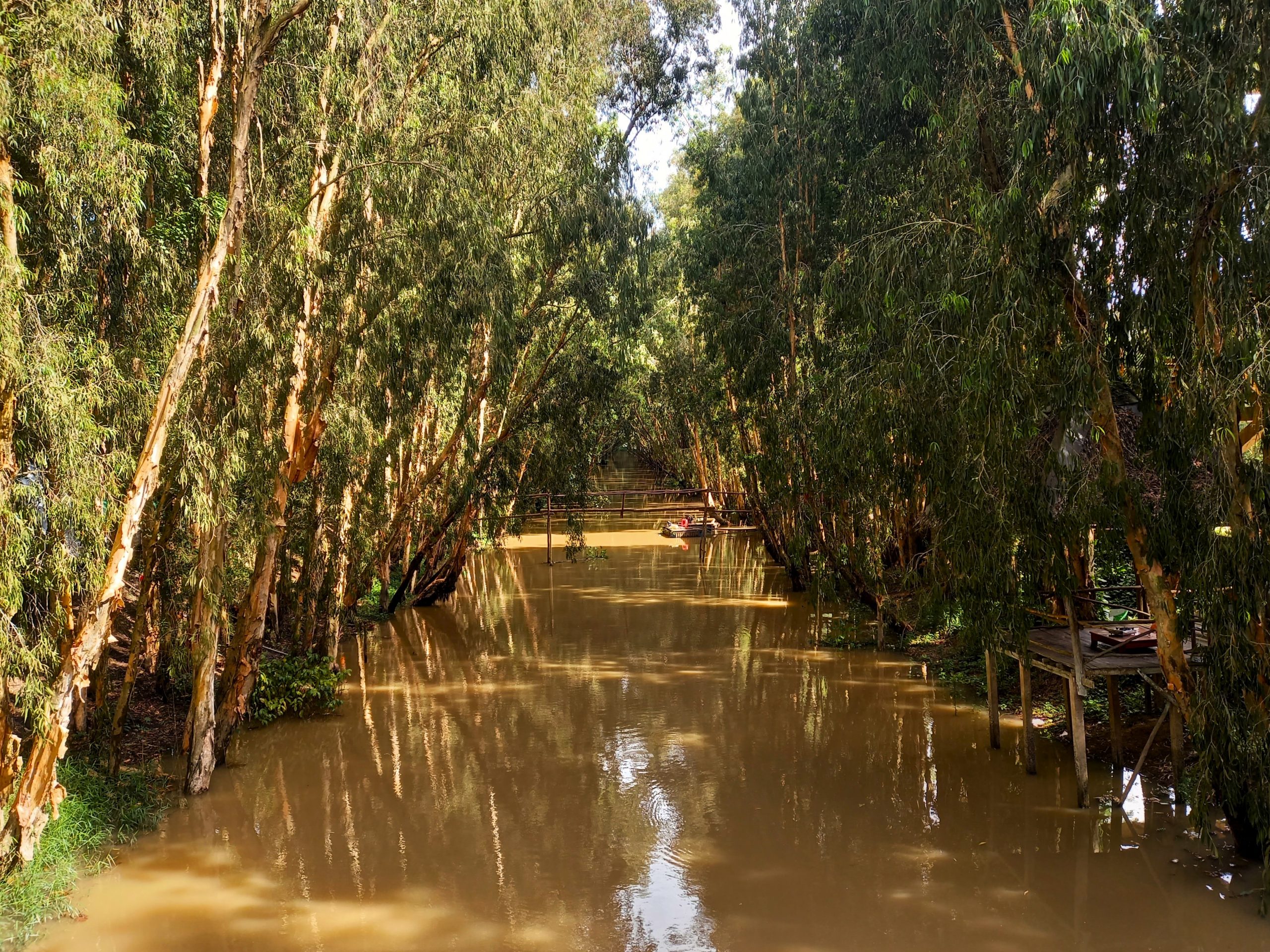
Opened as a tourist site in 2018, Trà Sư forest was originally planted as a flood defence in the early 1980s. The earth in the Trà Sư region is rich in alum and therefore not cultivable. Cajuput trees (of the genus Melaleuca and also spelled ‘cajeput’), which are resistant to alum and therefore thrive in the soil here, were planted to prevent the surrounding agricultural land from the high floodwaters of the Mekong River and its tributaries. After several decades, due to the absence of any human interference in the form of farming and construction, the Trà Sư forest ultimately became a haven for birds and other wildlife. Today, the 850-hectare site is home to over 70 bird species, 140 animal species and 150 plant species. The variety of cajuput that grows along the swampy channels and provides nesting and shelter for birdlife is known in Vietnamese as cây tràm nổi – floating cajuput tree.
The birds and the trees are the main attractions at Trà Sư. The forest is at once eerily calm – a primordial wetlands, pregnant with all the stuff of life but motionless, nascent and waiting – while at the same time the entire canopy and all the waterways shiver and shimmer with small, delicate but incessant movement and noise. In the forest, you are constantly aware of the presence and proximity of living things all around, even when you can’t see them. It can be an intoxicating and awe-inspiring experience. Storks and egrets might be the most common birds seen nesting in the treetops, but there are many more to spot for those in the know. Watching the birds – many thousands of them – as they line up in formation high in the sky, then slowly descend to the treetops, reminds me of watching the planes queue for landing at London Heathrow Airport as a child. In they come, again and again: one group lands, another appears out of the clouds; they land and then another flock sweeps down. This prompts the obvious question: where are they coming from?

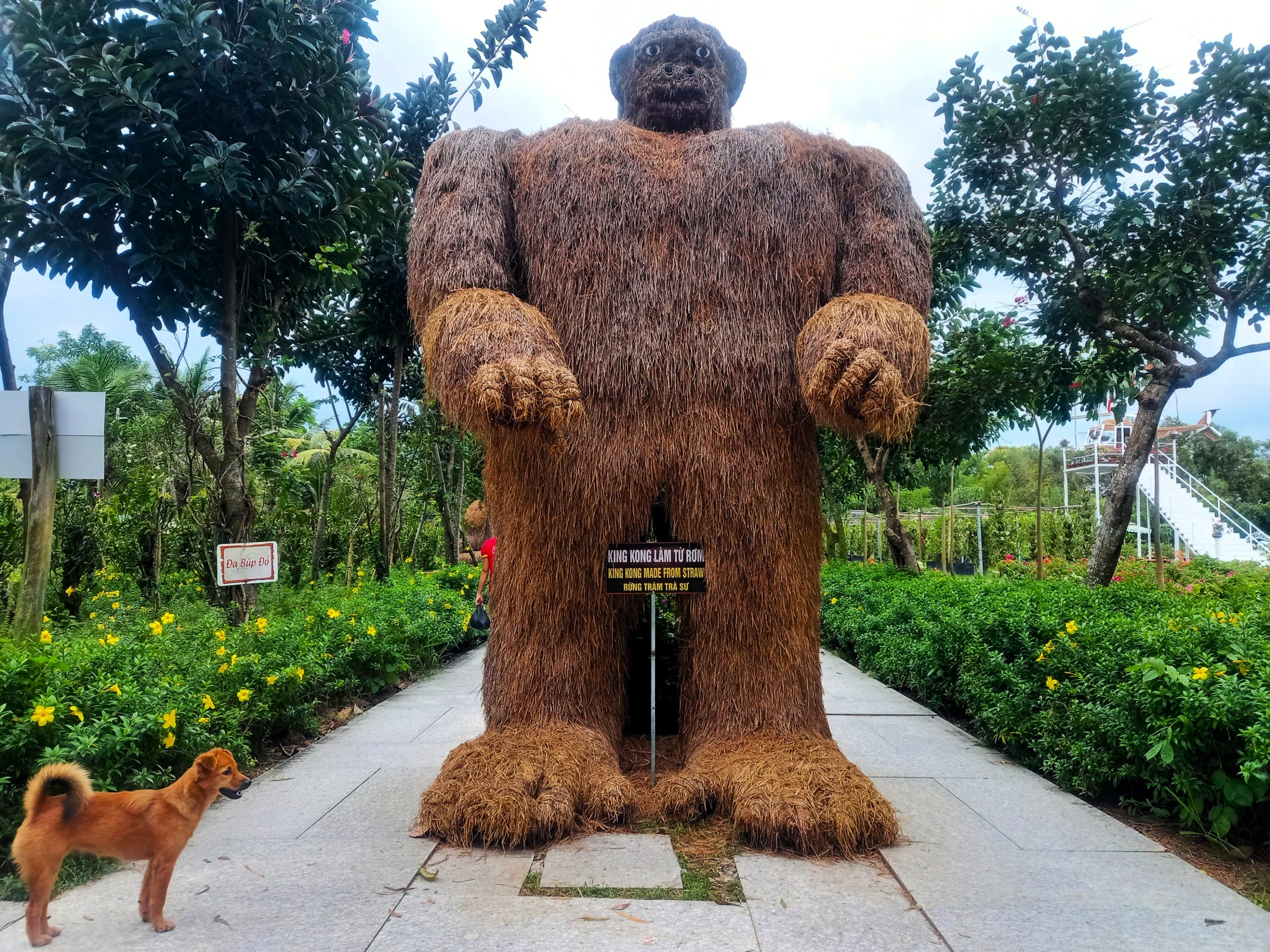
Overall, Rừng Tràm Trà Sư is a remarkable place to visit and a good example of how more of Vietnam’s natural sights might be developed for visitors in the future. Despite some questionable embellishments – mostly around the main entrance and initial staging post for the walkway and boats, including a giant, 12-foot high sculpture of a peacock, a colossal model of King Kong made from straw, and a bamboo tank among other incongruous additions to the natural setting – the site is extremely well organized, low-impact, tasteful and attractive. In general, Trà Sư is very well-kept, maintained and cared for. Most of the activities (although not all of them) encourage visitors to engage with, and learn about, the natural surroundings. Signage promotes respectful behaviour and there are plenty of places to dispose of trash responsibly. However, there is also evidence, as is sadly the case at most natural attractions in Vietnam, of littering. And, this being the Mekong Delta, the waterways are used for waste disposal. Even though the channels within the forest are kept clean, they are ultimately connected to all the other surrounding waterways, which are certainly not. That said, Trà Sư is in far better condition than most tourist sites in Vietnam.
Like this guide? Support Vietnam Coracle with a donation & help keep this website free & 100% independent. Thank you, Tom
Tickets & Prices:
Like this guide? Support Vietnam Coracle with a donation & help keep this website free & 100% independent. Thank you, Tom
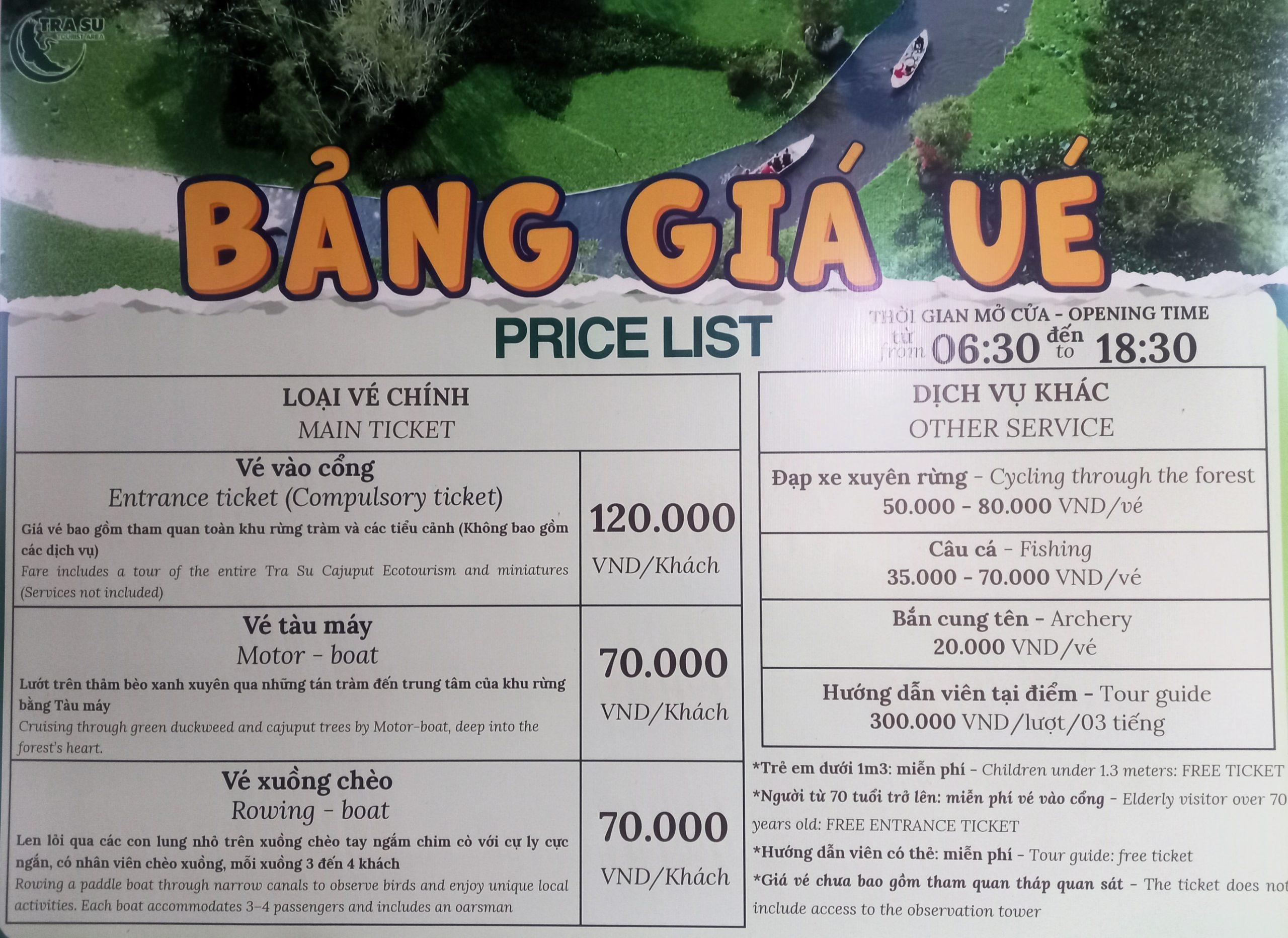
The main entrance to Trà Sư forest is on the western edge of the site. The entrance building is well-staffed and ticket prices are clearly displayed. Note that the general entrance ticket (120,000vnđ) allows you to wander on foot through the site, including the bamboo bridge and raised walkway, as much as you like, and this can easily fill a couple of hours. Tickets for the sampan boat ride and the motorboat ride through the forest cost extra (70,000vnđ each) and are also purchased at the main entrance before crossing the bridge into the site. A combo ticket, including general entrance, sampan and motorboat, costs 240,000vnđ. Tickets for all other activities are bought separately once you’re in the site. See the chart below for ticket types and prices, and go to Activities & Things To Do for more details.
- Contact & Information: website: www.trasu.vn | phone: 02966 512 299
- Opening times: 6.30am – 6.30pm daily
- Best time of day to visit: 6.30am – 8.30am or 4.30pm – 6.30pm
- Best time of year to visit: July-November (but visiting year-round is fine)
*Children under 1.3m and adults over 70 years go free
| Ticket Type/Activity | Price |
| Entrance Ticket (Vé Vào Cổng) (includes: full access on foot to the entire site) | 120,000vnđ |
| Sampan Boat (Vé Xuồng Chèo) (includes: 25-minute row boat through the forest) | 70,000vnđ |
| Motorboat (Vé Tàu Máy) (includes: 45-minute ride along the waterways) | 70,000vnđ |
| Bicycle (Vé Xe Đạp) (includes: 2 hours cycling within the site limits) | 50,000/80,000vnđ single/tandem |
| Observation Tower (Vé Tháp Quan Sát) (includes: access to 25m-high tower above the forest) | 5,000vnđ |
| Archery (Vé Bắn Cung Tên) (includes: firing arrows at a target in a range) | 20,000vnđ |
| Fishing (Vé Câu Cá) (includes: fishing within a stocked pond/lake) | 35,000vnđ-70,000vnđ |
*Other activities: cycling over a narrow bridge over a lake; walking along a wobbly walkway over a lake; riding in coracles on a lake (all designed as team-building activities and guaranteed to make you fall in the water)
Activities & Things To Do:
Like this guide? Support Vietnam Coracle with a donation & help keep this website free & 100% independent. Thank you, Tom
There are a lot of activities on offer at Trà Sư. Most of them help the visitor to see, experience and learn about the forest and its wildlife, and these are the ones that I assume readers will be interested in. Some activities, however, seem totally out of place and unrelated to the setting: what does archery have to do with a floating cajuput forest, for example? But this is Trà Sư’s answer to the perennial question of Vietnamese travellers when deciding whether or not to go somewhere: “Có gì vui không?” – Is there anything fun to do? For many domestic travellers, walking, boating and cycling through the forest, birdwatching and generally enjoying the natural setting is simply not enough to justify a visit. But when you throw in team-building activities, archery, tightrope walking over a pond, fish feeding and coracle rides designed to capsize, then there’s plenty of potential ‘fun’. (See Tickets & Prices for a breakdown of how much each activity costs.)
Bamboo Forest Walkway:
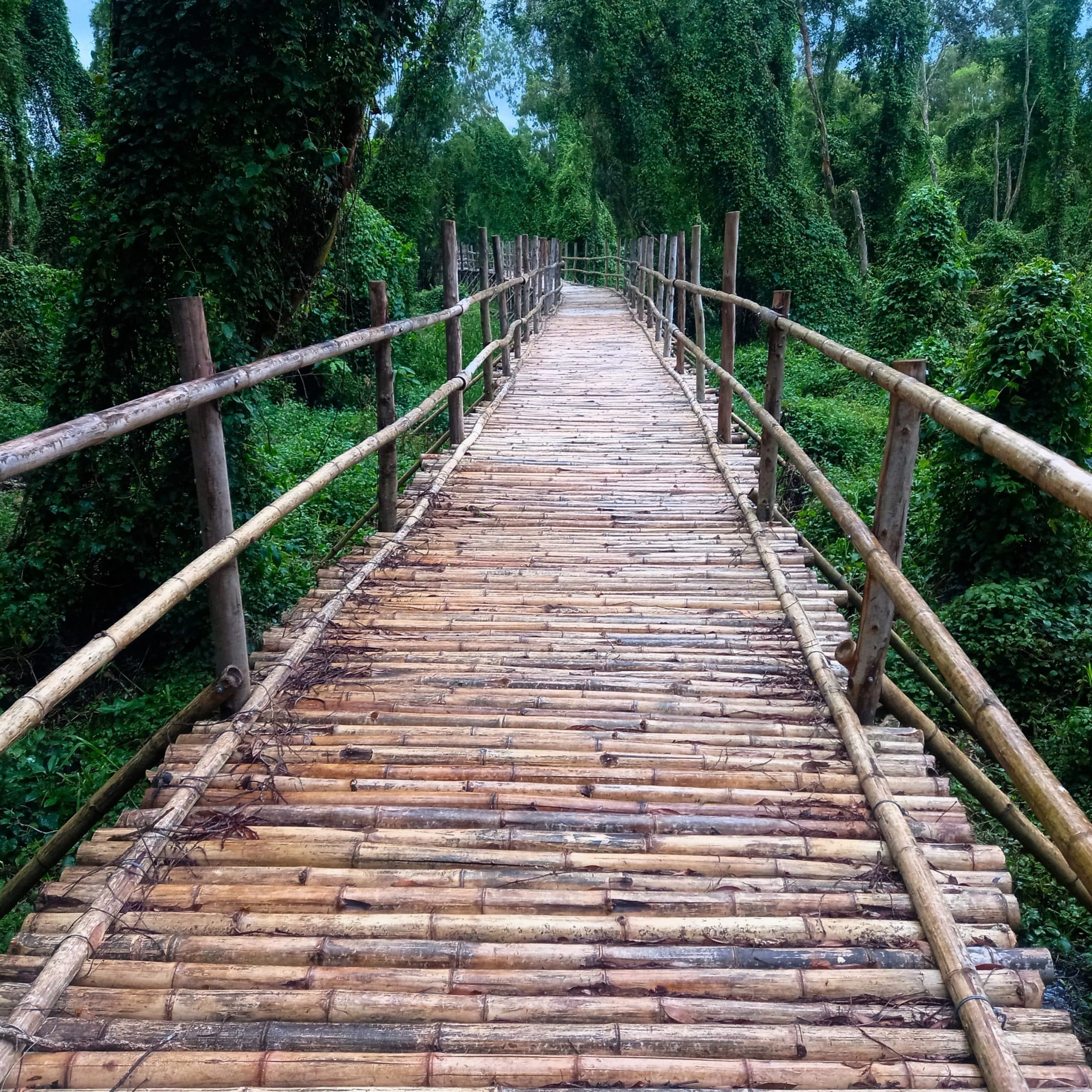
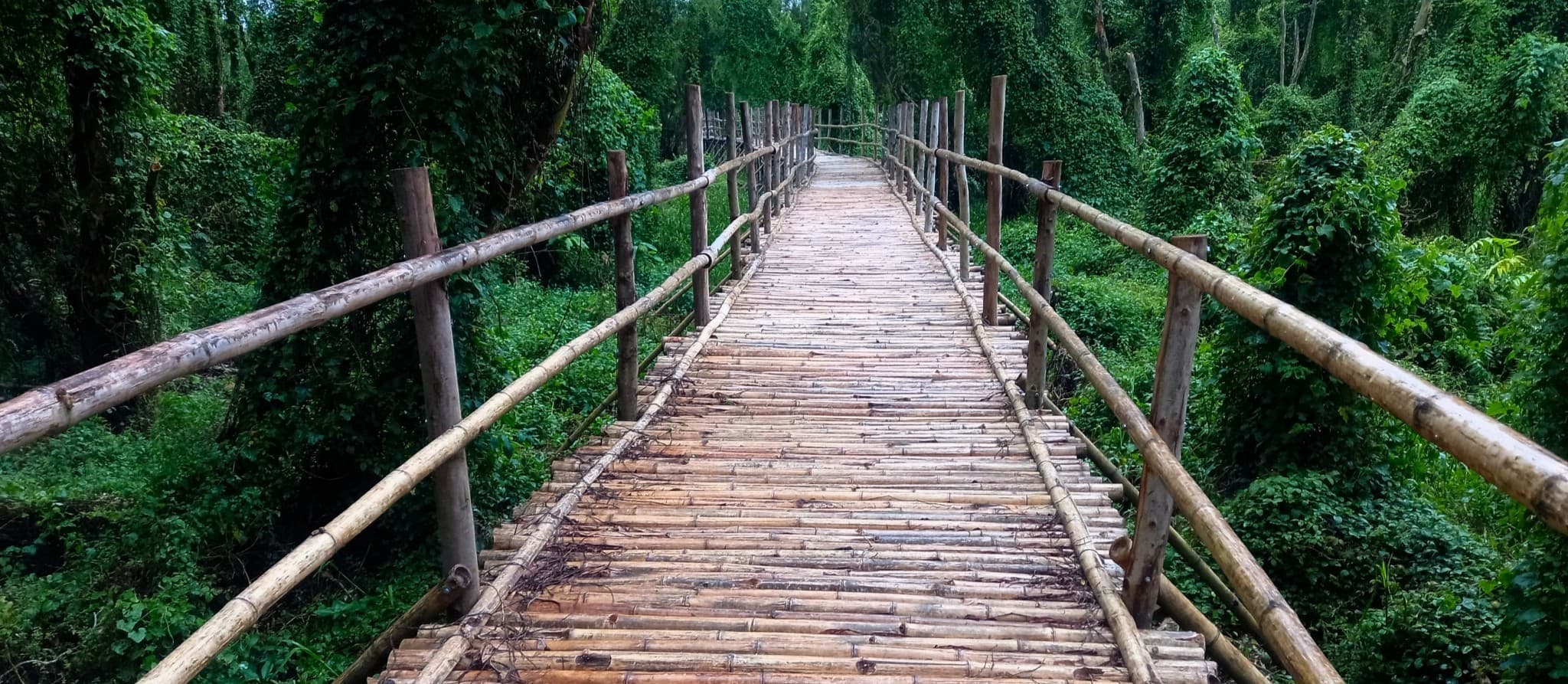
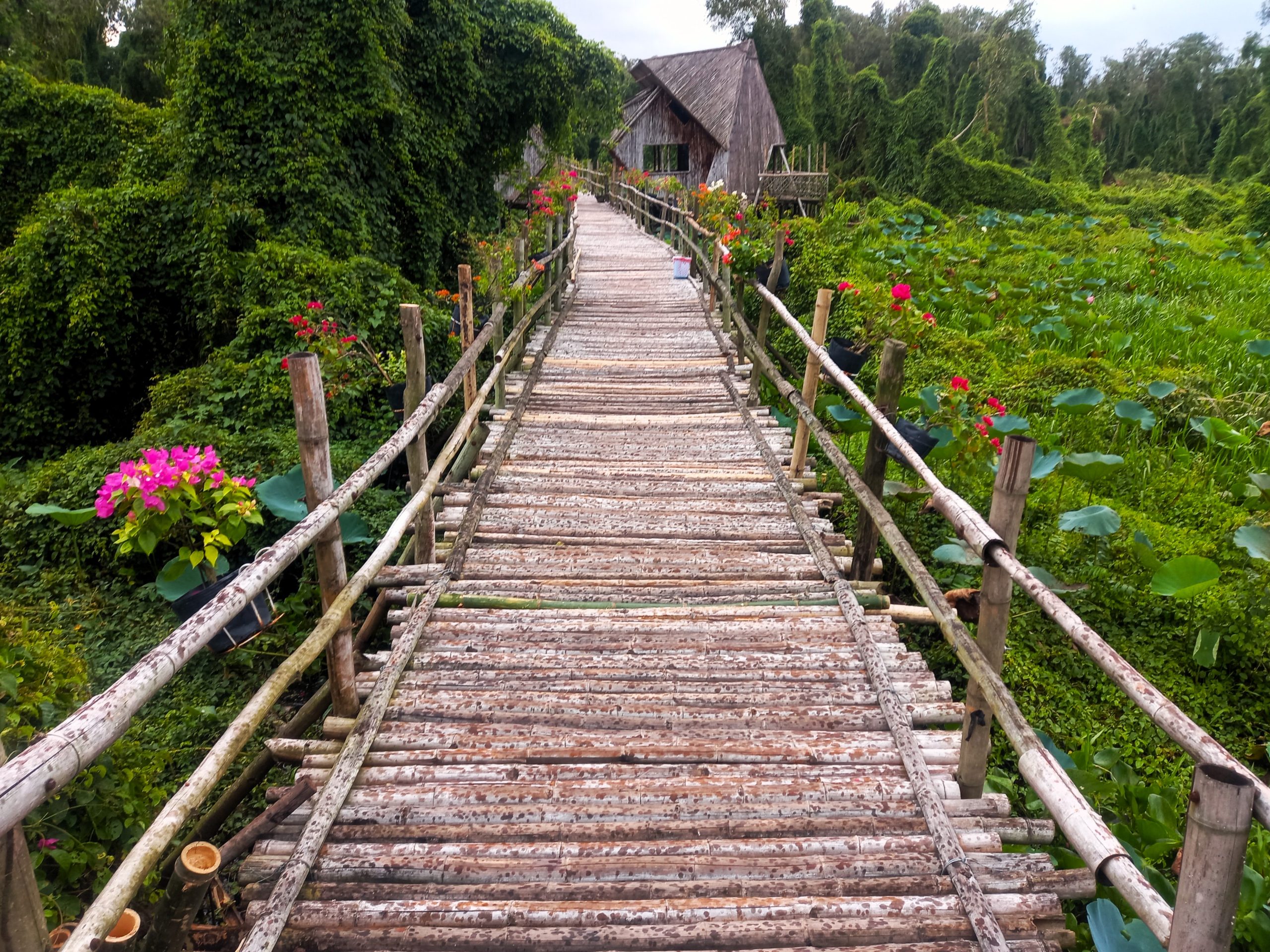
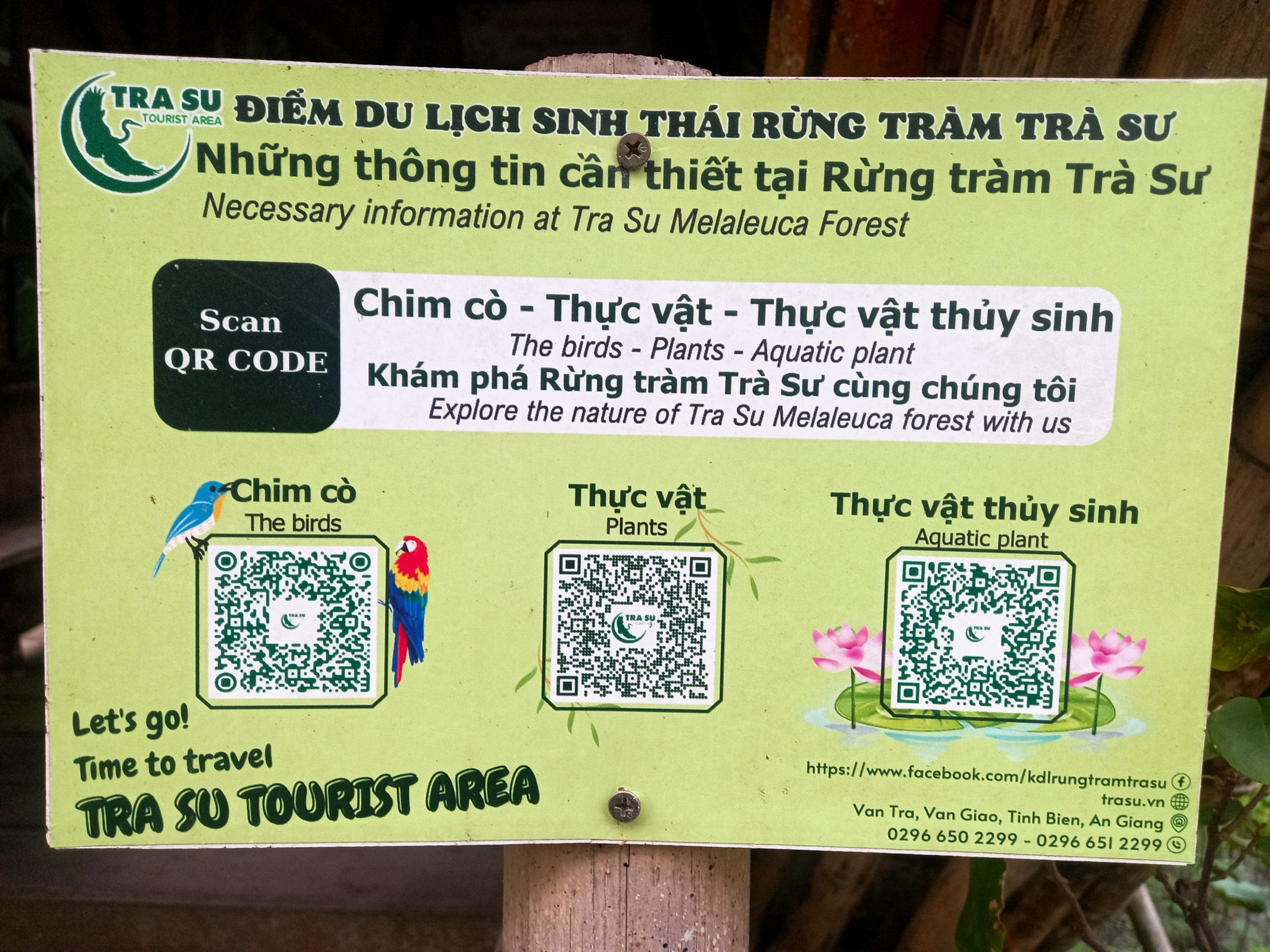
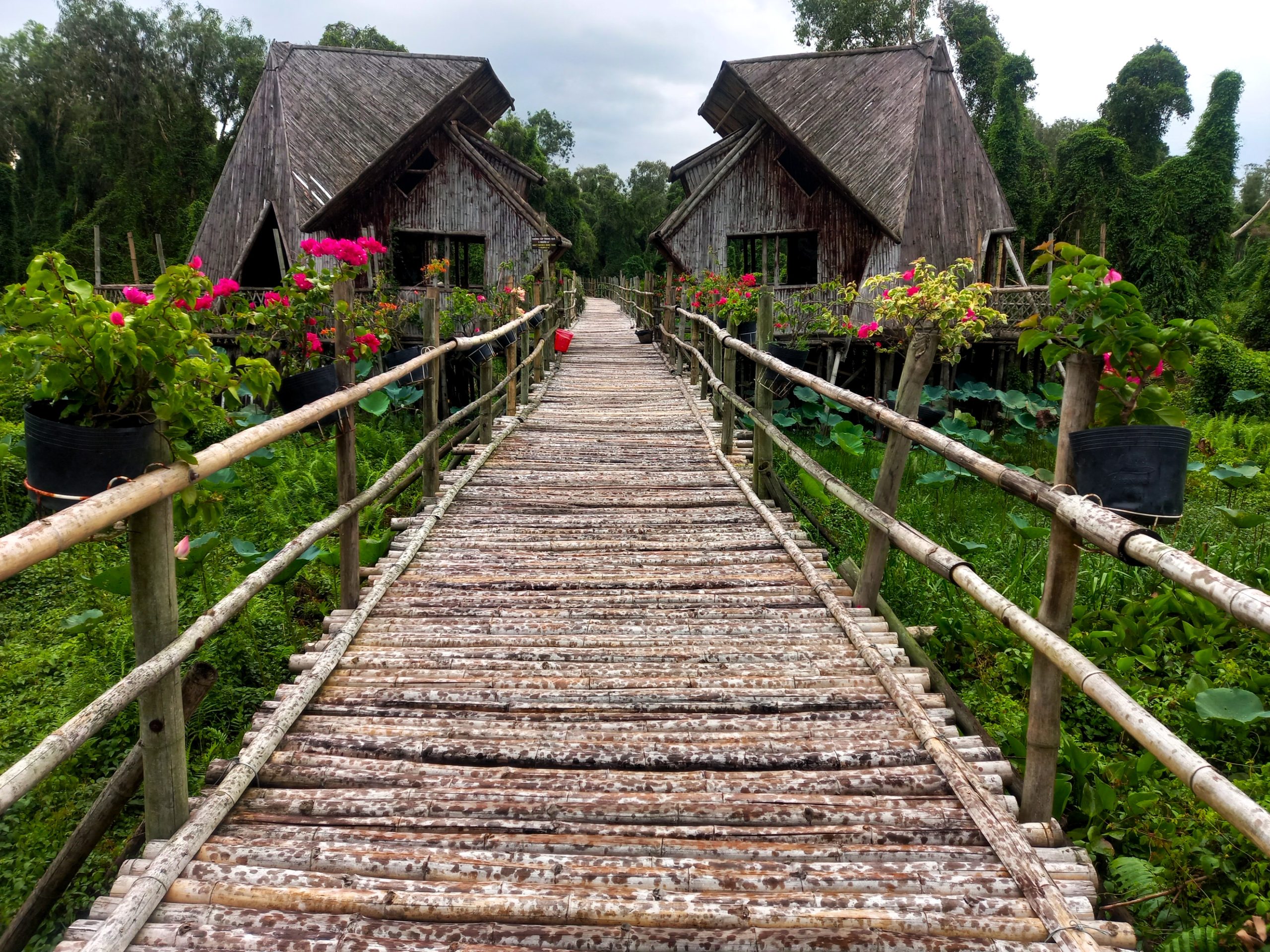
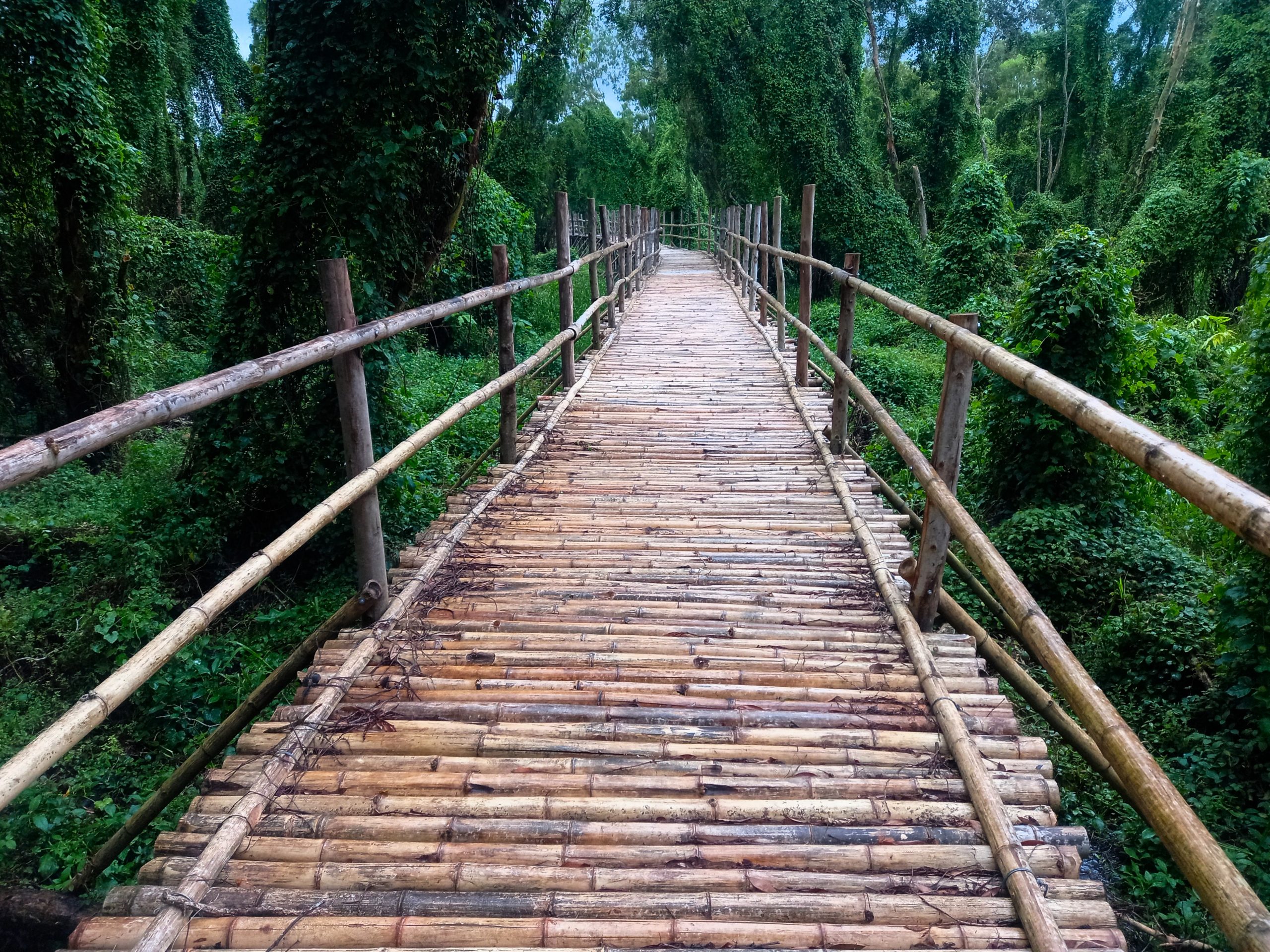
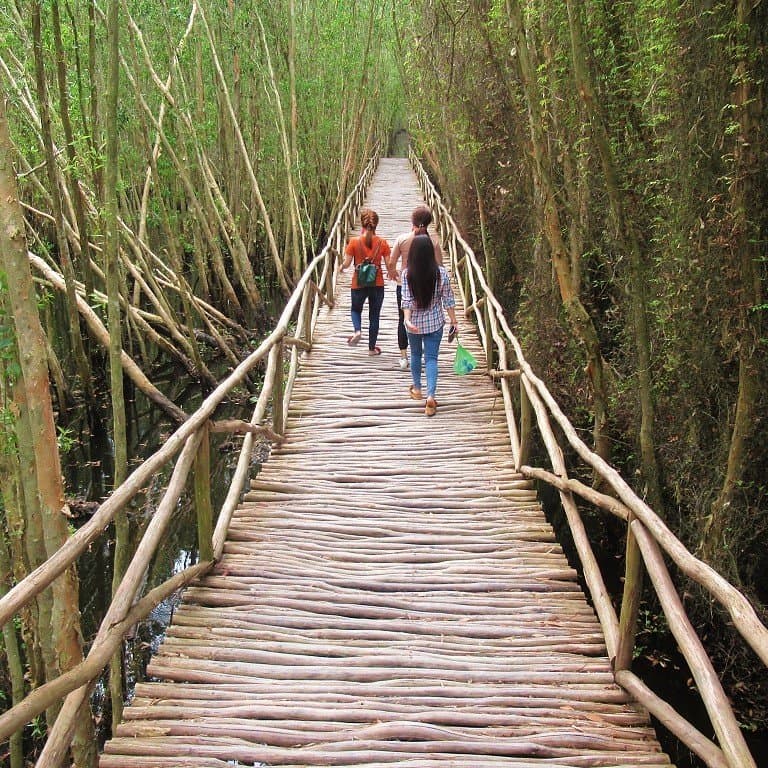
A bamboo bridge leads due east across the channel near the boat jetty and continues on a raised walkway above the wetlands, through the cajuput forest for about a kilometre. The trees and brush are teaming with birdlife and the variety of flora is impressive. It’s lush, lovely and can become hypnotic if you manage to visit when there are few other people around. Many of the trees, plants and flowers are labelled in Vietnamese and English. About halfway along, there are two bamboo huts facing each other. One of them contains photos and descriptions of Trà Sư’s birdlife; the other of its flora. It’s all very well done. I only wish the walkway was much, much longer.
Cycling & Walking:
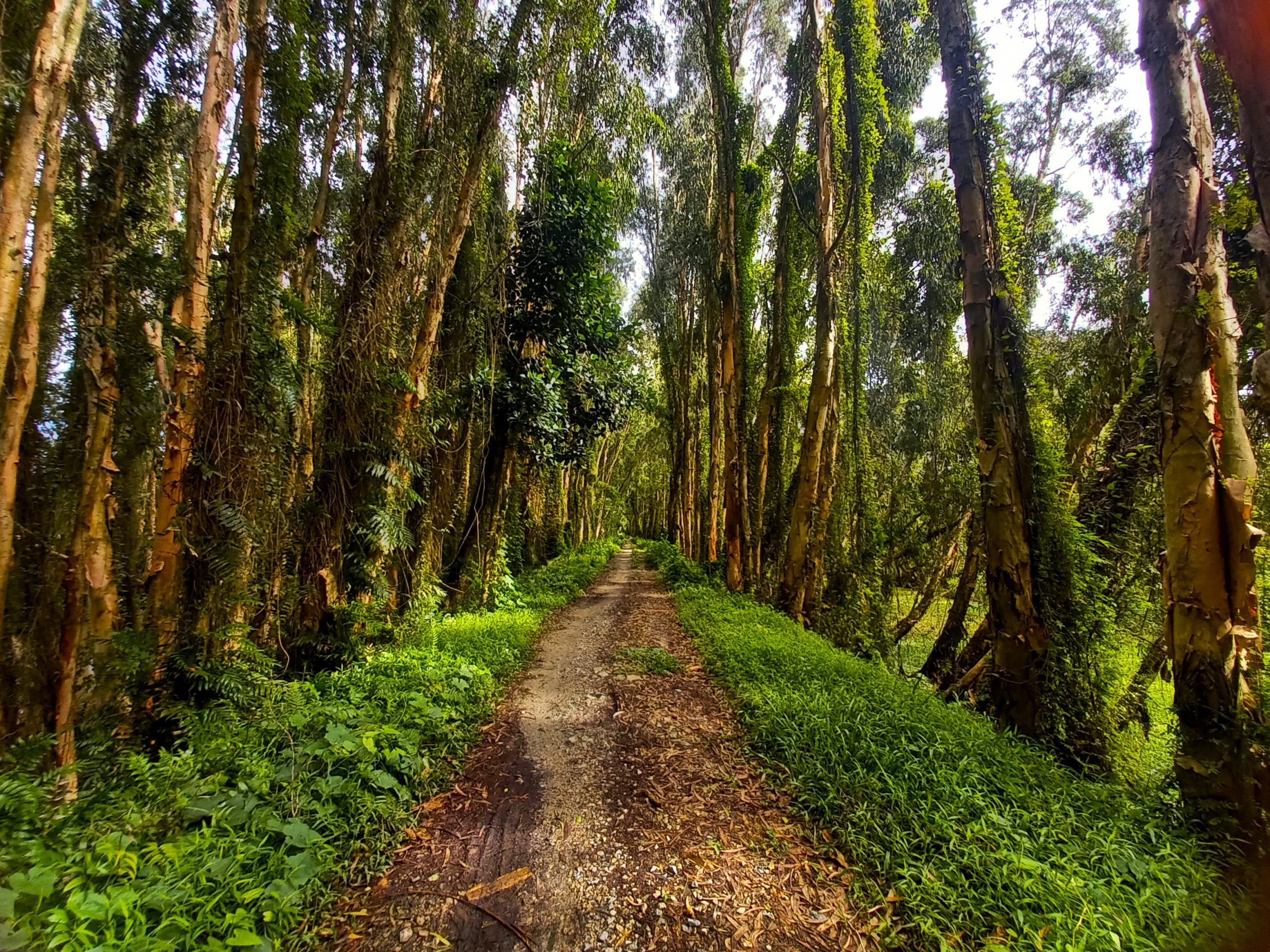
It’s possible to walk or hire a bicycle and explore the narrow, paved dyke pathway leading north of the boat jetty. This takes you deeper into Trà Sư forest, but there’s a limit to how far you can go. You’re not allowed to take the bicycles beyond the site boundaries, including to the Observation Tower (see below).
Sampan Row Boat:
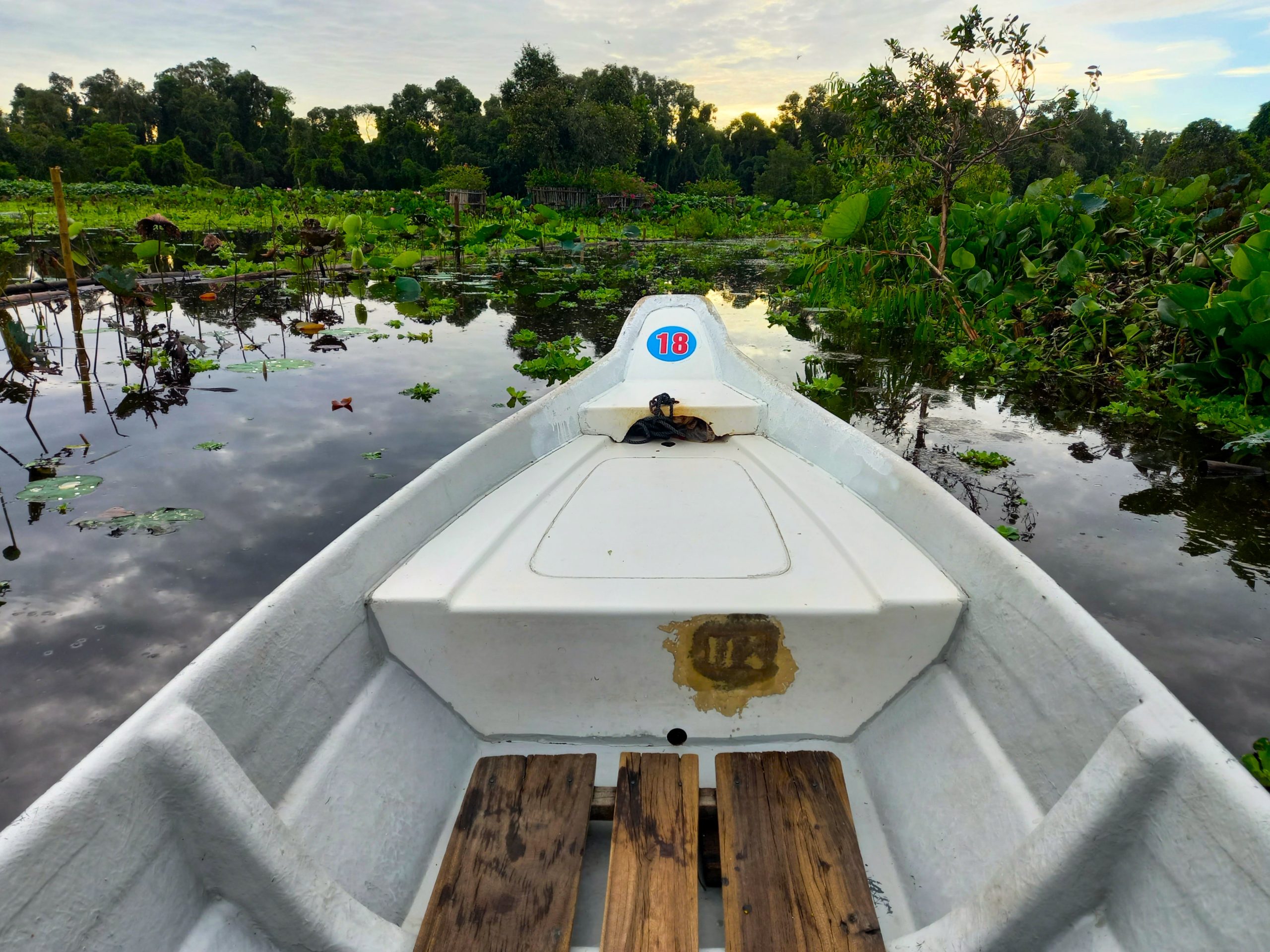
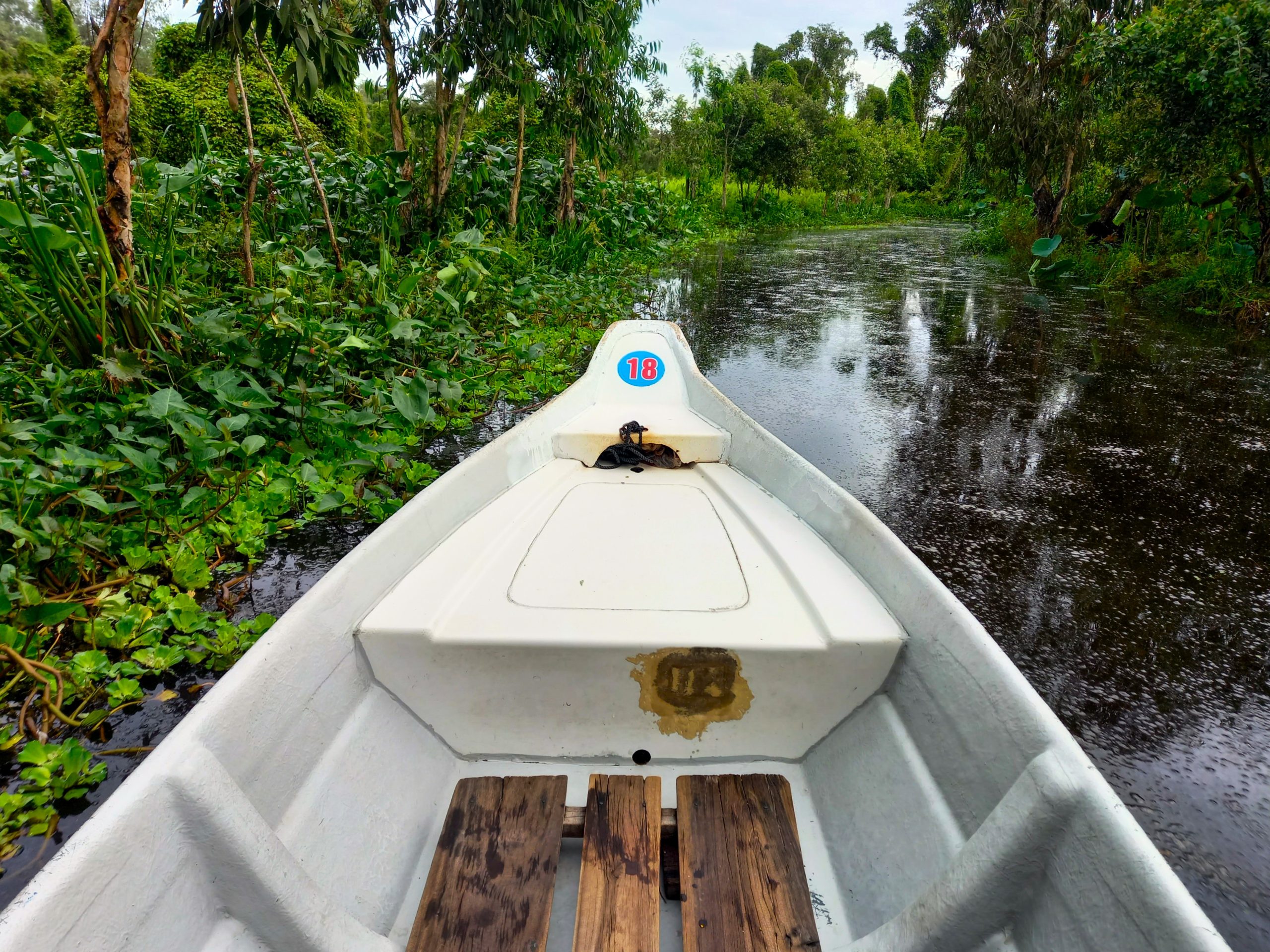
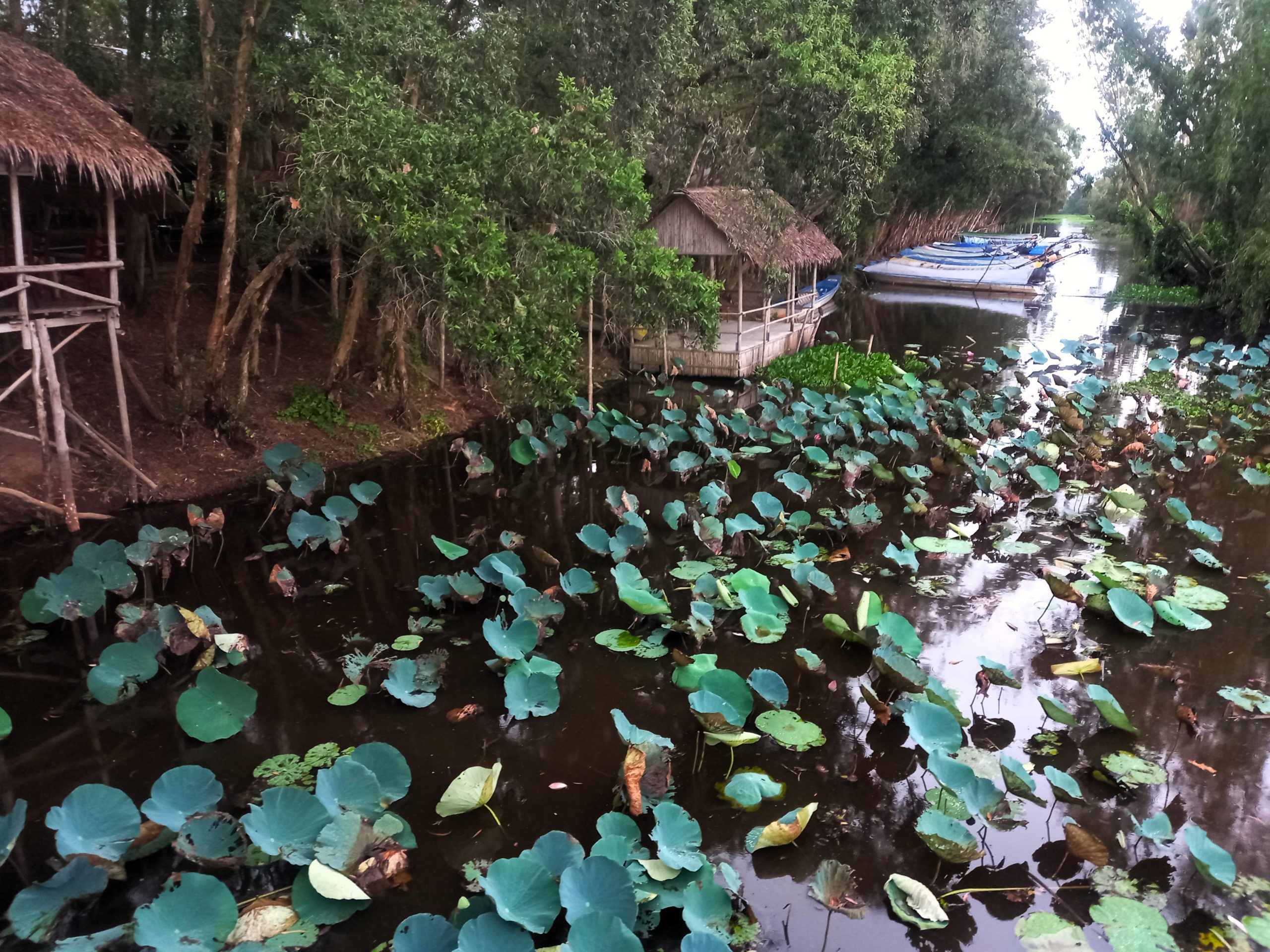
One of the highlights of Trà Sư is being rowed on a sampan along the narrow waterways leading between the trees on a 2km-loop. The ride takes about 25 minutes, starting and ending at the boat jetty, and is a soothing, beautiful experience. You’ll see lots of birdlife and flora, including hundreds of lotuses and water lilies. Most of the sampans are rowed by local women, many of whom have been working at Trà Sư for years. A tip at the end is appreciated, as they are only paid a small percentage of the ticket price.
Motorboat:
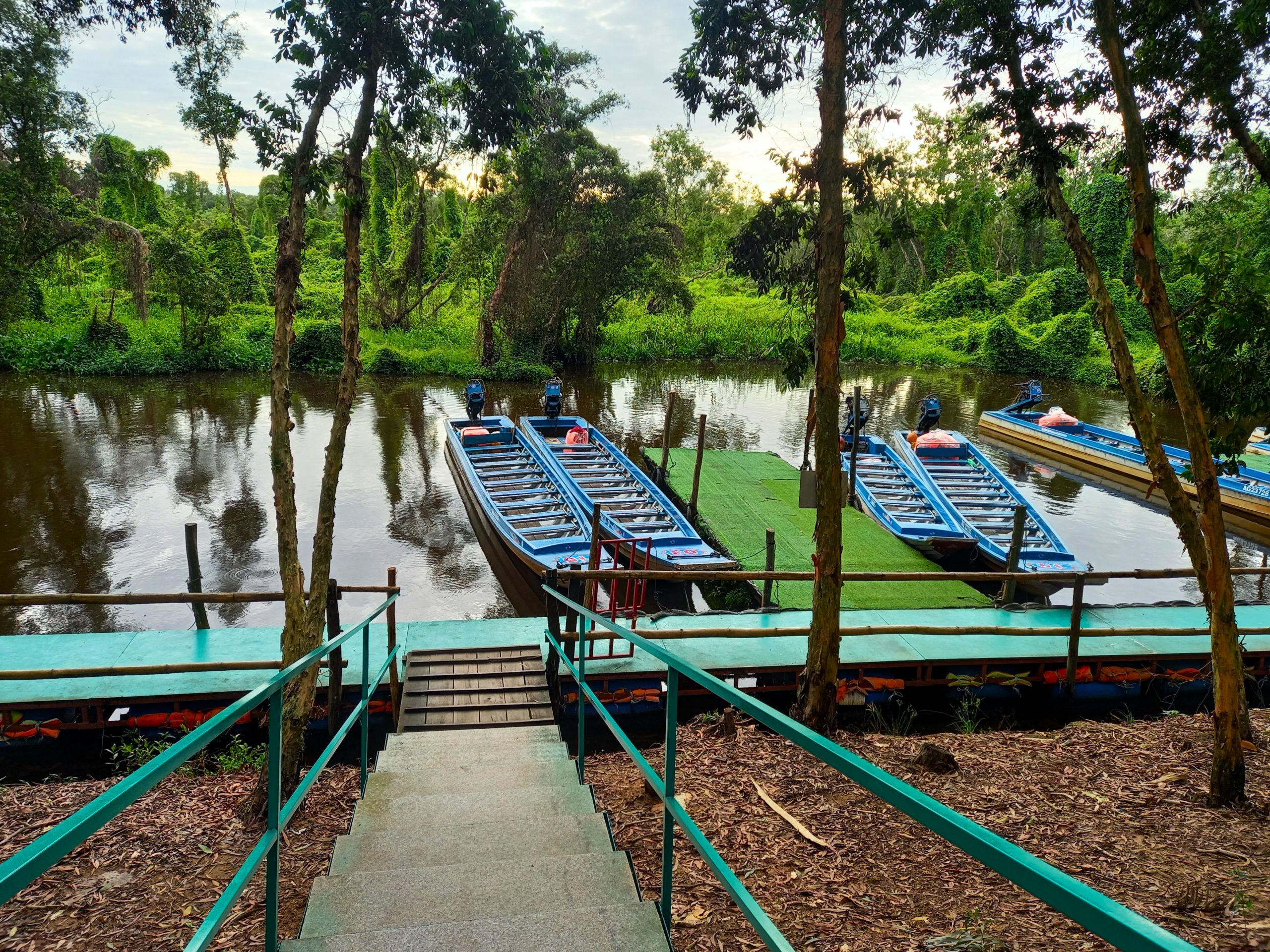
Although less atmospheric (and noisier) than the sampan ride, the motorboat takes you much deeper into the floating forest. The route starts from the motorboat pier and takes 30-40 minutes. In general, boats wait to leave until at least a handful of people are onboard. If you want to go with fewer people, you can probably just offer to pay a bit more.
Forest Observation Tower:
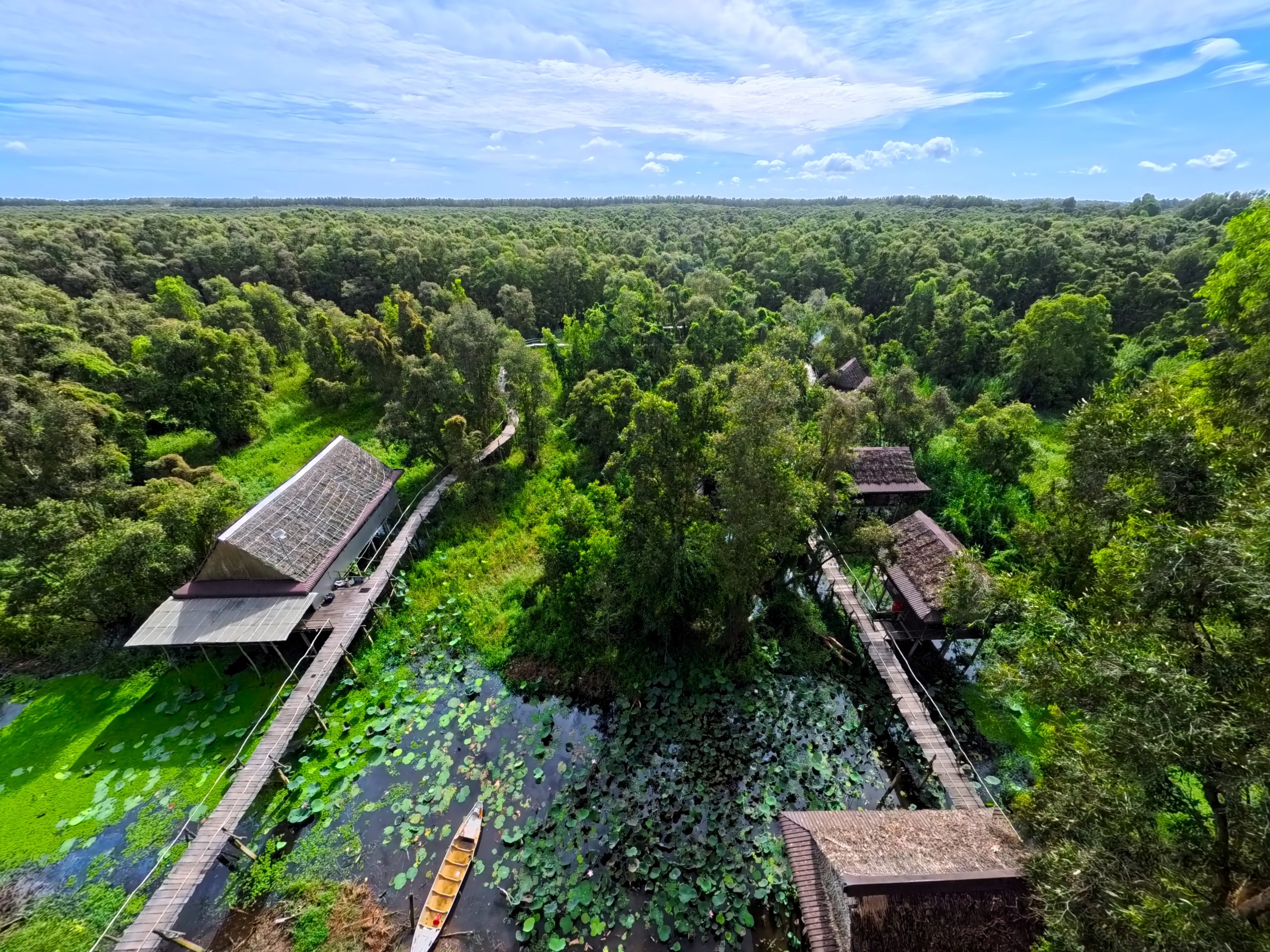
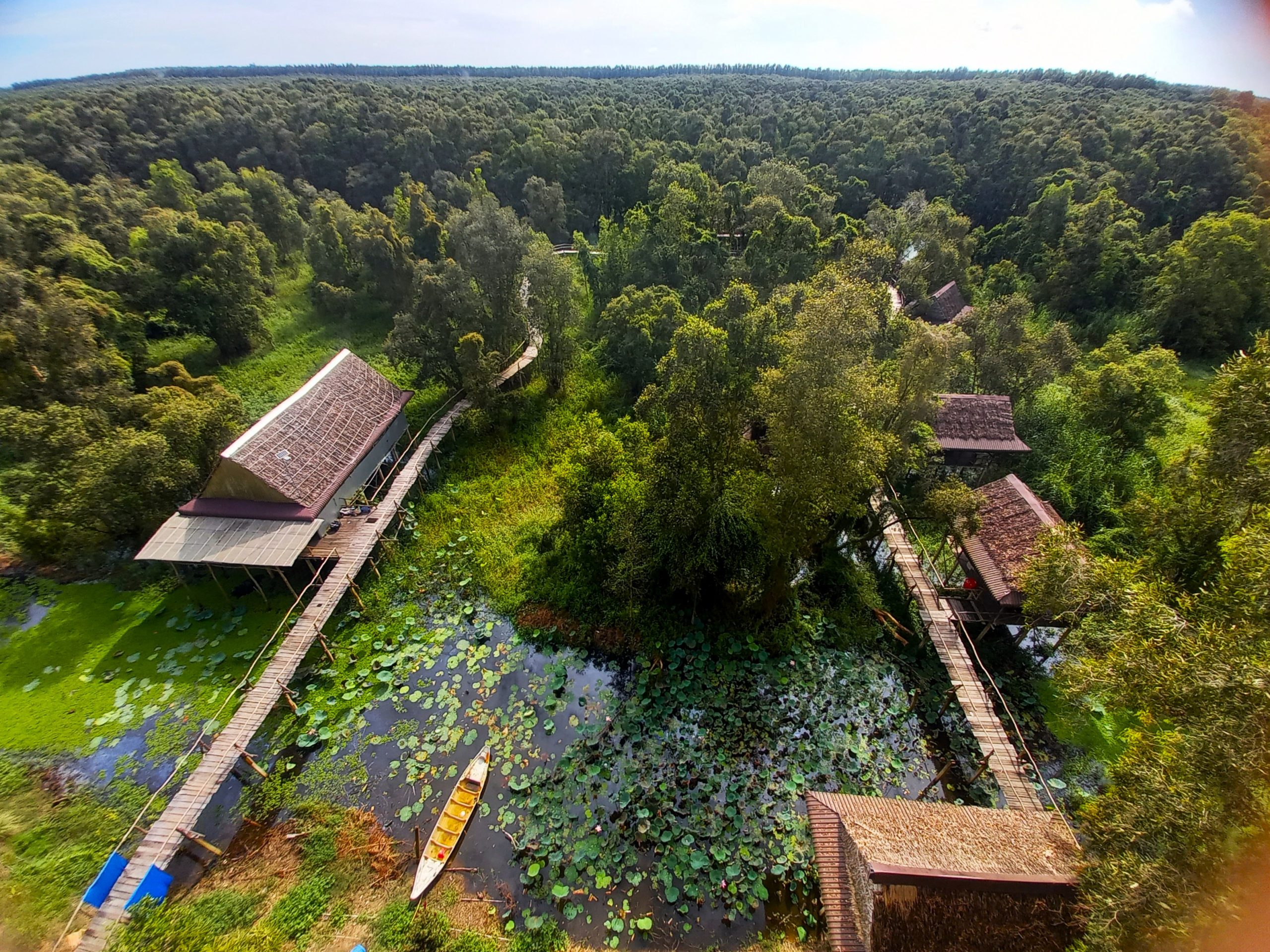
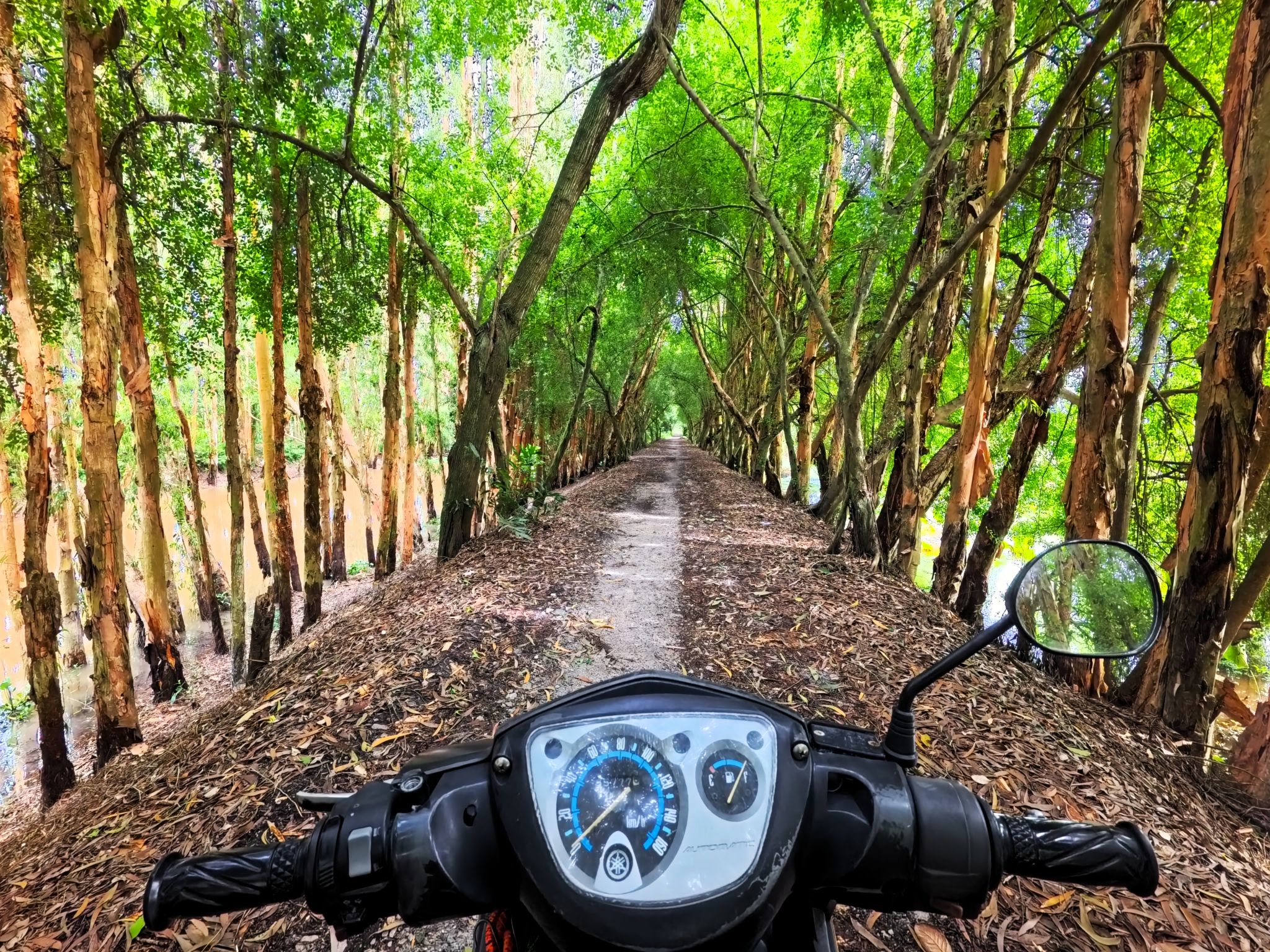
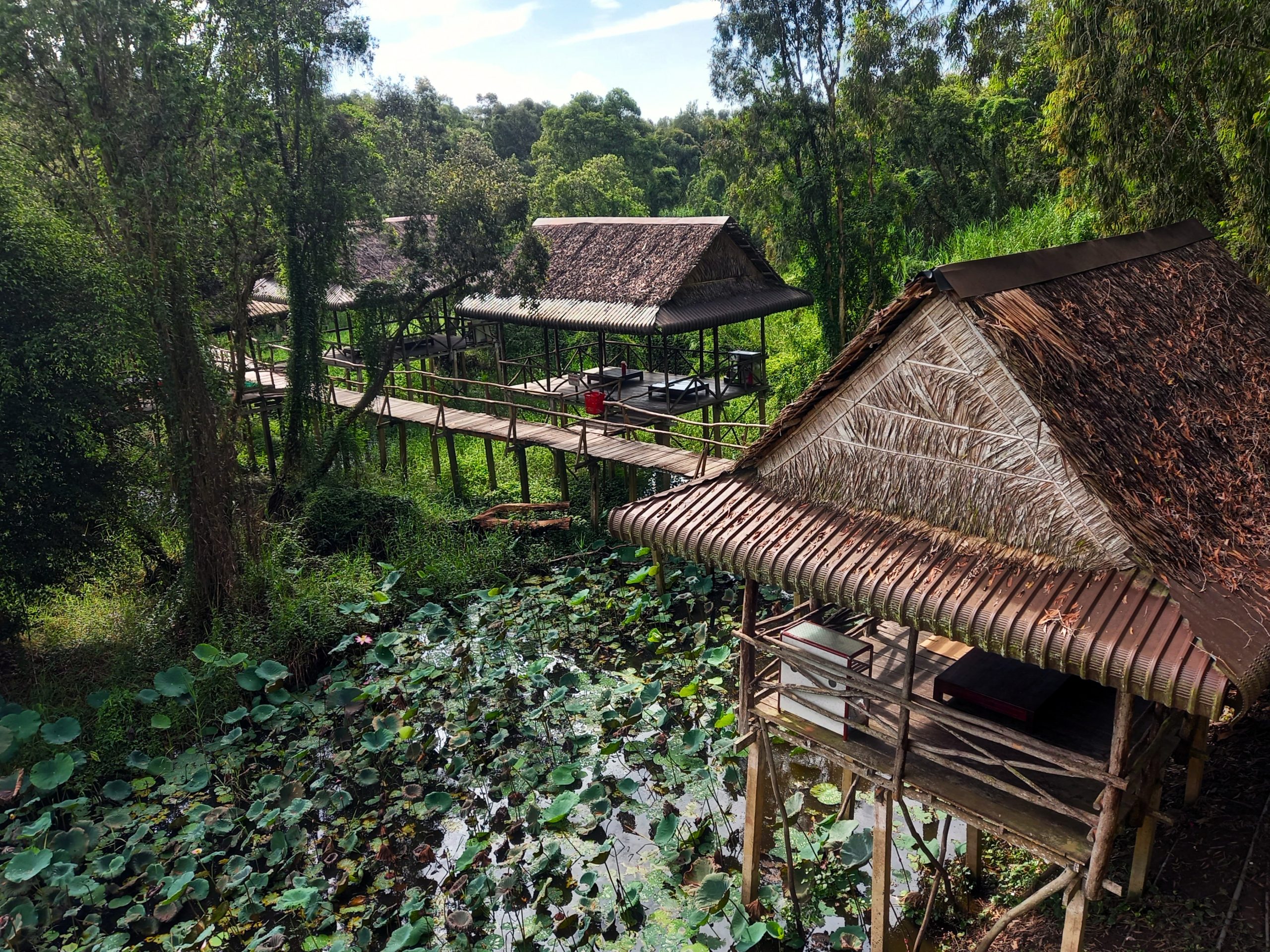
At the heart of the forest, accessed via a small lane, is a 25m-high observation tower (Tháp Quan Sát) with sensational views over the entire Trà Sư forest and across to the Bảy Núi (Seven Mountains) region of the Mekong Delta. It’s possible to walk, cycle or motorbike around the southern perimeter of Trà Sư on a narrow, paved lane above the wetlands, then turn due north into the forest on a smaller path leading to the tower. This is a particularly scenic little journey through tall trees, flooded fields and beside narrow channels. Climb the stairs (5,000vnd) to the top of the tower for excellent views. The area surrounding the tower is also very pleasant, with waterside eateries serving delectable Mekong meals in wooden gazebos overhanging the channel, each connected with the next via raised wooden walkways (see Eating & Drinking). Note: rental bicycles from the main Trà Sư site are not allowed to go as far as the observation tower. If you don’t have your own wheels, ask at your accommodation to rent a bicycle or motorbike. Alternatively, if you don’t mind a relatively long hike, just walk there instead.
Other Activities:
Around the main entrance and staging post for the boats, there are several other activities to try, if you’re inclined. Archery, various rides and walks over water that encourage you to fall in, pigeon coops, fish-feeding and fishing, among others.
Getting There & Around:
Like this guide? Support Vietnam Coracle with a donation & help keep this website free & 100% independent. Thank you, Tom
The regional transportation hub is Châu Đốc, which is well-connected by road to major cities such as Cần Thơ and Ho Chi Minh City. From Châu Đốc you can either get a taxi or ride-hailing vehicle, such as Grab, or hire a motorbike or bicycle from your accommodation, or book a tour through your hotel to get to Trà Sư, which is just 30 minutes due south.
Although it is technically possible to get to Châu Đốc by boat on a Mekong River cruise, in reality almost all travellers will arrive by road. Buses leave every 30 minutes from Ho Chi Minh City’s Miền Tây bus station for the 6-hour journey to Châu Đốc [check times & book tickets]. In addition, buses leave every hour from Cần Thơ’s bus station for the 3-hour trip to Châu Đốc [check times & book tickets]. You can search and book transportation to/from Châu Đốc using the Baolau search box below.
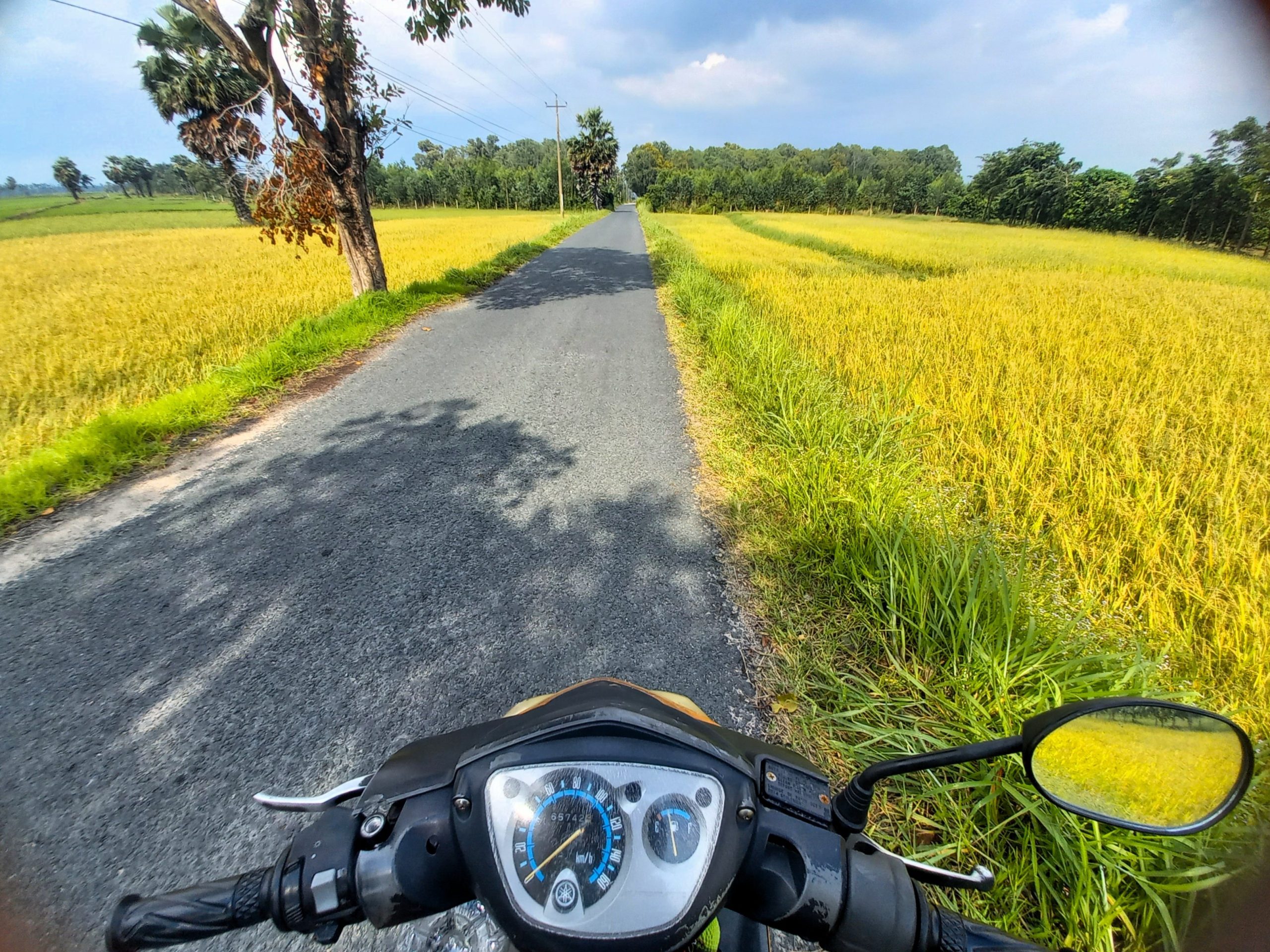
If you have a motorbike, Châu Đốc is at least 250km (depending on the route) from Ho Chi Minh City. The ride takes the best part of a day, some of the scenery is uninspiring and many of the roads can be busy and unpleasant. But the payoff is having your own wheels once you get to Trà Sư, allowing you to visit and explore with far more freedom than without your own transportation. Alternatively, you could rent a motorbike in Châu Đốc: start by asking at your accommodation. The turnoff for Trà Sư is signposted on road DT948. A paved lane leads along a dyke separating flooded fields for a couple of kilometres until the main entrance to Trà Sư comes into view. If you have your own two wheels, a visit to Trà Sư can easily be combined with the Mountains in the Mekong loop, or on the way to Hà Tiên and the ferry to Phú Quốc Island.
Search Box:
Check Routes & Book Bus Tickets to/from Châu Đốc
Eating & Drinking:
Like this guide? Support Vietnam Coracle with a donation & help keep this website free & 100% independent. Thank you, Tom
The Mekong Delta is one of the most exciting regions in Vietnam for food and drink. The sheer abundance of ingredients and dishes is staggering. Trà Sư does well to make dining a big part of the experience. There are several restaurants dotted around the site, especially along the channels close to the boat pier and below the observation tower deep within the forest. These restaurants (nhà hàng or quán ăn) specialize in local feasts, including roast chicken, grilled freshwater fish, stir-fried water hyacinth, hotpots, various freshwater snails, and even barbecued field mice. The colours, textures and flavous are incredible. These meals are best enjoyed as a small group because that means you can order several dishes and share them. The restaurants tend to be open-sided wooden structures overhanging the waterways in the shade of tall trees; some are on raised bamboo platforms reached via a wooden walkway on stilts above the marshes. A very atmospheric context for a memorable meal.
Smaller eats include Mekong favourites, such as bánh xèo and bánh khọt (both are crispy, savoury crepes with toppings like pork and shrimp) near the boat pier. There’s even a honey farm where you can buy jars of the fresh product.
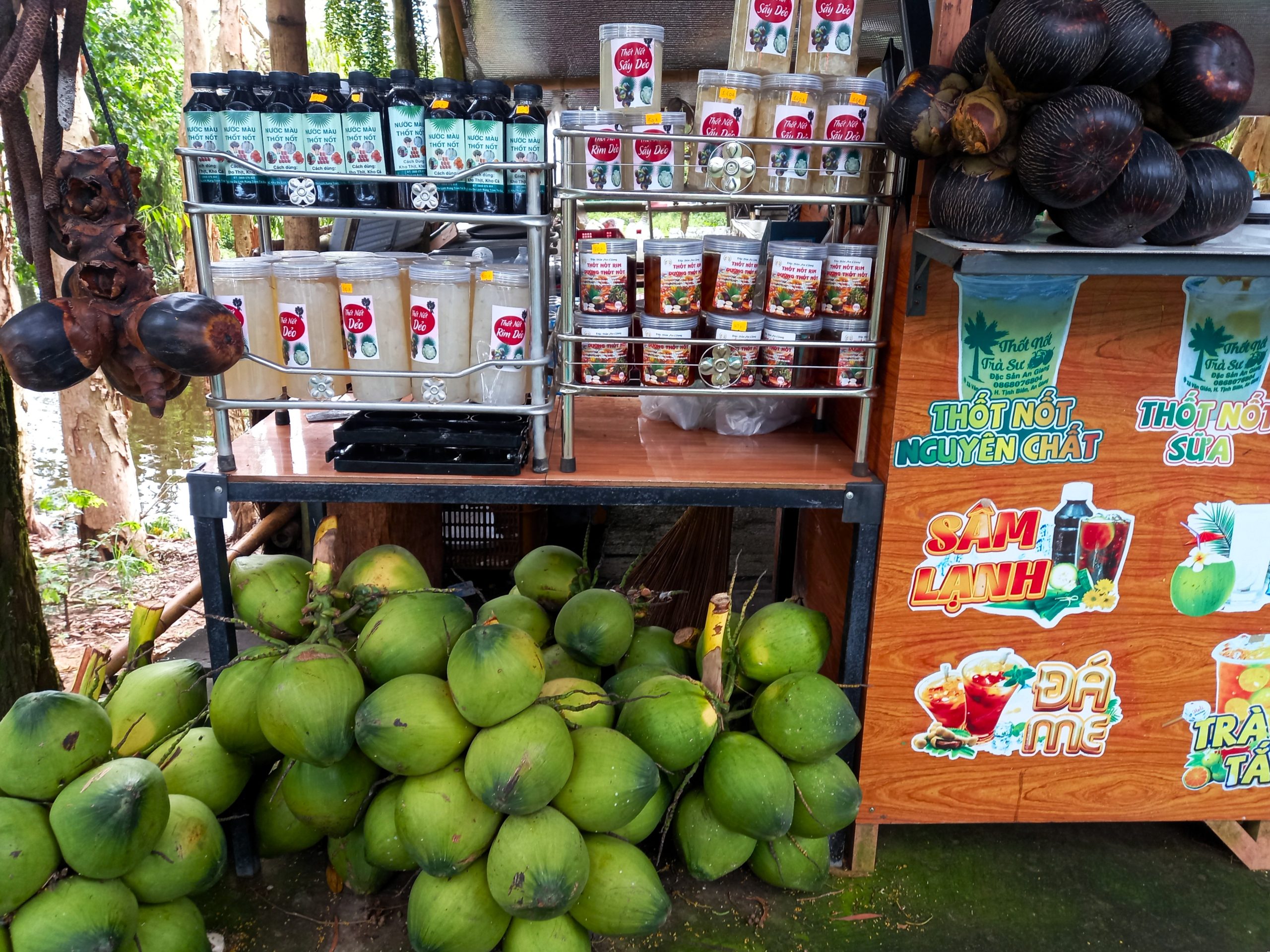
For drinks, you’ll find a handful of cafes and tea shops in and around the main entrance. These serve coffee, soft drinks, fresh coconuts, juices and smoothies, as well as drinks made from thốt nốt – the fruit of the palmyra palm. This is used in many ways, including flavouring for milk teas, jams, candies and dye.
*Note: Sadly, it is very apparent that some of restaurants near the observation tower dispose of their trash by tying it up in plastic bags and throwing it directly in the river. This is still a very common practice in Vietnam, especially in the Mekong Delta where the waterways carry the trash far away. It’s worth remembering that the absence of a regular dumpster truck to collect rubbish is one of the reasons this practice persists.
Where to Stay:
Like this guide? Support Vietnam Coracle with a donation & help keep this website free & 100% independent. Thank you, Tom
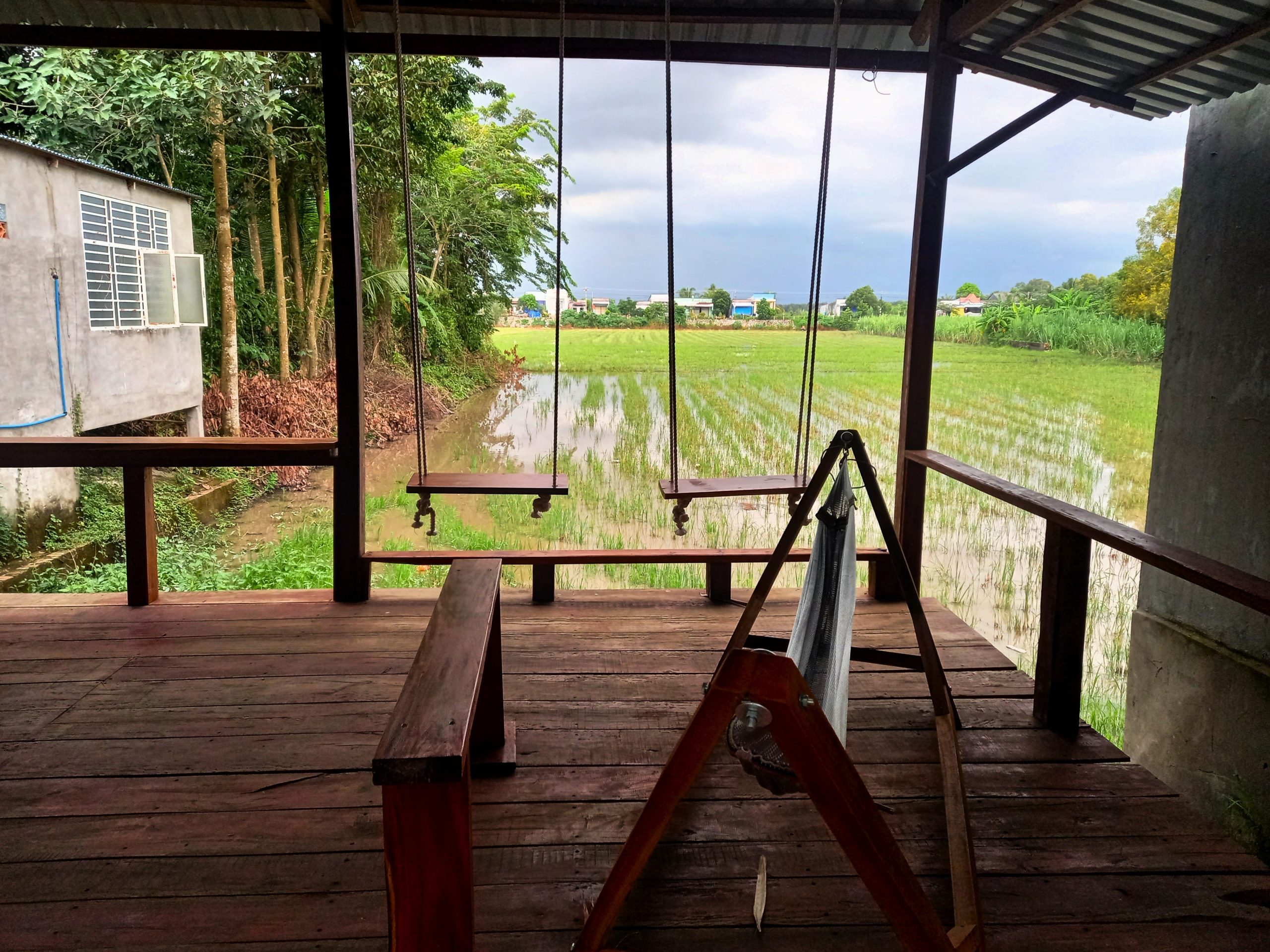
There are several small towns along the main road (DT948) just west of Trà Sư that have a few decent nhà nghỉ (local guest houses) and mini-hotels. These are cheap, clean and fine for a night, especially as you’ll be spending most of the time at the Trà Sư site rather than in your hotel room. The nearest option to Trà Sư is Hương Tràm Homestay, a small accommodation offering tiny rooms for just 140,000vnđ ($5) a night. The advantage of staying somewhere close to Trà Sư is that you can get there nice and early in the morning, thus beating the crowds.
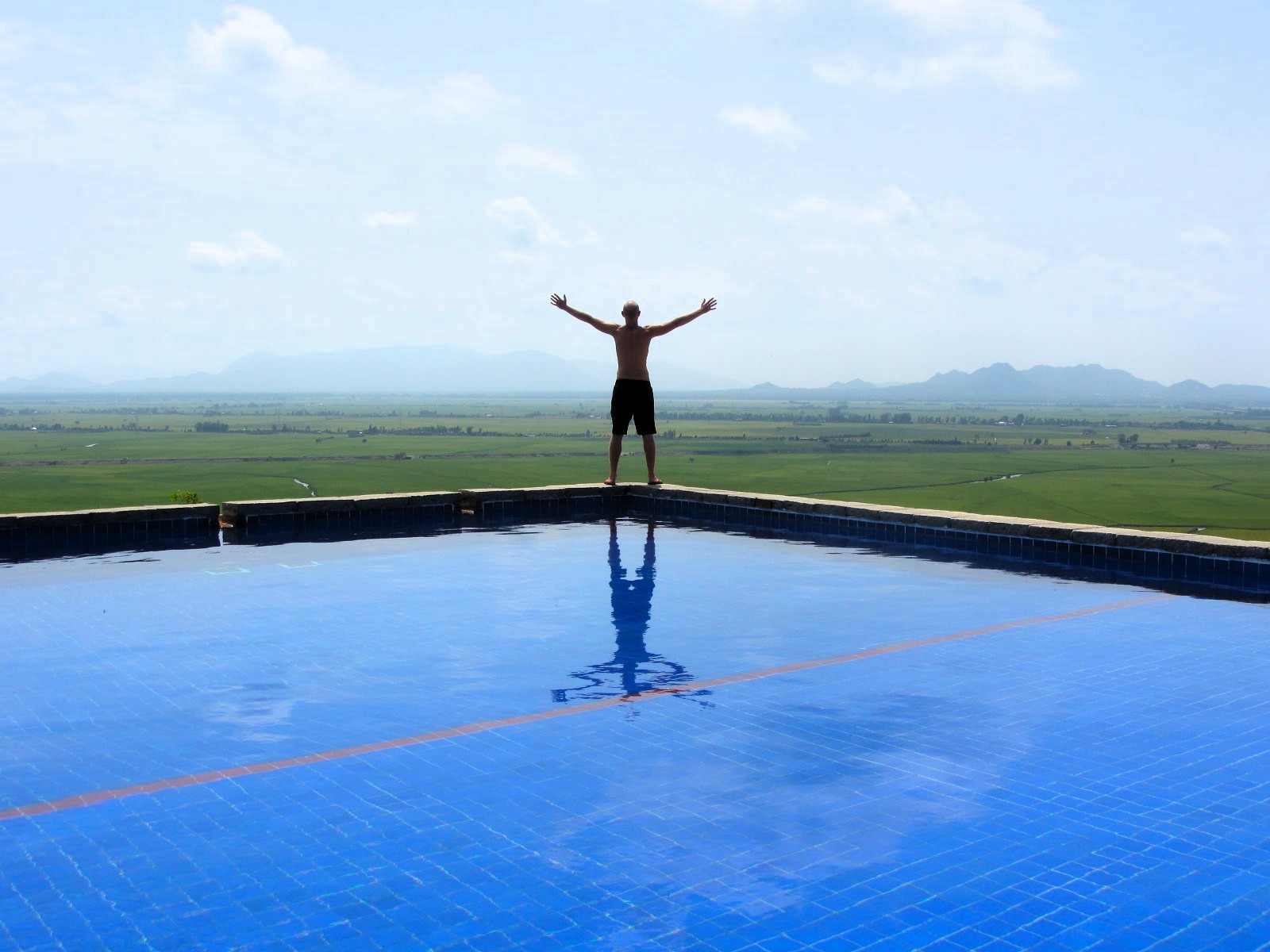
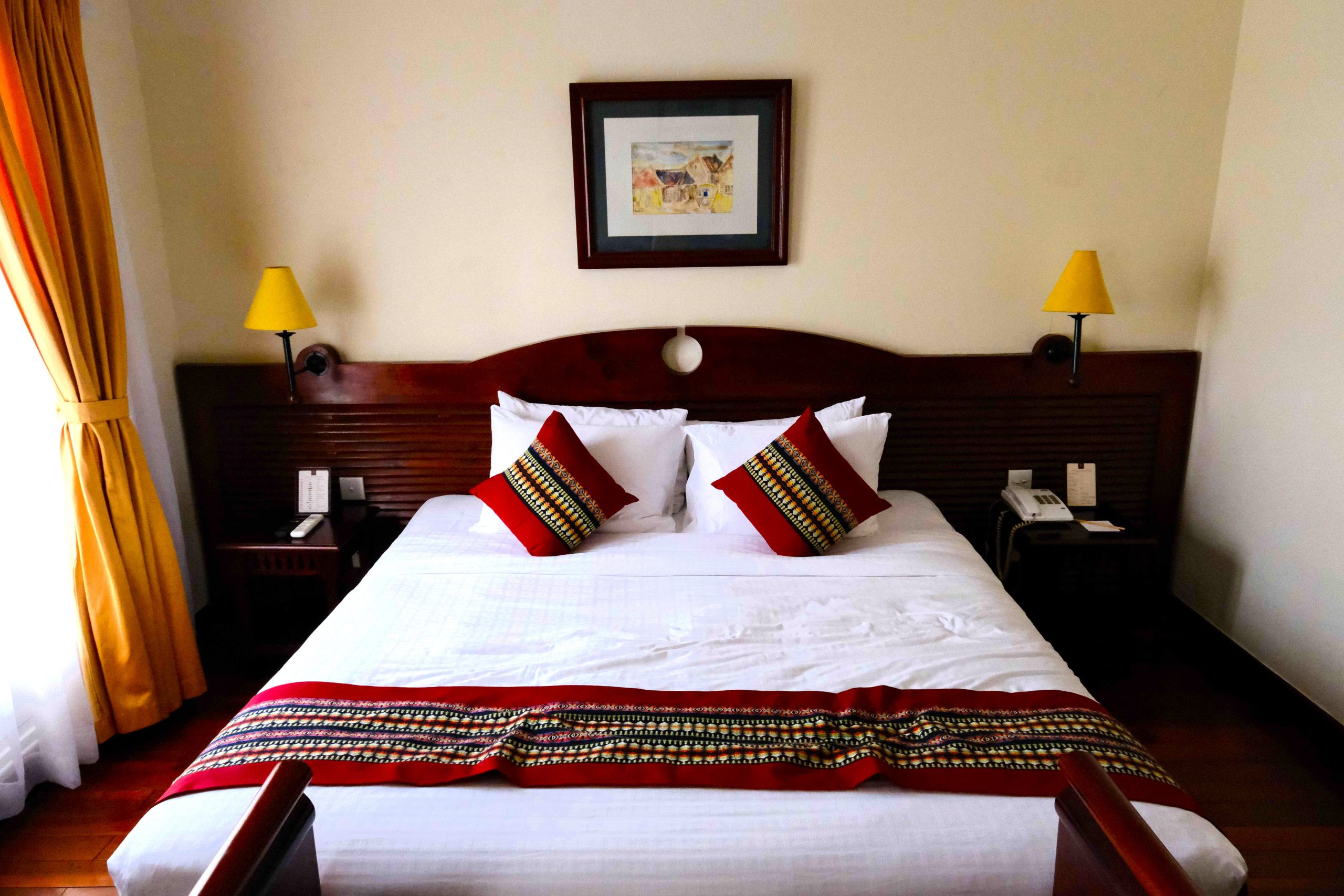
However, far better accommodation can be found in and around Châu Đốc, 20km due north of Trà Sư. The most comfortable options are Victoria Châu Đốc on the riverfront and Victoria Núi Sam Lodge on the slopes of the temple-studded Sam Mountain. Both have colonial-style rooms, excellent views, good food and facilities, including a swimming pool. Châu Đốc also has plenty of good-value mini-hotels, many of which are located around the fascinating main market. Try Hùng Cường and Little Sài Gòn. You can also browse more hotel options in and around Châu Đốc on this page or use the search box below:
Search Box:
Check Rates & Book Hotels in Châu Đốc
Support My Work
Free | Independent | No Sponsored Content
“Hello, if you enjoy my website, please support it.
Thank you.” Tom
*Disclosure: I never receive payment for anything I write: my content is always free and independent. I’ve written this guide because I want to: I like this forest and I want my readers to know about it. For more details, see my Disclosure & Disclaimer statements and my About Page


Did you hear any karaoke there?
Nope.